{"title":"子痫前期嗜铁相关基因:综合生物信息学分析、实验验证和药物预测。","authors":"Lidan He, Feng Zhan, Xuemei Li, Huijuan Yang, Jianbo Wu","doi":"10.1186/s12884-025-07325-5","DOIUrl":null,"url":null,"abstract":"<p><strong>Introduction: </strong>Preeclampsia (PE) is a severe pregnancy complication with limited early diagnostic and therapeutic options. Ferroptosis, an iron-dependent cell death pathway, has emerged as a potential mechanism in PE pathogenesis. This study investigated ferroptosis-related genes (FRGs) in PE to identify diagnostic biomarkers and therapeutic targets.</p><p><strong>Methods: </strong>Differentially expressed genes were identified from GEO databases and intersected with FRGs. Hub genes were selected using RandomForest and LASSO algorithms. Their diagnostic potential was evaluated through ROC analysis. Regulatory networks were constructed using transcription factors, microRNAs and potential drug targets. Hub gene expression was validated through immunohistochemistry, Western blot, and RT-qPCR in placental tissues and hypoxic trophoblasts.</p><p><strong>Results: </strong>We identified 25 ferroptosis-related differentially expressed genes enriched in ferroptosis and HIF-1 pathways. Four hub genes (NDRG1, P4HA1, LDHA, and IDO1) showed high diagnostic efficiency (AUC=0.9182). Immune cell analysis revealed altered levels of plasma cells, CD8+ T cells, Tregs, monocytes, and M2 macrophages in PE, correlating significantly with hub gene expression. We identified 84 mRNA-miRNA and 119 mRNA-TF interactions. Among 19 potential drugs, Tetrahydro-NAD showed promising targeting potential. Experimental validation confirmed elevated expression of NDRG1, P4HA1, and LDHA, and decreased IDO1 in PE tissues and hypoxic conditions.</p><p><strong>Discussion: </strong>This study identified four FRGs as potential PE biomarkers and therapeutic targets, providing new insights into PE pathogenesis through integrated bioinformatics and experimental validation. These findings may facilitate early PE diagnosis and treatment development.</p>","PeriodicalId":9033,"journal":{"name":"BMC Pregnancy and Childbirth","volume":"25 1","pages":"189"},"PeriodicalIF":2.7000,"publicationDate":"2025-02-21","publicationTypes":"Journal Article","fieldsOfStudy":null,"isOpenAccess":false,"openAccessPdf":"https://www.ncbi.nlm.nih.gov/pmc/articles/PMC11844108/pdf/","citationCount":"0","resultStr":"{\"title\":\"Ferroptosis-related genes in preeclampsia: integrative bioinformatics analysis, experimental validation and drug prediction.\",\"authors\":\"Lidan He, Feng Zhan, Xuemei Li, Huijuan Yang, Jianbo Wu\",\"doi\":\"10.1186/s12884-025-07325-5\",\"DOIUrl\":null,\"url\":null,\"abstract\":\"<p><strong>Introduction: </strong>Preeclampsia (PE) is a severe pregnancy complication with limited early diagnostic and therapeutic options. Ferroptosis, an iron-dependent cell death pathway, has emerged as a potential mechanism in PE pathogenesis. This study investigated ferroptosis-related genes (FRGs) in PE to identify diagnostic biomarkers and therapeutic targets.</p><p><strong>Methods: </strong>Differentially expressed genes were identified from GEO databases and intersected with FRGs. Hub genes were selected using RandomForest and LASSO algorithms. Their diagnostic potential was evaluated through ROC analysis. Regulatory networks were constructed using transcription factors, microRNAs and potential drug targets. Hub gene expression was validated through immunohistochemistry, Western blot, and RT-qPCR in placental tissues and hypoxic trophoblasts.</p><p><strong>Results: </strong>We identified 25 ferroptosis-related differentially expressed genes enriched in ferroptosis and HIF-1 pathways. Four hub genes (NDRG1, P4HA1, LDHA, and IDO1) showed high diagnostic efficiency (AUC=0.9182). Immune cell analysis revealed altered levels of plasma cells, CD8+ T cells, Tregs, monocytes, and M2 macrophages in PE, correlating significantly with hub gene expression. We identified 84 mRNA-miRNA and 119 mRNA-TF interactions. Among 19 potential drugs, Tetrahydro-NAD showed promising targeting potential. Experimental validation confirmed elevated expression of NDRG1, P4HA1, and LDHA, and decreased IDO1 in PE tissues and hypoxic conditions.</p><p><strong>Discussion: </strong>This study identified four FRGs as potential PE biomarkers and therapeutic targets, providing new insights into PE pathogenesis through integrated bioinformatics and experimental validation. These findings may facilitate early PE diagnosis and treatment development.</p>\",\"PeriodicalId\":9033,\"journal\":{\"name\":\"BMC Pregnancy and Childbirth\",\"volume\":\"25 1\",\"pages\":\"189\"},\"PeriodicalIF\":2.7000,\"publicationDate\":\"2025-02-21\",\"publicationTypes\":\"Journal Article\",\"fieldsOfStudy\":null,\"isOpenAccess\":false,\"openAccessPdf\":\"https://www.ncbi.nlm.nih.gov/pmc/articles/PMC11844108/pdf/\",\"citationCount\":\"0\",\"resultStr\":null,\"platform\":\"Semanticscholar\",\"paperid\":null,\"PeriodicalName\":\"BMC Pregnancy and Childbirth\",\"FirstCategoryId\":\"3\",\"ListUrlMain\":\"https://doi.org/10.1186/s12884-025-07325-5\",\"RegionNum\":2,\"RegionCategory\":\"医学\",\"ArticlePicture\":[],\"TitleCN\":null,\"AbstractTextCN\":null,\"PMCID\":null,\"EPubDate\":\"\",\"PubModel\":\"\",\"JCR\":\"Q1\",\"JCRName\":\"OBSTETRICS & GYNECOLOGY\",\"Score\":null,\"Total\":0}","platform":"Semanticscholar","paperid":null,"PeriodicalName":"BMC Pregnancy and Childbirth","FirstCategoryId":"3","ListUrlMain":"https://doi.org/10.1186/s12884-025-07325-5","RegionNum":2,"RegionCategory":"医学","ArticlePicture":[],"TitleCN":null,"AbstractTextCN":null,"PMCID":null,"EPubDate":"","PubModel":"","JCR":"Q1","JCRName":"OBSTETRICS & GYNECOLOGY","Score":null,"Total":0}
Ferroptosis-related genes in preeclampsia: integrative bioinformatics analysis, experimental validation and drug prediction.
Introduction: Preeclampsia (PE) is a severe pregnancy complication with limited early diagnostic and therapeutic options. Ferroptosis, an iron-dependent cell death pathway, has emerged as a potential mechanism in PE pathogenesis. This study investigated ferroptosis-related genes (FRGs) in PE to identify diagnostic biomarkers and therapeutic targets.
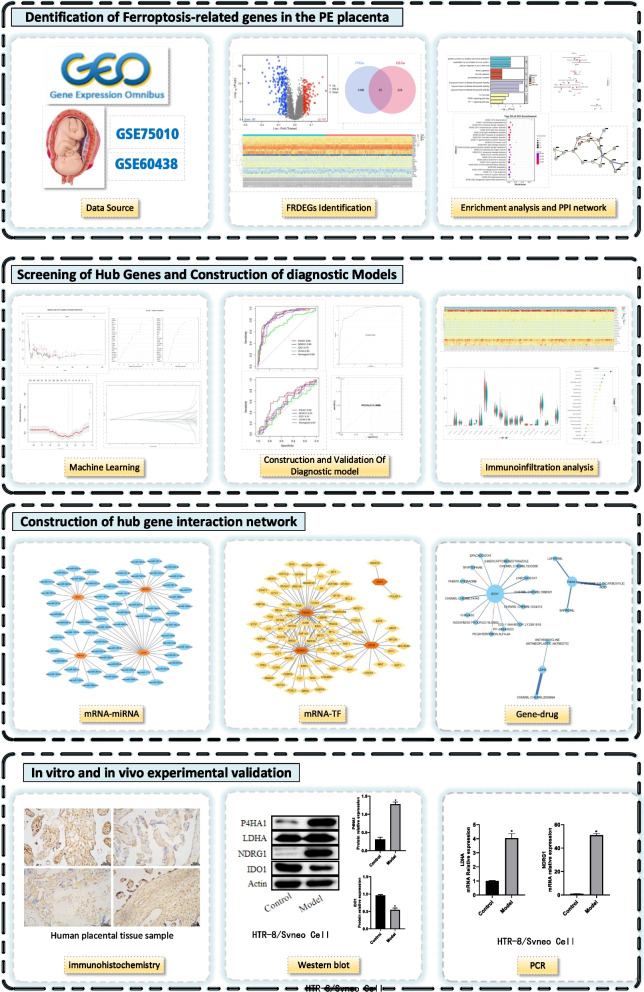
Methods: Differentially expressed genes were identified from GEO databases and intersected with FRGs. Hub genes were selected using RandomForest and LASSO algorithms. Their diagnostic potential was evaluated through ROC analysis. Regulatory networks were constructed using transcription factors, microRNAs and potential drug targets. Hub gene expression was validated through immunohistochemistry, Western blot, and RT-qPCR in placental tissues and hypoxic trophoblasts.
Results: We identified 25 ferroptosis-related differentially expressed genes enriched in ferroptosis and HIF-1 pathways. Four hub genes (NDRG1, P4HA1, LDHA, and IDO1) showed high diagnostic efficiency (AUC=0.9182). Immune cell analysis revealed altered levels of plasma cells, CD8+ T cells, Tregs, monocytes, and M2 macrophages in PE, correlating significantly with hub gene expression. We identified 84 mRNA-miRNA and 119 mRNA-TF interactions. Among 19 potential drugs, Tetrahydro-NAD showed promising targeting potential. Experimental validation confirmed elevated expression of NDRG1, P4HA1, and LDHA, and decreased IDO1 in PE tissues and hypoxic conditions.
Discussion: This study identified four FRGs as potential PE biomarkers and therapeutic targets, providing new insights into PE pathogenesis through integrated bioinformatics and experimental validation. These findings may facilitate early PE diagnosis and treatment development.
期刊介绍:
BMC Pregnancy & Childbirth is an open access, peer-reviewed journal that considers articles on all aspects of pregnancy and childbirth. The journal welcomes submissions on the biomedical aspects of pregnancy, breastfeeding, labor, maternal health, maternity care, trends and sociological aspects of pregnancy and childbirth.






 京公网安备 11010802042870号
京ICP备2023020795号-1
京公网安备 11010802042870号
京ICP备2023020795号-1

 分享
分享
 求助内容:
求助内容: 应助结果提醒方式:
 扫码关注我们
