Wan Wang, Zhuoming Ren, Yu Lin, Tongfeng Weng, Wenli Du
{"title":"超越两两相互作用的三角结构影响着世界贸易网络的稳健性。","authors":"Wan Wang, Zhuoming Ren, Yu Lin, Tongfeng Weng, Wenli Du","doi":"10.1063/5.0245093","DOIUrl":null,"url":null,"abstract":"<p><p>Unlike hollow triangles formed through pairwise interactions, a filled triangle or two-simplex comprises three nodes that form a group and represent the most fundamental higher-order interaction. To analyze the effects of higher-order triangles on the robustness of world trade networks, we integrate multilateral regional trade agreements and import-export world trade data to construct two-simplex higher-order trade networks. The topological characteristics indicate a significant growth in the scale and complexity of trade networks over time, with a notable decline in 2020. Then, we introduce node attack strategies designed to simulate scenarios where the key countries or regions withdraw from the trade network. It is revealed that network robustness has improved along with size and complexity, although it diminished in 2020. To further explore the factors influencing the changes in network robustness, we generate higher-order synthetic trade networks based on the random simplicial complex (RSC) model and the scale-free simplicial complex (SFSC) model. The synthetic trade networks demonstrate that increasing the average degree enhances robustness, while merely increasing the number of nodes or filled triangles can weaken it. Additionally, scale-free higher-order networks exhibit lower robustness due to vulnerability of the hub nodes, in contrast to the higher resilience of random simplicial complexes. These insights emphasize the importance of fostering multilateral interactions and strengthening ties for network robustness.</p>","PeriodicalId":9974,"journal":{"name":"Chaos","volume":"35 2","pages":""},"PeriodicalIF":3.2000,"publicationDate":"2025-02-01","publicationTypes":"Journal Article","fieldsOfStudy":null,"isOpenAccess":false,"openAccessPdf":"","citationCount":"0","resultStr":"{\"title\":\"The triangular structure beyond pairwise interactions affects the robustness of the world trade networks.\",\"authors\":\"Wan Wang, Zhuoming Ren, Yu Lin, Tongfeng Weng, Wenli Du\",\"doi\":\"10.1063/5.0245093\",\"DOIUrl\":null,\"url\":null,\"abstract\":\"<p><p>Unlike hollow triangles formed through pairwise interactions, a filled triangle or two-simplex comprises three nodes that form a group and represent the most fundamental higher-order interaction. To analyze the effects of higher-order triangles on the robustness of world trade networks, we integrate multilateral regional trade agreements and import-export world trade data to construct two-simplex higher-order trade networks. The topological characteristics indicate a significant growth in the scale and complexity of trade networks over time, with a notable decline in 2020. Then, we introduce node attack strategies designed to simulate scenarios where the key countries or regions withdraw from the trade network. It is revealed that network robustness has improved along with size and complexity, although it diminished in 2020. To further explore the factors influencing the changes in network robustness, we generate higher-order synthetic trade networks based on the random simplicial complex (RSC) model and the scale-free simplicial complex (SFSC) model. The synthetic trade networks demonstrate that increasing the average degree enhances robustness, while merely increasing the number of nodes or filled triangles can weaken it. Additionally, scale-free higher-order networks exhibit lower robustness due to vulnerability of the hub nodes, in contrast to the higher resilience of random simplicial complexes. These insights emphasize the importance of fostering multilateral interactions and strengthening ties for network robustness.</p>\",\"PeriodicalId\":9974,\"journal\":{\"name\":\"Chaos\",\"volume\":\"35 2\",\"pages\":\"\"},\"PeriodicalIF\":3.2000,\"publicationDate\":\"2025-02-01\",\"publicationTypes\":\"Journal Article\",\"fieldsOfStudy\":null,\"isOpenAccess\":false,\"openAccessPdf\":\"\",\"citationCount\":\"0\",\"resultStr\":null,\"platform\":\"Semanticscholar\",\"paperid\":null,\"PeriodicalName\":\"Chaos\",\"FirstCategoryId\":\"100\",\"ListUrlMain\":\"https://doi.org/10.1063/5.0245093\",\"RegionNum\":2,\"RegionCategory\":\"数学\",\"ArticlePicture\":[],\"TitleCN\":null,\"AbstractTextCN\":null,\"PMCID\":null,\"EPubDate\":\"\",\"PubModel\":\"\",\"JCR\":\"Q1\",\"JCRName\":\"MATHEMATICS, APPLIED\",\"Score\":null,\"Total\":0}","platform":"Semanticscholar","paperid":null,"PeriodicalName":"Chaos","FirstCategoryId":"100","ListUrlMain":"https://doi.org/10.1063/5.0245093","RegionNum":2,"RegionCategory":"数学","ArticlePicture":[],"TitleCN":null,"AbstractTextCN":null,"PMCID":null,"EPubDate":"","PubModel":"","JCR":"Q1","JCRName":"MATHEMATICS, APPLIED","Score":null,"Total":0}
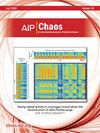
The triangular structure beyond pairwise interactions affects the robustness of the world trade networks.
Unlike hollow triangles formed through pairwise interactions, a filled triangle or two-simplex comprises three nodes that form a group and represent the most fundamental higher-order interaction. To analyze the effects of higher-order triangles on the robustness of world trade networks, we integrate multilateral regional trade agreements and import-export world trade data to construct two-simplex higher-order trade networks. The topological characteristics indicate a significant growth in the scale and complexity of trade networks over time, with a notable decline in 2020. Then, we introduce node attack strategies designed to simulate scenarios where the key countries or regions withdraw from the trade network. It is revealed that network robustness has improved along with size and complexity, although it diminished in 2020. To further explore the factors influencing the changes in network robustness, we generate higher-order synthetic trade networks based on the random simplicial complex (RSC) model and the scale-free simplicial complex (SFSC) model. The synthetic trade networks demonstrate that increasing the average degree enhances robustness, while merely increasing the number of nodes or filled triangles can weaken it. Additionally, scale-free higher-order networks exhibit lower robustness due to vulnerability of the hub nodes, in contrast to the higher resilience of random simplicial complexes. These insights emphasize the importance of fostering multilateral interactions and strengthening ties for network robustness.
期刊介绍:
Chaos: An Interdisciplinary Journal of Nonlinear Science is a peer-reviewed journal devoted to increasing the understanding of nonlinear phenomena and describing the manifestations in a manner comprehensible to researchers from a broad spectrum of disciplines.




 京公网安备 11010802042870号
京ICP备2023020795号-1
京公网安备 11010802042870号
京ICP备2023020795号-1

 分享
分享
 求助内容:
求助内容: 应助结果提醒方式:
 扫码关注我们
