Suhashini Handunneththige, Ryder Downey, Michael B. Hall, William W. Brennessel and Robert M. Chin*,
{"title":"甲基二钌配合物与双(二苯基膦)甲烷(dppm)配体的反应性及甲烷损失形成二氮和二氢配合物","authors":"Suhashini Handunneththige, Ryder Downey, Michael B. Hall, William W. Brennessel and Robert M. Chin*, ","doi":"10.1021/acs.organomet.4c00444","DOIUrl":null,"url":null,"abstract":"<p >A diruthenium complex with a μ-CH<sub>3</sub> ligand, [<i>cis-</i>{(η<sup>5</sup>-C<sub>5</sub>H<sub>2</sub>(<i>t</i>-Bu))<sub>2</sub>(CMe<sub>2</sub>)<sub>2</sub>}Ru<sub>2</sub>(dppm)<sub>2</sub>(μ-CH<sub>3</sub>)][B(Ar<sup>F</sup>)<sub>4</sub>] (dppm = 1,1-bis(diphenylphosphino)methane) has been synthesized, structured, and its reactivity explored. Reaction of the μ-CH<sub>3</sub> complex with H<sub>2</sub> led to a fluxional dihydrogen/hydrido complex with the hydrogens exchanging between the two ruthenium centers, results consistent with the NMR spectroscopy, the crystal structure, and density functional theory. The activation barrier for this exchange was calculated to be ∼12 kcal/mol. The μ-1,2-N<sub>2</sub> complex formed when the μ-CH<sub>3</sub> diruthenium or dimethyl diruthenium complexes were treated with acid, and the crystal structure showed a Ru–N–N–Ru geometry with a smaller Ru–N–N angle than other related complexes. The stability of a methane diruthenium complex with either a dppm or dmpm (1,1-bis(dimethylphosphino)methane) ligand has also been computationally investigated, with the less sterically demanding dmpm forming a more stable methane complex than that with the dppm ligand.</p>","PeriodicalId":56,"journal":{"name":"Organometallics","volume":"44 4","pages":"568–581 568–581"},"PeriodicalIF":2.9000,"publicationDate":"2025-02-05","publicationTypes":"Journal Article","fieldsOfStudy":null,"isOpenAccess":false,"openAccessPdf":"","citationCount":"0","resultStr":"{\"title\":\"Reactivity of Methyl Diruthenium Complexes with the Bis(diphenylphosphino)methane (dppm) Ligand and Formation of Dinitrogen and Dihydrogen Complexes via Methane Loss\",\"authors\":\"Suhashini Handunneththige, Ryder Downey, Michael B. Hall, William W. Brennessel and Robert M. Chin*, \",\"doi\":\"10.1021/acs.organomet.4c00444\",\"DOIUrl\":null,\"url\":null,\"abstract\":\"<p >A diruthenium complex with a μ-CH<sub>3</sub> ligand, [<i>cis-</i>{(η<sup>5</sup>-C<sub>5</sub>H<sub>2</sub>(<i>t</i>-Bu))<sub>2</sub>(CMe<sub>2</sub>)<sub>2</sub>}Ru<sub>2</sub>(dppm)<sub>2</sub>(μ-CH<sub>3</sub>)][B(Ar<sup>F</sup>)<sub>4</sub>] (dppm = 1,1-bis(diphenylphosphino)methane) has been synthesized, structured, and its reactivity explored. Reaction of the μ-CH<sub>3</sub> complex with H<sub>2</sub> led to a fluxional dihydrogen/hydrido complex with the hydrogens exchanging between the two ruthenium centers, results consistent with the NMR spectroscopy, the crystal structure, and density functional theory. The activation barrier for this exchange was calculated to be ∼12 kcal/mol. The μ-1,2-N<sub>2</sub> complex formed when the μ-CH<sub>3</sub> diruthenium or dimethyl diruthenium complexes were treated with acid, and the crystal structure showed a Ru–N–N–Ru geometry with a smaller Ru–N–N angle than other related complexes. The stability of a methane diruthenium complex with either a dppm or dmpm (1,1-bis(dimethylphosphino)methane) ligand has also been computationally investigated, with the less sterically demanding dmpm forming a more stable methane complex than that with the dppm ligand.</p>\",\"PeriodicalId\":56,\"journal\":{\"name\":\"Organometallics\",\"volume\":\"44 4\",\"pages\":\"568–581 568–581\"},\"PeriodicalIF\":2.9000,\"publicationDate\":\"2025-02-05\",\"publicationTypes\":\"Journal Article\",\"fieldsOfStudy\":null,\"isOpenAccess\":false,\"openAccessPdf\":\"\",\"citationCount\":\"0\",\"resultStr\":null,\"platform\":\"Semanticscholar\",\"paperid\":null,\"PeriodicalName\":\"Organometallics\",\"FirstCategoryId\":\"92\",\"ListUrlMain\":\"https://pubs.acs.org/doi/10.1021/acs.organomet.4c00444\",\"RegionNum\":3,\"RegionCategory\":\"化学\",\"ArticlePicture\":[],\"TitleCN\":null,\"AbstractTextCN\":null,\"PMCID\":null,\"EPubDate\":\"\",\"PubModel\":\"\",\"JCR\":\"Q2\",\"JCRName\":\"CHEMISTRY, INORGANIC & NUCLEAR\",\"Score\":null,\"Total\":0}","platform":"Semanticscholar","paperid":null,"PeriodicalName":"Organometallics","FirstCategoryId":"92","ListUrlMain":"https://pubs.acs.org/doi/10.1021/acs.organomet.4c00444","RegionNum":3,"RegionCategory":"化学","ArticlePicture":[],"TitleCN":null,"AbstractTextCN":null,"PMCID":null,"EPubDate":"","PubModel":"","JCR":"Q2","JCRName":"CHEMISTRY, INORGANIC & NUCLEAR","Score":null,"Total":0}
Reactivity of Methyl Diruthenium Complexes with the Bis(diphenylphosphino)methane (dppm) Ligand and Formation of Dinitrogen and Dihydrogen Complexes via Methane Loss
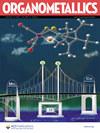
A diruthenium complex with a μ-CH3 ligand, [cis-{(η5-C5H2(t-Bu))2(CMe2)2}Ru2(dppm)2(μ-CH3)][B(ArF)4] (dppm = 1,1-bis(diphenylphosphino)methane) has been synthesized, structured, and its reactivity explored. Reaction of the μ-CH3 complex with H2 led to a fluxional dihydrogen/hydrido complex with the hydrogens exchanging between the two ruthenium centers, results consistent with the NMR spectroscopy, the crystal structure, and density functional theory. The activation barrier for this exchange was calculated to be ∼12 kcal/mol. The μ-1,2-N2 complex formed when the μ-CH3 diruthenium or dimethyl diruthenium complexes were treated with acid, and the crystal structure showed a Ru–N–N–Ru geometry with a smaller Ru–N–N angle than other related complexes. The stability of a methane diruthenium complex with either a dppm or dmpm (1,1-bis(dimethylphosphino)methane) ligand has also been computationally investigated, with the less sterically demanding dmpm forming a more stable methane complex than that with the dppm ligand.
期刊介绍:
Organometallics is the flagship journal of organometallic chemistry and records progress in one of the most active fields of science, bridging organic and inorganic chemistry. The journal publishes Articles, Communications, Reviews, and Tutorials (instructional overviews) that depict research on the synthesis, structure, bonding, chemical reactivity, and reaction mechanisms for a variety of applications, including catalyst design and catalytic processes; main-group, transition-metal, and lanthanide and actinide metal chemistry; synthetic aspects of polymer science and materials science; and bioorganometallic chemistry.




 京公网安备 11010802042870号
京ICP备2023020795号-1
京公网安备 11010802042870号
京ICP备2023020795号-1

 分享
分享
 求助内容:
求助内容: 应助结果提醒方式:
 扫码关注我们
