Wang-Yu Zhu , Yu-Mei Wang , Xiao-Meng Dong , Guo-Xu Zhao , Chang-Feng Chi , Bin Wang
{"title":"南极磷虾(Euphausia superba)水解产物的抗氧化肽:稳定性、ACE抑制活性和通过调节Keap1/Nrf2通路对内皮细胞的保护作用","authors":"Wang-Yu Zhu , Yu-Mei Wang , Xiao-Meng Dong , Guo-Xu Zhao , Chang-Feng Chi , Bin Wang","doi":"10.1016/j.jafr.2025.101745","DOIUrl":null,"url":null,"abstract":"<div><div>The objective of this work was to study the angiotensin-I-converting enzyme (ACE) inhibitory (ACEi) activity, inhibition mechanism, and ameliorating functions of SLPY, QYPPMQY and EYEA on HUVECs damaged by oxidative stress. The results indicated that SLPY, QYPPMQY and EYEA could significantly inhibit ACE activity with IC<sub>50</sub> values of 0.3715, 0.2903 and 0.3375 mg/mL, respectively; the affinity of SLPY, QYPPMQY and EYEA with ACE was −8.1, −9.9, and −8.3 kcal/mol, respectively, which is mainly due to the hydrophobic interaction and hydrogen bonding between peptide and ACE. Moreover, SLPY, QYPPMQY and EYEA could significantly improve the viability of H<sub>2</sub>O<sub>2</sub>-damaged HUVECs. The mechanism showed that SLPY, QYPPMQY and EYEA could activate the Keap1/Nrf2 pathway in HUVECs through significantly up-regulating Nrf2 protein expression and level in the nucleus (<em>P</em> < 0.05), which subsequently improved the activity of downstream proteases, increased the NO production, and reduced the levels of ROS, MDA and LDH. Moreover, molecular docking results illustrated that SLPY, QYPPMQY and EYEA could regulate Keap1/Nrf2 pathway by non-competitive inhibition model. Then, SLPY, QYPPMQY and EYEA could ameliorate hypertension via significantly inhibiting ACE activity and effectively protecting HUVECs against oxidative damage, and these results provide theoretical support for developing health products for curing hypertension and its closely related cardiovascular diseases.</div></div>","PeriodicalId":34393,"journal":{"name":"Journal of Agriculture and Food Research","volume":"20 ","pages":"Article 101745"},"PeriodicalIF":7.2000,"publicationDate":"2025-04-01","publicationTypes":"Journal Article","fieldsOfStudy":null,"isOpenAccess":false,"openAccessPdf":"","citationCount":"0","resultStr":"{\"title\":\"Antioxidant peptides from Antarctic krill (Euphausia superba) hydrolysate: Stability, ACE inhibitory activity, and endothelial cells protection by regulating Keap1/Nrf2 pathway\",\"authors\":\"Wang-Yu Zhu , Yu-Mei Wang , Xiao-Meng Dong , Guo-Xu Zhao , Chang-Feng Chi , Bin Wang\",\"doi\":\"10.1016/j.jafr.2025.101745\",\"DOIUrl\":null,\"url\":null,\"abstract\":\"<div><div>The objective of this work was to study the angiotensin-I-converting enzyme (ACE) inhibitory (ACEi) activity, inhibition mechanism, and ameliorating functions of SLPY, QYPPMQY and EYEA on HUVECs damaged by oxidative stress. The results indicated that SLPY, QYPPMQY and EYEA could significantly inhibit ACE activity with IC<sub>50</sub> values of 0.3715, 0.2903 and 0.3375 mg/mL, respectively; the affinity of SLPY, QYPPMQY and EYEA with ACE was −8.1, −9.9, and −8.3 kcal/mol, respectively, which is mainly due to the hydrophobic interaction and hydrogen bonding between peptide and ACE. Moreover, SLPY, QYPPMQY and EYEA could significantly improve the viability of H<sub>2</sub>O<sub>2</sub>-damaged HUVECs. The mechanism showed that SLPY, QYPPMQY and EYEA could activate the Keap1/Nrf2 pathway in HUVECs through significantly up-regulating Nrf2 protein expression and level in the nucleus (<em>P</em> < 0.05), which subsequently improved the activity of downstream proteases, increased the NO production, and reduced the levels of ROS, MDA and LDH. Moreover, molecular docking results illustrated that SLPY, QYPPMQY and EYEA could regulate Keap1/Nrf2 pathway by non-competitive inhibition model. Then, SLPY, QYPPMQY and EYEA could ameliorate hypertension via significantly inhibiting ACE activity and effectively protecting HUVECs against oxidative damage, and these results provide theoretical support for developing health products for curing hypertension and its closely related cardiovascular diseases.</div></div>\",\"PeriodicalId\":34393,\"journal\":{\"name\":\"Journal of Agriculture and Food Research\",\"volume\":\"20 \",\"pages\":\"Article 101745\"},\"PeriodicalIF\":7.2000,\"publicationDate\":\"2025-04-01\",\"publicationTypes\":\"Journal Article\",\"fieldsOfStudy\":null,\"isOpenAccess\":false,\"openAccessPdf\":\"\",\"citationCount\":\"0\",\"resultStr\":null,\"platform\":\"Semanticscholar\",\"paperid\":null,\"PeriodicalName\":\"Journal of Agriculture and Food Research\",\"FirstCategoryId\":\"1085\",\"ListUrlMain\":\"https://www.sciencedirect.com/science/article/pii/S2666154325001164\",\"RegionNum\":0,\"RegionCategory\":null,\"ArticlePicture\":[],\"TitleCN\":null,\"AbstractTextCN\":null,\"PMCID\":null,\"EPubDate\":\"2025/2/15 0:00:00\",\"PubModel\":\"Epub\",\"JCR\":\"Q1\",\"JCRName\":\"AGRICULTURE, MULTIDISCIPLINARY\",\"Score\":null,\"Total\":0}","platform":"Semanticscholar","paperid":null,"PeriodicalName":"Journal of Agriculture and Food Research","FirstCategoryId":"1085","ListUrlMain":"https://www.sciencedirect.com/science/article/pii/S2666154325001164","RegionNum":0,"RegionCategory":null,"ArticlePicture":[],"TitleCN":null,"AbstractTextCN":null,"PMCID":null,"EPubDate":"2025/2/15 0:00:00","PubModel":"Epub","JCR":"Q1","JCRName":"AGRICULTURE, MULTIDISCIPLINARY","Score":null,"Total":0}
Antioxidant peptides from Antarctic krill (Euphausia superba) hydrolysate: Stability, ACE inhibitory activity, and endothelial cells protection by regulating Keap1/Nrf2 pathway
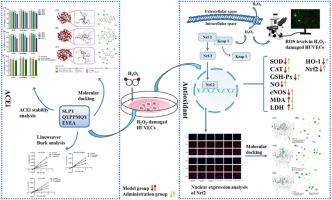
The objective of this work was to study the angiotensin-I-converting enzyme (ACE) inhibitory (ACEi) activity, inhibition mechanism, and ameliorating functions of SLPY, QYPPMQY and EYEA on HUVECs damaged by oxidative stress. The results indicated that SLPY, QYPPMQY and EYEA could significantly inhibit ACE activity with IC50 values of 0.3715, 0.2903 and 0.3375 mg/mL, respectively; the affinity of SLPY, QYPPMQY and EYEA with ACE was −8.1, −9.9, and −8.3 kcal/mol, respectively, which is mainly due to the hydrophobic interaction and hydrogen bonding between peptide and ACE. Moreover, SLPY, QYPPMQY and EYEA could significantly improve the viability of H2O2-damaged HUVECs. The mechanism showed that SLPY, QYPPMQY and EYEA could activate the Keap1/Nrf2 pathway in HUVECs through significantly up-regulating Nrf2 protein expression and level in the nucleus (P < 0.05), which subsequently improved the activity of downstream proteases, increased the NO production, and reduced the levels of ROS, MDA and LDH. Moreover, molecular docking results illustrated that SLPY, QYPPMQY and EYEA could regulate Keap1/Nrf2 pathway by non-competitive inhibition model. Then, SLPY, QYPPMQY and EYEA could ameliorate hypertension via significantly inhibiting ACE activity and effectively protecting HUVECs against oxidative damage, and these results provide theoretical support for developing health products for curing hypertension and its closely related cardiovascular diseases.





 京公网安备 11010802042870号
京ICP备2023020795号-1
京公网安备 11010802042870号
京ICP备2023020795号-1

 分享
分享
 求助内容:
求助内容: 应助结果提醒方式:
 扫码关注我们
