Qiong Liu, Qiyun Deng, Changxu Zhu, Kongqi Chen, Lidan Chen, Zhaohui Sun, Ben Zhong Tang, Zhiming Wang
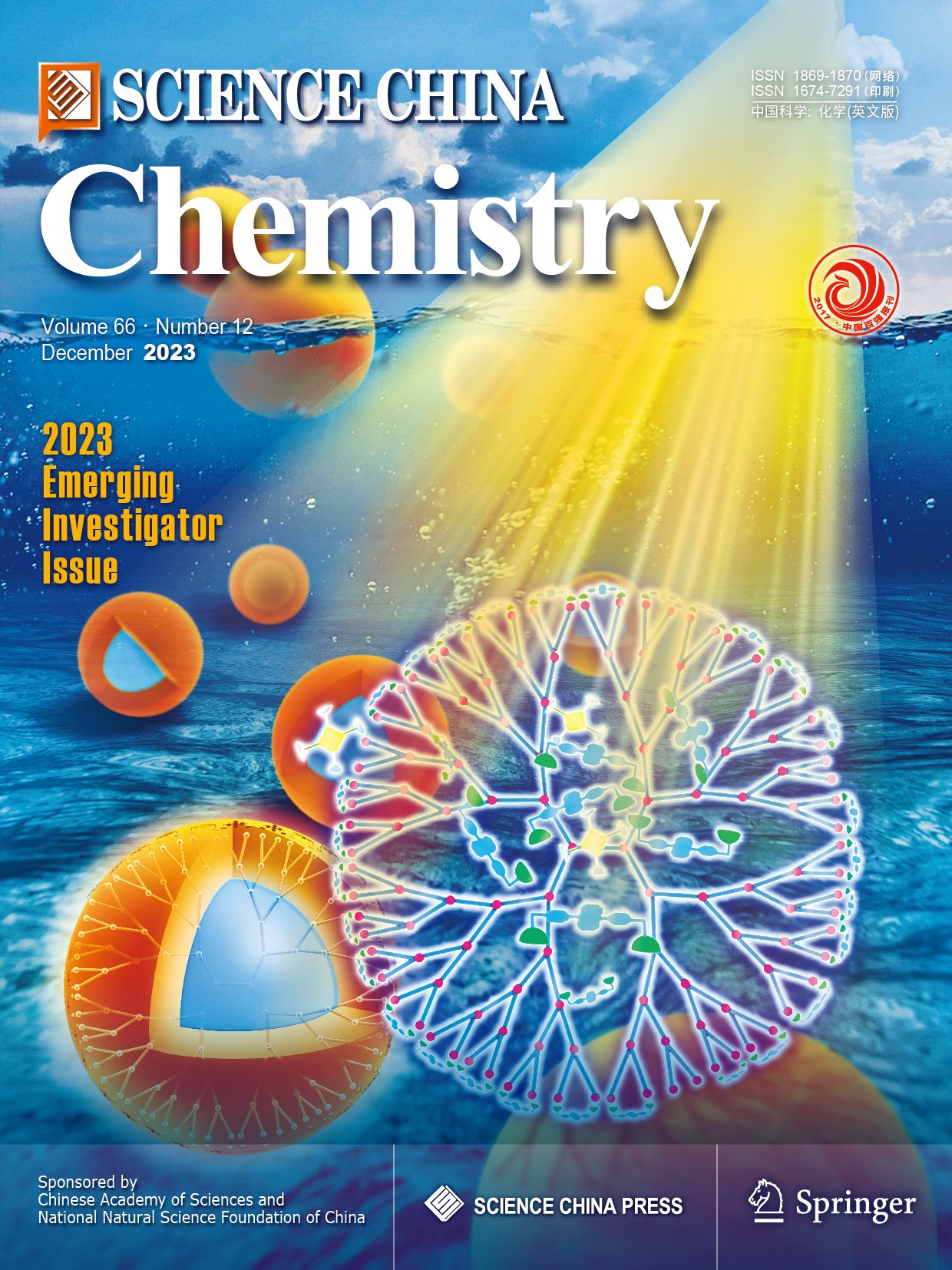
{"title":"结合药物化学和π桥效应设计理念,特异染色,精准杀伤癌细胞","authors":"Qiong Liu, Qiyun Deng, Changxu Zhu, Kongqi Chen, Lidan Chen, Zhaohui Sun, Ben Zhong Tang, Zhiming Wang","doi":"10.1007/s11426-024-2338-6","DOIUrl":null,"url":null,"abstract":"<div><p>The development of an advanced phototheranostic platform that combines imaging and therapy in a single agent is an appealing yet challenging task. In this study, we successfully constructed three novel fluorescent probes by leveraging pharmaceutical chemistry and the design philosophy of the <i>π</i>-bridge effect. Through a systematic comparative analysis of their fluorescence properties, water solubility, molecular conformation, and electrostatic potential, we revealed the fundamental principles governing the optical behavior and biological selectivity of these probes. Notably, the probe TPhIQ-CNTh demonstrated extended fluorescence in the near-infrared region, a significant aggregation-induced emission (AIE) effect, and the ability to distinguish tumor cells from normal cells. Moreover, it efficiently generated reactive oxygen species (ROS) and specifically labeled lipid droplets, enabling the precise staining and killing of cancer cells. This study presents a practical strategy for designing precise tumor treatments that integrate efficient imaging-guided photodynamic therapy (PDT) by harnessing the unique properties of AIE materials.</p><div><figure><div><div><picture><source><img></source></picture></div></div></figure></div></div>","PeriodicalId":772,"journal":{"name":"Science China Chemistry","volume":"68 3","pages":"1041 - 1050"},"PeriodicalIF":9.8000,"publicationDate":"2025-01-02","publicationTypes":"Journal Article","fieldsOfStudy":null,"isOpenAccess":false,"openAccessPdf":"https://link.springer.com/content/pdf/10.1007/s11426-024-2338-6.pdf","citationCount":"0","resultStr":"{\"title\":\"Specific staining and precise killing of cancer cells through fusion of pharmaceutical chemistry and π-bridge effect design philosophy\",\"authors\":\"Qiong Liu, Qiyun Deng, Changxu Zhu, Kongqi Chen, Lidan Chen, Zhaohui Sun, Ben Zhong Tang, Zhiming Wang\",\"doi\":\"10.1007/s11426-024-2338-6\",\"DOIUrl\":null,\"url\":null,\"abstract\":\"<div><p>The development of an advanced phototheranostic platform that combines imaging and therapy in a single agent is an appealing yet challenging task. In this study, we successfully constructed three novel fluorescent probes by leveraging pharmaceutical chemistry and the design philosophy of the <i>π</i>-bridge effect. Through a systematic comparative analysis of their fluorescence properties, water solubility, molecular conformation, and electrostatic potential, we revealed the fundamental principles governing the optical behavior and biological selectivity of these probes. Notably, the probe TPhIQ-CNTh demonstrated extended fluorescence in the near-infrared region, a significant aggregation-induced emission (AIE) effect, and the ability to distinguish tumor cells from normal cells. Moreover, it efficiently generated reactive oxygen species (ROS) and specifically labeled lipid droplets, enabling the precise staining and killing of cancer cells. This study presents a practical strategy for designing precise tumor treatments that integrate efficient imaging-guided photodynamic therapy (PDT) by harnessing the unique properties of AIE materials.</p><div><figure><div><div><picture><source><img></source></picture></div></div></figure></div></div>\",\"PeriodicalId\":772,\"journal\":{\"name\":\"Science China Chemistry\",\"volume\":\"68 3\",\"pages\":\"1041 - 1050\"},\"PeriodicalIF\":9.8000,\"publicationDate\":\"2025-01-02\",\"publicationTypes\":\"Journal Article\",\"fieldsOfStudy\":null,\"isOpenAccess\":false,\"openAccessPdf\":\"https://link.springer.com/content/pdf/10.1007/s11426-024-2338-6.pdf\",\"citationCount\":\"0\",\"resultStr\":null,\"platform\":\"Semanticscholar\",\"paperid\":null,\"PeriodicalName\":\"Science China Chemistry\",\"FirstCategoryId\":\"1\",\"ListUrlMain\":\"https://link.springer.com/article/10.1007/s11426-024-2338-6\",\"RegionNum\":1,\"RegionCategory\":\"化学\",\"ArticlePicture\":[],\"TitleCN\":null,\"AbstractTextCN\":null,\"PMCID\":null,\"EPubDate\":\"\",\"PubModel\":\"\",\"JCR\":\"Q1\",\"JCRName\":\"CHEMISTRY, MULTIDISCIPLINARY\",\"Score\":null,\"Total\":0}","platform":"Semanticscholar","paperid":null,"PeriodicalName":"Science China Chemistry","FirstCategoryId":"1","ListUrlMain":"https://link.springer.com/article/10.1007/s11426-024-2338-6","RegionNum":1,"RegionCategory":"化学","ArticlePicture":[],"TitleCN":null,"AbstractTextCN":null,"PMCID":null,"EPubDate":"","PubModel":"","JCR":"Q1","JCRName":"CHEMISTRY, MULTIDISCIPLINARY","Score":null,"Total":0}
Specific staining and precise killing of cancer cells through fusion of pharmaceutical chemistry and π-bridge effect design philosophy
The development of an advanced phototheranostic platform that combines imaging and therapy in a single agent is an appealing yet challenging task. In this study, we successfully constructed three novel fluorescent probes by leveraging pharmaceutical chemistry and the design philosophy of the π-bridge effect. Through a systematic comparative analysis of their fluorescence properties, water solubility, molecular conformation, and electrostatic potential, we revealed the fundamental principles governing the optical behavior and biological selectivity of these probes. Notably, the probe TPhIQ-CNTh demonstrated extended fluorescence in the near-infrared region, a significant aggregation-induced emission (AIE) effect, and the ability to distinguish tumor cells from normal cells. Moreover, it efficiently generated reactive oxygen species (ROS) and specifically labeled lipid droplets, enabling the precise staining and killing of cancer cells. This study presents a practical strategy for designing precise tumor treatments that integrate efficient imaging-guided photodynamic therapy (PDT) by harnessing the unique properties of AIE materials.
期刊介绍:
Science China Chemistry, co-sponsored by the Chinese Academy of Sciences and the National Natural Science Foundation of China and published by Science China Press, publishes high-quality original research in both basic and applied chemistry. Indexed by Science Citation Index, it is a premier academic journal in the field.
Categories of articles include:
Highlights. Brief summaries and scholarly comments on recent research achievements in any field of chemistry.
Perspectives. Concise reports on thelatest chemistry trends of interest to scientists worldwide, including discussions of research breakthroughs and interpretations of important science and funding policies.
Reviews. In-depth summaries of representative results and achievements of the past 5–10 years in selected topics based on or closely related to the research expertise of the authors, providing a thorough assessment of the significance, current status, and future research directions of the field.




 京公网安备 11010802042870号
京ICP备2023020795号-1
京公网安备 11010802042870号
京ICP备2023020795号-1

 分享
分享
 求助内容:
求助内容: 应助结果提醒方式:
 扫码关注我们
