Filippo Familiari, Adnan Saithna, Juan Pablo Martinez-Cano, Jorge Chahla, Juan Miguel Del Castillo, Nicholas N. DePhillipo, Gilbert Moatshe, Edoardo Monaco, Jaime Palos Lucio, Pieter D'Hooghe, Robert F. LaPrade, the ISAKOS Young Professionals Task Force
{"title":"探索骨科中的人工智能:ISAKOS青年专业工作组的一项合作调查","authors":"Filippo Familiari, Adnan Saithna, Juan Pablo Martinez-Cano, Jorge Chahla, Juan Miguel Del Castillo, Nicholas N. DePhillipo, Gilbert Moatshe, Edoardo Monaco, Jaime Palos Lucio, Pieter D'Hooghe, Robert F. LaPrade, the ISAKOS Young Professionals Task Force","doi":"10.1002/jeo2.70181","DOIUrl":null,"url":null,"abstract":"<div>\n \n \n <section>\n \n <h3> Purpose</h3>\n \n <p>Through an analysis of findings from a survey about the use of artificial intelligence (AI) in orthopaedics, the aim of this study was to establish a scholarly foundation for the discourse on AI in orthopaedics and to elucidate key patterns, challenges and potential future trajectories for AI applications within the field.</p>\n </section>\n \n <section>\n \n <h3> Methods</h3>\n \n <p>The International Society of Arthroscopy, Knee Surgery and Orthopaedic Sports Medicine (ISAKOS) Young Professionals Task Force developed a survey to collect feedback on issues related to the use of AI in the orthopaedic field. The survey included 26 questions. Data obtained from the completed questionnaires were transferred to a spreadsheet and then analyzed.</p>\n </section>\n \n <section>\n \n <h3> Results</h3>\n \n <p>Two hundred and eleven orthopaedic surgeons completed the survey. The survey encompassed responses from a diverse cohort of orthopaedic professionals, predominantly comprising males (92.9%). There was wide representation across all geographic regions. A notable proportion (52.1%) reported uncertainty or lack of differentiation among AI, machine learning and deep learning (47.9%). Respondents identified imaging-based diagnosis (60.2%) as the primary field of orthopaedics poised to benefit from AI. A considerable proportion (25.1%) reported using AI in their practice, with primary reasons including referencing scientific literature/publications (40.3%). The vast majority expressed interest in leveraging AI technologies (95.3%), demonstrating an inclination towards incorporating AI into orthopaedic practice. Respondents indicated specific areas of interest for further study, including prediction of patient outcomes after surgery (30.8%) and image-based diagnosis of osteoarthritis (28%).</p>\n </section>\n \n <section>\n \n <h3> Conclusions</h3>\n \n <p>This survey demonstrates that there is currently limited use of AI in orthopaedic practice, mainly due to a lack of knowledge about the subject, a lack of proven evidence of its real utility and high costs. These findings are in accordance with other surveys in the literature. However, there is also a high level of interest in its use in the future, in increased study and further research on the subject, so that it can be of real benefit and make AI an integral part of the orthopaedic surgeon's daily work.</p>\n </section>\n \n <section>\n \n <h3> Level of Evidence</h3>\n \n <p>Level IV, survey study.</p>\n </section>\n </div>","PeriodicalId":36909,"journal":{"name":"Journal of Experimental Orthopaedics","volume":"12 1","pages":""},"PeriodicalIF":2.7000,"publicationDate":"2025-02-24","publicationTypes":"Journal Article","fieldsOfStudy":null,"isOpenAccess":false,"openAccessPdf":"https://onlinelibrary.wiley.com/doi/epdf/10.1002/jeo2.70181","citationCount":"0","resultStr":"{\"title\":\"Exploring artificial intelligence in orthopaedics: A collaborative survey from the ISAKOS Young Professional Task Force\",\"authors\":\"Filippo Familiari, Adnan Saithna, Juan Pablo Martinez-Cano, Jorge Chahla, Juan Miguel Del Castillo, Nicholas N. DePhillipo, Gilbert Moatshe, Edoardo Monaco, Jaime Palos Lucio, Pieter D'Hooghe, Robert F. LaPrade, the ISAKOS Young Professionals Task Force\",\"doi\":\"10.1002/jeo2.70181\",\"DOIUrl\":null,\"url\":null,\"abstract\":\"<div>\\n \\n \\n <section>\\n \\n <h3> Purpose</h3>\\n \\n <p>Through an analysis of findings from a survey about the use of artificial intelligence (AI) in orthopaedics, the aim of this study was to establish a scholarly foundation for the discourse on AI in orthopaedics and to elucidate key patterns, challenges and potential future trajectories for AI applications within the field.</p>\\n </section>\\n \\n <section>\\n \\n <h3> Methods</h3>\\n \\n <p>The International Society of Arthroscopy, Knee Surgery and Orthopaedic Sports Medicine (ISAKOS) Young Professionals Task Force developed a survey to collect feedback on issues related to the use of AI in the orthopaedic field. The survey included 26 questions. Data obtained from the completed questionnaires were transferred to a spreadsheet and then analyzed.</p>\\n </section>\\n \\n <section>\\n \\n <h3> Results</h3>\\n \\n <p>Two hundred and eleven orthopaedic surgeons completed the survey. The survey encompassed responses from a diverse cohort of orthopaedic professionals, predominantly comprising males (92.9%). There was wide representation across all geographic regions. A notable proportion (52.1%) reported uncertainty or lack of differentiation among AI, machine learning and deep learning (47.9%). Respondents identified imaging-based diagnosis (60.2%) as the primary field of orthopaedics poised to benefit from AI. A considerable proportion (25.1%) reported using AI in their practice, with primary reasons including referencing scientific literature/publications (40.3%). The vast majority expressed interest in leveraging AI technologies (95.3%), demonstrating an inclination towards incorporating AI into orthopaedic practice. Respondents indicated specific areas of interest for further study, including prediction of patient outcomes after surgery (30.8%) and image-based diagnosis of osteoarthritis (28%).</p>\\n </section>\\n \\n <section>\\n \\n <h3> Conclusions</h3>\\n \\n <p>This survey demonstrates that there is currently limited use of AI in orthopaedic practice, mainly due to a lack of knowledge about the subject, a lack of proven evidence of its real utility and high costs. These findings are in accordance with other surveys in the literature. However, there is also a high level of interest in its use in the future, in increased study and further research on the subject, so that it can be of real benefit and make AI an integral part of the orthopaedic surgeon's daily work.</p>\\n </section>\\n \\n <section>\\n \\n <h3> Level of Evidence</h3>\\n \\n <p>Level IV, survey study.</p>\\n </section>\\n </div>\",\"PeriodicalId\":36909,\"journal\":{\"name\":\"Journal of Experimental Orthopaedics\",\"volume\":\"12 1\",\"pages\":\"\"},\"PeriodicalIF\":2.7000,\"publicationDate\":\"2025-02-24\",\"publicationTypes\":\"Journal Article\",\"fieldsOfStudy\":null,\"isOpenAccess\":false,\"openAccessPdf\":\"https://onlinelibrary.wiley.com/doi/epdf/10.1002/jeo2.70181\",\"citationCount\":\"0\",\"resultStr\":null,\"platform\":\"Semanticscholar\",\"paperid\":null,\"PeriodicalName\":\"Journal of Experimental Orthopaedics\",\"FirstCategoryId\":\"1085\",\"ListUrlMain\":\"https://esskajournals.onlinelibrary.wiley.com/doi/10.1002/jeo2.70181\",\"RegionNum\":0,\"RegionCategory\":null,\"ArticlePicture\":[],\"TitleCN\":null,\"AbstractTextCN\":null,\"PMCID\":null,\"EPubDate\":\"\",\"PubModel\":\"\",\"JCR\":\"Q2\",\"JCRName\":\"ORTHOPEDICS\",\"Score\":null,\"Total\":0}","platform":"Semanticscholar","paperid":null,"PeriodicalName":"Journal of Experimental Orthopaedics","FirstCategoryId":"1085","ListUrlMain":"https://esskajournals.onlinelibrary.wiley.com/doi/10.1002/jeo2.70181","RegionNum":0,"RegionCategory":null,"ArticlePicture":[],"TitleCN":null,"AbstractTextCN":null,"PMCID":null,"EPubDate":"","PubModel":"","JCR":"Q2","JCRName":"ORTHOPEDICS","Score":null,"Total":0}
Exploring artificial intelligence in orthopaedics: A collaborative survey from the ISAKOS Young Professional Task Force
Purpose
Through an analysis of findings from a survey about the use of artificial intelligence (AI) in orthopaedics, the aim of this study was to establish a scholarly foundation for the discourse on AI in orthopaedics and to elucidate key patterns, challenges and potential future trajectories for AI applications within the field.
Methods
The International Society of Arthroscopy, Knee Surgery and Orthopaedic Sports Medicine (ISAKOS) Young Professionals Task Force developed a survey to collect feedback on issues related to the use of AI in the orthopaedic field. The survey included 26 questions. Data obtained from the completed questionnaires were transferred to a spreadsheet and then analyzed.
Results
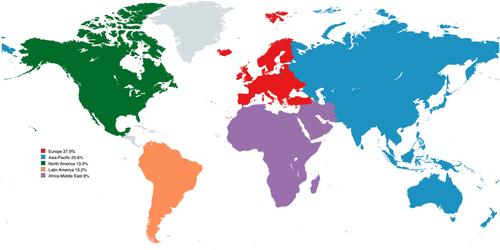
Two hundred and eleven orthopaedic surgeons completed the survey. The survey encompassed responses from a diverse cohort of orthopaedic professionals, predominantly comprising males (92.9%). There was wide representation across all geographic regions. A notable proportion (52.1%) reported uncertainty or lack of differentiation among AI, machine learning and deep learning (47.9%). Respondents identified imaging-based diagnosis (60.2%) as the primary field of orthopaedics poised to benefit from AI. A considerable proportion (25.1%) reported using AI in their practice, with primary reasons including referencing scientific literature/publications (40.3%). The vast majority expressed interest in leveraging AI technologies (95.3%), demonstrating an inclination towards incorporating AI into orthopaedic practice. Respondents indicated specific areas of interest for further study, including prediction of patient outcomes after surgery (30.8%) and image-based diagnosis of osteoarthritis (28%).
Conclusions
This survey demonstrates that there is currently limited use of AI in orthopaedic practice, mainly due to a lack of knowledge about the subject, a lack of proven evidence of its real utility and high costs. These findings are in accordance with other surveys in the literature. However, there is also a high level of interest in its use in the future, in increased study and further research on the subject, so that it can be of real benefit and make AI an integral part of the orthopaedic surgeon's daily work.







 京公网安备 11010802042870号
京ICP备2023020795号-1
京公网安备 11010802042870号
京ICP备2023020795号-1

 分享
分享
 求助内容:
求助内容: 应助结果提醒方式:
 扫码关注我们
