{"title":"针对上唇愈合动态量身定制的术后伤口管理模型:一项回顾性队列研究。","authors":"Yanjun Diao, Xian Liu, Hanghang Liu, Xuefeng Zhang, Xiaorong Zhou, Yongle Shi","doi":"10.1186/s12903-025-05640-z","DOIUrl":null,"url":null,"abstract":"<p><strong>Background: </strong>Clinical observations suggest that upper lip injuries often exhibit prolonged healing and reduced healing efficacy. The unique anatomical and physiological characteristics of the lips make them particularly susceptible to infection and delayed recovery, posing significant challenges for postoperative management. The aim of this research, grounded in the anatomical and physiological subtleties of the upper lip, was to contrast the wound management outcomes between patients treated with a conventional wound management approach and those treated with a customized wound management model. Additionally, it aimed to explore the efficacy of a dynamic model in the assessment and treatment of upper lip wounds.</p><p><strong>Method: </strong>It is a retrospective cohort study. Patients with maxillofacial injuries who attended the Emergency Department of West China Hospital of Stomatology of Sichuan University were selected for retrospective analysis. Between February and August 2023, 89 out of 783 patients with maxillofacial injuries who had upper lip injuries formed the control group. From February to August 2024, 84 patients with upper lip injuries, selected from 643 patients with maxillofacial injuries, constituted the experimental group. The control group applied the traditional wound management method, while the experimental group implemented the customized wound management model, which involved optimizing the team, devising a wound-healing model, improving dressings, innovating in both the timing and method of dressing changes, and providing customized care for complex wounds. The outcomes of upper lip wound management between the two groups were compared, including the wound infection rate, the Vancouver Scar Scale (VSS) score 30 days after surgery, and patients' satisfaction. Data analysis was conducted using SPSS 23.0 software.</p><p><strong>Results: </strong>There were no statistically significant differences in the demographic variables between the two groups (P > 0.05). The upper lip infection rates were 18% (16 out of 89) in the control group and 1.2% (1 out of 84) in the experimental group, respectively. Notably, the incidence of wound complications and wound infection rates differed significantly between the control and experimental groups, with the experimental group showing lower figures for both (P < 0.001). Compared to the control group, the experimental group had a lower VSS score and a higher patients' satisfaction score, with these differences being statistically significant (P < 0.001).</p><p><strong>Conclusion: </strong>The customized wound management model demonstrated superior clinical efficacy in treating upper lip injuries. Patients gain advantages from a customized postoperative wound management model designed according to the upper lip healing kinetics. By aligning postoperative care with the unique healing kinetics of the upper lip, this approach significantly reduces infection rates and enhances patient satisfaction. These findings advocate for wider adoption of this personalized wound management model in the clinical treatment of upper lip injuries.</p><p><strong>Trial registration: </strong>Clinical Trial Registration No. ChiCTR2300079287, Registration Date 29 December 2023.</p>","PeriodicalId":9072,"journal":{"name":"BMC Oral Health","volume":"25 1","pages":"284"},"PeriodicalIF":3.8000,"publicationDate":"2025-02-22","publicationTypes":"Journal Article","fieldsOfStudy":null,"isOpenAccess":false,"openAccessPdf":"https://www.ncbi.nlm.nih.gov/pmc/articles/PMC11847351/pdf/","citationCount":"0","resultStr":"{\"title\":\"A customized postoperative wound management model tailored to the healing dynamics of the upper lip: a retrospective cohort study.\",\"authors\":\"Yanjun Diao, Xian Liu, Hanghang Liu, Xuefeng Zhang, Xiaorong Zhou, Yongle Shi\",\"doi\":\"10.1186/s12903-025-05640-z\",\"DOIUrl\":null,\"url\":null,\"abstract\":\"<p><strong>Background: </strong>Clinical observations suggest that upper lip injuries often exhibit prolonged healing and reduced healing efficacy. The unique anatomical and physiological characteristics of the lips make them particularly susceptible to infection and delayed recovery, posing significant challenges for postoperative management. The aim of this research, grounded in the anatomical and physiological subtleties of the upper lip, was to contrast the wound management outcomes between patients treated with a conventional wound management approach and those treated with a customized wound management model. Additionally, it aimed to explore the efficacy of a dynamic model in the assessment and treatment of upper lip wounds.</p><p><strong>Method: </strong>It is a retrospective cohort study. Patients with maxillofacial injuries who attended the Emergency Department of West China Hospital of Stomatology of Sichuan University were selected for retrospective analysis. Between February and August 2023, 89 out of 783 patients with maxillofacial injuries who had upper lip injuries formed the control group. From February to August 2024, 84 patients with upper lip injuries, selected from 643 patients with maxillofacial injuries, constituted the experimental group. The control group applied the traditional wound management method, while the experimental group implemented the customized wound management model, which involved optimizing the team, devising a wound-healing model, improving dressings, innovating in both the timing and method of dressing changes, and providing customized care for complex wounds. The outcomes of upper lip wound management between the two groups were compared, including the wound infection rate, the Vancouver Scar Scale (VSS) score 30 days after surgery, and patients' satisfaction. Data analysis was conducted using SPSS 23.0 software.</p><p><strong>Results: </strong>There were no statistically significant differences in the demographic variables between the two groups (P > 0.05). The upper lip infection rates were 18% (16 out of 89) in the control group and 1.2% (1 out of 84) in the experimental group, respectively. Notably, the incidence of wound complications and wound infection rates differed significantly between the control and experimental groups, with the experimental group showing lower figures for both (P < 0.001). Compared to the control group, the experimental group had a lower VSS score and a higher patients' satisfaction score, with these differences being statistically significant (P < 0.001).</p><p><strong>Conclusion: </strong>The customized wound management model demonstrated superior clinical efficacy in treating upper lip injuries. Patients gain advantages from a customized postoperative wound management model designed according to the upper lip healing kinetics. By aligning postoperative care with the unique healing kinetics of the upper lip, this approach significantly reduces infection rates and enhances patient satisfaction. These findings advocate for wider adoption of this personalized wound management model in the clinical treatment of upper lip injuries.</p><p><strong>Trial registration: </strong>Clinical Trial Registration No. ChiCTR2300079287, Registration Date 29 December 2023.</p>\",\"PeriodicalId\":9072,\"journal\":{\"name\":\"BMC Oral Health\",\"volume\":\"25 1\",\"pages\":\"284\"},\"PeriodicalIF\":3.8000,\"publicationDate\":\"2025-02-22\",\"publicationTypes\":\"Journal Article\",\"fieldsOfStudy\":null,\"isOpenAccess\":false,\"openAccessPdf\":\"https://www.ncbi.nlm.nih.gov/pmc/articles/PMC11847351/pdf/\",\"citationCount\":\"0\",\"resultStr\":null,\"platform\":\"Semanticscholar\",\"paperid\":null,\"PeriodicalName\":\"BMC Oral Health\",\"FirstCategoryId\":\"3\",\"ListUrlMain\":\"https://doi.org/10.1186/s12903-025-05640-z\",\"RegionNum\":2,\"RegionCategory\":\"医学\",\"ArticlePicture\":[],\"TitleCN\":null,\"AbstractTextCN\":null,\"PMCID\":null,\"EPubDate\":\"\",\"PubModel\":\"\",\"JCR\":\"Q1\",\"JCRName\":\"DENTISTRY, ORAL SURGERY & MEDICINE\",\"Score\":null,\"Total\":0}","platform":"Semanticscholar","paperid":null,"PeriodicalName":"BMC Oral Health","FirstCategoryId":"3","ListUrlMain":"https://doi.org/10.1186/s12903-025-05640-z","RegionNum":2,"RegionCategory":"医学","ArticlePicture":[],"TitleCN":null,"AbstractTextCN":null,"PMCID":null,"EPubDate":"","PubModel":"","JCR":"Q1","JCRName":"DENTISTRY, ORAL SURGERY & MEDICINE","Score":null,"Total":0}
A customized postoperative wound management model tailored to the healing dynamics of the upper lip: a retrospective cohort study.
Background: Clinical observations suggest that upper lip injuries often exhibit prolonged healing and reduced healing efficacy. The unique anatomical and physiological characteristics of the lips make them particularly susceptible to infection and delayed recovery, posing significant challenges for postoperative management. The aim of this research, grounded in the anatomical and physiological subtleties of the upper lip, was to contrast the wound management outcomes between patients treated with a conventional wound management approach and those treated with a customized wound management model. Additionally, it aimed to explore the efficacy of a dynamic model in the assessment and treatment of upper lip wounds.
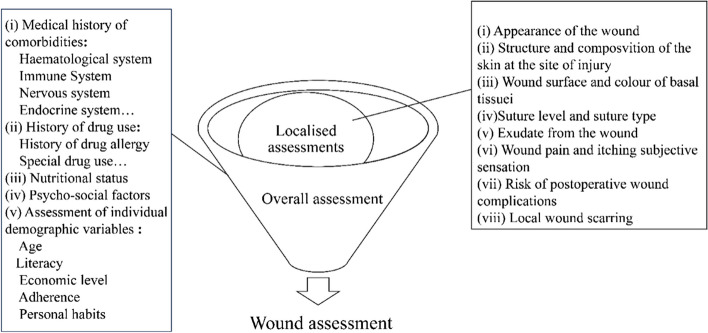
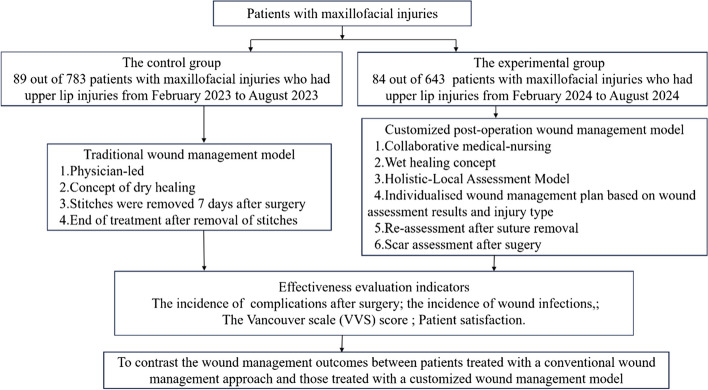
Method: It is a retrospective cohort study. Patients with maxillofacial injuries who attended the Emergency Department of West China Hospital of Stomatology of Sichuan University were selected for retrospective analysis. Between February and August 2023, 89 out of 783 patients with maxillofacial injuries who had upper lip injuries formed the control group. From February to August 2024, 84 patients with upper lip injuries, selected from 643 patients with maxillofacial injuries, constituted the experimental group. The control group applied the traditional wound management method, while the experimental group implemented the customized wound management model, which involved optimizing the team, devising a wound-healing model, improving dressings, innovating in both the timing and method of dressing changes, and providing customized care for complex wounds. The outcomes of upper lip wound management between the two groups were compared, including the wound infection rate, the Vancouver Scar Scale (VSS) score 30 days after surgery, and patients' satisfaction. Data analysis was conducted using SPSS 23.0 software.
Results: There were no statistically significant differences in the demographic variables between the two groups (P > 0.05). The upper lip infection rates were 18% (16 out of 89) in the control group and 1.2% (1 out of 84) in the experimental group, respectively. Notably, the incidence of wound complications and wound infection rates differed significantly between the control and experimental groups, with the experimental group showing lower figures for both (P < 0.001). Compared to the control group, the experimental group had a lower VSS score and a higher patients' satisfaction score, with these differences being statistically significant (P < 0.001).
Conclusion: The customized wound management model demonstrated superior clinical efficacy in treating upper lip injuries. Patients gain advantages from a customized postoperative wound management model designed according to the upper lip healing kinetics. By aligning postoperative care with the unique healing kinetics of the upper lip, this approach significantly reduces infection rates and enhances patient satisfaction. These findings advocate for wider adoption of this personalized wound management model in the clinical treatment of upper lip injuries.
Trial registration: Clinical Trial Registration No. ChiCTR2300079287, Registration Date 29 December 2023.
期刊介绍:
BMC Oral Health is an open access, peer-reviewed journal that considers articles on all aspects of the prevention, diagnosis and management of disorders of the mouth, teeth and gums, as well as related molecular genetics, pathophysiology, and epidemiology.




 京公网安备 11010802042870号
京ICP备2023020795号-1
京公网安备 11010802042870号
京ICP备2023020795号-1

 分享
分享
 求助内容:
求助内容: 应助结果提醒方式:
 扫码关注我们
