{"title":"介壳菌发酵牛奶的非靶向代谢组学图谱揭示了与电发酵相关的不同表达代谢物。","authors":"Tristan Yusho Huang, John Jackson Yang","doi":"10.1186/s12934-025-02673-5","DOIUrl":null,"url":null,"abstract":"<p><strong>Background: </strong>Leuconostoc mesenteroides (L. mesenteroides) has known as an electrogenic probiotic bacterium. However, metabolites related to electro-fermentation in ferments of L. mesenteroides are not unveiled.</p><p><strong>Result: </strong>Electrogenic L. mesenteroides fermentatively metabolized bovine milk to dense ferments with homogeneous particle-size distribution. A non-targeted metabolomics approach was performed on non-fermented and L. mesenteroides-fermented milk. A total of 917 metabolites were identified and quantified by ultra-high performance liquid chromatography (UHPLC)-tandem mass spectrometry (MS-MS). Thirteen prokaryotic metabolic pathways associated with differentially expressed metabolites (DEMs) were revealed through Koto Encyclopedia of Genes and Genomes (KEGG) enrichment analysis. Anthranilic acid (AA) and 3-hydroxyanthranilin acid (3-HAA), potentially as electron donors, and quinolinic acid, an electron donor precursor, in the tryptophan kynurenine pathway were significantly increased in the fermented milk. Histidine, arginine, and riboflavin involved in bacterial survival or bioelectricity production were elevated after fermentation.</p><p><strong>Conclusions: </strong>Results indicate that electrogenic L. mesenteroides can mediate electro-fermentation to transform milk to a new nutritional source which is rich in electron donors reportedly acting as antioxidants.</p>","PeriodicalId":18582,"journal":{"name":"Microbial Cell Factories","volume":"24 1","pages":"46"},"PeriodicalIF":4.9000,"publicationDate":"2025-02-22","publicationTypes":"Journal Article","fieldsOfStudy":null,"isOpenAccess":false,"openAccessPdf":"https://www.ncbi.nlm.nih.gov/pmc/articles/PMC11847352/pdf/","citationCount":"0","resultStr":"{\"title\":\"Non-targeted metabolomic profile of Leuconostoc mesenteroides-fermented milk reveals differentially expressed metabolites associated with electro-fermentation.\",\"authors\":\"Tristan Yusho Huang, John Jackson Yang\",\"doi\":\"10.1186/s12934-025-02673-5\",\"DOIUrl\":null,\"url\":null,\"abstract\":\"<p><strong>Background: </strong>Leuconostoc mesenteroides (L. mesenteroides) has known as an electrogenic probiotic bacterium. However, metabolites related to electro-fermentation in ferments of L. mesenteroides are not unveiled.</p><p><strong>Result: </strong>Electrogenic L. mesenteroides fermentatively metabolized bovine milk to dense ferments with homogeneous particle-size distribution. A non-targeted metabolomics approach was performed on non-fermented and L. mesenteroides-fermented milk. A total of 917 metabolites were identified and quantified by ultra-high performance liquid chromatography (UHPLC)-tandem mass spectrometry (MS-MS). Thirteen prokaryotic metabolic pathways associated with differentially expressed metabolites (DEMs) were revealed through Koto Encyclopedia of Genes and Genomes (KEGG) enrichment analysis. Anthranilic acid (AA) and 3-hydroxyanthranilin acid (3-HAA), potentially as electron donors, and quinolinic acid, an electron donor precursor, in the tryptophan kynurenine pathway were significantly increased in the fermented milk. Histidine, arginine, and riboflavin involved in bacterial survival or bioelectricity production were elevated after fermentation.</p><p><strong>Conclusions: </strong>Results indicate that electrogenic L. mesenteroides can mediate electro-fermentation to transform milk to a new nutritional source which is rich in electron donors reportedly acting as antioxidants.</p>\",\"PeriodicalId\":18582,\"journal\":{\"name\":\"Microbial Cell Factories\",\"volume\":\"24 1\",\"pages\":\"46\"},\"PeriodicalIF\":4.9000,\"publicationDate\":\"2025-02-22\",\"publicationTypes\":\"Journal Article\",\"fieldsOfStudy\":null,\"isOpenAccess\":false,\"openAccessPdf\":\"https://www.ncbi.nlm.nih.gov/pmc/articles/PMC11847352/pdf/\",\"citationCount\":\"0\",\"resultStr\":null,\"platform\":\"Semanticscholar\",\"paperid\":null,\"PeriodicalName\":\"Microbial Cell Factories\",\"FirstCategoryId\":\"5\",\"ListUrlMain\":\"https://doi.org/10.1186/s12934-025-02673-5\",\"RegionNum\":2,\"RegionCategory\":\"生物学\",\"ArticlePicture\":[],\"TitleCN\":null,\"AbstractTextCN\":null,\"PMCID\":null,\"EPubDate\":\"\",\"PubModel\":\"\",\"JCR\":\"Q1\",\"JCRName\":\"BIOTECHNOLOGY & APPLIED MICROBIOLOGY\",\"Score\":null,\"Total\":0}","platform":"Semanticscholar","paperid":null,"PeriodicalName":"Microbial Cell Factories","FirstCategoryId":"5","ListUrlMain":"https://doi.org/10.1186/s12934-025-02673-5","RegionNum":2,"RegionCategory":"生物学","ArticlePicture":[],"TitleCN":null,"AbstractTextCN":null,"PMCID":null,"EPubDate":"","PubModel":"","JCR":"Q1","JCRName":"BIOTECHNOLOGY & APPLIED MICROBIOLOGY","Score":null,"Total":0}
Non-targeted metabolomic profile of Leuconostoc mesenteroides-fermented milk reveals differentially expressed metabolites associated with electro-fermentation.
Background: Leuconostoc mesenteroides (L. mesenteroides) has known as an electrogenic probiotic bacterium. However, metabolites related to electro-fermentation in ferments of L. mesenteroides are not unveiled.
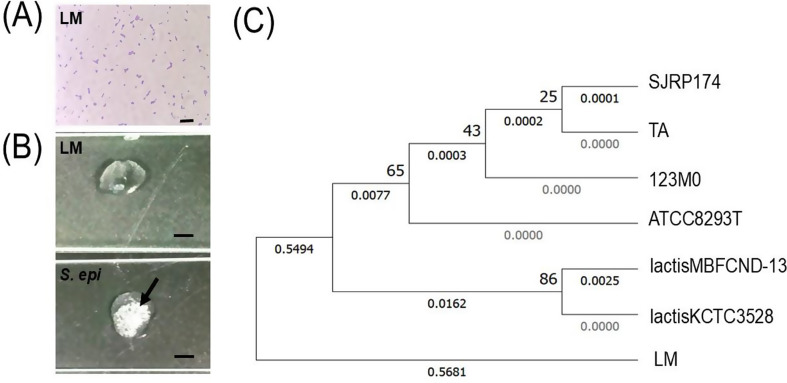
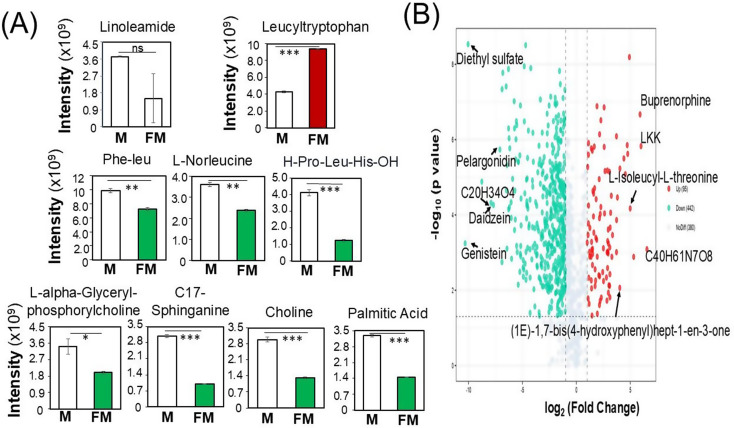
Result: Electrogenic L. mesenteroides fermentatively metabolized bovine milk to dense ferments with homogeneous particle-size distribution. A non-targeted metabolomics approach was performed on non-fermented and L. mesenteroides-fermented milk. A total of 917 metabolites were identified and quantified by ultra-high performance liquid chromatography (UHPLC)-tandem mass spectrometry (MS-MS). Thirteen prokaryotic metabolic pathways associated with differentially expressed metabolites (DEMs) were revealed through Koto Encyclopedia of Genes and Genomes (KEGG) enrichment analysis. Anthranilic acid (AA) and 3-hydroxyanthranilin acid (3-HAA), potentially as electron donors, and quinolinic acid, an electron donor precursor, in the tryptophan kynurenine pathway were significantly increased in the fermented milk. Histidine, arginine, and riboflavin involved in bacterial survival or bioelectricity production were elevated after fermentation.
Conclusions: Results indicate that electrogenic L. mesenteroides can mediate electro-fermentation to transform milk to a new nutritional source which is rich in electron donors reportedly acting as antioxidants.
期刊介绍:
Microbial Cell Factories is an open access peer-reviewed journal that covers any topic related to the development, use and investigation of microbial cells as producers of recombinant proteins and natural products, or as catalyzers of biological transformations of industrial interest. Microbial Cell Factories is the world leading, primary research journal fully focusing on Applied Microbiology.
The journal is divided into the following editorial sections:
-Metabolic engineering
-Synthetic biology
-Whole-cell biocatalysis
-Microbial regulations
-Recombinant protein production/bioprocessing
-Production of natural compounds
-Systems biology of cell factories
-Microbial production processes
-Cell-free systems





 京公网安备 11010802042870号
京ICP备2023020795号-1
京公网安备 11010802042870号
京ICP备2023020795号-1

 分享
分享
 求助内容:
求助内容: 应助结果提醒方式:
 扫码关注我们
