Shantel Chang MD, Alexander Lombardo MD, Ian Smith PhD, Samuel Lawler MD, Cheng He MBBS, FRACS, Andrie Stroebel MBBS, FRACS
{"title":"心脏术后早期使用非维生素K拮抗剂口服抗凝剂与华法林治疗术后房颤的比较。","authors":"Shantel Chang MD, Alexander Lombardo MD, Ian Smith PhD, Samuel Lawler MD, Cheng He MBBS, FRACS, Andrie Stroebel MBBS, FRACS","doi":"10.1111/ans.70045","DOIUrl":null,"url":null,"abstract":"<div>\n \n \n <section>\n \n <h3> Background</h3>\n \n <p>The introduction of non-vitamin-K-antagonist oral anticoagulants (NOAC) has shifted the landscape of anticoagulation in the setting of atrial fibrillation (AF), as an alternative to warfarin. Despite extensive evidence for NOACs in non-perioperative and non-valvular AF, there remains little consensus on anticoagulation choice for patients with postoperative atrial fibrillation (POAF) after cardiac surgery.</p>\n </section>\n \n <section>\n \n <h3> Methods</h3>\n \n <p>This retrospective, observational study included 2263 patients who underwent cardiac surgery between 1 March 2016 and 13 January 2023 at a tertiary cardiac centre. Patients with pre-existing AF, valvular AF and transcatheter interventions were excluded. Short- and long-term outcomes were compared between patients who received a NOAC and those who received warfarin for POAF. A Cox regression model was constructed to identify independent predictors for time-to-mortality. Subgroup analysis was performed based on the type of surgery, including CABG-only, aortic valve replacement (AVR)-only, and combined surgery cohorts.</p>\n </section>\n \n <section>\n \n <h3> Results</h3>\n \n <p>Of the 2263 patients, 556 (24.5%) developed POAF. Of those who developed POAF, 162 were anticoagulated with warfarin and 65 were anticoagulated with a NOAC, including apixaban, rivaroxaban and dabigatran. There were three cases of permanent stroke in the warfarin group compared with no cases in the NOAC group. All-cause 30-day and one-year readmission rates were similar between groups. The use of NOAC or warfarin did not impact overall survival in the Kaplan–Meier analysis. Subgroup analysis demonstrated similar outcomes in CABG-only, AVR-only and combined surgery groups.</p>\n </section>\n \n <section>\n \n <h3> Conclusions</h3>\n \n <p>Warfarin and NOAC performed similarly in short- and long-term complications, suggesting NOAC as a plausible alternative to warfarin for anticoagulation in POAF.</p>\n </section>\n </div>","PeriodicalId":8158,"journal":{"name":"ANZ Journal of Surgery","volume":"95 6","pages":"1135-1141"},"PeriodicalIF":1.6000,"publicationDate":"2025-02-23","publicationTypes":"Journal Article","fieldsOfStudy":null,"isOpenAccess":false,"openAccessPdf":"https://onlinelibrary.wiley.com/doi/epdf/10.1111/ans.70045","citationCount":"0","resultStr":"{\"title\":\"Early use of non-vitamin K antagonist oral anticoagulants after cardiac surgery compared with warfarin for postoperative atrial fibrillation\",\"authors\":\"Shantel Chang MD, Alexander Lombardo MD, Ian Smith PhD, Samuel Lawler MD, Cheng He MBBS, FRACS, Andrie Stroebel MBBS, FRACS\",\"doi\":\"10.1111/ans.70045\",\"DOIUrl\":null,\"url\":null,\"abstract\":\"<div>\\n \\n \\n <section>\\n \\n <h3> Background</h3>\\n \\n <p>The introduction of non-vitamin-K-antagonist oral anticoagulants (NOAC) has shifted the landscape of anticoagulation in the setting of atrial fibrillation (AF), as an alternative to warfarin. Despite extensive evidence for NOACs in non-perioperative and non-valvular AF, there remains little consensus on anticoagulation choice for patients with postoperative atrial fibrillation (POAF) after cardiac surgery.</p>\\n </section>\\n \\n <section>\\n \\n <h3> Methods</h3>\\n \\n <p>This retrospective, observational study included 2263 patients who underwent cardiac surgery between 1 March 2016 and 13 January 2023 at a tertiary cardiac centre. Patients with pre-existing AF, valvular AF and transcatheter interventions were excluded. Short- and long-term outcomes were compared between patients who received a NOAC and those who received warfarin for POAF. A Cox regression model was constructed to identify independent predictors for time-to-mortality. Subgroup analysis was performed based on the type of surgery, including CABG-only, aortic valve replacement (AVR)-only, and combined surgery cohorts.</p>\\n </section>\\n \\n <section>\\n \\n <h3> Results</h3>\\n \\n <p>Of the 2263 patients, 556 (24.5%) developed POAF. Of those who developed POAF, 162 were anticoagulated with warfarin and 65 were anticoagulated with a NOAC, including apixaban, rivaroxaban and dabigatran. There were three cases of permanent stroke in the warfarin group compared with no cases in the NOAC group. All-cause 30-day and one-year readmission rates were similar between groups. The use of NOAC or warfarin did not impact overall survival in the Kaplan–Meier analysis. Subgroup analysis demonstrated similar outcomes in CABG-only, AVR-only and combined surgery groups.</p>\\n </section>\\n \\n <section>\\n \\n <h3> Conclusions</h3>\\n \\n <p>Warfarin and NOAC performed similarly in short- and long-term complications, suggesting NOAC as a plausible alternative to warfarin for anticoagulation in POAF.</p>\\n </section>\\n </div>\",\"PeriodicalId\":8158,\"journal\":{\"name\":\"ANZ Journal of Surgery\",\"volume\":\"95 6\",\"pages\":\"1135-1141\"},\"PeriodicalIF\":1.6000,\"publicationDate\":\"2025-02-23\",\"publicationTypes\":\"Journal Article\",\"fieldsOfStudy\":null,\"isOpenAccess\":false,\"openAccessPdf\":\"https://onlinelibrary.wiley.com/doi/epdf/10.1111/ans.70045\",\"citationCount\":\"0\",\"resultStr\":null,\"platform\":\"Semanticscholar\",\"paperid\":null,\"PeriodicalName\":\"ANZ Journal of Surgery\",\"FirstCategoryId\":\"3\",\"ListUrlMain\":\"https://onlinelibrary.wiley.com/doi/10.1111/ans.70045\",\"RegionNum\":4,\"RegionCategory\":\"医学\",\"ArticlePicture\":[],\"TitleCN\":null,\"AbstractTextCN\":null,\"PMCID\":null,\"EPubDate\":\"\",\"PubModel\":\"\",\"JCR\":\"Q3\",\"JCRName\":\"SURGERY\",\"Score\":null,\"Total\":0}","platform":"Semanticscholar","paperid":null,"PeriodicalName":"ANZ Journal of Surgery","FirstCategoryId":"3","ListUrlMain":"https://onlinelibrary.wiley.com/doi/10.1111/ans.70045","RegionNum":4,"RegionCategory":"医学","ArticlePicture":[],"TitleCN":null,"AbstractTextCN":null,"PMCID":null,"EPubDate":"","PubModel":"","JCR":"Q3","JCRName":"SURGERY","Score":null,"Total":0}
Early use of non-vitamin K antagonist oral anticoagulants after cardiac surgery compared with warfarin for postoperative atrial fibrillation
Background
The introduction of non-vitamin-K-antagonist oral anticoagulants (NOAC) has shifted the landscape of anticoagulation in the setting of atrial fibrillation (AF), as an alternative to warfarin. Despite extensive evidence for NOACs in non-perioperative and non-valvular AF, there remains little consensus on anticoagulation choice for patients with postoperative atrial fibrillation (POAF) after cardiac surgery.
Methods
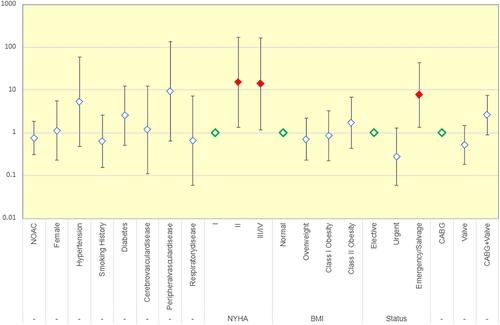
This retrospective, observational study included 2263 patients who underwent cardiac surgery between 1 March 2016 and 13 January 2023 at a tertiary cardiac centre. Patients with pre-existing AF, valvular AF and transcatheter interventions were excluded. Short- and long-term outcomes were compared between patients who received a NOAC and those who received warfarin for POAF. A Cox regression model was constructed to identify independent predictors for time-to-mortality. Subgroup analysis was performed based on the type of surgery, including CABG-only, aortic valve replacement (AVR)-only, and combined surgery cohorts.
Results
Of the 2263 patients, 556 (24.5%) developed POAF. Of those who developed POAF, 162 were anticoagulated with warfarin and 65 were anticoagulated with a NOAC, including apixaban, rivaroxaban and dabigatran. There were three cases of permanent stroke in the warfarin group compared with no cases in the NOAC group. All-cause 30-day and one-year readmission rates were similar between groups. The use of NOAC or warfarin did not impact overall survival in the Kaplan–Meier analysis. Subgroup analysis demonstrated similar outcomes in CABG-only, AVR-only and combined surgery groups.
Conclusions
Warfarin and NOAC performed similarly in short- and long-term complications, suggesting NOAC as a plausible alternative to warfarin for anticoagulation in POAF.
期刊介绍:
ANZ Journal of Surgery is published by Wiley on behalf of the Royal Australasian College of Surgeons to provide a medium for the publication of peer-reviewed original contributions related to clinical practice and/or research in all fields of surgery and related disciplines. It also provides a programme of continuing education for surgeons. All articles are peer-reviewed by at least two researchers expert in the field of the submitted paper.




 京公网安备 11010802042870号
京ICP备2023020795号-1
京公网安备 11010802042870号
京ICP备2023020795号-1

 分享
分享
 求助内容:
求助内容: 应助结果提醒方式:
 扫码关注我们
