Alessandra Pistolesi , Alice Molli , Francesco De Cesaris , Alberto Chiarugi , Daniela Buonvicino
{"title":"抗CGRP单抗Fremanezumab在体外恢复CGRP的抗炎作用,但不改变进行性多发性硬化症小鼠模型中的疾病进化。","authors":"Alessandra Pistolesi , Alice Molli , Francesco De Cesaris , Alberto Chiarugi , Daniela Buonvicino","doi":"10.1016/j.ejphar.2025.177415","DOIUrl":null,"url":null,"abstract":"<div><div>Migraine has been reported to be twice as prevalent in patients with multiple sclerosis (MS) compared to the non-MS population, highlighting the importance of the treatment for migraine in the MS population. Because of their efficacy, safety profile, and target specificity, the anti-CGRP monoclonal antibodies (mAbs) represent a promising option in MS patients concomitantly exposed to disease-modifying drugs. However, growing evidence reports the role of CGRP in regulating the immune system, raising a question about the safety use of anti-CGRP mAbs in autoimmune disorders such as MS. In the present study, by adopting NOD mice immunized with MOG<sub>35-55</sub> as a model of progressive experimental autoimmune encephalomyelitis (PEAE), we evaluated the effects of the anti-CGRP mAb fremanezumab on disease evolution.</div><div>We report that CGRP inhibited both LPS-induced microglia activation and lymphocyte proliferation in a concentration-dependent manner and that a concomitant fremanezumab exposure counteracted these effects <em>in vitro</em>. However, we found that fremanezumab administered every 2 weeks from the day of immunization, did not worsen disease evolution or survival in PEAE mice. Accordingly, no difference in innate and adaptive immune responses as well as spinal cord degeneration was observed in immunized mice treated with fremanezumab. Notably, we also demonstrated the ability of fremanezumab to reach the site of neurodegeneration, showing its presence in the spinal cord.</div><div>Data indicate that CGRP has an irrelevant immunosuppressant effect in the complex pathophysiological <em>scenario</em> of MS, and suggest that the use of anti-CGRP antibodies for migraine treatment in MS patients is safe.</div></div>","PeriodicalId":12004,"journal":{"name":"European journal of pharmacology","volume":"995 ","pages":"Article 177415"},"PeriodicalIF":4.7000,"publicationDate":"2025-05-15","publicationTypes":"Journal Article","fieldsOfStudy":null,"isOpenAccess":false,"openAccessPdf":"","citationCount":"0","resultStr":"{\"title\":\"The anti-CGRP mAb Fremanezumab reverts the anti-inflammatory effects of CGRP in vitro but does not alter disease evolution in a mouse model of progressive multiple sclerosis\",\"authors\":\"Alessandra Pistolesi , Alice Molli , Francesco De Cesaris , Alberto Chiarugi , Daniela Buonvicino\",\"doi\":\"10.1016/j.ejphar.2025.177415\",\"DOIUrl\":null,\"url\":null,\"abstract\":\"<div><div>Migraine has been reported to be twice as prevalent in patients with multiple sclerosis (MS) compared to the non-MS population, highlighting the importance of the treatment for migraine in the MS population. Because of their efficacy, safety profile, and target specificity, the anti-CGRP monoclonal antibodies (mAbs) represent a promising option in MS patients concomitantly exposed to disease-modifying drugs. However, growing evidence reports the role of CGRP in regulating the immune system, raising a question about the safety use of anti-CGRP mAbs in autoimmune disorders such as MS. In the present study, by adopting NOD mice immunized with MOG<sub>35-55</sub> as a model of progressive experimental autoimmune encephalomyelitis (PEAE), we evaluated the effects of the anti-CGRP mAb fremanezumab on disease evolution.</div><div>We report that CGRP inhibited both LPS-induced microglia activation and lymphocyte proliferation in a concentration-dependent manner and that a concomitant fremanezumab exposure counteracted these effects <em>in vitro</em>. However, we found that fremanezumab administered every 2 weeks from the day of immunization, did not worsen disease evolution or survival in PEAE mice. Accordingly, no difference in innate and adaptive immune responses as well as spinal cord degeneration was observed in immunized mice treated with fremanezumab. Notably, we also demonstrated the ability of fremanezumab to reach the site of neurodegeneration, showing its presence in the spinal cord.</div><div>Data indicate that CGRP has an irrelevant immunosuppressant effect in the complex pathophysiological <em>scenario</em> of MS, and suggest that the use of anti-CGRP antibodies for migraine treatment in MS patients is safe.</div></div>\",\"PeriodicalId\":12004,\"journal\":{\"name\":\"European journal of pharmacology\",\"volume\":\"995 \",\"pages\":\"Article 177415\"},\"PeriodicalIF\":4.7000,\"publicationDate\":\"2025-05-15\",\"publicationTypes\":\"Journal Article\",\"fieldsOfStudy\":null,\"isOpenAccess\":false,\"openAccessPdf\":\"\",\"citationCount\":\"0\",\"resultStr\":null,\"platform\":\"Semanticscholar\",\"paperid\":null,\"PeriodicalName\":\"European journal of pharmacology\",\"FirstCategoryId\":\"3\",\"ListUrlMain\":\"https://www.sciencedirect.com/science/article/pii/S0014299925001694\",\"RegionNum\":3,\"RegionCategory\":\"医学\",\"ArticlePicture\":[],\"TitleCN\":null,\"AbstractTextCN\":null,\"PMCID\":null,\"EPubDate\":\"2025/2/21 0:00:00\",\"PubModel\":\"Epub\",\"JCR\":\"Q1\",\"JCRName\":\"PHARMACOLOGY & PHARMACY\",\"Score\":null,\"Total\":0}","platform":"Semanticscholar","paperid":null,"PeriodicalName":"European journal of pharmacology","FirstCategoryId":"3","ListUrlMain":"https://www.sciencedirect.com/science/article/pii/S0014299925001694","RegionNum":3,"RegionCategory":"医学","ArticlePicture":[],"TitleCN":null,"AbstractTextCN":null,"PMCID":null,"EPubDate":"2025/2/21 0:00:00","PubModel":"Epub","JCR":"Q1","JCRName":"PHARMACOLOGY & PHARMACY","Score":null,"Total":0}
The anti-CGRP mAb Fremanezumab reverts the anti-inflammatory effects of CGRP in vitro but does not alter disease evolution in a mouse model of progressive multiple sclerosis
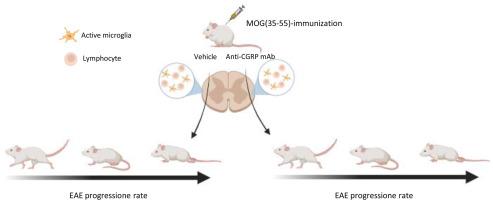
Migraine has been reported to be twice as prevalent in patients with multiple sclerosis (MS) compared to the non-MS population, highlighting the importance of the treatment for migraine in the MS population. Because of their efficacy, safety profile, and target specificity, the anti-CGRP monoclonal antibodies (mAbs) represent a promising option in MS patients concomitantly exposed to disease-modifying drugs. However, growing evidence reports the role of CGRP in regulating the immune system, raising a question about the safety use of anti-CGRP mAbs in autoimmune disorders such as MS. In the present study, by adopting NOD mice immunized with MOG35-55 as a model of progressive experimental autoimmune encephalomyelitis (PEAE), we evaluated the effects of the anti-CGRP mAb fremanezumab on disease evolution.
We report that CGRP inhibited both LPS-induced microglia activation and lymphocyte proliferation in a concentration-dependent manner and that a concomitant fremanezumab exposure counteracted these effects in vitro. However, we found that fremanezumab administered every 2 weeks from the day of immunization, did not worsen disease evolution or survival in PEAE mice. Accordingly, no difference in innate and adaptive immune responses as well as spinal cord degeneration was observed in immunized mice treated with fremanezumab. Notably, we also demonstrated the ability of fremanezumab to reach the site of neurodegeneration, showing its presence in the spinal cord.
Data indicate that CGRP has an irrelevant immunosuppressant effect in the complex pathophysiological scenario of MS, and suggest that the use of anti-CGRP antibodies for migraine treatment in MS patients is safe.
期刊介绍:
The European Journal of Pharmacology publishes research papers covering all aspects of experimental pharmacology with focus on the mechanism of action of structurally identified compounds affecting biological systems.
The scope includes:
Behavioural pharmacology
Neuropharmacology and analgesia
Cardiovascular pharmacology
Pulmonary, gastrointestinal and urogenital pharmacology
Endocrine pharmacology
Immunopharmacology and inflammation
Molecular and cellular pharmacology
Regenerative pharmacology
Biologicals and biotherapeutics
Translational pharmacology
Nutriceutical pharmacology.




 京公网安备 11010802042870号
京ICP备2023020795号-1
京公网安备 11010802042870号
京ICP备2023020795号-1

 分享
分享

 求助内容:
求助内容: 应助结果提醒方式:
 扫码关注我们
