Ugo Marchese, Vanessa Pauly, Anna Pellat, Yasmina Richa, Guillaume Fond, Stylianos Tzedakis, Martin Gaillard, Basile Fuchs, Veronica Orleans, David Fuks, Mehdi El Amrani, Laurent Boyer
{"title":"法国胰腺癌患者的临终关怀:一项基于全国人群的队列研究","authors":"Ugo Marchese, Vanessa Pauly, Anna Pellat, Yasmina Richa, Guillaume Fond, Stylianos Tzedakis, Martin Gaillard, Basile Fuchs, Veronica Orleans, David Fuks, Mehdi El Amrani, Laurent Boyer","doi":"10.1177/17588359251320731","DOIUrl":null,"url":null,"abstract":"<p><strong>Background: </strong>Pancreatic cancer, a frequently fatal disease with severe symptoms, can require high-intensity end-of-life (HI-EOL) care, posing challenges to patients' well-being. The examination of HI-EOL care to develop tailored interventions in the management of pancreatic cancer is a critical, yet underexplored area.</p><p><strong>Objectives: </strong>The objective of this study was to assess the factors that influence the intensity of end-of-life (EOL) care in France.</p><p><strong>Design: </strong>A retrospective study of patients registered in the French Nationwide database who were hospitalized in France for pancreatic adenocarcinoma from January 1, 2014 to December 31, 2019, and subsequently died during the follow-up period.</p><p><strong>Methods: </strong>Data on patient demographics, clinical characteristics, hospitalization details, and palliative care were collected. The primary outcome measure was the evaluation of HI-EOL care, defined by indicators such as death in an intensive care unit (ICU), multiple hospitalizations, and chemotherapy administration within the last 30 days of life. Secondary outcomes included indicators of most-intensive EOL (MI-EOL) care and invasive procedures (IP). Univariate and multivariate logistic regression analyses were conducted to identify factors associated with each outcome measure.</p><p><strong>Results: </strong>A total of 42,696 patients who died from pancreatic adenocarcinoma were included. Among them, 41.1% experienced HI-EOL, with the most common indicators being multiple hospitalizations and death in an ICU, emergency room, or acute care unit. A smaller proportion (2.8%) received MI-EOL care, while 28.1% underwent IPs in the last 30 days of life. The multivariate analysis revealed that male gender and follow-up in non-cancer specialized care facilities were associated with a higher risk of HI-EOL. Conversely, palliative care involvement and older age at death were identified as protective factors. Male gender, older age at death, and palliative care involvement were associated with lower rates of MI-EOL care and IPs.</p><p><strong>Conclusion: </strong>These results underscore the importance of palliative care integration and individualized approaches in improving the EOL quality of care and patient outcomes for individuals with advanced pancreatic cancer.</p>","PeriodicalId":23053,"journal":{"name":"Therapeutic Advances in Medical Oncology","volume":"17 ","pages":"17588359251320731"},"PeriodicalIF":4.2000,"publicationDate":"2025-02-20","publicationTypes":"Journal Article","fieldsOfStudy":null,"isOpenAccess":false,"openAccessPdf":"https://www.ncbi.nlm.nih.gov/pmc/articles/PMC11843702/pdf/","citationCount":"0","resultStr":"{\"title\":\"End-of-life care for patients with pancreatic cancer in France: a nationwide population-based cohort study.\",\"authors\":\"Ugo Marchese, Vanessa Pauly, Anna Pellat, Yasmina Richa, Guillaume Fond, Stylianos Tzedakis, Martin Gaillard, Basile Fuchs, Veronica Orleans, David Fuks, Mehdi El Amrani, Laurent Boyer\",\"doi\":\"10.1177/17588359251320731\",\"DOIUrl\":null,\"url\":null,\"abstract\":\"<p><strong>Background: </strong>Pancreatic cancer, a frequently fatal disease with severe symptoms, can require high-intensity end-of-life (HI-EOL) care, posing challenges to patients' well-being. The examination of HI-EOL care to develop tailored interventions in the management of pancreatic cancer is a critical, yet underexplored area.</p><p><strong>Objectives: </strong>The objective of this study was to assess the factors that influence the intensity of end-of-life (EOL) care in France.</p><p><strong>Design: </strong>A retrospective study of patients registered in the French Nationwide database who were hospitalized in France for pancreatic adenocarcinoma from January 1, 2014 to December 31, 2019, and subsequently died during the follow-up period.</p><p><strong>Methods: </strong>Data on patient demographics, clinical characteristics, hospitalization details, and palliative care were collected. The primary outcome measure was the evaluation of HI-EOL care, defined by indicators such as death in an intensive care unit (ICU), multiple hospitalizations, and chemotherapy administration within the last 30 days of life. Secondary outcomes included indicators of most-intensive EOL (MI-EOL) care and invasive procedures (IP). Univariate and multivariate logistic regression analyses were conducted to identify factors associated with each outcome measure.</p><p><strong>Results: </strong>A total of 42,696 patients who died from pancreatic adenocarcinoma were included. Among them, 41.1% experienced HI-EOL, with the most common indicators being multiple hospitalizations and death in an ICU, emergency room, or acute care unit. A smaller proportion (2.8%) received MI-EOL care, while 28.1% underwent IPs in the last 30 days of life. The multivariate analysis revealed that male gender and follow-up in non-cancer specialized care facilities were associated with a higher risk of HI-EOL. Conversely, palliative care involvement and older age at death were identified as protective factors. Male gender, older age at death, and palliative care involvement were associated with lower rates of MI-EOL care and IPs.</p><p><strong>Conclusion: </strong>These results underscore the importance of palliative care integration and individualized approaches in improving the EOL quality of care and patient outcomes for individuals with advanced pancreatic cancer.</p>\",\"PeriodicalId\":23053,\"journal\":{\"name\":\"Therapeutic Advances in Medical Oncology\",\"volume\":\"17 \",\"pages\":\"17588359251320731\"},\"PeriodicalIF\":4.2000,\"publicationDate\":\"2025-02-20\",\"publicationTypes\":\"Journal Article\",\"fieldsOfStudy\":null,\"isOpenAccess\":false,\"openAccessPdf\":\"https://www.ncbi.nlm.nih.gov/pmc/articles/PMC11843702/pdf/\",\"citationCount\":\"0\",\"resultStr\":null,\"platform\":\"Semanticscholar\",\"paperid\":null,\"PeriodicalName\":\"Therapeutic Advances in Medical Oncology\",\"FirstCategoryId\":\"3\",\"ListUrlMain\":\"https://doi.org/10.1177/17588359251320731\",\"RegionNum\":2,\"RegionCategory\":\"医学\",\"ArticlePicture\":[],\"TitleCN\":null,\"AbstractTextCN\":null,\"PMCID\":null,\"EPubDate\":\"2025/1/1 0:00:00\",\"PubModel\":\"eCollection\",\"JCR\":\"Q2\",\"JCRName\":\"ONCOLOGY\",\"Score\":null,\"Total\":0}","platform":"Semanticscholar","paperid":null,"PeriodicalName":"Therapeutic Advances in Medical Oncology","FirstCategoryId":"3","ListUrlMain":"https://doi.org/10.1177/17588359251320731","RegionNum":2,"RegionCategory":"医学","ArticlePicture":[],"TitleCN":null,"AbstractTextCN":null,"PMCID":null,"EPubDate":"2025/1/1 0:00:00","PubModel":"eCollection","JCR":"Q2","JCRName":"ONCOLOGY","Score":null,"Total":0}
End-of-life care for patients with pancreatic cancer in France: a nationwide population-based cohort study.
Background: Pancreatic cancer, a frequently fatal disease with severe symptoms, can require high-intensity end-of-life (HI-EOL) care, posing challenges to patients' well-being. The examination of HI-EOL care to develop tailored interventions in the management of pancreatic cancer is a critical, yet underexplored area.
Objectives: The objective of this study was to assess the factors that influence the intensity of end-of-life (EOL) care in France.
Design: A retrospective study of patients registered in the French Nationwide database who were hospitalized in France for pancreatic adenocarcinoma from January 1, 2014 to December 31, 2019, and subsequently died during the follow-up period.
Methods: Data on patient demographics, clinical characteristics, hospitalization details, and palliative care were collected. The primary outcome measure was the evaluation of HI-EOL care, defined by indicators such as death in an intensive care unit (ICU), multiple hospitalizations, and chemotherapy administration within the last 30 days of life. Secondary outcomes included indicators of most-intensive EOL (MI-EOL) care and invasive procedures (IP). Univariate and multivariate logistic regression analyses were conducted to identify factors associated with each outcome measure.
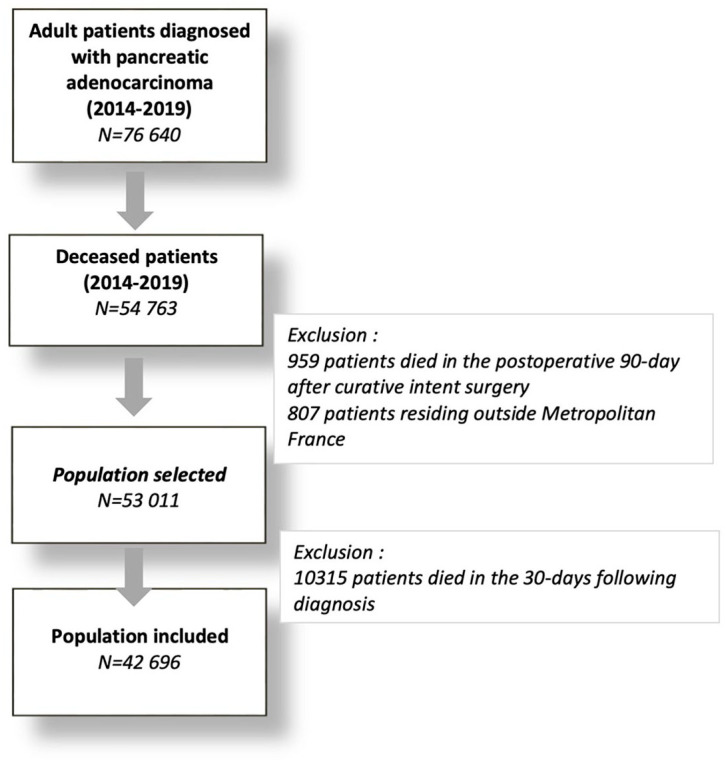
Results: A total of 42,696 patients who died from pancreatic adenocarcinoma were included. Among them, 41.1% experienced HI-EOL, with the most common indicators being multiple hospitalizations and death in an ICU, emergency room, or acute care unit. A smaller proportion (2.8%) received MI-EOL care, while 28.1% underwent IPs in the last 30 days of life. The multivariate analysis revealed that male gender and follow-up in non-cancer specialized care facilities were associated with a higher risk of HI-EOL. Conversely, palliative care involvement and older age at death were identified as protective factors. Male gender, older age at death, and palliative care involvement were associated with lower rates of MI-EOL care and IPs.
Conclusion: These results underscore the importance of palliative care integration and individualized approaches in improving the EOL quality of care and patient outcomes for individuals with advanced pancreatic cancer.
期刊介绍:
Therapeutic Advances in Medical Oncology is an open access, peer-reviewed journal delivering the highest quality articles, reviews, and scholarly comment on pioneering efforts and innovative studies in the medical treatment of cancer. The journal has a strong clinical and pharmacological focus and is aimed at clinicians and researchers in medical oncology, providing a forum in print and online for publishing the highest quality articles in this area. This journal is a member of the Committee on Publication Ethics (COPE).






 京公网安备 11010802042870号
京ICP备2023020795号-1
京公网安备 11010802042870号
京ICP备2023020795号-1

 分享
分享
 求助内容:
求助内容: 应助结果提醒方式:
 扫码关注我们
