Daniela Schoene, Martin Roessler, Katharina Eder, Albrecht Günther, Konrad Pleul, Axel Rahmel, Kristian Barlinn
{"title":"2019冠状病毒病大流行对德国医院脑死亡检测的影响:对全州健康数据的分析","authors":"Daniela Schoene, Martin Roessler, Katharina Eder, Albrecht Günther, Konrad Pleul, Axel Rahmel, Kristian Barlinn","doi":"10.1186/s42466-025-00368-1","DOIUrl":null,"url":null,"abstract":"<p><strong>Background: </strong>The low rate of organ donation in Germany has been linked to a deficit in the detection of patients with brain death (BD) in hospitals. It is unclear how crisis-related health system disruptions, such as the COVID-19 pandemic, affect this detection deficit.</p><p><strong>Methods: </strong>Secondary data analysis of anonymized data from deceased patients with acute brain injury from Saxony, Saxony-Anhalt and Thuringia during the pre-pandemic and pandemic period (01/2019-12/2022). Pandemic phases were stratified according to the predominant SARS-CoV-2 variant. Logistic multilevel models were employed to assess outcomes including diagnosis of BD, deceased organ donations, missed cases with potential BD and organ donation-related interactions with the German Organ procurement organization. Models accounted for regional COVID-19 incidence and first-dose vaccination rates, as well as age, gender and types of brain injuries.</p><p><strong>Results: </strong>A total of 11,100 deceased individuals from 136 hospitals were analyzed. An inverse association was observed between COVID-19 incidence and the determination of BD (adjusted odds ratio [aOR] 0.94, 95%CI [0.91; 0.97]; p < 0.001) as well as deceased organ donation (aOR 0.94, 95%CI [0.90; 0.98]; p = 0.001). When stratified by pandemic phases, this inverse association was evident for both BD determination (aOR 0.92, 95%CI [0.87; 0.99]; p = 0.02) and deceased organ donation (aOR 0.90, 95%CI [0.83; 0.97]; p = 0.01) during the initial wild-type phase. In the alpha phase, the association was observed only for BD determination (aOR 0.76, 95%CI [0.59; 0.98]; p = 0.03). No association was found in subsequent pandemic phases.</p><p><strong>Conclusion: </strong>The initial impact on BD detection during the pandemic highlights the importance of the health system's adaptive capacity in times of crisis.</p>","PeriodicalId":94156,"journal":{"name":"Neurological research and practice","volume":"7 1","pages":"9"},"PeriodicalIF":4.0000,"publicationDate":"2025-02-24","publicationTypes":"Journal Article","fieldsOfStudy":null,"isOpenAccess":false,"openAccessPdf":"https://www.ncbi.nlm.nih.gov/pmc/articles/PMC11921974/pdf/","citationCount":"0","resultStr":"{\"title\":\"Impact of the COVID-19 pandemic on brain death detection in German hospitals: a state-wide analysis of health data.\",\"authors\":\"Daniela Schoene, Martin Roessler, Katharina Eder, Albrecht Günther, Konrad Pleul, Axel Rahmel, Kristian Barlinn\",\"doi\":\"10.1186/s42466-025-00368-1\",\"DOIUrl\":null,\"url\":null,\"abstract\":\"<p><strong>Background: </strong>The low rate of organ donation in Germany has been linked to a deficit in the detection of patients with brain death (BD) in hospitals. It is unclear how crisis-related health system disruptions, such as the COVID-19 pandemic, affect this detection deficit.</p><p><strong>Methods: </strong>Secondary data analysis of anonymized data from deceased patients with acute brain injury from Saxony, Saxony-Anhalt and Thuringia during the pre-pandemic and pandemic period (01/2019-12/2022). Pandemic phases were stratified according to the predominant SARS-CoV-2 variant. Logistic multilevel models were employed to assess outcomes including diagnosis of BD, deceased organ donations, missed cases with potential BD and organ donation-related interactions with the German Organ procurement organization. Models accounted for regional COVID-19 incidence and first-dose vaccination rates, as well as age, gender and types of brain injuries.</p><p><strong>Results: </strong>A total of 11,100 deceased individuals from 136 hospitals were analyzed. An inverse association was observed between COVID-19 incidence and the determination of BD (adjusted odds ratio [aOR] 0.94, 95%CI [0.91; 0.97]; p < 0.001) as well as deceased organ donation (aOR 0.94, 95%CI [0.90; 0.98]; p = 0.001). When stratified by pandemic phases, this inverse association was evident for both BD determination (aOR 0.92, 95%CI [0.87; 0.99]; p = 0.02) and deceased organ donation (aOR 0.90, 95%CI [0.83; 0.97]; p = 0.01) during the initial wild-type phase. In the alpha phase, the association was observed only for BD determination (aOR 0.76, 95%CI [0.59; 0.98]; p = 0.03). No association was found in subsequent pandemic phases.</p><p><strong>Conclusion: </strong>The initial impact on BD detection during the pandemic highlights the importance of the health system's adaptive capacity in times of crisis.</p>\",\"PeriodicalId\":94156,\"journal\":{\"name\":\"Neurological research and practice\",\"volume\":\"7 1\",\"pages\":\"9\"},\"PeriodicalIF\":4.0000,\"publicationDate\":\"2025-02-24\",\"publicationTypes\":\"Journal Article\",\"fieldsOfStudy\":null,\"isOpenAccess\":false,\"openAccessPdf\":\"https://www.ncbi.nlm.nih.gov/pmc/articles/PMC11921974/pdf/\",\"citationCount\":\"0\",\"resultStr\":null,\"platform\":\"Semanticscholar\",\"paperid\":null,\"PeriodicalName\":\"Neurological research and practice\",\"FirstCategoryId\":\"1085\",\"ListUrlMain\":\"https://doi.org/10.1186/s42466-025-00368-1\",\"RegionNum\":0,\"RegionCategory\":null,\"ArticlePicture\":[],\"TitleCN\":null,\"AbstractTextCN\":null,\"PMCID\":null,\"EPubDate\":\"\",\"PubModel\":\"\",\"JCR\":\"Q2\",\"JCRName\":\"Medicine\",\"Score\":null,\"Total\":0}","platform":"Semanticscholar","paperid":null,"PeriodicalName":"Neurological research and practice","FirstCategoryId":"1085","ListUrlMain":"https://doi.org/10.1186/s42466-025-00368-1","RegionNum":0,"RegionCategory":null,"ArticlePicture":[],"TitleCN":null,"AbstractTextCN":null,"PMCID":null,"EPubDate":"","PubModel":"","JCR":"Q2","JCRName":"Medicine","Score":null,"Total":0}
Impact of the COVID-19 pandemic on brain death detection in German hospitals: a state-wide analysis of health data.
Background: The low rate of organ donation in Germany has been linked to a deficit in the detection of patients with brain death (BD) in hospitals. It is unclear how crisis-related health system disruptions, such as the COVID-19 pandemic, affect this detection deficit.
Methods: Secondary data analysis of anonymized data from deceased patients with acute brain injury from Saxony, Saxony-Anhalt and Thuringia during the pre-pandemic and pandemic period (01/2019-12/2022). Pandemic phases were stratified according to the predominant SARS-CoV-2 variant. Logistic multilevel models were employed to assess outcomes including diagnosis of BD, deceased organ donations, missed cases with potential BD and organ donation-related interactions with the German Organ procurement organization. Models accounted for regional COVID-19 incidence and first-dose vaccination rates, as well as age, gender and types of brain injuries.
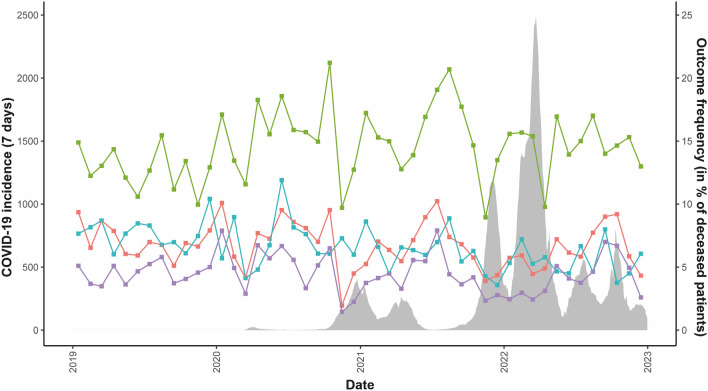
Results: A total of 11,100 deceased individuals from 136 hospitals were analyzed. An inverse association was observed between COVID-19 incidence and the determination of BD (adjusted odds ratio [aOR] 0.94, 95%CI [0.91; 0.97]; p < 0.001) as well as deceased organ donation (aOR 0.94, 95%CI [0.90; 0.98]; p = 0.001). When stratified by pandemic phases, this inverse association was evident for both BD determination (aOR 0.92, 95%CI [0.87; 0.99]; p = 0.02) and deceased organ donation (aOR 0.90, 95%CI [0.83; 0.97]; p = 0.01) during the initial wild-type phase. In the alpha phase, the association was observed only for BD determination (aOR 0.76, 95%CI [0.59; 0.98]; p = 0.03). No association was found in subsequent pandemic phases.
Conclusion: The initial impact on BD detection during the pandemic highlights the importance of the health system's adaptive capacity in times of crisis.






 京公网安备 11010802042870号
京ICP备2023020795号-1
京公网安备 11010802042870号
京ICP备2023020795号-1

 分享
分享

 求助内容:
求助内容: 应助结果提醒方式:
 扫码关注我们
