Kaili He , Zijing Guo , Qin Wen , Jianchao Wang , Chongqing Wang , Yawei Xiao , Hongru Jiang , Jihui Li
{"title":"磁性生物炭制备高效脱除四环素和六价铬:利用海水矿物包埋和浸渍纳米氧化铁","authors":"Kaili He , Zijing Guo , Qin Wen , Jianchao Wang , Chongqing Wang , Yawei Xiao , Hongru Jiang , Jihui Li","doi":"10.1016/j.ces.2025.121421","DOIUrl":null,"url":null,"abstract":"<div><div>A novel magnetic biochar (MB) was developed by combining seawater minerals and potassium ferrate during the pyrolysis of corncob at 400–600 °C. The MB pyrolyzed at 600 °C (MB600) was optimal for the removal of tetracycline (TC) and hexavalent chromium (Cr(VI)) from aqueous solutions. The process enhanced the biochar with nano magnetic iron species (Fe<sub>3</sub>O<sub>4</sub> and MgFe<sub>2</sub>O<sub>4</sub>), increased surface area, and enriched oxygen-containing functional groups for better adsorption. Seawater mineral was instrumental in parceling and dispersing the in-situ generated magnetic iron oxides, facilitating formation of nano-sized iron particles. MB600 exhibited adsorption capacities of 570.16 mg/g for TC and 92.34 mg/g for Cr(VI), with high saturation magnetization (40.40 emu/g). The potential adsorption mechanisms for TC and Cr(VI) were driven by hydrogen bonding/complexation/π-π interaction/pore filling and reduction/hydrogen bonding/complexation/electrostatic interaction/pore filling, respectively. This study presents a sustainable method to produce high-efficiency MB from agricultural waste and seawater minerals for pollution control.</div></div>","PeriodicalId":271,"journal":{"name":"Chemical Engineering Science","volume":"308 ","pages":"Article 121421"},"PeriodicalIF":4.3000,"publicationDate":"2025-04-01","publicationTypes":"Journal Article","fieldsOfStudy":null,"isOpenAccess":false,"openAccessPdf":"","citationCount":"0","resultStr":"{\"title\":\"Preparation of magnetic biochar towards efficient tetracycline and hexavalent chromium removal: Harnessing seawater mineral for encapsulating and impregnating nano-iron oxides\",\"authors\":\"Kaili He , Zijing Guo , Qin Wen , Jianchao Wang , Chongqing Wang , Yawei Xiao , Hongru Jiang , Jihui Li\",\"doi\":\"10.1016/j.ces.2025.121421\",\"DOIUrl\":null,\"url\":null,\"abstract\":\"<div><div>A novel magnetic biochar (MB) was developed by combining seawater minerals and potassium ferrate during the pyrolysis of corncob at 400–600 °C. The MB pyrolyzed at 600 °C (MB600) was optimal for the removal of tetracycline (TC) and hexavalent chromium (Cr(VI)) from aqueous solutions. The process enhanced the biochar with nano magnetic iron species (Fe<sub>3</sub>O<sub>4</sub> and MgFe<sub>2</sub>O<sub>4</sub>), increased surface area, and enriched oxygen-containing functional groups for better adsorption. Seawater mineral was instrumental in parceling and dispersing the in-situ generated magnetic iron oxides, facilitating formation of nano-sized iron particles. MB600 exhibited adsorption capacities of 570.16 mg/g for TC and 92.34 mg/g for Cr(VI), with high saturation magnetization (40.40 emu/g). The potential adsorption mechanisms for TC and Cr(VI) were driven by hydrogen bonding/complexation/π-π interaction/pore filling and reduction/hydrogen bonding/complexation/electrostatic interaction/pore filling, respectively. This study presents a sustainable method to produce high-efficiency MB from agricultural waste and seawater minerals for pollution control.</div></div>\",\"PeriodicalId\":271,\"journal\":{\"name\":\"Chemical Engineering Science\",\"volume\":\"308 \",\"pages\":\"Article 121421\"},\"PeriodicalIF\":4.3000,\"publicationDate\":\"2025-04-01\",\"publicationTypes\":\"Journal Article\",\"fieldsOfStudy\":null,\"isOpenAccess\":false,\"openAccessPdf\":\"\",\"citationCount\":\"0\",\"resultStr\":null,\"platform\":\"Semanticscholar\",\"paperid\":null,\"PeriodicalName\":\"Chemical Engineering Science\",\"FirstCategoryId\":\"5\",\"ListUrlMain\":\"https://www.sciencedirect.com/science/article/pii/S0009250925002441\",\"RegionNum\":2,\"RegionCategory\":\"工程技术\",\"ArticlePicture\":[],\"TitleCN\":null,\"AbstractTextCN\":null,\"PMCID\":null,\"EPubDate\":\"2025/2/25 0:00:00\",\"PubModel\":\"Epub\",\"JCR\":\"Q2\",\"JCRName\":\"ENGINEERING, CHEMICAL\",\"Score\":null,\"Total\":0}","platform":"Semanticscholar","paperid":null,"PeriodicalName":"Chemical Engineering Science","FirstCategoryId":"5","ListUrlMain":"https://www.sciencedirect.com/science/article/pii/S0009250925002441","RegionNum":2,"RegionCategory":"工程技术","ArticlePicture":[],"TitleCN":null,"AbstractTextCN":null,"PMCID":null,"EPubDate":"2025/2/25 0:00:00","PubModel":"Epub","JCR":"Q2","JCRName":"ENGINEERING, CHEMICAL","Score":null,"Total":0}
Preparation of magnetic biochar towards efficient tetracycline and hexavalent chromium removal: Harnessing seawater mineral for encapsulating and impregnating nano-iron oxides
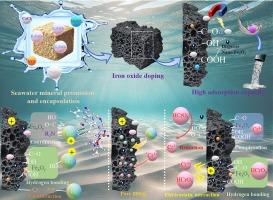
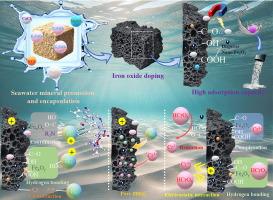
A novel magnetic biochar (MB) was developed by combining seawater minerals and potassium ferrate during the pyrolysis of corncob at 400–600 °C. The MB pyrolyzed at 600 °C (MB600) was optimal for the removal of tetracycline (TC) and hexavalent chromium (Cr(VI)) from aqueous solutions. The process enhanced the biochar with nano magnetic iron species (Fe3O4 and MgFe2O4), increased surface area, and enriched oxygen-containing functional groups for better adsorption. Seawater mineral was instrumental in parceling and dispersing the in-situ generated magnetic iron oxides, facilitating formation of nano-sized iron particles. MB600 exhibited adsorption capacities of 570.16 mg/g for TC and 92.34 mg/g for Cr(VI), with high saturation magnetization (40.40 emu/g). The potential adsorption mechanisms for TC and Cr(VI) were driven by hydrogen bonding/complexation/π-π interaction/pore filling and reduction/hydrogen bonding/complexation/electrostatic interaction/pore filling, respectively. This study presents a sustainable method to produce high-efficiency MB from agricultural waste and seawater minerals for pollution control.
期刊介绍:
Chemical engineering enables the transformation of natural resources and energy into useful products for society. It draws on and applies natural sciences, mathematics and economics, and has developed fundamental engineering science that underpins the discipline.
Chemical Engineering Science (CES) has been publishing papers on the fundamentals of chemical engineering since 1951. CES is the platform where the most significant advances in the discipline have ever since been published. Chemical Engineering Science has accompanied and sustained chemical engineering through its development into the vibrant and broad scientific discipline it is today.




 京公网安备 11010802042870号
京ICP备2023020795号-1
京公网安备 11010802042870号
京ICP备2023020795号-1

 分享
分享
 求助内容:
求助内容: 应助结果提醒方式:
 扫码关注我们
