迁徙和定居夜蛾种群基因组学揭示了驱动迁徙性状的关键基因和位点

IF 3.8 1区 农林科学 Q1 AGRONOMY Pest Management Science Pub Date : 2025-02-24 DOI:10.1002/ps.8682
Zhongxiang Sun, Pengfei Fu, Yaping Chen, Zhihui Lu, Fanghao Wan, Furong Gui
{"title":"迁徙和定居夜蛾种群基因组学揭示了驱动迁徙性状的关键基因和位点","authors":"Zhongxiang Sun,&nbsp;Pengfei Fu,&nbsp;Yaping Chen,&nbsp;Zhihui Lu,&nbsp;Fanghao Wan,&nbsp;Furong Gui","doi":"10.1002/ps.8682","DOIUrl":null,"url":null,"abstract":"<div>\n \n \n <section>\n \n <h3> Background</h3>\n \n <p>The fall armyworm (<i>Spodoptera frugiperda,</i> FAW) is one of the most devastating invasive pests in the world, owing to its extraordinary migration performance. Research has clarified the migratory pathways and external environmental factors affecting FAW migration. However, the internal genes and loci regulating migration or reside in FAW remain largely unknown.</p>\n </section>\n \n <section>\n \n <h3> Results</h3>\n \n <p>In this study, we used a tethered flight mill system to distinguish migratory and resident individuals, which exhibit significant differences in flight-related traits such as flight distance, duration, and maximum speed. Selective sweep analysis of 51 resequencing FAW (23 migratory and 28 resident individuals) identified 652 candidate genes, and genome-wide association analysis (GWAS) identified 79 functional annotated genes associated with the most significant trait, flight distance. These candidate genes were mainly concentrated in amino acid metabolism, signal transduction, and environmental adaptation. The <i>neuroendocrine convertase 2</i> gene was crossed between the two analyses, with 65 selective mutation loci in the intron region. <i>Casein kinase I</i>, which reported regulating circadian rhythm by phosphorylating the period, was simultaneously involved in several enriched signaling pathways, and had 11 selective loci in the regulatory region. These selective mutation loci may affect the expression of target genes and regulate the migration behavior of FAW.</p>\n </section>\n \n <section>\n \n <h3> Conclusion</h3>\n \n <p>Key loci and genes may determine the migration behavior of FAW by regulating the circadian rhythm and other signaling pathways. These findings provide a new perspective for elucidating the internal driving mechanism of migratory insects, and provide a new possibility for developing eco-friendly control strategies for migratory pests. © 2025 Society of Chemical Industry.</p>\n </section>\n </div>","PeriodicalId":218,"journal":{"name":"Pest Management Science","volume":"81 6","pages":"3112-3121"},"PeriodicalIF":3.8000,"publicationDate":"2025-02-24","publicationTypes":"Journal Article","fieldsOfStudy":null,"isOpenAccess":false,"openAccessPdf":"","citationCount":"0","resultStr":"{\"title\":\"Population genomics of migratory and resident Spodoptera frugiperda reveals key genes and loci driving migration traits\",\"authors\":\"Zhongxiang Sun,&nbsp;Pengfei Fu,&nbsp;Yaping Chen,&nbsp;Zhihui Lu,&nbsp;Fanghao Wan,&nbsp;Furong Gui\",\"doi\":\"10.1002/ps.8682\",\"DOIUrl\":null,\"url\":null,\"abstract\":\"<div>\\n \\n \\n <section>\\n \\n <h3> Background</h3>\\n \\n <p>The fall armyworm (<i>Spodoptera frugiperda,</i> FAW) is one of the most devastating invasive pests in the world, owing to its extraordinary migration performance. Research has clarified the migratory pathways and external environmental factors affecting FAW migration. However, the internal genes and loci regulating migration or reside in FAW remain largely unknown.</p>\\n </section>\\n \\n <section>\\n \\n <h3> Results</h3>\\n \\n <p>In this study, we used a tethered flight mill system to distinguish migratory and resident individuals, which exhibit significant differences in flight-related traits such as flight distance, duration, and maximum speed. Selective sweep analysis of 51 resequencing FAW (23 migratory and 28 resident individuals) identified 652 candidate genes, and genome-wide association analysis (GWAS) identified 79 functional annotated genes associated with the most significant trait, flight distance. These candidate genes were mainly concentrated in amino acid metabolism, signal transduction, and environmental adaptation. The <i>neuroendocrine convertase 2</i> gene was crossed between the two analyses, with 65 selective mutation loci in the intron region. <i>Casein kinase I</i>, which reported regulating circadian rhythm by phosphorylating the period, was simultaneously involved in several enriched signaling pathways, and had 11 selective loci in the regulatory region. These selective mutation loci may affect the expression of target genes and regulate the migration behavior of FAW.</p>\\n </section>\\n \\n <section>\\n \\n <h3> Conclusion</h3>\\n \\n <p>Key loci and genes may determine the migration behavior of FAW by regulating the circadian rhythm and other signaling pathways. These findings provide a new perspective for elucidating the internal driving mechanism of migratory insects, and provide a new possibility for developing eco-friendly control strategies for migratory pests. © 2025 Society of Chemical Industry.</p>\\n </section>\\n </div>\",\"PeriodicalId\":218,\"journal\":{\"name\":\"Pest Management Science\",\"volume\":\"81 6\",\"pages\":\"3112-3121\"},\"PeriodicalIF\":3.8000,\"publicationDate\":\"2025-02-24\",\"publicationTypes\":\"Journal Article\",\"fieldsOfStudy\":null,\"isOpenAccess\":false,\"openAccessPdf\":\"\",\"citationCount\":\"0\",\"resultStr\":null,\"platform\":\"Semanticscholar\",\"paperid\":null,\"PeriodicalName\":\"Pest Management Science\",\"FirstCategoryId\":\"97\",\"ListUrlMain\":\"https://scijournals.onlinelibrary.wiley.com/doi/10.1002/ps.8682\",\"RegionNum\":1,\"RegionCategory\":\"农林科学\",\"ArticlePicture\":[],\"TitleCN\":null,\"AbstractTextCN\":null,\"PMCID\":null,\"EPubDate\":\"\",\"PubModel\":\"\",\"JCR\":\"Q1\",\"JCRName\":\"AGRONOMY\",\"Score\":null,\"Total\":0}","platform":"Semanticscholar","paperid":null,"PeriodicalName":"Pest Management Science","FirstCategoryId":"97","ListUrlMain":"https://scijournals.onlinelibrary.wiley.com/doi/10.1002/ps.8682","RegionNum":1,"RegionCategory":"农林科学","ArticlePicture":[],"TitleCN":null,"AbstractTextCN":null,"PMCID":null,"EPubDate":"","PubModel":"","JCR":"Q1","JCRName":"AGRONOMY","Score":null,"Total":0}
引用次数: 0

摘要

秋粘虫(Spodoptera frugiperda, FAW)是世界上最具破坏性的入侵害虫之一,因为它具有非凡的迁移能力。研究明确了一汽迁徙的迁徙路径和影响一汽迁徙的外部环境因素。然而,内部基因和位点调控迁移或居住在FAW仍然很大程度上是未知的。
本文章由计算机程序翻译,如有差异,请以英文原文为准。

摘要图片

摘要图片

摘要图片

摘要图片

摘要图片

查看原文
分享 分享
微信好友 朋友圈 QQ好友 复制链接
本刊更多论文
Population genomics of migratory and resident Spodoptera frugiperda reveals key genes and loci driving migration traits

Background

The fall armyworm (Spodoptera frugiperda, FAW) is one of the most devastating invasive pests in the world, owing to its extraordinary migration performance. Research has clarified the migratory pathways and external environmental factors affecting FAW migration. However, the internal genes and loci regulating migration or reside in FAW remain largely unknown.

Results

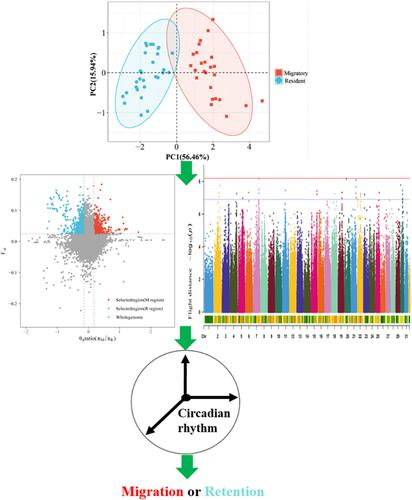
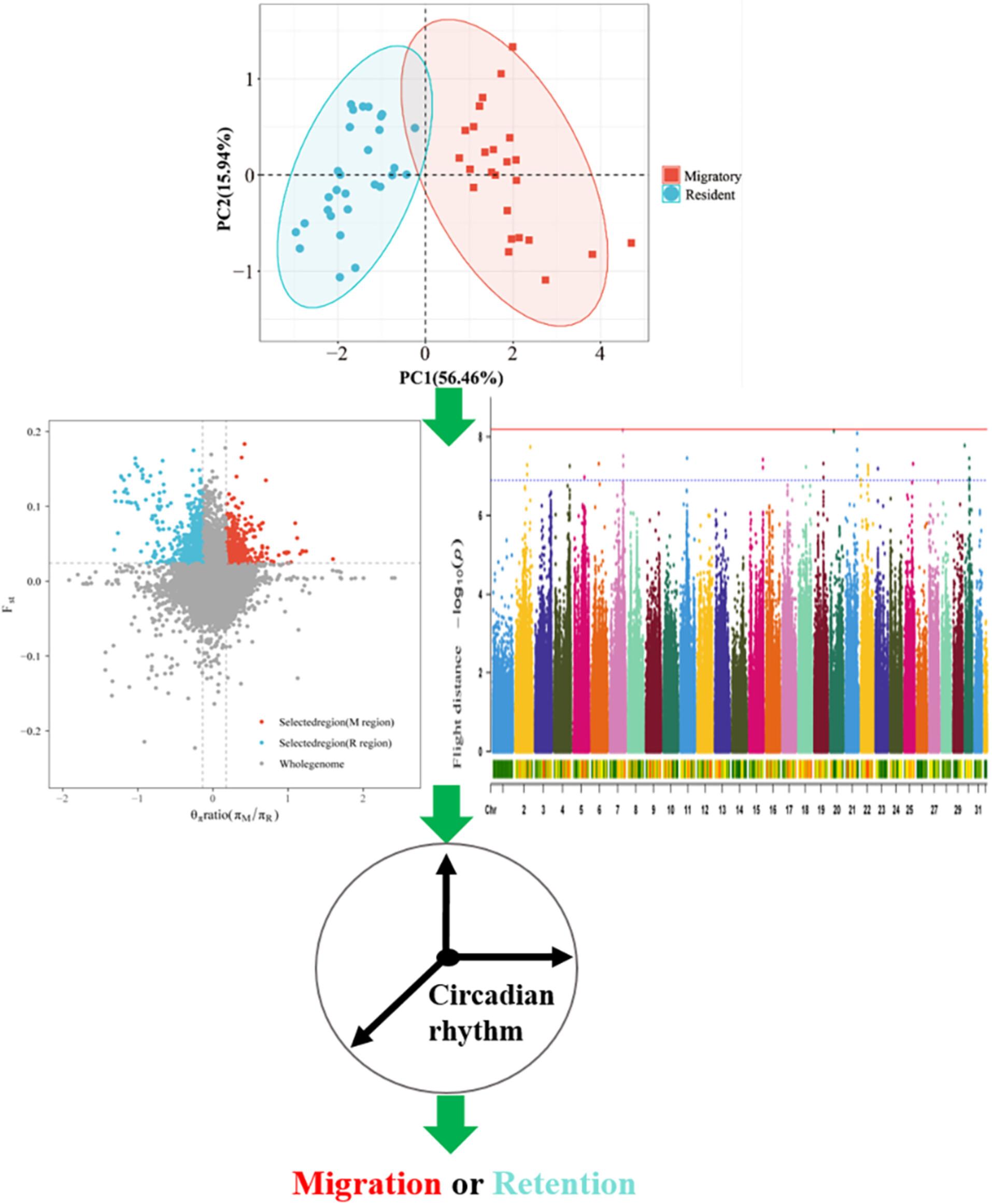
In this study, we used a tethered flight mill system to distinguish migratory and resident individuals, which exhibit significant differences in flight-related traits such as flight distance, duration, and maximum speed. Selective sweep analysis of 51 resequencing FAW (23 migratory and 28 resident individuals) identified 652 candidate genes, and genome-wide association analysis (GWAS) identified 79 functional annotated genes associated with the most significant trait, flight distance. These candidate genes were mainly concentrated in amino acid metabolism, signal transduction, and environmental adaptation. The neuroendocrine convertase 2 gene was crossed between the two analyses, with 65 selective mutation loci in the intron region. Casein kinase I, which reported regulating circadian rhythm by phosphorylating the period, was simultaneously involved in several enriched signaling pathways, and had 11 selective loci in the regulatory region. These selective mutation loci may affect the expression of target genes and regulate the migration behavior of FAW.

Conclusion

Key loci and genes may determine the migration behavior of FAW by regulating the circadian rhythm and other signaling pathways. These findings provide a new perspective for elucidating the internal driving mechanism of migratory insects, and provide a new possibility for developing eco-friendly control strategies for migratory pests. © 2025 Society of Chemical Industry.

求助全文
通过发布文献求助,成功后即可免费获取论文全文。 去求助
来源期刊
Pest Management Science
Pest Management Science 农林科学-昆虫学
CiteScore
7.90
自引率
9.80%
发文量
553
审稿时长
4.8 months
期刊介绍: Pest Management Science is the international journal of research and development in crop protection and pest control. Since its launch in 1970, the journal has become the premier forum for papers on the discovery, application, and impact on the environment of products and strategies designed for pest management. Published for SCI by John Wiley & Sons Ltd.
期刊最新文献
Potential of endophytic Beauveria bassiana against Coraebus (Coleoptera: Buprestidae) oak borers. Artificial shelters as dual-purpose tools for monitoring natural enemies and providing microhabitats in orchards. Residue dynamics and metabolic pathways of sulfoxaflor in Cirsium japonicum var. maackii and Olea europaea L. Molecular co-assembly engineering towards natural tea saponin-based nanopesticides for synergistic enhanced foliar affinity. Cytochrome P450 and glutathione S-transferase may confer bensulfuron-methyl resistance in Cyperus iria.
×
引用
GB/T 7714-2015
复制
MLA
复制
APA
复制
导出至
BibTeX EndNote RefMan NoteFirst NoteExpress
×
×
提示
您的信息不完整,为了账户安全,请先补充。
现在去补充
×
提示
您因"违规操作"
具体请查看互助需知
我知道了
×
提示
现在去查看 取消
×
提示
确定
0
微信
客服QQ
Book学术公众号 扫码关注我们
反馈
×
意见反馈
请填写您的意见或建议
请填写您的手机或邮箱
已复制链接
已复制链接
快去分享给好友吧!
我知道了
×
扫码分享
扫码分享
Book学术官方微信
Book学术文献互助
Book学术文献互助群
群 号:604180095
Book学术
文献互助 智能选刊 最新文献 互助须知 联系我们:info@booksci.cn
Book学术提供免费学术资源搜索服务,方便国内外学者检索中英文文献。致力于提供最便捷和优质的服务体验。
Copyright © 2023 Book学术 All rights reserved.
ghs 京公网安备 11010802042870号 京ICP备2023020795号-1