Peter Nymberg, Veronica Milos-Nymberg, Anton Grundberg, Nils Oscarson, Emelie Stenman, Kristina Sundquist
{"title":"探索自评口腔健康不良与心血管风险之间的联系:一项使用SCORE2的横断面研究","authors":"Peter Nymberg, Veronica Milos-Nymberg, Anton Grundberg, Nils Oscarson, Emelie Stenman, Kristina Sundquist","doi":"10.1186/s12903-025-05671-6","DOIUrl":null,"url":null,"abstract":"<p><strong>Background: </strong>Poor oral health is associated with several non-communicable diseases including cardiovascular disease. There are also well-known associations between lifestyle habits, cardiovascular disease, and oral health. In Europe, SCORE2 is a recommended instrument for assessing an individual's risk of a cardiovascular event within 10 years. However, no previous studies have examined the association between self-rated oral health and SCORE2. Using data from a cohort of 40- and 50-year-old individuals in Swedish primary healthcare, the present cross-sectional study investigated the association between self-reported poor oral health and cardiovascular risk assessed with targeted health dialogues and SCORE2.</p><p><strong>Methods: </strong>40- and 50-year-old individuals registered at 180 primary healthcare centres in southern Sweden were invited to participate in targeted health dialogues. Self-reported oral health and lifestyle habits were collected using a web questionnaire. Anthropometric measurements, blood pressure, and blood tests were collected. Data were analysed using group comparisons and regression models.</p><p><strong>Results: </strong>A total of 9499 individuals agreed to participate in the study and completed a targeted health dialogue between January 1, 2021, and January 10, 2024. The group who reported poor oral health had a higher proportion of high waist-hip ratio, insufficient physical activity, poor eating habits and tobacco use compared with individuals with good self-reported oral health. Significantly higher blood pressure was also noted, as well as elevated plasma glucose levels and low-density lipids. The regression analysis showed a significant association between poor self-rated oral health and cardiovascular risk by SCORE2 among both men and women. In the fully adjusted model, the association remained significant only for women.</p><p><strong>Conclusions: </strong>Our results indicate that individuals with poor self-rated oral health have higher cardiovascular risk and should be offered screening for unhealthy lifestyle habits to prevent cardiovascular events. We suggest that primary healthcare and dental care cooperate in identifying individuals at risk and intervene using evidence-based methods to prevent and address cardiovascular and oral diseases.</p><p><strong>Trial registration: </strong>ClinicalTrials.gov registration number. NCT04912739. Registration date 2021-06-03, retrospectively registered. Ethical approval was secured from the Swedish Ethical Review Authority (registration number 2020-02689 with subsequent amendments).</p>","PeriodicalId":9072,"journal":{"name":"BMC Oral Health","volume":"25 1","pages":"298"},"PeriodicalIF":3.1000,"publicationDate":"2025-02-24","publicationTypes":"Journal Article","fieldsOfStudy":null,"isOpenAccess":false,"openAccessPdf":"https://www.ncbi.nlm.nih.gov/pmc/articles/PMC11853182/pdf/","citationCount":"0","resultStr":"{\"title\":\"Exploring the link between self-rated poor oral health and cardiovascular risk: a cross-sectional study using SCORE2.\",\"authors\":\"Peter Nymberg, Veronica Milos-Nymberg, Anton Grundberg, Nils Oscarson, Emelie Stenman, Kristina Sundquist\",\"doi\":\"10.1186/s12903-025-05671-6\",\"DOIUrl\":null,\"url\":null,\"abstract\":\"<p><strong>Background: </strong>Poor oral health is associated with several non-communicable diseases including cardiovascular disease. There are also well-known associations between lifestyle habits, cardiovascular disease, and oral health. In Europe, SCORE2 is a recommended instrument for assessing an individual's risk of a cardiovascular event within 10 years. However, no previous studies have examined the association between self-rated oral health and SCORE2. Using data from a cohort of 40- and 50-year-old individuals in Swedish primary healthcare, the present cross-sectional study investigated the association between self-reported poor oral health and cardiovascular risk assessed with targeted health dialogues and SCORE2.</p><p><strong>Methods: </strong>40- and 50-year-old individuals registered at 180 primary healthcare centres in southern Sweden were invited to participate in targeted health dialogues. Self-reported oral health and lifestyle habits were collected using a web questionnaire. Anthropometric measurements, blood pressure, and blood tests were collected. Data were analysed using group comparisons and regression models.</p><p><strong>Results: </strong>A total of 9499 individuals agreed to participate in the study and completed a targeted health dialogue between January 1, 2021, and January 10, 2024. The group who reported poor oral health had a higher proportion of high waist-hip ratio, insufficient physical activity, poor eating habits and tobacco use compared with individuals with good self-reported oral health. Significantly higher blood pressure was also noted, as well as elevated plasma glucose levels and low-density lipids. The regression analysis showed a significant association between poor self-rated oral health and cardiovascular risk by SCORE2 among both men and women. In the fully adjusted model, the association remained significant only for women.</p><p><strong>Conclusions: </strong>Our results indicate that individuals with poor self-rated oral health have higher cardiovascular risk and should be offered screening for unhealthy lifestyle habits to prevent cardiovascular events. We suggest that primary healthcare and dental care cooperate in identifying individuals at risk and intervene using evidence-based methods to prevent and address cardiovascular and oral diseases.</p><p><strong>Trial registration: </strong>ClinicalTrials.gov registration number. NCT04912739. Registration date 2021-06-03, retrospectively registered. Ethical approval was secured from the Swedish Ethical Review Authority (registration number 2020-02689 with subsequent amendments).</p>\",\"PeriodicalId\":9072,\"journal\":{\"name\":\"BMC Oral Health\",\"volume\":\"25 1\",\"pages\":\"298\"},\"PeriodicalIF\":3.1000,\"publicationDate\":\"2025-02-24\",\"publicationTypes\":\"Journal Article\",\"fieldsOfStudy\":null,\"isOpenAccess\":false,\"openAccessPdf\":\"https://www.ncbi.nlm.nih.gov/pmc/articles/PMC11853182/pdf/\",\"citationCount\":\"0\",\"resultStr\":null,\"platform\":\"Semanticscholar\",\"paperid\":null,\"PeriodicalName\":\"BMC Oral Health\",\"FirstCategoryId\":\"3\",\"ListUrlMain\":\"https://doi.org/10.1186/s12903-025-05671-6\",\"RegionNum\":2,\"RegionCategory\":\"医学\",\"ArticlePicture\":[],\"TitleCN\":null,\"AbstractTextCN\":null,\"PMCID\":null,\"EPubDate\":\"\",\"PubModel\":\"\",\"JCR\":\"Q1\",\"JCRName\":\"DENTISTRY, ORAL SURGERY & MEDICINE\",\"Score\":null,\"Total\":0}","platform":"Semanticscholar","paperid":null,"PeriodicalName":"BMC Oral Health","FirstCategoryId":"3","ListUrlMain":"https://doi.org/10.1186/s12903-025-05671-6","RegionNum":2,"RegionCategory":"医学","ArticlePicture":[],"TitleCN":null,"AbstractTextCN":null,"PMCID":null,"EPubDate":"","PubModel":"","JCR":"Q1","JCRName":"DENTISTRY, ORAL SURGERY & MEDICINE","Score":null,"Total":0}
Exploring the link between self-rated poor oral health and cardiovascular risk: a cross-sectional study using SCORE2.
Background: Poor oral health is associated with several non-communicable diseases including cardiovascular disease. There are also well-known associations between lifestyle habits, cardiovascular disease, and oral health. In Europe, SCORE2 is a recommended instrument for assessing an individual's risk of a cardiovascular event within 10 years. However, no previous studies have examined the association between self-rated oral health and SCORE2. Using data from a cohort of 40- and 50-year-old individuals in Swedish primary healthcare, the present cross-sectional study investigated the association between self-reported poor oral health and cardiovascular risk assessed with targeted health dialogues and SCORE2.
Methods: 40- and 50-year-old individuals registered at 180 primary healthcare centres in southern Sweden were invited to participate in targeted health dialogues. Self-reported oral health and lifestyle habits were collected using a web questionnaire. Anthropometric measurements, blood pressure, and blood tests were collected. Data were analysed using group comparisons and regression models.
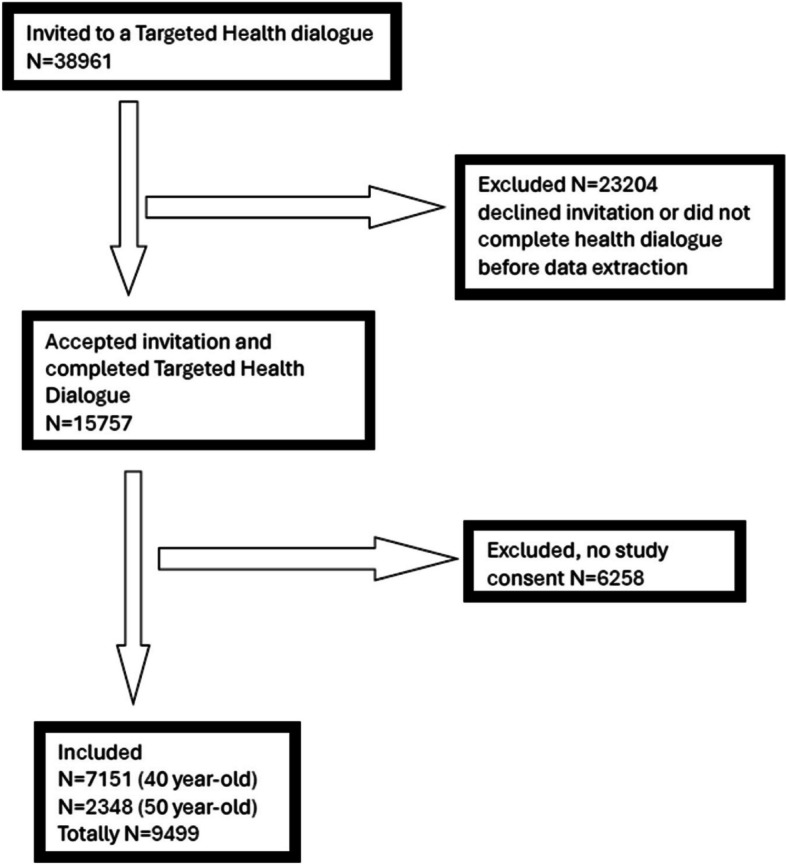
Results: A total of 9499 individuals agreed to participate in the study and completed a targeted health dialogue between January 1, 2021, and January 10, 2024. The group who reported poor oral health had a higher proportion of high waist-hip ratio, insufficient physical activity, poor eating habits and tobacco use compared with individuals with good self-reported oral health. Significantly higher blood pressure was also noted, as well as elevated plasma glucose levels and low-density lipids. The regression analysis showed a significant association between poor self-rated oral health and cardiovascular risk by SCORE2 among both men and women. In the fully adjusted model, the association remained significant only for women.
Conclusions: Our results indicate that individuals with poor self-rated oral health have higher cardiovascular risk and should be offered screening for unhealthy lifestyle habits to prevent cardiovascular events. We suggest that primary healthcare and dental care cooperate in identifying individuals at risk and intervene using evidence-based methods to prevent and address cardiovascular and oral diseases.
Trial registration: ClinicalTrials.gov registration number. NCT04912739. Registration date 2021-06-03, retrospectively registered. Ethical approval was secured from the Swedish Ethical Review Authority (registration number 2020-02689 with subsequent amendments).
期刊介绍:
BMC Oral Health is an open access, peer-reviewed journal that considers articles on all aspects of the prevention, diagnosis and management of disorders of the mouth, teeth and gums, as well as related molecular genetics, pathophysiology, and epidemiology.




 京公网安备 11010802042870号
京ICP备2023020795号-1
京公网安备 11010802042870号
京ICP备2023020795号-1

 分享
分享
 求助内容:
求助内容: 应助结果提醒方式:
 扫码关注我们
