Felix E G Beaudry, Zhihao Li, Ayelet Borgida, Anudari Zorigtbaatar, Xin Wang, Maggie Hildebrand, Oumaima Hamza, Gun Ho Jang, Roxana Bucur, Anna Dodd, Julie Wilson, Rebecca C Auer, Samuel Saibil, Erica S Tsang, Arndt Vogel, Grainne M O'Kane, Steven Gallinger, Jennifer J Knox, Faiyaz Notta, Gonzalo Sapisochin, Robert C Grant
{"title":"分子肿瘤委员会指导的靶向治疗胆道癌症在公共资助的医疗保健系统。","authors":"Felix E G Beaudry, Zhihao Li, Ayelet Borgida, Anudari Zorigtbaatar, Xin Wang, Maggie Hildebrand, Oumaima Hamza, Gun Ho Jang, Roxana Bucur, Anna Dodd, Julie Wilson, Rebecca C Auer, Samuel Saibil, Erica S Tsang, Arndt Vogel, Grainne M O'Kane, Steven Gallinger, Jennifer J Knox, Faiyaz Notta, Gonzalo Sapisochin, Robert C Grant","doi":"10.3390/curroncol32020080","DOIUrl":null,"url":null,"abstract":"<p><p>Comprehensive molecular profiling can identify alterations in biliary tract cancer (BTC) potentially treatable with targeted therapies. However, the impact of whole-genome and transcriptome sequencing (WGTS) on therapeutic decision-making in a public healthcare system is unknown. Here, BTC patients prospectively received WGTS to inform clinical care at a large Canadian academic cancer center. We characterized the proportion of targetable alterations, the treatment recommendations generated by a molecular tumor board, targeted therapies received, patient outcomes, and the financing of these treatments. A total of 55 patients with BTC prospectively underwent WGTS to inform clinical care. Of those 55, 28 (51%, 95% CI 38-64%) harbored targetable alterations. Molecular tumor boards recommended consideration of targeted therapies for 43 (78% CI: 66-87%) of 55 cases. Among the 15 patients who progressed to second-line therapy and harbored targetable alterations, 8 received nine targeted therapies. No targeted therapies were funded through the public system, and most therapies were funded through compassionate access programs from companies. These results highlight the challenges and potential for inequities when implementing precision oncology in a publicly funded healthcare system.</p>","PeriodicalId":11012,"journal":{"name":"Current oncology","volume":"32 2","pages":""},"PeriodicalIF":3.6000,"publicationDate":"2025-01-31","publicationTypes":"Journal Article","fieldsOfStudy":null,"isOpenAccess":false,"openAccessPdf":"https://www.ncbi.nlm.nih.gov/pmc/articles/PMC11854319/pdf/","citationCount":"0","resultStr":"{\"title\":\"Molecular Tumor Board-Guided Targeted Treatments for Biliary Tract Cancers in a Publicly Funded Healthcare System.\",\"authors\":\"Felix E G Beaudry, Zhihao Li, Ayelet Borgida, Anudari Zorigtbaatar, Xin Wang, Maggie Hildebrand, Oumaima Hamza, Gun Ho Jang, Roxana Bucur, Anna Dodd, Julie Wilson, Rebecca C Auer, Samuel Saibil, Erica S Tsang, Arndt Vogel, Grainne M O'Kane, Steven Gallinger, Jennifer J Knox, Faiyaz Notta, Gonzalo Sapisochin, Robert C Grant\",\"doi\":\"10.3390/curroncol32020080\",\"DOIUrl\":null,\"url\":null,\"abstract\":\"<p><p>Comprehensive molecular profiling can identify alterations in biliary tract cancer (BTC) potentially treatable with targeted therapies. However, the impact of whole-genome and transcriptome sequencing (WGTS) on therapeutic decision-making in a public healthcare system is unknown. Here, BTC patients prospectively received WGTS to inform clinical care at a large Canadian academic cancer center. We characterized the proportion of targetable alterations, the treatment recommendations generated by a molecular tumor board, targeted therapies received, patient outcomes, and the financing of these treatments. A total of 55 patients with BTC prospectively underwent WGTS to inform clinical care. Of those 55, 28 (51%, 95% CI 38-64%) harbored targetable alterations. Molecular tumor boards recommended consideration of targeted therapies for 43 (78% CI: 66-87%) of 55 cases. Among the 15 patients who progressed to second-line therapy and harbored targetable alterations, 8 received nine targeted therapies. No targeted therapies were funded through the public system, and most therapies were funded through compassionate access programs from companies. These results highlight the challenges and potential for inequities when implementing precision oncology in a publicly funded healthcare system.</p>\",\"PeriodicalId\":11012,\"journal\":{\"name\":\"Current oncology\",\"volume\":\"32 2\",\"pages\":\"\"},\"PeriodicalIF\":3.6000,\"publicationDate\":\"2025-01-31\",\"publicationTypes\":\"Journal Article\",\"fieldsOfStudy\":null,\"isOpenAccess\":false,\"openAccessPdf\":\"https://www.ncbi.nlm.nih.gov/pmc/articles/PMC11854319/pdf/\",\"citationCount\":\"0\",\"resultStr\":null,\"platform\":\"Semanticscholar\",\"paperid\":null,\"PeriodicalName\":\"Current oncology\",\"FirstCategoryId\":\"3\",\"ListUrlMain\":\"https://doi.org/10.3390/curroncol32020080\",\"RegionNum\":4,\"RegionCategory\":\"医学\",\"ArticlePicture\":[],\"TitleCN\":null,\"AbstractTextCN\":null,\"PMCID\":null,\"EPubDate\":\"\",\"PubModel\":\"\",\"JCR\":\"Q2\",\"JCRName\":\"ONCOLOGY\",\"Score\":null,\"Total\":0}","platform":"Semanticscholar","paperid":null,"PeriodicalName":"Current oncology","FirstCategoryId":"3","ListUrlMain":"https://doi.org/10.3390/curroncol32020080","RegionNum":4,"RegionCategory":"医学","ArticlePicture":[],"TitleCN":null,"AbstractTextCN":null,"PMCID":null,"EPubDate":"","PubModel":"","JCR":"Q2","JCRName":"ONCOLOGY","Score":null,"Total":0}
引用次数: 0
摘要
综合分子谱分析可以识别胆道癌(BTC)的改变,这些改变可能通过靶向治疗来治疗。然而,全基因组和转录组测序(WGTS)对公共卫生系统治疗决策的影响尚不清楚。在这里,BTC患者前瞻性地接受了WGTS,以告知加拿大一家大型学术癌症中心的临床护理。我们描述了可靶向改变的比例、分子肿瘤委员会产生的治疗建议、接受的靶向治疗、患者结果和这些治疗的资金。共有55例BTC患者前瞻性地接受了WGTS以告知临床护理。在这55例中,28例(51%,95% CI 38-64%)存在可靶向的改变。分子肿瘤委员会推荐55例中43例(78% CI: 66-87%)考虑靶向治疗。在进展到二线治疗并有靶向改变的15例患者中,8例接受了9种靶向治疗。没有针对性的治疗是由公共系统资助的,大多数治疗是由公司的同情访问项目资助的。这些结果突出了在公共资助的医疗保健系统中实施精确肿瘤学时的挑战和潜在的不公平。
Molecular Tumor Board-Guided Targeted Treatments for Biliary Tract Cancers in a Publicly Funded Healthcare System.
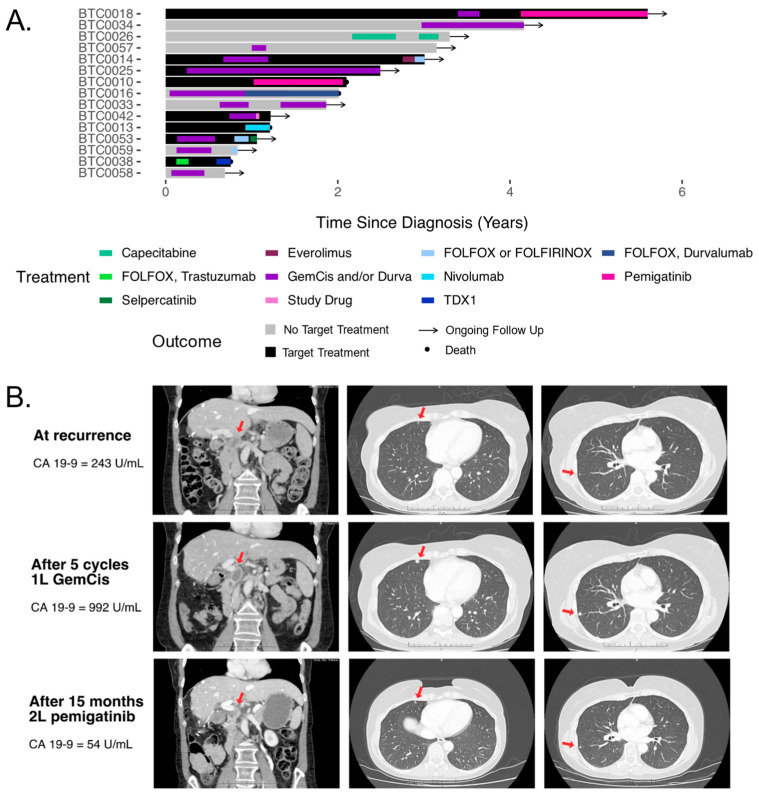
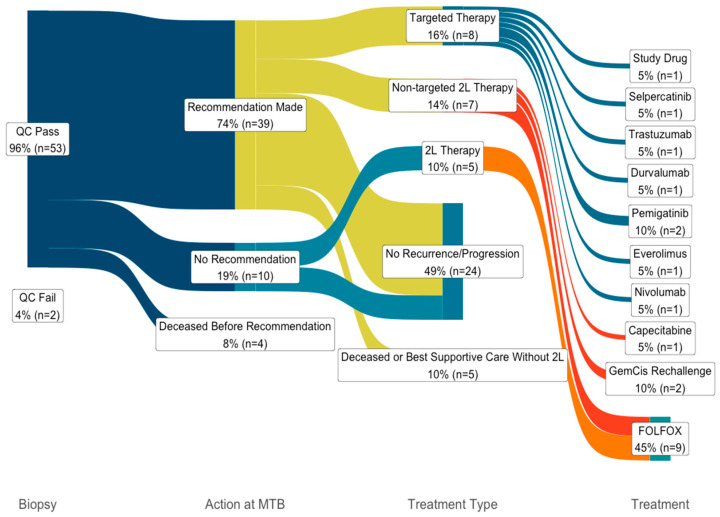
Comprehensive molecular profiling can identify alterations in biliary tract cancer (BTC) potentially treatable with targeted therapies. However, the impact of whole-genome and transcriptome sequencing (WGTS) on therapeutic decision-making in a public healthcare system is unknown. Here, BTC patients prospectively received WGTS to inform clinical care at a large Canadian academic cancer center. We characterized the proportion of targetable alterations, the treatment recommendations generated by a molecular tumor board, targeted therapies received, patient outcomes, and the financing of these treatments. A total of 55 patients with BTC prospectively underwent WGTS to inform clinical care. Of those 55, 28 (51%, 95% CI 38-64%) harbored targetable alterations. Molecular tumor boards recommended consideration of targeted therapies for 43 (78% CI: 66-87%) of 55 cases. Among the 15 patients who progressed to second-line therapy and harbored targetable alterations, 8 received nine targeted therapies. No targeted therapies were funded through the public system, and most therapies were funded through compassionate access programs from companies. These results highlight the challenges and potential for inequities when implementing precision oncology in a publicly funded healthcare system.
期刊介绍:
Current Oncology is a peer-reviewed, Canadian-based and internationally respected journal. Current Oncology represents a multidisciplinary medium encompassing health care workers in the field of cancer therapy in Canada to report upon and to review progress in the management of this disease.
We encourage submissions from all fields of cancer medicine, including radiation oncology, surgical oncology, medical oncology, pediatric oncology, pathology, and cancer rehabilitation and survivorship. Articles published in the journal typically contain information that is relevant directly to clinical oncology practice, and have clear potential for application to the current or future practice of cancer medicine.





 京公网安备 11010802042870号
京ICP备2023020795号-1
京公网安备 11010802042870号
京ICP备2023020795号-1

 分享
分享
 求助内容:
求助内容: 应助结果提醒方式:
 扫码关注我们
