Thikrayat Bani-Hani, Rami S Al-Fodeh, Ahed M Al-Wahadni, Elham S Abu-Alhaija, Mahmoud Al-Hakam
{"title":"儿童恒磨牙预制与定制氧化锆冠抗断性的体外研究。","authors":"Thikrayat Bani-Hani, Rami S Al-Fodeh, Ahed M Al-Wahadni, Elham S Abu-Alhaija, Mahmoud Al-Hakam","doi":"10.3390/dj13020064","DOIUrl":null,"url":null,"abstract":"<p><p><b>Background:</b> Recently, the demand for esthetic restorations has grown dramatically and extended into the pediatric population. The prefabricated zirconia crowns (PZCs) and custom-made zirconia crowns (CZCs) are new esthetic options in pediatric dentistry. However, they are still inadequately tested for use in children. Aim: To determine the fracture resistance and failure mode of the PZC in comparison to the CZC. <b>Materials and Methods:</b> In this in-vitro study, thirty cobalt-chromium dies were fabricated by scanning the negative replica of a prefabricated lower first permanent molar zirconia crown. CZCs were designed and milled using two different zirconia brands: Ceramill Zolid-FX (FX) and the Highly-Translucent (HT) zirconia. Dies were randomly assigned to receive either a PZC or a CZC (n = 10 in each group). All crowns were cemented on their respective dies using glass ionomer cement. Following artificial aging, all specimens were loaded to failure. Fracture mode analysis was performed. One-way ANOVA and Bonferroni post-hoc test were used for multiple comparisons across the groups. The significant level was set at <i>p</i> ≤ 0.05. <b>Results:</b> HT zirconia had a significantly higher fracture load compared to other groups (<i>p</i> < 0.05). The mean fracture resistance values were: (3087 ± 385) N for HT zirconia, (2633 ± 300) N for PZCs, and (2483 ± 381) N for FX, with no statistically significant difference in fracture strengths between PZCs and FX. <b>Conclusions:</b> HT zirconia crowns showed the highest fracture resistance amongst all groups. The fracture loads of tested crowns exceeded the maximum posterior biteforce. When placed in permanent molars, PZC are expected to perform well under masticatory forces in children.</p>","PeriodicalId":11269,"journal":{"name":"Dentistry Journal","volume":"13 2","pages":""},"PeriodicalIF":3.1000,"publicationDate":"2025-01-30","publicationTypes":"Journal Article","fieldsOfStudy":null,"isOpenAccess":false,"openAccessPdf":"https://www.ncbi.nlm.nih.gov/pmc/articles/PMC11854477/pdf/","citationCount":"0","resultStr":"{\"title\":\"An In-Vitro Investigation into the Fracture Resistance of Prefabricated and Custom-Made Zirconia Crowns for Permanent Molars in Children.\",\"authors\":\"Thikrayat Bani-Hani, Rami S Al-Fodeh, Ahed M Al-Wahadni, Elham S Abu-Alhaija, Mahmoud Al-Hakam\",\"doi\":\"10.3390/dj13020064\",\"DOIUrl\":null,\"url\":null,\"abstract\":\"<p><p><b>Background:</b> Recently, the demand for esthetic restorations has grown dramatically and extended into the pediatric population. The prefabricated zirconia crowns (PZCs) and custom-made zirconia crowns (CZCs) are new esthetic options in pediatric dentistry. However, they are still inadequately tested for use in children. Aim: To determine the fracture resistance and failure mode of the PZC in comparison to the CZC. <b>Materials and Methods:</b> In this in-vitro study, thirty cobalt-chromium dies were fabricated by scanning the negative replica of a prefabricated lower first permanent molar zirconia crown. CZCs were designed and milled using two different zirconia brands: Ceramill Zolid-FX (FX) and the Highly-Translucent (HT) zirconia. Dies were randomly assigned to receive either a PZC or a CZC (n = 10 in each group). All crowns were cemented on their respective dies using glass ionomer cement. Following artificial aging, all specimens were loaded to failure. Fracture mode analysis was performed. One-way ANOVA and Bonferroni post-hoc test were used for multiple comparisons across the groups. The significant level was set at <i>p</i> ≤ 0.05. <b>Results:</b> HT zirconia had a significantly higher fracture load compared to other groups (<i>p</i> < 0.05). The mean fracture resistance values were: (3087 ± 385) N for HT zirconia, (2633 ± 300) N for PZCs, and (2483 ± 381) N for FX, with no statistically significant difference in fracture strengths between PZCs and FX. <b>Conclusions:</b> HT zirconia crowns showed the highest fracture resistance amongst all groups. The fracture loads of tested crowns exceeded the maximum posterior biteforce. When placed in permanent molars, PZC are expected to perform well under masticatory forces in children.</p>\",\"PeriodicalId\":11269,\"journal\":{\"name\":\"Dentistry Journal\",\"volume\":\"13 2\",\"pages\":\"\"},\"PeriodicalIF\":3.1000,\"publicationDate\":\"2025-01-30\",\"publicationTypes\":\"Journal Article\",\"fieldsOfStudy\":null,\"isOpenAccess\":false,\"openAccessPdf\":\"https://www.ncbi.nlm.nih.gov/pmc/articles/PMC11854477/pdf/\",\"citationCount\":\"0\",\"resultStr\":null,\"platform\":\"Semanticscholar\",\"paperid\":null,\"PeriodicalName\":\"Dentistry Journal\",\"FirstCategoryId\":\"1085\",\"ListUrlMain\":\"https://doi.org/10.3390/dj13020064\",\"RegionNum\":0,\"RegionCategory\":null,\"ArticlePicture\":[],\"TitleCN\":null,\"AbstractTextCN\":null,\"PMCID\":null,\"EPubDate\":\"\",\"PubModel\":\"\",\"JCR\":\"Q2\",\"JCRName\":\"DENTISTRY, ORAL SURGERY & MEDICINE\",\"Score\":null,\"Total\":0}","platform":"Semanticscholar","paperid":null,"PeriodicalName":"Dentistry Journal","FirstCategoryId":"1085","ListUrlMain":"https://doi.org/10.3390/dj13020064","RegionNum":0,"RegionCategory":null,"ArticlePicture":[],"TitleCN":null,"AbstractTextCN":null,"PMCID":null,"EPubDate":"","PubModel":"","JCR":"Q2","JCRName":"DENTISTRY, ORAL SURGERY & MEDICINE","Score":null,"Total":0}
An In-Vitro Investigation into the Fracture Resistance of Prefabricated and Custom-Made Zirconia Crowns for Permanent Molars in Children.
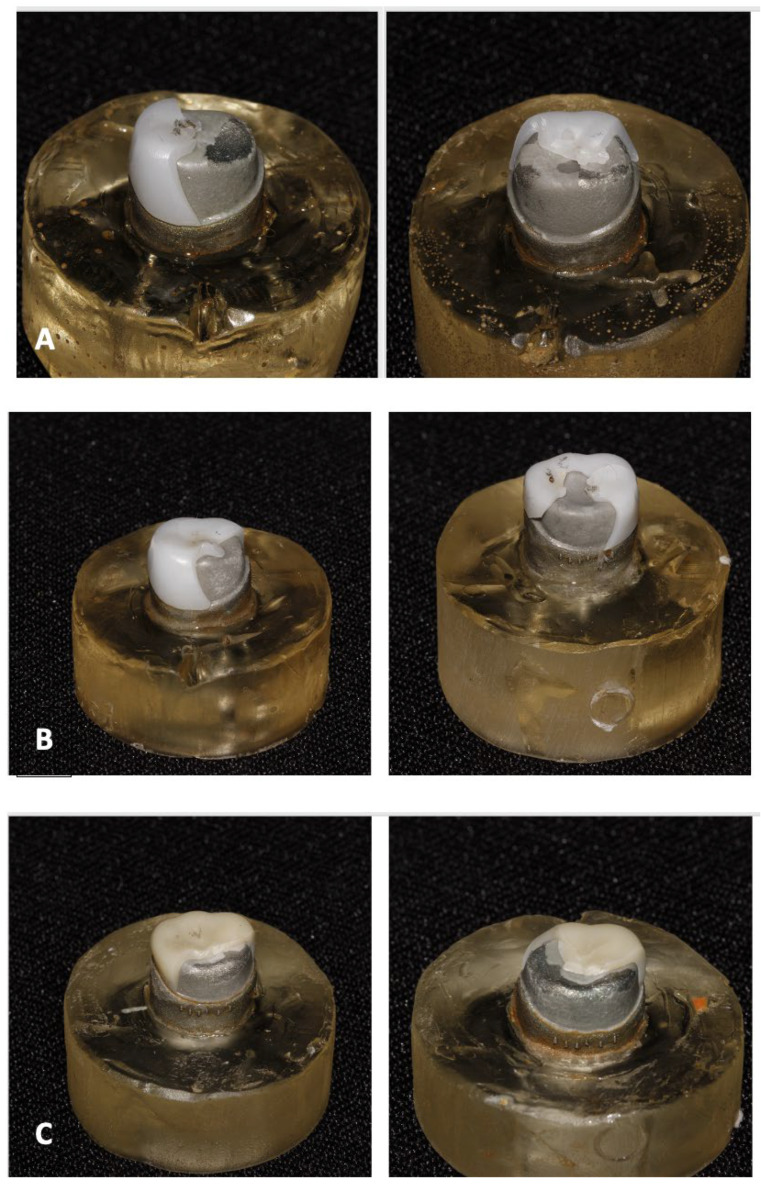
Background: Recently, the demand for esthetic restorations has grown dramatically and extended into the pediatric population. The prefabricated zirconia crowns (PZCs) and custom-made zirconia crowns (CZCs) are new esthetic options in pediatric dentistry. However, they are still inadequately tested for use in children. Aim: To determine the fracture resistance and failure mode of the PZC in comparison to the CZC. Materials and Methods: In this in-vitro study, thirty cobalt-chromium dies were fabricated by scanning the negative replica of a prefabricated lower first permanent molar zirconia crown. CZCs were designed and milled using two different zirconia brands: Ceramill Zolid-FX (FX) and the Highly-Translucent (HT) zirconia. Dies were randomly assigned to receive either a PZC or a CZC (n = 10 in each group). All crowns were cemented on their respective dies using glass ionomer cement. Following artificial aging, all specimens were loaded to failure. Fracture mode analysis was performed. One-way ANOVA and Bonferroni post-hoc test were used for multiple comparisons across the groups. The significant level was set at p ≤ 0.05. Results: HT zirconia had a significantly higher fracture load compared to other groups (p < 0.05). The mean fracture resistance values were: (3087 ± 385) N for HT zirconia, (2633 ± 300) N for PZCs, and (2483 ± 381) N for FX, with no statistically significant difference in fracture strengths between PZCs and FX. Conclusions: HT zirconia crowns showed the highest fracture resistance amongst all groups. The fracture loads of tested crowns exceeded the maximum posterior biteforce. When placed in permanent molars, PZC are expected to perform well under masticatory forces in children.







 京公网安备 11010802042870号
京ICP备2023020795号-1
京公网安备 11010802042870号
京ICP备2023020795号-1

 分享
分享
 求助内容:
求助内容: 应助结果提醒方式:
 扫码关注我们
