Hart Mann Alain Youbi Mambou, Simon Pale, Orelien Sylvain Mtopi Bopda, Vanessa Tita Jugha, Nji Seraphin Ombel Musa, Tambong Ako Ojongnkpot, Bertrand Yuwong Wanyu, Raymond Bess Bila, Rashed N Herqash, Abdelaaty A Shahat, Germain Sotoing Taiwe
{"title":"含羞草水提物保护小鼠免受匹罗卡品-微毒素点燃诱导的颞叶癫痫、氧化应激、gaba能/胆碱能通路和BDNF表达的改变。","authors":"Hart Mann Alain Youbi Mambou, Simon Pale, Orelien Sylvain Mtopi Bopda, Vanessa Tita Jugha, Nji Seraphin Ombel Musa, Tambong Ako Ojongnkpot, Bertrand Yuwong Wanyu, Raymond Bess Bila, Rashed N Herqash, Abdelaaty A Shahat, Germain Sotoing Taiwe","doi":"10.3389/fphar.2024.1301002","DOIUrl":null,"url":null,"abstract":"<p><p>Ethnopharmacological studies revealed that the leaves and stems of <i>Mimosa pudica</i> L. (Fabaceae) are widely used for the treatment of epilepsy. This study sought to investigate the effects of the aqueous extract of <i>Mimosa pudica</i> leaves and stems against pilocarpine-picrotoxin kindling-induced temporal lobe epilepsy in mice and its implication on oxidative/nitrosative stress, GABAergic/cholinergic signalling, and brain-derived neurotrophic factor (BDNF) expression. The animals were treated for seven consecutive days as follows: one normal group and one negative control group that received orally distilled water; four test groups that received orally four doses of <i>Mimosa pudica</i> (20, 40, 80, and 160 mg/kg), respectively; and one positive control group that received 300 mg/kg sodium valproate intraperitoneally. One hour after the first treatment (first day), <i>status epilepticus</i> was induced by intraperitoneal injection of a single dose of pilocarpine (360 mg/kg). Then, 23 hours after the injection of pilocarpine to the mice, once again, they received their different treatments. Sixty minutes later, they were injected with a sub-convulsive dose of picrotoxin (1 mg/kg), and the anticonvulsant property of the extract was determined. On day 7, open-field, rotarod, and catalepsy tests were performed. Finally, the mice were sacrificed, and the hippocampi were isolated to quantify some biochemical markers of oxidative/nitrosative stress, GABAergic/cholinergic signalling, and BDNF levels in the hippocampus. <i>Mimosa pudica</i> extracts (160 mg/kg) significantly increased the latency time to <i>status epilepticus</i> by 70.91%. It significantly decreased the number of clonic and tonic seizures to 9.33 ± 1.03 and 5.00 ± 0.89, and their duration to 11.50 ± 2.07 and 6.83 ± 0.75 s, respectively. Exploratory behaviour, motor coordination, and catalepsy were significantly ameliorated, respectively, in the open-field, rotarod, and catalepsy tests. Pilocarpine-picrotoxin-induced alteration of oxidant-antioxidant balance, GABA-transaminase stability, acetylcholinesterase/butyrylcholinesterase activity, and neurogenesis were attenuated by the extract (80-160 mg/kg). This study showed that the aqueous extract of <i>Mimosa pudica</i> leaves and stems ameliorated epileptogenesis of temporal lobe epilepsy and could be used for the treatment of temporal lobe epilepsy.</p>","PeriodicalId":12491,"journal":{"name":"Frontiers in Pharmacology","volume":"15 ","pages":"1301002"},"PeriodicalIF":5.4000,"publicationDate":"2025-02-10","publicationTypes":"Journal Article","fieldsOfStudy":null,"isOpenAccess":false,"openAccessPdf":"https://www.ncbi.nlm.nih.gov/pmc/articles/PMC11848678/pdf/","citationCount":"0","resultStr":"{\"title\":\"<i>Mimosa</i> <i>pudica</i> L. aqueous extract protects mice against pilocarpine-picrotoxin kindling-induced temporal lobe epilepsy, oxidative stress, and alteration in GABAergic/cholinergic pathways and BDNF expression.\",\"authors\":\"Hart Mann Alain Youbi Mambou, Simon Pale, Orelien Sylvain Mtopi Bopda, Vanessa Tita Jugha, Nji Seraphin Ombel Musa, Tambong Ako Ojongnkpot, Bertrand Yuwong Wanyu, Raymond Bess Bila, Rashed N Herqash, Abdelaaty A Shahat, Germain Sotoing Taiwe\",\"doi\":\"10.3389/fphar.2024.1301002\",\"DOIUrl\":null,\"url\":null,\"abstract\":\"<p><p>Ethnopharmacological studies revealed that the leaves and stems of <i>Mimosa pudica</i> L. (Fabaceae) are widely used for the treatment of epilepsy. This study sought to investigate the effects of the aqueous extract of <i>Mimosa pudica</i> leaves and stems against pilocarpine-picrotoxin kindling-induced temporal lobe epilepsy in mice and its implication on oxidative/nitrosative stress, GABAergic/cholinergic signalling, and brain-derived neurotrophic factor (BDNF) expression. The animals were treated for seven consecutive days as follows: one normal group and one negative control group that received orally distilled water; four test groups that received orally four doses of <i>Mimosa pudica</i> (20, 40, 80, and 160 mg/kg), respectively; and one positive control group that received 300 mg/kg sodium valproate intraperitoneally. One hour after the first treatment (first day), <i>status epilepticus</i> was induced by intraperitoneal injection of a single dose of pilocarpine (360 mg/kg). Then, 23 hours after the injection of pilocarpine to the mice, once again, they received their different treatments. Sixty minutes later, they were injected with a sub-convulsive dose of picrotoxin (1 mg/kg), and the anticonvulsant property of the extract was determined. On day 7, open-field, rotarod, and catalepsy tests were performed. Finally, the mice were sacrificed, and the hippocampi were isolated to quantify some biochemical markers of oxidative/nitrosative stress, GABAergic/cholinergic signalling, and BDNF levels in the hippocampus. <i>Mimosa pudica</i> extracts (160 mg/kg) significantly increased the latency time to <i>status epilepticus</i> by 70.91%. It significantly decreased the number of clonic and tonic seizures to 9.33 ± 1.03 and 5.00 ± 0.89, and their duration to 11.50 ± 2.07 and 6.83 ± 0.75 s, respectively. Exploratory behaviour, motor coordination, and catalepsy were significantly ameliorated, respectively, in the open-field, rotarod, and catalepsy tests. Pilocarpine-picrotoxin-induced alteration of oxidant-antioxidant balance, GABA-transaminase stability, acetylcholinesterase/butyrylcholinesterase activity, and neurogenesis were attenuated by the extract (80-160 mg/kg). This study showed that the aqueous extract of <i>Mimosa pudica</i> leaves and stems ameliorated epileptogenesis of temporal lobe epilepsy and could be used for the treatment of temporal lobe epilepsy.</p>\",\"PeriodicalId\":12491,\"journal\":{\"name\":\"Frontiers in Pharmacology\",\"volume\":\"15 \",\"pages\":\"1301002\"},\"PeriodicalIF\":5.4000,\"publicationDate\":\"2025-02-10\",\"publicationTypes\":\"Journal Article\",\"fieldsOfStudy\":null,\"isOpenAccess\":false,\"openAccessPdf\":\"https://www.ncbi.nlm.nih.gov/pmc/articles/PMC11848678/pdf/\",\"citationCount\":\"0\",\"resultStr\":null,\"platform\":\"Semanticscholar\",\"paperid\":null,\"PeriodicalName\":\"Frontiers in Pharmacology\",\"FirstCategoryId\":\"3\",\"ListUrlMain\":\"https://doi.org/10.3389/fphar.2024.1301002\",\"RegionNum\":2,\"RegionCategory\":\"医学\",\"ArticlePicture\":[],\"TitleCN\":null,\"AbstractTextCN\":null,\"PMCID\":null,\"EPubDate\":\"2024/1/1 0:00:00\",\"PubModel\":\"eCollection\",\"JCR\":\"Q1\",\"JCRName\":\"PHARMACOLOGY & PHARMACY\",\"Score\":null,\"Total\":0}","platform":"Semanticscholar","paperid":null,"PeriodicalName":"Frontiers in Pharmacology","FirstCategoryId":"3","ListUrlMain":"https://doi.org/10.3389/fphar.2024.1301002","RegionNum":2,"RegionCategory":"医学","ArticlePicture":[],"TitleCN":null,"AbstractTextCN":null,"PMCID":null,"EPubDate":"2024/1/1 0:00:00","PubModel":"eCollection","JCR":"Q1","JCRName":"PHARMACOLOGY & PHARMACY","Score":null,"Total":0}
Mimosapudica L. aqueous extract protects mice against pilocarpine-picrotoxin kindling-induced temporal lobe epilepsy, oxidative stress, and alteration in GABAergic/cholinergic pathways and BDNF expression.
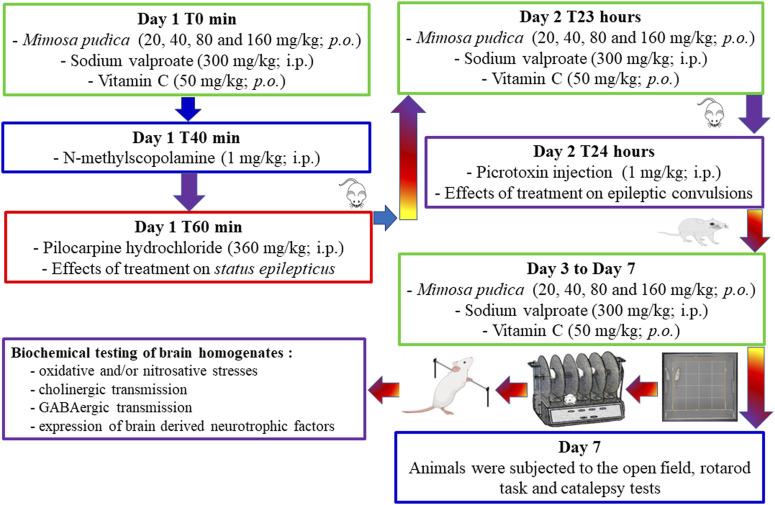
Ethnopharmacological studies revealed that the leaves and stems of Mimosa pudica L. (Fabaceae) are widely used for the treatment of epilepsy. This study sought to investigate the effects of the aqueous extract of Mimosa pudica leaves and stems against pilocarpine-picrotoxin kindling-induced temporal lobe epilepsy in mice and its implication on oxidative/nitrosative stress, GABAergic/cholinergic signalling, and brain-derived neurotrophic factor (BDNF) expression. The animals were treated for seven consecutive days as follows: one normal group and one negative control group that received orally distilled water; four test groups that received orally four doses of Mimosa pudica (20, 40, 80, and 160 mg/kg), respectively; and one positive control group that received 300 mg/kg sodium valproate intraperitoneally. One hour after the first treatment (first day), status epilepticus was induced by intraperitoneal injection of a single dose of pilocarpine (360 mg/kg). Then, 23 hours after the injection of pilocarpine to the mice, once again, they received their different treatments. Sixty minutes later, they were injected with a sub-convulsive dose of picrotoxin (1 mg/kg), and the anticonvulsant property of the extract was determined. On day 7, open-field, rotarod, and catalepsy tests were performed. Finally, the mice were sacrificed, and the hippocampi were isolated to quantify some biochemical markers of oxidative/nitrosative stress, GABAergic/cholinergic signalling, and BDNF levels in the hippocampus. Mimosa pudica extracts (160 mg/kg) significantly increased the latency time to status epilepticus by 70.91%. It significantly decreased the number of clonic and tonic seizures to 9.33 ± 1.03 and 5.00 ± 0.89, and their duration to 11.50 ± 2.07 and 6.83 ± 0.75 s, respectively. Exploratory behaviour, motor coordination, and catalepsy were significantly ameliorated, respectively, in the open-field, rotarod, and catalepsy tests. Pilocarpine-picrotoxin-induced alteration of oxidant-antioxidant balance, GABA-transaminase stability, acetylcholinesterase/butyrylcholinesterase activity, and neurogenesis were attenuated by the extract (80-160 mg/kg). This study showed that the aqueous extract of Mimosa pudica leaves and stems ameliorated epileptogenesis of temporal lobe epilepsy and could be used for the treatment of temporal lobe epilepsy.
期刊介绍:
Frontiers in Pharmacology is a leading journal in its field, publishing rigorously peer-reviewed research across disciplines, including basic and clinical pharmacology, medicinal chemistry, pharmacy and toxicology. Field Chief Editor Heike Wulff at UC Davis is supported by an outstanding Editorial Board of international researchers. This multidisciplinary open-access journal is at the forefront of disseminating and communicating scientific knowledge and impactful discoveries to researchers, academics, clinicians and the public worldwide.





 京公网安备 11010802042870号
京ICP备2023020795号-1
京公网安备 11010802042870号
京ICP备2023020795号-1

 分享
分享
 求助内容:
求助内容: 应助结果提醒方式:
 扫码关注我们
