Wendy Maltinsky, Vivien Swanson, Kamar Tanyan, Sarah Hotham
{"title":"圣赫勒拿岛保健和护理专业人员健康行为改变培训评价。","authors":"Wendy Maltinsky, Vivien Swanson, Kamar Tanyan, Sarah Hotham","doi":"10.3390/healthcare13040435","DOIUrl":null,"url":null,"abstract":"<p><p><b>Background:</b> Health behavior consultations support self-management if delivered by skilled practitioners. We summarize here the results of a collaborative training intervention program delivered to health and care practitioners working in a remote-island context. The program was designed to build confidence in the implementation of communication and behavior change skills and to sustain their use in work settings. The setting for the behavior change training program was the South Atlantic island of St. Helena, a remote low-middle-income country which has a population with high levels of obesity and a prevalence of long-term conditions. <b>Objectives:</b> We aimed to increase knowledge, confidence, and implementation of behavior change techniques (BCTs) and communication skills of health and social care staff through delivering and evaluating training using the MAP (Motivation, Action, Prompt) behavior change framework. A successful training intervention could ultimately improve self-management and patient health outcomes. <b>Methods:</b> Co-production with onsite representatives adapted the program for local delivery. A two-day training program was delivered face-to-face to 32 multidisciplinary staff. Pre- and post-intervention and 18-month follow-up evaluation assessed reactions, learning and implementation using multiple methods, including participant feedback and primary care patient reports. <b>Results:</b> Positive reactions to training and significant improvement in confidence, perceived importance, intention to use and implementation of BCTs and communication skills immediately post-training and at long-term follow-up were observed. Patient reports suggested some techniques became routinely used. Methodological difficulties arose due to staff retention and disruption through the COVID-19 pandemic. <b>Conclusions:</b> The delivery of health behavior change training can be effective in remote contexts with sustainable impacts on healthcare. There are challenges working in this context including staff continuity and technological reliability.</p>","PeriodicalId":12977,"journal":{"name":"Healthcare","volume":"13 4","pages":""},"PeriodicalIF":2.7000,"publicationDate":"2025-02-18","publicationTypes":"Journal Article","fieldsOfStudy":null,"isOpenAccess":false,"openAccessPdf":"https://www.ncbi.nlm.nih.gov/pmc/articles/PMC11854948/pdf/","citationCount":"0","resultStr":"{\"title\":\"An Evaluation of Health Behavior Change Training for Health and Care Professionals in St. Helena.\",\"authors\":\"Wendy Maltinsky, Vivien Swanson, Kamar Tanyan, Sarah Hotham\",\"doi\":\"10.3390/healthcare13040435\",\"DOIUrl\":null,\"url\":null,\"abstract\":\"<p><p><b>Background:</b> Health behavior consultations support self-management if delivered by skilled practitioners. We summarize here the results of a collaborative training intervention program delivered to health and care practitioners working in a remote-island context. The program was designed to build confidence in the implementation of communication and behavior change skills and to sustain their use in work settings. The setting for the behavior change training program was the South Atlantic island of St. Helena, a remote low-middle-income country which has a population with high levels of obesity and a prevalence of long-term conditions. <b>Objectives:</b> We aimed to increase knowledge, confidence, and implementation of behavior change techniques (BCTs) and communication skills of health and social care staff through delivering and evaluating training using the MAP (Motivation, Action, Prompt) behavior change framework. A successful training intervention could ultimately improve self-management and patient health outcomes. <b>Methods:</b> Co-production with onsite representatives adapted the program for local delivery. A two-day training program was delivered face-to-face to 32 multidisciplinary staff. Pre- and post-intervention and 18-month follow-up evaluation assessed reactions, learning and implementation using multiple methods, including participant feedback and primary care patient reports. <b>Results:</b> Positive reactions to training and significant improvement in confidence, perceived importance, intention to use and implementation of BCTs and communication skills immediately post-training and at long-term follow-up were observed. Patient reports suggested some techniques became routinely used. Methodological difficulties arose due to staff retention and disruption through the COVID-19 pandemic. <b>Conclusions:</b> The delivery of health behavior change training can be effective in remote contexts with sustainable impacts on healthcare. There are challenges working in this context including staff continuity and technological reliability.</p>\",\"PeriodicalId\":12977,\"journal\":{\"name\":\"Healthcare\",\"volume\":\"13 4\",\"pages\":\"\"},\"PeriodicalIF\":2.7000,\"publicationDate\":\"2025-02-18\",\"publicationTypes\":\"Journal Article\",\"fieldsOfStudy\":null,\"isOpenAccess\":false,\"openAccessPdf\":\"https://www.ncbi.nlm.nih.gov/pmc/articles/PMC11854948/pdf/\",\"citationCount\":\"0\",\"resultStr\":null,\"platform\":\"Semanticscholar\",\"paperid\":null,\"PeriodicalName\":\"Healthcare\",\"FirstCategoryId\":\"3\",\"ListUrlMain\":\"https://doi.org/10.3390/healthcare13040435\",\"RegionNum\":4,\"RegionCategory\":\"医学\",\"ArticlePicture\":[],\"TitleCN\":null,\"AbstractTextCN\":null,\"PMCID\":null,\"EPubDate\":\"\",\"PubModel\":\"\",\"JCR\":\"Q2\",\"JCRName\":\"HEALTH CARE SCIENCES & SERVICES\",\"Score\":null,\"Total\":0}","platform":"Semanticscholar","paperid":null,"PeriodicalName":"Healthcare","FirstCategoryId":"3","ListUrlMain":"https://doi.org/10.3390/healthcare13040435","RegionNum":4,"RegionCategory":"医学","ArticlePicture":[],"TitleCN":null,"AbstractTextCN":null,"PMCID":null,"EPubDate":"","PubModel":"","JCR":"Q2","JCRName":"HEALTH CARE SCIENCES & SERVICES","Score":null,"Total":0}
An Evaluation of Health Behavior Change Training for Health and Care Professionals in St. Helena.
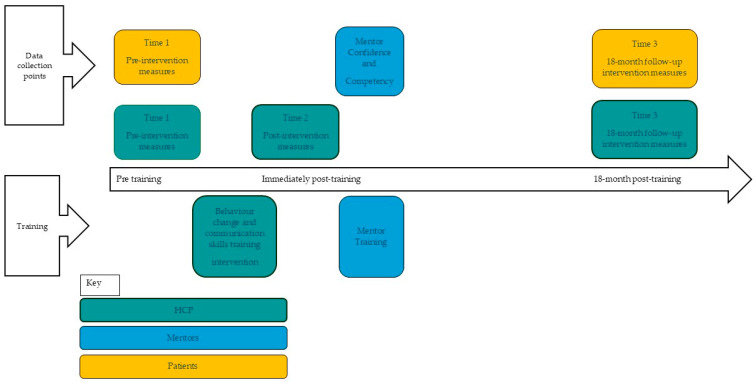
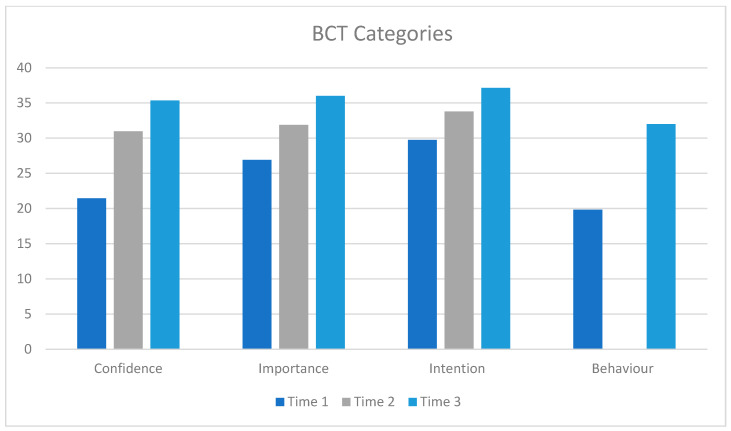
Background: Health behavior consultations support self-management if delivered by skilled practitioners. We summarize here the results of a collaborative training intervention program delivered to health and care practitioners working in a remote-island context. The program was designed to build confidence in the implementation of communication and behavior change skills and to sustain their use in work settings. The setting for the behavior change training program was the South Atlantic island of St. Helena, a remote low-middle-income country which has a population with high levels of obesity and a prevalence of long-term conditions. Objectives: We aimed to increase knowledge, confidence, and implementation of behavior change techniques (BCTs) and communication skills of health and social care staff through delivering and evaluating training using the MAP (Motivation, Action, Prompt) behavior change framework. A successful training intervention could ultimately improve self-management and patient health outcomes. Methods: Co-production with onsite representatives adapted the program for local delivery. A two-day training program was delivered face-to-face to 32 multidisciplinary staff. Pre- and post-intervention and 18-month follow-up evaluation assessed reactions, learning and implementation using multiple methods, including participant feedback and primary care patient reports. Results: Positive reactions to training and significant improvement in confidence, perceived importance, intention to use and implementation of BCTs and communication skills immediately post-training and at long-term follow-up were observed. Patient reports suggested some techniques became routinely used. Methodological difficulties arose due to staff retention and disruption through the COVID-19 pandemic. Conclusions: The delivery of health behavior change training can be effective in remote contexts with sustainable impacts on healthcare. There are challenges working in this context including staff continuity and technological reliability.
期刊介绍:
Healthcare (ISSN 2227-9032) is an international, peer-reviewed, open access journal (free for readers), which publishes original theoretical and empirical work in the interdisciplinary area of all aspects of medicine and health care research. Healthcare publishes Original Research Articles, Reviews, Case Reports, Research Notes and Short Communications. We encourage researchers to publish their experimental and theoretical results in as much detail as possible. For theoretical papers, full details of proofs must be provided so that the results can be checked; for experimental papers, full experimental details must be provided so that the results can be reproduced. Additionally, electronic files or software regarding the full details of the calculations, experimental procedure, etc., can be deposited along with the publication as “Supplementary Material”.





 京公网安备 11010802042870号
京ICP备2023020795号-1
京公网安备 11010802042870号
京ICP备2023020795号-1

 分享
分享
 求助内容:
求助内容: 应助结果提醒方式:
 扫码关注我们
