Martina Pontillo, Rossella Trio, Nicola Rocco, Ada Cinquerrui, Mariana Di Lorenzo, Giuseppe Catanuto, Francesca Magnoni, Fabrizia Calenda, Carlo Luigi Junior Castiello, Mafalda Ingenito, Alessia Luciana Margherita, Nunzio Velotti, Mario Musella
{"title":"乳腺癌预防的饮食干预:探讨营养在一级和三级预防策略中的作用。","authors":"Martina Pontillo, Rossella Trio, Nicola Rocco, Ada Cinquerrui, Mariana Di Lorenzo, Giuseppe Catanuto, Francesca Magnoni, Fabrizia Calenda, Carlo Luigi Junior Castiello, Mafalda Ingenito, Alessia Luciana Margherita, Nunzio Velotti, Mario Musella","doi":"10.3390/healthcare13040407","DOIUrl":null,"url":null,"abstract":"<p><p><b>Background:</b> Breast cancer remains the most prevalent malignancy among women worldwide, necessitating effective prevention strategies. The current literature was scrutinized to investigate the impact of dietary factors, such as the consumption of fruits, vegetables, and whole grains, and dietary patterns such as the Mediterranean diet on reducing the risk of breast cancer. Additionally, the potential role of diet in diminishing the risk of disease recurrence and enhancing outcomes among breast cancer survivors was explored. <b>Methods</b>: A systematic literature search was conducted using PubMed, Web of Science, Scopus, and EMBASE to identify relevant studies published between 2000 and 2024. Inclusion criteria were applied to select studies with robust methodologies, including randomized clinical trials, meta-analyses, and prospective cohort studies focusing on adult women. Only studies published in English were considered. Papers on animal studies, editorials, and case series were excluded. <b>Results</b>: Our findings show the critical interplay between diet and breast cancer prevention, crucial for the development of effective strategies to both primary and tertiary prevention. Challenges such as adherence to dietary recommendations, cultural and socioeconomic disparities, and limited high-quality evidence were identified. <b>Conclusions</b>: This review underscores the critical need to integrate nutrition into clinical practice and highlights avenues for future research, including personalized dietary interventions.</p>","PeriodicalId":12977,"journal":{"name":"Healthcare","volume":"13 4","pages":""},"PeriodicalIF":2.7000,"publicationDate":"2025-02-13","publicationTypes":"Journal Article","fieldsOfStudy":null,"isOpenAccess":false,"openAccessPdf":"https://www.ncbi.nlm.nih.gov/pmc/articles/PMC11854917/pdf/","citationCount":"0","resultStr":"{\"title\":\"Dietary Interventions for Breast Cancer Prevention: Exploring the Role of Nutrition in Primary and Tertiary Prevention Strategies.\",\"authors\":\"Martina Pontillo, Rossella Trio, Nicola Rocco, Ada Cinquerrui, Mariana Di Lorenzo, Giuseppe Catanuto, Francesca Magnoni, Fabrizia Calenda, Carlo Luigi Junior Castiello, Mafalda Ingenito, Alessia Luciana Margherita, Nunzio Velotti, Mario Musella\",\"doi\":\"10.3390/healthcare13040407\",\"DOIUrl\":null,\"url\":null,\"abstract\":\"<p><p><b>Background:</b> Breast cancer remains the most prevalent malignancy among women worldwide, necessitating effective prevention strategies. The current literature was scrutinized to investigate the impact of dietary factors, such as the consumption of fruits, vegetables, and whole grains, and dietary patterns such as the Mediterranean diet on reducing the risk of breast cancer. Additionally, the potential role of diet in diminishing the risk of disease recurrence and enhancing outcomes among breast cancer survivors was explored. <b>Methods</b>: A systematic literature search was conducted using PubMed, Web of Science, Scopus, and EMBASE to identify relevant studies published between 2000 and 2024. Inclusion criteria were applied to select studies with robust methodologies, including randomized clinical trials, meta-analyses, and prospective cohort studies focusing on adult women. Only studies published in English were considered. Papers on animal studies, editorials, and case series were excluded. <b>Results</b>: Our findings show the critical interplay between diet and breast cancer prevention, crucial for the development of effective strategies to both primary and tertiary prevention. Challenges such as adherence to dietary recommendations, cultural and socioeconomic disparities, and limited high-quality evidence were identified. <b>Conclusions</b>: This review underscores the critical need to integrate nutrition into clinical practice and highlights avenues for future research, including personalized dietary interventions.</p>\",\"PeriodicalId\":12977,\"journal\":{\"name\":\"Healthcare\",\"volume\":\"13 4\",\"pages\":\"\"},\"PeriodicalIF\":2.7000,\"publicationDate\":\"2025-02-13\",\"publicationTypes\":\"Journal Article\",\"fieldsOfStudy\":null,\"isOpenAccess\":false,\"openAccessPdf\":\"https://www.ncbi.nlm.nih.gov/pmc/articles/PMC11854917/pdf/\",\"citationCount\":\"0\",\"resultStr\":null,\"platform\":\"Semanticscholar\",\"paperid\":null,\"PeriodicalName\":\"Healthcare\",\"FirstCategoryId\":\"3\",\"ListUrlMain\":\"https://doi.org/10.3390/healthcare13040407\",\"RegionNum\":4,\"RegionCategory\":\"医学\",\"ArticlePicture\":[],\"TitleCN\":null,\"AbstractTextCN\":null,\"PMCID\":null,\"EPubDate\":\"\",\"PubModel\":\"\",\"JCR\":\"Q2\",\"JCRName\":\"HEALTH CARE SCIENCES & SERVICES\",\"Score\":null,\"Total\":0}","platform":"Semanticscholar","paperid":null,"PeriodicalName":"Healthcare","FirstCategoryId":"3","ListUrlMain":"https://doi.org/10.3390/healthcare13040407","RegionNum":4,"RegionCategory":"医学","ArticlePicture":[],"TitleCN":null,"AbstractTextCN":null,"PMCID":null,"EPubDate":"","PubModel":"","JCR":"Q2","JCRName":"HEALTH CARE SCIENCES & SERVICES","Score":null,"Total":0}
引用次数: 0
摘要
背景:乳腺癌仍然是世界范围内妇女中最普遍的恶性肿瘤,需要有效的预防策略。目前的文献被仔细审查,以调查饮食因素的影响,如水果、蔬菜和全谷物的消费,以及饮食模式,如地中海饮食对降低乳腺癌风险的影响。此外,研究还探讨了饮食在降低乳腺癌幸存者疾病复发风险和提高预后方面的潜在作用。方法:系统检索PubMed、Web of Science、Scopus、EMBASE等数据库,检索2000 - 2024年间发表的相关研究。纳入标准用于选择方法可靠的研究,包括随机临床试验、荟萃分析和以成年女性为重点的前瞻性队列研究。只考虑了用英语发表的研究。关于动物研究、社论和病例系列的论文被排除在外。结果:我们的研究结果显示了饮食和乳腺癌预防之间的关键相互作用,这对于制定有效的一级和三级预防策略至关重要。研究发现了一些挑战,如饮食建议的依从性、文化和社会经济差异以及有限的高质量证据。结论:本综述强调了将营养纳入临床实践的迫切需要,并强调了未来研究的途径,包括个性化饮食干预。
Dietary Interventions for Breast Cancer Prevention: Exploring the Role of Nutrition in Primary and Tertiary Prevention Strategies.
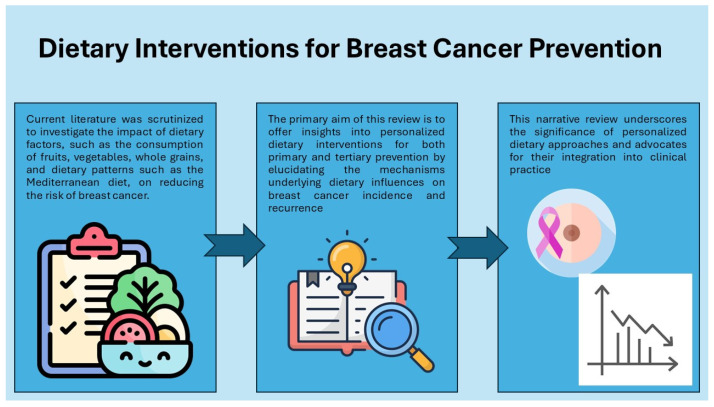
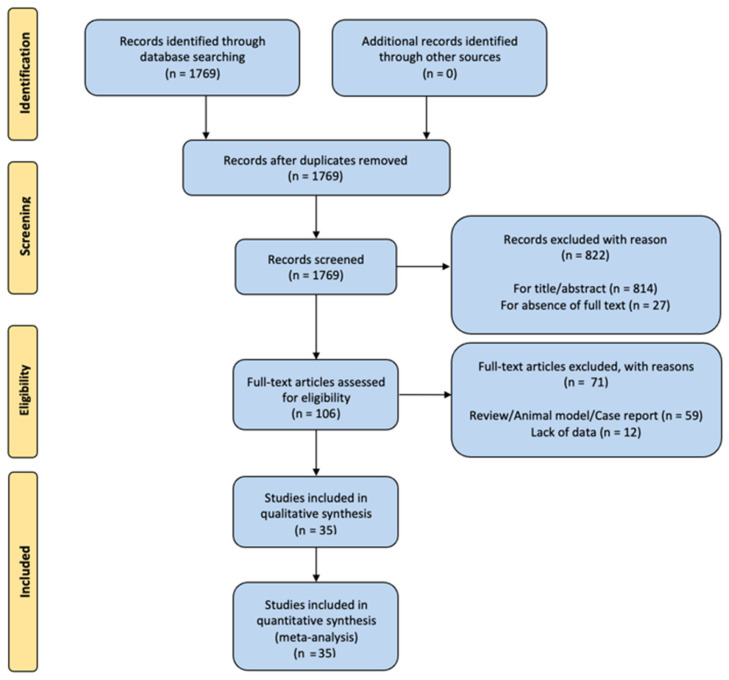
Background: Breast cancer remains the most prevalent malignancy among women worldwide, necessitating effective prevention strategies. The current literature was scrutinized to investigate the impact of dietary factors, such as the consumption of fruits, vegetables, and whole grains, and dietary patterns such as the Mediterranean diet on reducing the risk of breast cancer. Additionally, the potential role of diet in diminishing the risk of disease recurrence and enhancing outcomes among breast cancer survivors was explored. Methods: A systematic literature search was conducted using PubMed, Web of Science, Scopus, and EMBASE to identify relevant studies published between 2000 and 2024. Inclusion criteria were applied to select studies with robust methodologies, including randomized clinical trials, meta-analyses, and prospective cohort studies focusing on adult women. Only studies published in English were considered. Papers on animal studies, editorials, and case series were excluded. Results: Our findings show the critical interplay between diet and breast cancer prevention, crucial for the development of effective strategies to both primary and tertiary prevention. Challenges such as adherence to dietary recommendations, cultural and socioeconomic disparities, and limited high-quality evidence were identified. Conclusions: This review underscores the critical need to integrate nutrition into clinical practice and highlights avenues for future research, including personalized dietary interventions.
期刊介绍:
Healthcare (ISSN 2227-9032) is an international, peer-reviewed, open access journal (free for readers), which publishes original theoretical and empirical work in the interdisciplinary area of all aspects of medicine and health care research. Healthcare publishes Original Research Articles, Reviews, Case Reports, Research Notes and Short Communications. We encourage researchers to publish their experimental and theoretical results in as much detail as possible. For theoretical papers, full details of proofs must be provided so that the results can be checked; for experimental papers, full experimental details must be provided so that the results can be reproduced. Additionally, electronic files or software regarding the full details of the calculations, experimental procedure, etc., can be deposited along with the publication as “Supplementary Material”.




 京公网安备 11010802042870号
京ICP备2023020795号-1
京公网安备 11010802042870号
京ICP备2023020795号-1

 分享
分享
 求助内容:
求助内容: 应助结果提醒方式:
 扫码关注我们
