{"title":"沙特阿拉伯镰状细胞病的直接医疗成本:一项单中心研究的启示","authors":"Yazed AlRuthia","doi":"10.3390/healthcare13040420","DOIUrl":null,"url":null,"abstract":"<p><p><b>Background</b>: Sickle cell disease (SCD) is a rare autosomal recessive disorder that is common in countries with consanguineous marriages. It leads to various complications, including painful episodes, infections, delayed growth, stroke, and organ damage, which contribute to high healthcare utilization and costs. In Saudi Arabia, the prevalence of SCD is notably high, largely due to the frequency of consanguineous marriages. However, there has not yet been a study estimating the direct medical costs of managing SCD based on real-world data. This study aims to assess these costs in Saudi Arabia. <b>Methods</b>: Data were collected from electronic medical records (EMRs) at a university-affiliated tertiary care center. A micro-costing approach was used to estimate the direct medical costs (e.g., laboratory tests, imaging, emergency department visits, hospitalizations, prescription medications, outpatient visits, etc.) retrospectively over a 12-month follow-up period. The baseline characteristics of the patients were presented using frequencies and percentages. The costs of different healthcare services were analyzed using means and the 95% confidence intervals. A generalized linear model (GLM) with a gamma distribution was utilized to examine the association between the overall costs and patient characteristics (e.g., age, gender, duration of illness, surgeries, blood transfusions, etc.), allowing for the estimation of the adjusted mean costs. <b>Results</b>: A total of 100 patients met the inclusion criteria and were included in the analysis. The mean age of the patients was 10.21 years (±6.87 years); 53% were male, and a substantial majority (96%) had the HbSS genotype. Sixty-one percent of the patients had undergone at least one red blood cell (RBC) exchange transfusion, while 21% had undergone surgical procedures, including tonsillectomy, splenectomy, and cholecystectomy. Additionally, 45% had experienced at least one vaso-occlusive crisis (VOC), and 59% had been hospitalized at least once in the past 12 months. Factors such as the frequency of laboratory tests and imaging studies, the length of hospital stay (LOS), the rate of emergency department (ED) visits, surgical procedures, the number of prescription medications, and the frequency of blood transfusions were all significant predictors of higher direct medical costs (<i>p</i> < 0.05). The estimated mean annual direct medical costs per patient were USD 26,626.45 (95% CI: USD 22,716.89-USD 30,536.00). After adjusting for various factors, including age, gender, duration of illness, frequency of lab and imaging tests, LOS, ED visits, surgical procedures, number of prescription medications, rates of VOCs, and RBC exchange transfusions, the adjusted mean annual direct medical cost per patient was calculated to be USD 14,604.72 (95% CI: USD 10,943.49-USD 19,525.96). <b>Conclusions</b>: The results of this study emphasize the substantial direct medical costs linked to sickle cell disease (SCD), which are greatly affected by the frequency of related complications. These insights should motivate policymakers and healthcare researchers to assess both the national direct and indirect costs associated with SCD, especially given the significant number of SCD patients in Saudi Arabia.</p>","PeriodicalId":12977,"journal":{"name":"Healthcare","volume":"13 4","pages":""},"PeriodicalIF":3.4000,"publicationDate":"2025-02-15","publicationTypes":"Journal Article","fieldsOfStudy":null,"isOpenAccess":false,"openAccessPdf":"https://www.ncbi.nlm.nih.gov/pmc/articles/PMC11855012/pdf/","citationCount":"0","resultStr":"{\"title\":\"The Direct Medical Costs of Sickle Cell Disease in Saudi Arabia: Insights from a Single Center Study.\",\"authors\":\"Yazed AlRuthia\",\"doi\":\"10.3390/healthcare13040420\",\"DOIUrl\":null,\"url\":null,\"abstract\":\"<p><p><b>Background</b>: Sickle cell disease (SCD) is a rare autosomal recessive disorder that is common in countries with consanguineous marriages. It leads to various complications, including painful episodes, infections, delayed growth, stroke, and organ damage, which contribute to high healthcare utilization and costs. In Saudi Arabia, the prevalence of SCD is notably high, largely due to the frequency of consanguineous marriages. However, there has not yet been a study estimating the direct medical costs of managing SCD based on real-world data. This study aims to assess these costs in Saudi Arabia. <b>Methods</b>: Data were collected from electronic medical records (EMRs) at a university-affiliated tertiary care center. A micro-costing approach was used to estimate the direct medical costs (e.g., laboratory tests, imaging, emergency department visits, hospitalizations, prescription medications, outpatient visits, etc.) retrospectively over a 12-month follow-up period. The baseline characteristics of the patients were presented using frequencies and percentages. The costs of different healthcare services were analyzed using means and the 95% confidence intervals. A generalized linear model (GLM) with a gamma distribution was utilized to examine the association between the overall costs and patient characteristics (e.g., age, gender, duration of illness, surgeries, blood transfusions, etc.), allowing for the estimation of the adjusted mean costs. <b>Results</b>: A total of 100 patients met the inclusion criteria and were included in the analysis. The mean age of the patients was 10.21 years (±6.87 years); 53% were male, and a substantial majority (96%) had the HbSS genotype. Sixty-one percent of the patients had undergone at least one red blood cell (RBC) exchange transfusion, while 21% had undergone surgical procedures, including tonsillectomy, splenectomy, and cholecystectomy. Additionally, 45% had experienced at least one vaso-occlusive crisis (VOC), and 59% had been hospitalized at least once in the past 12 months. Factors such as the frequency of laboratory tests and imaging studies, the length of hospital stay (LOS), the rate of emergency department (ED) visits, surgical procedures, the number of prescription medications, and the frequency of blood transfusions were all significant predictors of higher direct medical costs (<i>p</i> < 0.05). The estimated mean annual direct medical costs per patient were USD 26,626.45 (95% CI: USD 22,716.89-USD 30,536.00). After adjusting for various factors, including age, gender, duration of illness, frequency of lab and imaging tests, LOS, ED visits, surgical procedures, number of prescription medications, rates of VOCs, and RBC exchange transfusions, the adjusted mean annual direct medical cost per patient was calculated to be USD 14,604.72 (95% CI: USD 10,943.49-USD 19,525.96). <b>Conclusions</b>: The results of this study emphasize the substantial direct medical costs linked to sickle cell disease (SCD), which are greatly affected by the frequency of related complications. These insights should motivate policymakers and healthcare researchers to assess both the national direct and indirect costs associated with SCD, especially given the significant number of SCD patients in Saudi Arabia.</p>\",\"PeriodicalId\":12977,\"journal\":{\"name\":\"Healthcare\",\"volume\":\"13 4\",\"pages\":\"\"},\"PeriodicalIF\":3.4000,\"publicationDate\":\"2025-02-15\",\"publicationTypes\":\"Journal Article\",\"fieldsOfStudy\":null,\"isOpenAccess\":false,\"openAccessPdf\":\"https://www.ncbi.nlm.nih.gov/pmc/articles/PMC11855012/pdf/\",\"citationCount\":\"0\",\"resultStr\":null,\"platform\":\"Semanticscholar\",\"paperid\":null,\"PeriodicalName\":\"Healthcare\",\"FirstCategoryId\":\"3\",\"ListUrlMain\":\"https://doi.org/10.3390/healthcare13040420\",\"RegionNum\":4,\"RegionCategory\":\"医学\",\"ArticlePicture\":[],\"TitleCN\":null,\"AbstractTextCN\":null,\"PMCID\":null,\"EPubDate\":\"\",\"PubModel\":\"\",\"JCR\":\"Q2\",\"JCRName\":\"HEALTH CARE SCIENCES & SERVICES\",\"Score\":null,\"Total\":0}","platform":"Semanticscholar","paperid":null,"PeriodicalName":"Healthcare","FirstCategoryId":"3","ListUrlMain":"https://doi.org/10.3390/healthcare13040420","RegionNum":4,"RegionCategory":"医学","ArticlePicture":[],"TitleCN":null,"AbstractTextCN":null,"PMCID":null,"EPubDate":"","PubModel":"","JCR":"Q2","JCRName":"HEALTH CARE SCIENCES & SERVICES","Score":null,"Total":0}
The Direct Medical Costs of Sickle Cell Disease in Saudi Arabia: Insights from a Single Center Study.
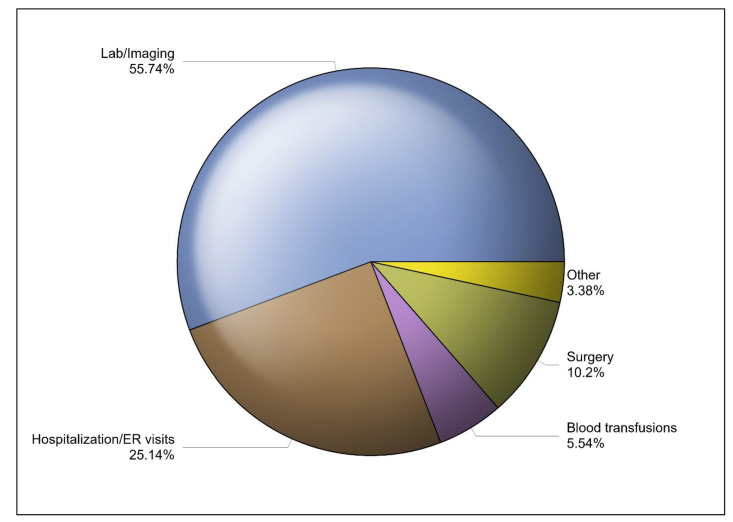
Background: Sickle cell disease (SCD) is a rare autosomal recessive disorder that is common in countries with consanguineous marriages. It leads to various complications, including painful episodes, infections, delayed growth, stroke, and organ damage, which contribute to high healthcare utilization and costs. In Saudi Arabia, the prevalence of SCD is notably high, largely due to the frequency of consanguineous marriages. However, there has not yet been a study estimating the direct medical costs of managing SCD based on real-world data. This study aims to assess these costs in Saudi Arabia. Methods: Data were collected from electronic medical records (EMRs) at a university-affiliated tertiary care center. A micro-costing approach was used to estimate the direct medical costs (e.g., laboratory tests, imaging, emergency department visits, hospitalizations, prescription medications, outpatient visits, etc.) retrospectively over a 12-month follow-up period. The baseline characteristics of the patients were presented using frequencies and percentages. The costs of different healthcare services were analyzed using means and the 95% confidence intervals. A generalized linear model (GLM) with a gamma distribution was utilized to examine the association between the overall costs and patient characteristics (e.g., age, gender, duration of illness, surgeries, blood transfusions, etc.), allowing for the estimation of the adjusted mean costs. Results: A total of 100 patients met the inclusion criteria and were included in the analysis. The mean age of the patients was 10.21 years (±6.87 years); 53% were male, and a substantial majority (96%) had the HbSS genotype. Sixty-one percent of the patients had undergone at least one red blood cell (RBC) exchange transfusion, while 21% had undergone surgical procedures, including tonsillectomy, splenectomy, and cholecystectomy. Additionally, 45% had experienced at least one vaso-occlusive crisis (VOC), and 59% had been hospitalized at least once in the past 12 months. Factors such as the frequency of laboratory tests and imaging studies, the length of hospital stay (LOS), the rate of emergency department (ED) visits, surgical procedures, the number of prescription medications, and the frequency of blood transfusions were all significant predictors of higher direct medical costs (p < 0.05). The estimated mean annual direct medical costs per patient were USD 26,626.45 (95% CI: USD 22,716.89-USD 30,536.00). After adjusting for various factors, including age, gender, duration of illness, frequency of lab and imaging tests, LOS, ED visits, surgical procedures, number of prescription medications, rates of VOCs, and RBC exchange transfusions, the adjusted mean annual direct medical cost per patient was calculated to be USD 14,604.72 (95% CI: USD 10,943.49-USD 19,525.96). Conclusions: The results of this study emphasize the substantial direct medical costs linked to sickle cell disease (SCD), which are greatly affected by the frequency of related complications. These insights should motivate policymakers and healthcare researchers to assess both the national direct and indirect costs associated with SCD, especially given the significant number of SCD patients in Saudi Arabia.
期刊介绍:
Healthcare (ISSN 2227-9032) is an international, peer-reviewed, open access journal (free for readers), which publishes original theoretical and empirical work in the interdisciplinary area of all aspects of medicine and health care research. Healthcare publishes Original Research Articles, Reviews, Case Reports, Research Notes and Short Communications. We encourage researchers to publish their experimental and theoretical results in as much detail as possible. For theoretical papers, full details of proofs must be provided so that the results can be checked; for experimental papers, full experimental details must be provided so that the results can be reproduced. Additionally, electronic files or software regarding the full details of the calculations, experimental procedure, etc., can be deposited along with the publication as “Supplementary Material”.




 京公网安备 11010802042870号
京ICP备2023020795号-1
京公网安备 11010802042870号
京ICP备2023020795号-1

 分享
分享
 求助内容:
求助内容: 应助结果提醒方式:
 扫码关注我们
