Ki-Sun Lee, Jaeyeol Kim, JaeHyung Lim, Jae-Jun Ryu
{"title":"新型无螺钉固位牙种植体的生物力学评价:三维有限元分析。","authors":"Ki-Sun Lee, Jaeyeol Kim, JaeHyung Lim, Jae-Jun Ryu","doi":"10.3390/jfb16020039","DOIUrl":null,"url":null,"abstract":"<p><p>This study aimed to comparatively evaluate the biomechanical behaviors of three types of dental implant restorations: a screw-and-cement-retained prosthetic system (SCRP); a cementless screw-retained prosthetic system (SRP); and a novel screwless hook-retained prosthetic system (HRP). Three-dimensional finite element analysis (FEA) was used to evaluate biomechanical behavior. A comparative study of three dental implant prostheses was performed under two loading conditions: a vertical load of 100 N and an oblique load of 100 N at an angle of 30°. Under both loading conditions, the maximum von Mises stress values in the dental implant using the HRP system were lower (21.33 MPa) than those of the SCRP system (32.91 MPa), and the stress distribution of the implant prosthetic components tended to be more favorable than that of the SCRP system. Thus, the results show that the performance of the HRP system was comparable to that of a conventional SRP system under the same conditions. Regarding stress distribution, the novel screwless HRP system presents a viable alternative implant prosthodontic system to the conventional SCRP system.</p>","PeriodicalId":15767,"journal":{"name":"Journal of Functional Biomaterials","volume":"16 2","pages":""},"PeriodicalIF":5.2000,"publicationDate":"2025-01-22","publicationTypes":"Journal Article","fieldsOfStudy":null,"isOpenAccess":false,"openAccessPdf":"https://www.ncbi.nlm.nih.gov/pmc/articles/PMC11856067/pdf/","citationCount":"0","resultStr":"{\"title\":\"Comparative Biomechanical Evaluation of Novel Screwless Retained Dental Implant Prosthesis: A 3D Finite Element Analysis.\",\"authors\":\"Ki-Sun Lee, Jaeyeol Kim, JaeHyung Lim, Jae-Jun Ryu\",\"doi\":\"10.3390/jfb16020039\",\"DOIUrl\":null,\"url\":null,\"abstract\":\"<p><p>This study aimed to comparatively evaluate the biomechanical behaviors of three types of dental implant restorations: a screw-and-cement-retained prosthetic system (SCRP); a cementless screw-retained prosthetic system (SRP); and a novel screwless hook-retained prosthetic system (HRP). Three-dimensional finite element analysis (FEA) was used to evaluate biomechanical behavior. A comparative study of three dental implant prostheses was performed under two loading conditions: a vertical load of 100 N and an oblique load of 100 N at an angle of 30°. Under both loading conditions, the maximum von Mises stress values in the dental implant using the HRP system were lower (21.33 MPa) than those of the SCRP system (32.91 MPa), and the stress distribution of the implant prosthetic components tended to be more favorable than that of the SCRP system. Thus, the results show that the performance of the HRP system was comparable to that of a conventional SRP system under the same conditions. Regarding stress distribution, the novel screwless HRP system presents a viable alternative implant prosthodontic system to the conventional SCRP system.</p>\",\"PeriodicalId\":15767,\"journal\":{\"name\":\"Journal of Functional Biomaterials\",\"volume\":\"16 2\",\"pages\":\"\"},\"PeriodicalIF\":5.2000,\"publicationDate\":\"2025-01-22\",\"publicationTypes\":\"Journal Article\",\"fieldsOfStudy\":null,\"isOpenAccess\":false,\"openAccessPdf\":\"https://www.ncbi.nlm.nih.gov/pmc/articles/PMC11856067/pdf/\",\"citationCount\":\"0\",\"resultStr\":null,\"platform\":\"Semanticscholar\",\"paperid\":null,\"PeriodicalName\":\"Journal of Functional Biomaterials\",\"FirstCategoryId\":\"5\",\"ListUrlMain\":\"https://doi.org/10.3390/jfb16020039\",\"RegionNum\":3,\"RegionCategory\":\"医学\",\"ArticlePicture\":[],\"TitleCN\":null,\"AbstractTextCN\":null,\"PMCID\":null,\"EPubDate\":\"\",\"PubModel\":\"\",\"JCR\":\"Q1\",\"JCRName\":\"ENGINEERING, BIOMEDICAL\",\"Score\":null,\"Total\":0}","platform":"Semanticscholar","paperid":null,"PeriodicalName":"Journal of Functional Biomaterials","FirstCategoryId":"5","ListUrlMain":"https://doi.org/10.3390/jfb16020039","RegionNum":3,"RegionCategory":"医学","ArticlePicture":[],"TitleCN":null,"AbstractTextCN":null,"PMCID":null,"EPubDate":"","PubModel":"","JCR":"Q1","JCRName":"ENGINEERING, BIOMEDICAL","Score":null,"Total":0}
Comparative Biomechanical Evaluation of Novel Screwless Retained Dental Implant Prosthesis: A 3D Finite Element Analysis.
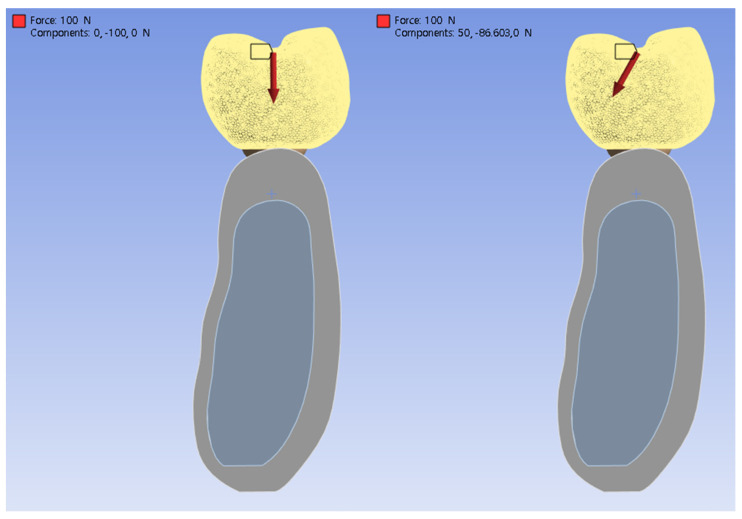
This study aimed to comparatively evaluate the biomechanical behaviors of three types of dental implant restorations: a screw-and-cement-retained prosthetic system (SCRP); a cementless screw-retained prosthetic system (SRP); and a novel screwless hook-retained prosthetic system (HRP). Three-dimensional finite element analysis (FEA) was used to evaluate biomechanical behavior. A comparative study of three dental implant prostheses was performed under two loading conditions: a vertical load of 100 N and an oblique load of 100 N at an angle of 30°. Under both loading conditions, the maximum von Mises stress values in the dental implant using the HRP system were lower (21.33 MPa) than those of the SCRP system (32.91 MPa), and the stress distribution of the implant prosthetic components tended to be more favorable than that of the SCRP system. Thus, the results show that the performance of the HRP system was comparable to that of a conventional SRP system under the same conditions. Regarding stress distribution, the novel screwless HRP system presents a viable alternative implant prosthodontic system to the conventional SCRP system.
期刊介绍:
Journal of Functional Biomaterials (JFB, ISSN 2079-4983) is an international and interdisciplinary scientific journal that publishes regular research papers (articles), reviews and short communications about applications of materials for biomedical use. JFB covers subjects from chemistry, pharmacy, biology, physics over to engineering. The journal focuses on the preparation, performance and use of functional biomaterials in biomedical devices and their behaviour in physiological environments. Our aim is to encourage scientists to publish their results in as much detail as possible. Therefore, there is no restriction on the length of the papers. The full experimental details must be provided so that the results can be reproduced. Several topical special issues will be published. Scope: adhesion, adsorption, biocompatibility, biohybrid materials, bio-inert materials, biomaterials, biomedical devices, biomimetic materials, bone repair, cardiovascular devices, ceramics, composite materials, dental implants, dental materials, drug delivery systems, functional biopolymers, glasses, hyper branched polymers, molecularly imprinted polymers (MIPs), nanomedicine, nanoparticles, nanotechnology, natural materials, self-assembly smart materials, stimuli responsive materials, surface modification, tissue devices, tissue engineering, tissue-derived materials, urological devices.







 京公网安备 11010802042870号
京ICP备2023020795号-1
京公网安备 11010802042870号
京ICP备2023020795号-1

 分享
分享
 求助内容:
求助内容: 应助结果提醒方式:
 扫码关注我们
