Sang J. Lee , Jessica Poon , Apissada Jindarojanakul , Chu-Chi Huang , Oliver Viera , Chan W. Cheong , Jason D. Lee
{"title":"人工智能在牙科:探索新兴应用和未来前景。","authors":"Sang J. Lee , Jessica Poon , Apissada Jindarojanakul , Chu-Chi Huang , Oliver Viera , Chan W. Cheong , Jason D. Lee","doi":"10.1016/j.jdent.2025.105648","DOIUrl":null,"url":null,"abstract":"<div><h3>Objectives</h3><div>This narrative review aimed to explore the evolution and advancements of artificial intelligence technologies, highlighting their transformative impact on healthcare, education, and specific aspects within dentistry as a field.</div></div><div><h3>Data and sources</h3><div>Subtopics within artificial intelligence technologies in dentistry were identified and divided among four reviewers. Electronic searches were performed with search terms that included: artificial intelligence, technologies, healthcare, education, dentistry, restorative, prosthodontics, periodontics, endodontics, oral surgery, oral pathology, oral medicine, implant dentistry, dental education, dental patient care, dental practice management, and combinations of the keywords.</div></div><div><h3>Study</h3><div>selection: A total of 120 articles were included for review that evaluated the use of artificial intelligence technologies within the healthcare and dental field. No formal evidence-based quality assessment was performed due to the narrative nature of this review. The conducted search was limited to the English language with no other further restrictions.</div></div><div><h3>Results</h3><div>The significance and applications of artificial intelligence technologies on the areas of dental education, dental patient care, and dental practice management were reviewed, along with the existing limitations and future directions of artificial intelligence in dentistry as whole. Current artificial intelligence technologies have shown promising efforts to bridge the gap between theoretical knowledge and clinical practice in dental education, as well as improved diagnostic information gathering and clinical decision-making abilities in patient care throughout various dental specialties. The integration of artificial intelligence into patient administration aspects have enabled practices to develop more efficient management workflows.</div></div><div><h3>Conclusions</h3><div>Despite the limitations that exist, the integration of artificial intelligence into the dental profession comes with numerous benefits that will continue to evolve each day. While the challenges and ethical considerations, mainly concerns about data privacy, are areas that need to be further addressed, the future of artificial intelligence in dentistry looks promising, with ongoing research aimed at overcoming current limitations and expanding artificial intelligence technologies.</div></div>","PeriodicalId":15585,"journal":{"name":"Journal of dentistry","volume":"155 ","pages":"Article 105648"},"PeriodicalIF":5.5000,"publicationDate":"2025-04-01","publicationTypes":"Journal Article","fieldsOfStudy":null,"isOpenAccess":false,"openAccessPdf":"","citationCount":"0","resultStr":"{\"title\":\"Artificial intelligence in dentistry: Exploring emerging applications and future prospects\",\"authors\":\"Sang J. Lee , Jessica Poon , Apissada Jindarojanakul , Chu-Chi Huang , Oliver Viera , Chan W. Cheong , Jason D. Lee\",\"doi\":\"10.1016/j.jdent.2025.105648\",\"DOIUrl\":null,\"url\":null,\"abstract\":\"<div><h3>Objectives</h3><div>This narrative review aimed to explore the evolution and advancements of artificial intelligence technologies, highlighting their transformative impact on healthcare, education, and specific aspects within dentistry as a field.</div></div><div><h3>Data and sources</h3><div>Subtopics within artificial intelligence technologies in dentistry were identified and divided among four reviewers. Electronic searches were performed with search terms that included: artificial intelligence, technologies, healthcare, education, dentistry, restorative, prosthodontics, periodontics, endodontics, oral surgery, oral pathology, oral medicine, implant dentistry, dental education, dental patient care, dental practice management, and combinations of the keywords.</div></div><div><h3>Study</h3><div>selection: A total of 120 articles were included for review that evaluated the use of artificial intelligence technologies within the healthcare and dental field. No formal evidence-based quality assessment was performed due to the narrative nature of this review. The conducted search was limited to the English language with no other further restrictions.</div></div><div><h3>Results</h3><div>The significance and applications of artificial intelligence technologies on the areas of dental education, dental patient care, and dental practice management were reviewed, along with the existing limitations and future directions of artificial intelligence in dentistry as whole. Current artificial intelligence technologies have shown promising efforts to bridge the gap between theoretical knowledge and clinical practice in dental education, as well as improved diagnostic information gathering and clinical decision-making abilities in patient care throughout various dental specialties. The integration of artificial intelligence into patient administration aspects have enabled practices to develop more efficient management workflows.</div></div><div><h3>Conclusions</h3><div>Despite the limitations that exist, the integration of artificial intelligence into the dental profession comes with numerous benefits that will continue to evolve each day. While the challenges and ethical considerations, mainly concerns about data privacy, are areas that need to be further addressed, the future of artificial intelligence in dentistry looks promising, with ongoing research aimed at overcoming current limitations and expanding artificial intelligence technologies.</div></div>\",\"PeriodicalId\":15585,\"journal\":{\"name\":\"Journal of dentistry\",\"volume\":\"155 \",\"pages\":\"Article 105648\"},\"PeriodicalIF\":5.5000,\"publicationDate\":\"2025-04-01\",\"publicationTypes\":\"Journal Article\",\"fieldsOfStudy\":null,\"isOpenAccess\":false,\"openAccessPdf\":\"\",\"citationCount\":\"0\",\"resultStr\":null,\"platform\":\"Semanticscholar\",\"paperid\":null,\"PeriodicalName\":\"Journal of dentistry\",\"FirstCategoryId\":\"3\",\"ListUrlMain\":\"https://www.sciencedirect.com/science/article/pii/S0300571225000934\",\"RegionNum\":2,\"RegionCategory\":\"医学\",\"ArticlePicture\":[],\"TitleCN\":null,\"AbstractTextCN\":null,\"PMCID\":null,\"EPubDate\":\"2025/2/22 0:00:00\",\"PubModel\":\"Epub\",\"JCR\":\"Q1\",\"JCRName\":\"DENTISTRY, ORAL SURGERY & MEDICINE\",\"Score\":null,\"Total\":0}","platform":"Semanticscholar","paperid":null,"PeriodicalName":"Journal of dentistry","FirstCategoryId":"3","ListUrlMain":"https://www.sciencedirect.com/science/article/pii/S0300571225000934","RegionNum":2,"RegionCategory":"医学","ArticlePicture":[],"TitleCN":null,"AbstractTextCN":null,"PMCID":null,"EPubDate":"2025/2/22 0:00:00","PubModel":"Epub","JCR":"Q1","JCRName":"DENTISTRY, ORAL SURGERY & MEDICINE","Score":null,"Total":0}
Artificial intelligence in dentistry: Exploring emerging applications and future prospects
Objectives
This narrative review aimed to explore the evolution and advancements of artificial intelligence technologies, highlighting their transformative impact on healthcare, education, and specific aspects within dentistry as a field.
Data and sources
Subtopics within artificial intelligence technologies in dentistry were identified and divided among four reviewers. Electronic searches were performed with search terms that included: artificial intelligence, technologies, healthcare, education, dentistry, restorative, prosthodontics, periodontics, endodontics, oral surgery, oral pathology, oral medicine, implant dentistry, dental education, dental patient care, dental practice management, and combinations of the keywords.
Study
selection: A total of 120 articles were included for review that evaluated the use of artificial intelligence technologies within the healthcare and dental field. No formal evidence-based quality assessment was performed due to the narrative nature of this review. The conducted search was limited to the English language with no other further restrictions.
Results
The significance and applications of artificial intelligence technologies on the areas of dental education, dental patient care, and dental practice management were reviewed, along with the existing limitations and future directions of artificial intelligence in dentistry as whole. Current artificial intelligence technologies have shown promising efforts to bridge the gap between theoretical knowledge and clinical practice in dental education, as well as improved diagnostic information gathering and clinical decision-making abilities in patient care throughout various dental specialties. The integration of artificial intelligence into patient administration aspects have enabled practices to develop more efficient management workflows.
Conclusions
Despite the limitations that exist, the integration of artificial intelligence into the dental profession comes with numerous benefits that will continue to evolve each day. While the challenges and ethical considerations, mainly concerns about data privacy, are areas that need to be further addressed, the future of artificial intelligence in dentistry looks promising, with ongoing research aimed at overcoming current limitations and expanding artificial intelligence technologies.
期刊介绍:
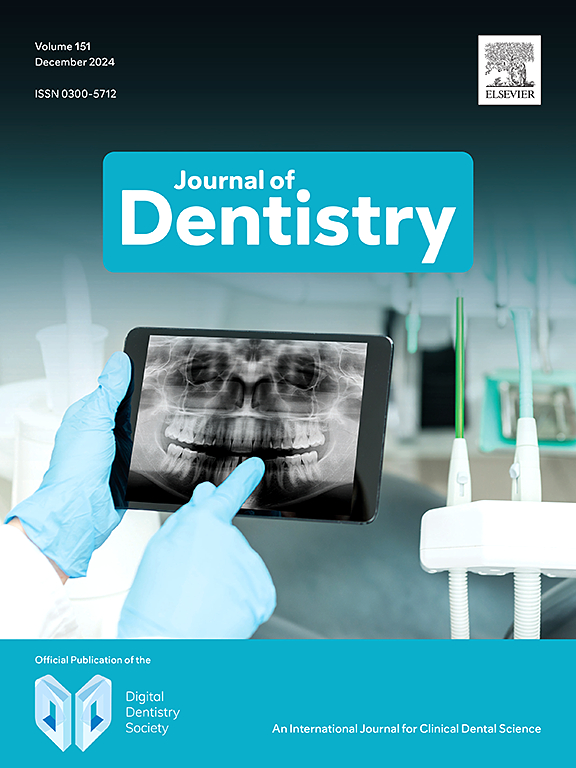
The Journal of Dentistry has an open access mirror journal The Journal of Dentistry: X, sharing the same aims and scope, editorial team, submission system and rigorous peer review.
The Journal of Dentistry is the leading international dental journal within the field of Restorative Dentistry. Placing an emphasis on publishing novel and high-quality research papers, the Journal aims to influence the practice of dentistry at clinician, research, industry and policy-maker level on an international basis.
Topics covered include the management of dental disease, periodontology, endodontology, operative dentistry, fixed and removable prosthodontics, dental biomaterials science, long-term clinical trials including epidemiology and oral health, technology transfer of new scientific instrumentation or procedures, as well as clinically relevant oral biology and translational research.
The Journal of Dentistry will publish original scientific research papers including short communications. It is also interested in publishing review articles and leaders in themed areas which will be linked to new scientific research. Conference proceedings are also welcome and expressions of interest should be communicated to the Editor.




 京公网安备 11010802042870号
京ICP备2023020795号-1
京公网安备 11010802042870号
京ICP备2023020795号-1

 分享
分享
 求助内容:
求助内容: 应助结果提醒方式:
 扫码关注我们
