Sunil P Mohan, Sivan P Priya, Nada Tawfig, Vivek Padmanabhan, Rasha Babiker, Arunkumar Palaniappan, Srinivasan Prabhu, Nallan Csk Chaitanya, Muhammed Mustahsen Rahman, Md Sofiqul Islam
{"title":"脂肪来源干细胞在周围神经再生中的潜在作用。","authors":"Sunil P Mohan, Sivan P Priya, Nada Tawfig, Vivek Padmanabhan, Rasha Babiker, Arunkumar Palaniappan, Srinivasan Prabhu, Nallan Csk Chaitanya, Muhammed Mustahsen Rahman, Md Sofiqul Islam","doi":"10.3390/neurolint17020023","DOIUrl":null,"url":null,"abstract":"<p><p>Peripheral nerve injuries are common complications in surgical and dental practices, often resulting in functional deficiencies and reduced quality of life. Current treatment choices, such as autografts, have limitations, including donor site morbidity and suboptimal outcomes. Adipose-derived stem cells (ADSCs) have shown assuring regenerative potential due to their accessibility, ease of harvesting and propagation, and multipotent properties. This review investigates the therapeutic potential of ADSCs in peripheral nerve regeneration, focusing on their use in bioengineered nerve conduits and supportive microenvironments. The analysis is constructed on published case reports, organized reviews, and clinical trials from Phase I to Phase III that investigate ADSCs in managing nerve injuries, emphasizing both peripheral and orofacial applications. The findings highlight the advantages of ADSCs in promoting nerve regeneration, including their secretion of angiogenic and neurotrophic factors, support for cellular persistence, and supplementing scaffold-based tissue repair. The regenerative capabilities of ADSCs in peripheral nerve injuries offer a novel approach to augmenting nerve repair and functional recovery. The accessibility of adipose tissue and the minimally invasive nature of ADSC harvesting further encourage its prospective application as an autologous cell source in regenerative medicine. Future research is needed to ascertain standardized protocols and optimize clinical outcomes, paving the way for ADSCs to become a mainstay in nerve regeneration.</p>","PeriodicalId":19130,"journal":{"name":"Neurology International","volume":"17 2","pages":""},"PeriodicalIF":3.0000,"publicationDate":"2025-02-06","publicationTypes":"Journal Article","fieldsOfStudy":null,"isOpenAccess":false,"openAccessPdf":"https://www.ncbi.nlm.nih.gov/pmc/articles/PMC11858299/pdf/","citationCount":"0","resultStr":"{\"title\":\"The Potential Role of Adipose-Derived Stem Cells in Regeneration of Peripheral Nerves.\",\"authors\":\"Sunil P Mohan, Sivan P Priya, Nada Tawfig, Vivek Padmanabhan, Rasha Babiker, Arunkumar Palaniappan, Srinivasan Prabhu, Nallan Csk Chaitanya, Muhammed Mustahsen Rahman, Md Sofiqul Islam\",\"doi\":\"10.3390/neurolint17020023\",\"DOIUrl\":null,\"url\":null,\"abstract\":\"<p><p>Peripheral nerve injuries are common complications in surgical and dental practices, often resulting in functional deficiencies and reduced quality of life. Current treatment choices, such as autografts, have limitations, including donor site morbidity and suboptimal outcomes. Adipose-derived stem cells (ADSCs) have shown assuring regenerative potential due to their accessibility, ease of harvesting and propagation, and multipotent properties. This review investigates the therapeutic potential of ADSCs in peripheral nerve regeneration, focusing on their use in bioengineered nerve conduits and supportive microenvironments. The analysis is constructed on published case reports, organized reviews, and clinical trials from Phase I to Phase III that investigate ADSCs in managing nerve injuries, emphasizing both peripheral and orofacial applications. The findings highlight the advantages of ADSCs in promoting nerve regeneration, including their secretion of angiogenic and neurotrophic factors, support for cellular persistence, and supplementing scaffold-based tissue repair. The regenerative capabilities of ADSCs in peripheral nerve injuries offer a novel approach to augmenting nerve repair and functional recovery. The accessibility of adipose tissue and the minimally invasive nature of ADSC harvesting further encourage its prospective application as an autologous cell source in regenerative medicine. Future research is needed to ascertain standardized protocols and optimize clinical outcomes, paving the way for ADSCs to become a mainstay in nerve regeneration.</p>\",\"PeriodicalId\":19130,\"journal\":{\"name\":\"Neurology International\",\"volume\":\"17 2\",\"pages\":\"\"},\"PeriodicalIF\":3.0000,\"publicationDate\":\"2025-02-06\",\"publicationTypes\":\"Journal Article\",\"fieldsOfStudy\":null,\"isOpenAccess\":false,\"openAccessPdf\":\"https://www.ncbi.nlm.nih.gov/pmc/articles/PMC11858299/pdf/\",\"citationCount\":\"0\",\"resultStr\":null,\"platform\":\"Semanticscholar\",\"paperid\":null,\"PeriodicalName\":\"Neurology International\",\"FirstCategoryId\":\"1085\",\"ListUrlMain\":\"https://doi.org/10.3390/neurolint17020023\",\"RegionNum\":0,\"RegionCategory\":null,\"ArticlePicture\":[],\"TitleCN\":null,\"AbstractTextCN\":null,\"PMCID\":null,\"EPubDate\":\"\",\"PubModel\":\"\",\"JCR\":\"Q2\",\"JCRName\":\"CLINICAL NEUROLOGY\",\"Score\":null,\"Total\":0}","platform":"Semanticscholar","paperid":null,"PeriodicalName":"Neurology International","FirstCategoryId":"1085","ListUrlMain":"https://doi.org/10.3390/neurolint17020023","RegionNum":0,"RegionCategory":null,"ArticlePicture":[],"TitleCN":null,"AbstractTextCN":null,"PMCID":null,"EPubDate":"","PubModel":"","JCR":"Q2","JCRName":"CLINICAL NEUROLOGY","Score":null,"Total":0}
The Potential Role of Adipose-Derived Stem Cells in Regeneration of Peripheral Nerves.
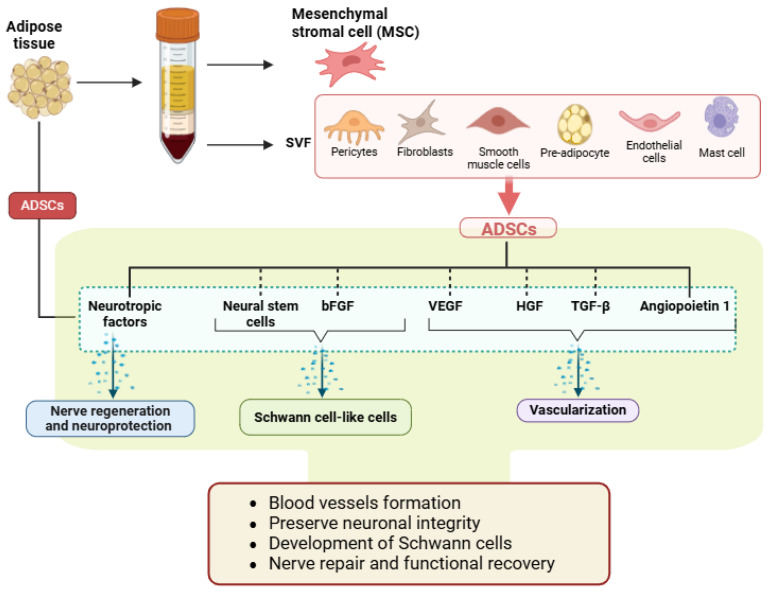
Peripheral nerve injuries are common complications in surgical and dental practices, often resulting in functional deficiencies and reduced quality of life. Current treatment choices, such as autografts, have limitations, including donor site morbidity and suboptimal outcomes. Adipose-derived stem cells (ADSCs) have shown assuring regenerative potential due to their accessibility, ease of harvesting and propagation, and multipotent properties. This review investigates the therapeutic potential of ADSCs in peripheral nerve regeneration, focusing on their use in bioengineered nerve conduits and supportive microenvironments. The analysis is constructed on published case reports, organized reviews, and clinical trials from Phase I to Phase III that investigate ADSCs in managing nerve injuries, emphasizing both peripheral and orofacial applications. The findings highlight the advantages of ADSCs in promoting nerve regeneration, including their secretion of angiogenic and neurotrophic factors, support for cellular persistence, and supplementing scaffold-based tissue repair. The regenerative capabilities of ADSCs in peripheral nerve injuries offer a novel approach to augmenting nerve repair and functional recovery. The accessibility of adipose tissue and the minimally invasive nature of ADSC harvesting further encourage its prospective application as an autologous cell source in regenerative medicine. Future research is needed to ascertain standardized protocols and optimize clinical outcomes, paving the way for ADSCs to become a mainstay in nerve regeneration.







 京公网安备 11010802042870号
京ICP备2023020795号-1
京公网安备 11010802042870号
京ICP备2023020795号-1

 分享
分享
 求助内容:
求助内容: 应助结果提醒方式:
 扫码关注我们
