Dalia Caleffi, Luca Pingani, Sergio Rovesti, Domenico Cannizzaro, Paola Ferri
{"title":"护士主导的心房心律失常患者电外复律:系统回顾更新和荟萃分析。","authors":"Dalia Caleffi, Luca Pingani, Sergio Rovesti, Domenico Cannizzaro, Paola Ferri","doi":"10.3390/nursrep15020032","DOIUrl":null,"url":null,"abstract":"<p><p><b>Background</b>: Atrial fibrillation, the most frequent and prevalent cardiac arrhythmia, often requires external cardioversion to ensure rhythm control. As healthcare professionals, nurses play a key role in autonomous intervention implementation. The aim was to update current evidence on the efficacy of nurse-led external direct current cardioversion. <b>Methods</b>: A systematic review of primary quantitative studies in English or Italian was conducted with no temporal filter. Seven database searches were interrogated. A total of nine articles were included, for which validity was evaluated and analysed. The review was performed using PRISMA guidelines for systematic reviews. Study characteristics were examined to determine if a meta-analysis was possible, and odds ratio was used as the effect size measure. <b>Results</b>: Data analysis led to the development of selected topics. The success rate of nurse-led direct current cardioversion appears to be high, at >80% (eight out of nine studies) in safe conditions. High-level professional training was required of nurses. There seemed to be no clear consensus on the management of anaesthetic aspects and medical support during the procedure. Meta-analyses of three studies found that there was no risk (M1-OR 0.89, CI [0.58, 1.36]; M2-OR 0.90, CI [0.59, 1.37]) difference between nurse-led DCCV and that performed by other clinicians. Few studies reported data on patient satisfaction, cost effectiveness, and waiting time. <b>Conclusions</b>: This review confirms that nurse-led external direct current cardioversion appears to be successful and safe in restoring sinus rhythm. A high level of nurse training and definition of a shared protocol could allow for effective implementation in more countries and settings.</p>","PeriodicalId":40753,"journal":{"name":"Nursing Reports","volume":"15 2","pages":""},"PeriodicalIF":3.1000,"publicationDate":"2025-01-23","publicationTypes":"Journal Article","fieldsOfStudy":null,"isOpenAccess":false,"openAccessPdf":"https://www.ncbi.nlm.nih.gov/pmc/articles/PMC11858258/pdf/","citationCount":"0","resultStr":"{\"title\":\"Nurse-Led Electrical External Cardioversion of Patients with Atrial Arrhythmia: A Systematic Review Update and Meta-Analysis.\",\"authors\":\"Dalia Caleffi, Luca Pingani, Sergio Rovesti, Domenico Cannizzaro, Paola Ferri\",\"doi\":\"10.3390/nursrep15020032\",\"DOIUrl\":null,\"url\":null,\"abstract\":\"<p><p><b>Background</b>: Atrial fibrillation, the most frequent and prevalent cardiac arrhythmia, often requires external cardioversion to ensure rhythm control. As healthcare professionals, nurses play a key role in autonomous intervention implementation. The aim was to update current evidence on the efficacy of nurse-led external direct current cardioversion. <b>Methods</b>: A systematic review of primary quantitative studies in English or Italian was conducted with no temporal filter. Seven database searches were interrogated. A total of nine articles were included, for which validity was evaluated and analysed. The review was performed using PRISMA guidelines for systematic reviews. Study characteristics were examined to determine if a meta-analysis was possible, and odds ratio was used as the effect size measure. <b>Results</b>: Data analysis led to the development of selected topics. The success rate of nurse-led direct current cardioversion appears to be high, at >80% (eight out of nine studies) in safe conditions. High-level professional training was required of nurses. There seemed to be no clear consensus on the management of anaesthetic aspects and medical support during the procedure. Meta-analyses of three studies found that there was no risk (M1-OR 0.89, CI [0.58, 1.36]; M2-OR 0.90, CI [0.59, 1.37]) difference between nurse-led DCCV and that performed by other clinicians. Few studies reported data on patient satisfaction, cost effectiveness, and waiting time. <b>Conclusions</b>: This review confirms that nurse-led external direct current cardioversion appears to be successful and safe in restoring sinus rhythm. A high level of nurse training and definition of a shared protocol could allow for effective implementation in more countries and settings.</p>\",\"PeriodicalId\":40753,\"journal\":{\"name\":\"Nursing Reports\",\"volume\":\"15 2\",\"pages\":\"\"},\"PeriodicalIF\":3.1000,\"publicationDate\":\"2025-01-23\",\"publicationTypes\":\"Journal Article\",\"fieldsOfStudy\":null,\"isOpenAccess\":false,\"openAccessPdf\":\"https://www.ncbi.nlm.nih.gov/pmc/articles/PMC11858258/pdf/\",\"citationCount\":\"0\",\"resultStr\":null,\"platform\":\"Semanticscholar\",\"paperid\":null,\"PeriodicalName\":\"Nursing Reports\",\"FirstCategoryId\":\"1085\",\"ListUrlMain\":\"https://doi.org/10.3390/nursrep15020032\",\"RegionNum\":0,\"RegionCategory\":null,\"ArticlePicture\":[],\"TitleCN\":null,\"AbstractTextCN\":null,\"PMCID\":null,\"EPubDate\":\"\",\"PubModel\":\"\",\"JCR\":\"Q1\",\"JCRName\":\"NURSING\",\"Score\":null,\"Total\":0}","platform":"Semanticscholar","paperid":null,"PeriodicalName":"Nursing Reports","FirstCategoryId":"1085","ListUrlMain":"https://doi.org/10.3390/nursrep15020032","RegionNum":0,"RegionCategory":null,"ArticlePicture":[],"TitleCN":null,"AbstractTextCN":null,"PMCID":null,"EPubDate":"","PubModel":"","JCR":"Q1","JCRName":"NURSING","Score":null,"Total":0}
引用次数: 0
摘要
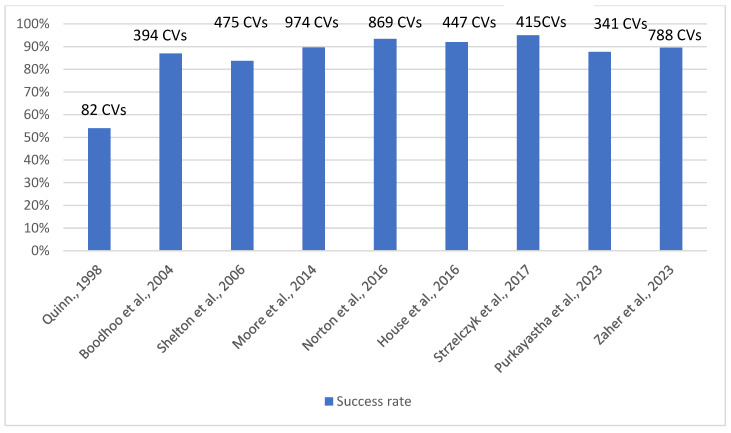
背景:房颤是最常见和最普遍的心律失常,通常需要体外复律以确保心律控制。作为医疗保健专业人员,护士在自主干预实施中发挥着关键作用。目的是更新现有证据的有效性,护士主导的外部直流电心律转复。方法:对英语或意大利语的初步定量研究进行系统回顾,不进行时间筛选。进行了七次数据库搜索。共纳入9篇文章,对其效度进行评估和分析。采用PRISMA系统评价指南进行评价。检查研究特征以确定是否可能进行荟萃分析,并使用优势比作为效应大小测量。结果:数据分析导致选定主题的发展。在安全条件下,由护士主导的直流电复律的成功率似乎很高,约为80%(9项研究中有8项)。护士需要接受高水平的专业培训。在麻醉方面的管理和手术期间的医疗支持方面似乎没有明确的共识。三项研究的荟萃分析发现没有风险(M1-OR = 0.89, CI [0.58, 1.36];M2-OR 0.90, CI[0.59, 1.37])与其他临床医生进行的DCCV比较差异。很少有研究报告了患者满意度、成本效益和等待时间的数据。结论:这篇综述证实了护士主导的外部直流复律在恢复窦性心律方面是成功和安全的。高水平的护士培训和确定共享协议可以在更多国家和环境中有效实施。
Nurse-Led Electrical External Cardioversion of Patients with Atrial Arrhythmia: A Systematic Review Update and Meta-Analysis.
Background: Atrial fibrillation, the most frequent and prevalent cardiac arrhythmia, often requires external cardioversion to ensure rhythm control. As healthcare professionals, nurses play a key role in autonomous intervention implementation. The aim was to update current evidence on the efficacy of nurse-led external direct current cardioversion. Methods: A systematic review of primary quantitative studies in English or Italian was conducted with no temporal filter. Seven database searches were interrogated. A total of nine articles were included, for which validity was evaluated and analysed. The review was performed using PRISMA guidelines for systematic reviews. Study characteristics were examined to determine if a meta-analysis was possible, and odds ratio was used as the effect size measure. Results: Data analysis led to the development of selected topics. The success rate of nurse-led direct current cardioversion appears to be high, at >80% (eight out of nine studies) in safe conditions. High-level professional training was required of nurses. There seemed to be no clear consensus on the management of anaesthetic aspects and medical support during the procedure. Meta-analyses of three studies found that there was no risk (M1-OR 0.89, CI [0.58, 1.36]; M2-OR 0.90, CI [0.59, 1.37]) difference between nurse-led DCCV and that performed by other clinicians. Few studies reported data on patient satisfaction, cost effectiveness, and waiting time. Conclusions: This review confirms that nurse-led external direct current cardioversion appears to be successful and safe in restoring sinus rhythm. A high level of nurse training and definition of a shared protocol could allow for effective implementation in more countries and settings.
期刊介绍:
Nursing Reports is an open access, peer-reviewed, online-only journal that aims to influence the art and science of nursing by making rigorously conducted research accessible and understood to the full spectrum of practicing nurses, academics, educators and interested members of the public. The journal represents an exhilarating opportunity to make a unique and significant contribution to nursing and the wider community by addressing topics, theories and issues that concern the whole field of Nursing Science, including research, practice, policy and education. The primary intent of the journal is to present scientifically sound and influential empirical and theoretical studies, critical reviews and open debates to the global community of nurses. Short reports, opinions and insight into the plight of nurses the world-over will provide a voice for those of all cultures, governments and perspectives. The emphasis of Nursing Reports will be on ensuring that the highest quality of evidence and contribution is made available to the greatest number of nurses. Nursing Reports aims to make original, evidence-based, peer-reviewed research available to the global community of nurses and to interested members of the public. In addition, reviews of the literature, open debates on professional issues and short reports from around the world are invited to contribute to our vibrant and dynamic journal. All published work will adhere to the most stringent ethical standards and journalistic principles of fairness, worth and credibility. Our journal publishes Editorials, Original Articles, Review articles, Critical Debates, Short Reports from Around the Globe and Letters to the Editor.







 京公网安备 11010802042870号
京ICP备2023020795号-1
京公网安备 11010802042870号
京ICP备2023020795号-1

 分享
分享
 求助内容:
求助内容: 应助结果提醒方式:
 扫码关注我们
