Victoria Alejandra López-Callejón, Amparo Yuste-Sanchez, Mayed Murad, Rut Navarro-Martínez, Leticia Pérez-Santiago, José Martín-Arevalo, David Moro-Valdezate, Vicente Pla-Martí, David Casado-Rodriguez, Alejandro Espí-Macías, Stephanie García-Botello
{"title":"围手术期监督腹壁锻炼预防造口旁疝的倾向评分分析。","authors":"Victoria Alejandra López-Callejón, Amparo Yuste-Sanchez, Mayed Murad, Rut Navarro-Martínez, Leticia Pérez-Santiago, José Martín-Arevalo, David Moro-Valdezate, Vicente Pla-Martí, David Casado-Rodriguez, Alejandro Espí-Macías, Stephanie García-Botello","doi":"10.3390/nursrep15020062","DOIUrl":null,"url":null,"abstract":"<p><p>Retrospective studies have suggested that performing perioperative abdominal wall exercises may decrease the incidence of parastomal hernias. <b>Objectives:</b> This study seeks to assess the usefulness of supervised preoperative and postoperative abdominal wall exercises in the prevention of parastomal hernia. <b>Methods:</b> An observational study of patients who underwent a stoma, temporary or permanent, between January 2019 and December 2020, was performed. Minimum follow-up was 12 months. During the first 12 months of recruitment, patients were enrolled on a consecutive basis and assigned to the control group, and the remaining patients were assigned to the intervention group. A propensity score matching was performed to obtain totally comparable groups. A set of exercises was designed by the Rehabilitation Department, and their performance was supervised by physiotherapists and stoma therapists. The diagnosis of parastomal hernia was made by physical examination and computed axial tomography. Descriptive statistics of the study group were performed. Subsequently, prediction models for the occurrence of parastomal hernia were created based on binary logistic regression and classification trees. <b>Results:</b> After propensity matching and inclusion criteria, 64 patients were included (colostomy: <i>n</i> = 39, ileostomy: <i>n</i> = 25). Independent prognostic variables for parastomal hernias in colostomy were age (<i>p</i> = 0.044) and perioperative exercises (<i>p</i> = 0.003). The binary logistic regression model based on these variables gave an AUC of 97.6. The classification tree model included only perioperative exercises with an AUC of 92.5%. In the case of ileostomy, perioperative exercises were the only independent prognostic variable identified. The classification-tree-based model reported an AUC of 84%. <b>Conclusions</b>: The performance of supervised abdominal wall training and strengthening exercises may be useful in the prevention of parastomal hernias.</p>","PeriodicalId":40753,"journal":{"name":"Nursing Reports","volume":"15 2","pages":""},"PeriodicalIF":2.0000,"publicationDate":"2025-02-08","publicationTypes":"Journal Article","fieldsOfStudy":null,"isOpenAccess":false,"openAccessPdf":"https://www.ncbi.nlm.nih.gov/pmc/articles/PMC11857961/pdf/","citationCount":"0","resultStr":"{\"title\":\"Propensity Score Analysis of the Utility of Supervised Perioperative Abdominal Wall Exercises for the Prevention of Parastomal Hernia.\",\"authors\":\"Victoria Alejandra López-Callejón, Amparo Yuste-Sanchez, Mayed Murad, Rut Navarro-Martínez, Leticia Pérez-Santiago, José Martín-Arevalo, David Moro-Valdezate, Vicente Pla-Martí, David Casado-Rodriguez, Alejandro Espí-Macías, Stephanie García-Botello\",\"doi\":\"10.3390/nursrep15020062\",\"DOIUrl\":null,\"url\":null,\"abstract\":\"<p><p>Retrospective studies have suggested that performing perioperative abdominal wall exercises may decrease the incidence of parastomal hernias. <b>Objectives:</b> This study seeks to assess the usefulness of supervised preoperative and postoperative abdominal wall exercises in the prevention of parastomal hernia. <b>Methods:</b> An observational study of patients who underwent a stoma, temporary or permanent, between January 2019 and December 2020, was performed. Minimum follow-up was 12 months. During the first 12 months of recruitment, patients were enrolled on a consecutive basis and assigned to the control group, and the remaining patients were assigned to the intervention group. A propensity score matching was performed to obtain totally comparable groups. A set of exercises was designed by the Rehabilitation Department, and their performance was supervised by physiotherapists and stoma therapists. The diagnosis of parastomal hernia was made by physical examination and computed axial tomography. Descriptive statistics of the study group were performed. Subsequently, prediction models for the occurrence of parastomal hernia were created based on binary logistic regression and classification trees. <b>Results:</b> After propensity matching and inclusion criteria, 64 patients were included (colostomy: <i>n</i> = 39, ileostomy: <i>n</i> = 25). Independent prognostic variables for parastomal hernias in colostomy were age (<i>p</i> = 0.044) and perioperative exercises (<i>p</i> = 0.003). The binary logistic regression model based on these variables gave an AUC of 97.6. The classification tree model included only perioperative exercises with an AUC of 92.5%. In the case of ileostomy, perioperative exercises were the only independent prognostic variable identified. The classification-tree-based model reported an AUC of 84%. <b>Conclusions</b>: The performance of supervised abdominal wall training and strengthening exercises may be useful in the prevention of parastomal hernias.</p>\",\"PeriodicalId\":40753,\"journal\":{\"name\":\"Nursing Reports\",\"volume\":\"15 2\",\"pages\":\"\"},\"PeriodicalIF\":2.0000,\"publicationDate\":\"2025-02-08\",\"publicationTypes\":\"Journal Article\",\"fieldsOfStudy\":null,\"isOpenAccess\":false,\"openAccessPdf\":\"https://www.ncbi.nlm.nih.gov/pmc/articles/PMC11857961/pdf/\",\"citationCount\":\"0\",\"resultStr\":null,\"platform\":\"Semanticscholar\",\"paperid\":null,\"PeriodicalName\":\"Nursing Reports\",\"FirstCategoryId\":\"1085\",\"ListUrlMain\":\"https://doi.org/10.3390/nursrep15020062\",\"RegionNum\":0,\"RegionCategory\":null,\"ArticlePicture\":[],\"TitleCN\":null,\"AbstractTextCN\":null,\"PMCID\":null,\"EPubDate\":\"\",\"PubModel\":\"\",\"JCR\":\"Q1\",\"JCRName\":\"NURSING\",\"Score\":null,\"Total\":0}","platform":"Semanticscholar","paperid":null,"PeriodicalName":"Nursing Reports","FirstCategoryId":"1085","ListUrlMain":"https://doi.org/10.3390/nursrep15020062","RegionNum":0,"RegionCategory":null,"ArticlePicture":[],"TitleCN":null,"AbstractTextCN":null,"PMCID":null,"EPubDate":"","PubModel":"","JCR":"Q1","JCRName":"NURSING","Score":null,"Total":0}
Propensity Score Analysis of the Utility of Supervised Perioperative Abdominal Wall Exercises for the Prevention of Parastomal Hernia.
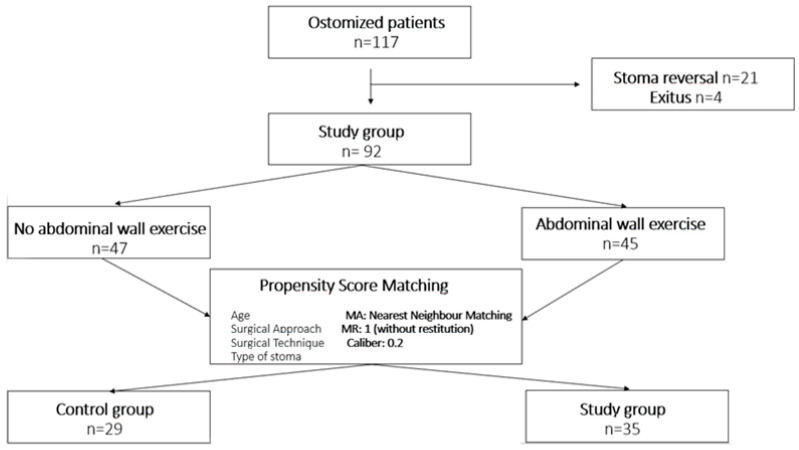
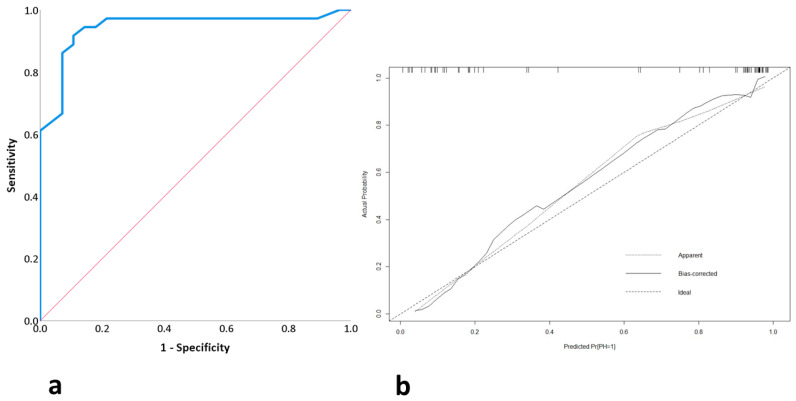
Retrospective studies have suggested that performing perioperative abdominal wall exercises may decrease the incidence of parastomal hernias. Objectives: This study seeks to assess the usefulness of supervised preoperative and postoperative abdominal wall exercises in the prevention of parastomal hernia. Methods: An observational study of patients who underwent a stoma, temporary or permanent, between January 2019 and December 2020, was performed. Minimum follow-up was 12 months. During the first 12 months of recruitment, patients were enrolled on a consecutive basis and assigned to the control group, and the remaining patients were assigned to the intervention group. A propensity score matching was performed to obtain totally comparable groups. A set of exercises was designed by the Rehabilitation Department, and their performance was supervised by physiotherapists and stoma therapists. The diagnosis of parastomal hernia was made by physical examination and computed axial tomography. Descriptive statistics of the study group were performed. Subsequently, prediction models for the occurrence of parastomal hernia were created based on binary logistic regression and classification trees. Results: After propensity matching and inclusion criteria, 64 patients were included (colostomy: n = 39, ileostomy: n = 25). Independent prognostic variables for parastomal hernias in colostomy were age (p = 0.044) and perioperative exercises (p = 0.003). The binary logistic regression model based on these variables gave an AUC of 97.6. The classification tree model included only perioperative exercises with an AUC of 92.5%. In the case of ileostomy, perioperative exercises were the only independent prognostic variable identified. The classification-tree-based model reported an AUC of 84%. Conclusions: The performance of supervised abdominal wall training and strengthening exercises may be useful in the prevention of parastomal hernias.
期刊介绍:
Nursing Reports is an open access, peer-reviewed, online-only journal that aims to influence the art and science of nursing by making rigorously conducted research accessible and understood to the full spectrum of practicing nurses, academics, educators and interested members of the public. The journal represents an exhilarating opportunity to make a unique and significant contribution to nursing and the wider community by addressing topics, theories and issues that concern the whole field of Nursing Science, including research, practice, policy and education. The primary intent of the journal is to present scientifically sound and influential empirical and theoretical studies, critical reviews and open debates to the global community of nurses. Short reports, opinions and insight into the plight of nurses the world-over will provide a voice for those of all cultures, governments and perspectives. The emphasis of Nursing Reports will be on ensuring that the highest quality of evidence and contribution is made available to the greatest number of nurses. Nursing Reports aims to make original, evidence-based, peer-reviewed research available to the global community of nurses and to interested members of the public. In addition, reviews of the literature, open debates on professional issues and short reports from around the world are invited to contribute to our vibrant and dynamic journal. All published work will adhere to the most stringent ethical standards and journalistic principles of fairness, worth and credibility. Our journal publishes Editorials, Original Articles, Review articles, Critical Debates, Short Reports from Around the Globe and Letters to the Editor.






 京公网安备 11010802042870号
京ICP备2023020795号-1
京公网安备 11010802042870号
京ICP备2023020795号-1

 分享
分享
 求助内容:
求助内容: 应助结果提醒方式:
 扫码关注我们
