Donald W Rogers, Andreas T Himariotis, Thomas J Sherriff, Quentin J Proulx, Megan T Duong, Sabrina E Noel, David J Cornell
{"title":"光电容积脉搏图手指传感器采集心率变异性测量数据的重测信度和并发效度。","authors":"Donald W Rogers, Andreas T Himariotis, Thomas J Sherriff, Quentin J Proulx, Megan T Duong, Sabrina E Noel, David J Cornell","doi":"10.3390/sports13020029","DOIUrl":null,"url":null,"abstract":"<p><p>The purpose of the current study was to determine the test-retest reliability and concurrent validity of a photoplethysmography (PPG) finger sensor when collecting heart rate variability (HRV) metrics in reference to electrocardiography (ECG) and heart rate monitor (HRM) devices. Five minutes of R-R interval data were collected from 45 participants (23 females; age: 23.13 ± 4.45 yrs; body mass index: 25.39 ± 4.13 kg/m<sup>2</sup>) in the supine and seated positions in testing sessions 48 h apart. <i>Moderate-to-excellent</i> test-retest reliability of the HRV data collected from the PPG sensor was identified (ICC<sub>2,1</sub> = 0.60-0.93). Additionally, similar standard errors of the mean, coefficient of variation, and minimal detectable change metrics were observed across all devices. Statistically significant (<i>p</i> < 0.05) differences were identified in the HRV data between the PPG sensor and ECG and HRM devices; however, these differences were interpreted as <i>trivial-to-small</i> (<i>g</i> = 0.00-0.59). Further, the PPG sensor tended to only overestimate HRV metrics by <0.5 ms and <i>near perfect</i> relationships (<i>r</i> = 0.91-1.00) and <i>very large-to-near perfect</i> agreement (CCC = 0.81-1.00) were identified between collection methods. The PPG sensor demonstrated adequate test-retest reliability and concurrent validity in both the supine and seated resting positions.</p>","PeriodicalId":53303,"journal":{"name":"Sports","volume":"13 2","pages":""},"PeriodicalIF":2.9000,"publicationDate":"2025-01-22","publicationTypes":"Journal Article","fieldsOfStudy":null,"isOpenAccess":false,"openAccessPdf":"https://www.ncbi.nlm.nih.gov/pmc/articles/PMC11861371/pdf/","citationCount":"0","resultStr":"{\"title\":\"Test-Retest Reliability and Concurrent Validity of Photoplethysmography Finger Sensor to Collect Measures of Heart Rate Variability.\",\"authors\":\"Donald W Rogers, Andreas T Himariotis, Thomas J Sherriff, Quentin J Proulx, Megan T Duong, Sabrina E Noel, David J Cornell\",\"doi\":\"10.3390/sports13020029\",\"DOIUrl\":null,\"url\":null,\"abstract\":\"<p><p>The purpose of the current study was to determine the test-retest reliability and concurrent validity of a photoplethysmography (PPG) finger sensor when collecting heart rate variability (HRV) metrics in reference to electrocardiography (ECG) and heart rate monitor (HRM) devices. Five minutes of R-R interval data were collected from 45 participants (23 females; age: 23.13 ± 4.45 yrs; body mass index: 25.39 ± 4.13 kg/m<sup>2</sup>) in the supine and seated positions in testing sessions 48 h apart. <i>Moderate-to-excellent</i> test-retest reliability of the HRV data collected from the PPG sensor was identified (ICC<sub>2,1</sub> = 0.60-0.93). Additionally, similar standard errors of the mean, coefficient of variation, and minimal detectable change metrics were observed across all devices. Statistically significant (<i>p</i> < 0.05) differences were identified in the HRV data between the PPG sensor and ECG and HRM devices; however, these differences were interpreted as <i>trivial-to-small</i> (<i>g</i> = 0.00-0.59). Further, the PPG sensor tended to only overestimate HRV metrics by <0.5 ms and <i>near perfect</i> relationships (<i>r</i> = 0.91-1.00) and <i>very large-to-near perfect</i> agreement (CCC = 0.81-1.00) were identified between collection methods. The PPG sensor demonstrated adequate test-retest reliability and concurrent validity in both the supine and seated resting positions.</p>\",\"PeriodicalId\":53303,\"journal\":{\"name\":\"Sports\",\"volume\":\"13 2\",\"pages\":\"\"},\"PeriodicalIF\":2.9000,\"publicationDate\":\"2025-01-22\",\"publicationTypes\":\"Journal Article\",\"fieldsOfStudy\":null,\"isOpenAccess\":false,\"openAccessPdf\":\"https://www.ncbi.nlm.nih.gov/pmc/articles/PMC11861371/pdf/\",\"citationCount\":\"0\",\"resultStr\":null,\"platform\":\"Semanticscholar\",\"paperid\":null,\"PeriodicalName\":\"Sports\",\"FirstCategoryId\":\"1085\",\"ListUrlMain\":\"https://doi.org/10.3390/sports13020029\",\"RegionNum\":0,\"RegionCategory\":null,\"ArticlePicture\":[],\"TitleCN\":null,\"AbstractTextCN\":null,\"PMCID\":null,\"EPubDate\":\"\",\"PubModel\":\"\",\"JCR\":\"Q2\",\"JCRName\":\"SPORT SCIENCES\",\"Score\":null,\"Total\":0}","platform":"Semanticscholar","paperid":null,"PeriodicalName":"Sports","FirstCategoryId":"1085","ListUrlMain":"https://doi.org/10.3390/sports13020029","RegionNum":0,"RegionCategory":null,"ArticlePicture":[],"TitleCN":null,"AbstractTextCN":null,"PMCID":null,"EPubDate":"","PubModel":"","JCR":"Q2","JCRName":"SPORT SCIENCES","Score":null,"Total":0}
Test-Retest Reliability and Concurrent Validity of Photoplethysmography Finger Sensor to Collect Measures of Heart Rate Variability.
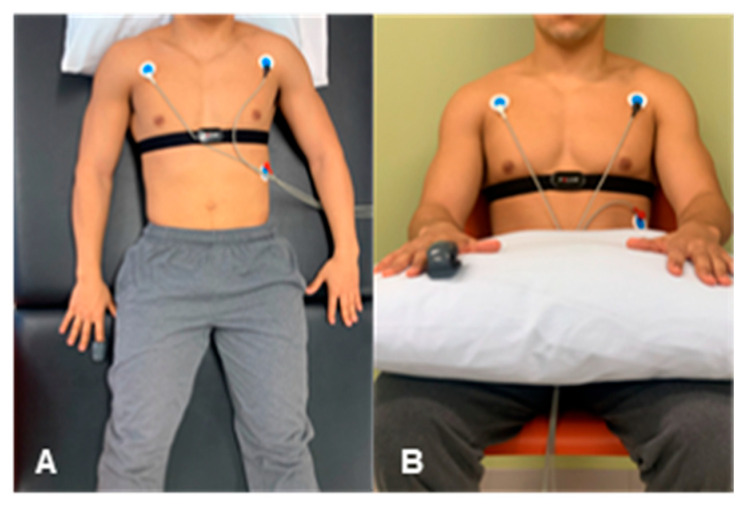
The purpose of the current study was to determine the test-retest reliability and concurrent validity of a photoplethysmography (PPG) finger sensor when collecting heart rate variability (HRV) metrics in reference to electrocardiography (ECG) and heart rate monitor (HRM) devices. Five minutes of R-R interval data were collected from 45 participants (23 females; age: 23.13 ± 4.45 yrs; body mass index: 25.39 ± 4.13 kg/m2) in the supine and seated positions in testing sessions 48 h apart. Moderate-to-excellent test-retest reliability of the HRV data collected from the PPG sensor was identified (ICC2,1 = 0.60-0.93). Additionally, similar standard errors of the mean, coefficient of variation, and minimal detectable change metrics were observed across all devices. Statistically significant (p < 0.05) differences were identified in the HRV data between the PPG sensor and ECG and HRM devices; however, these differences were interpreted as trivial-to-small (g = 0.00-0.59). Further, the PPG sensor tended to only overestimate HRV metrics by <0.5 ms and near perfect relationships (r = 0.91-1.00) and very large-to-near perfect agreement (CCC = 0.81-1.00) were identified between collection methods. The PPG sensor demonstrated adequate test-retest reliability and concurrent validity in both the supine and seated resting positions.







 京公网安备 11010802042870号
京ICP备2023020795号-1
京公网安备 11010802042870号
京ICP备2023020795号-1

 分享
分享
 求助内容:
求助内容: 应助结果提醒方式:
 扫码关注我们
