Amy E Laturski, Maria T Dulay, Jillian L Perry, Joseph M DeSimone
{"title":"RNA纳米颗粒转染:比较RNA包封与吸附方法。","authors":"Amy E Laturski, Maria T Dulay, Jillian L Perry, Joseph M DeSimone","doi":"10.1021/acs.bioconjchem.5c00028","DOIUrl":null,"url":null,"abstract":"<p><p>Historically, RNA delivery via nanoparticles has primarily relied on encapsulation, as demonstrated by lipid nanoparticles in SARS-CoV-2 vaccines. Concerns about RNA degradation on nanoparticle surfaces initially limited the exploration of adsorption-based approaches. However, recent advancements have renewed interest in adsorption as a viable alternative. This Viewpoint explores the approaches of RNA incorporation in nanoparticles, comparing encapsulation, adsorption, and the combination of encapsulation and adsorption, and presents a framework to guide the selection of the most suitable strategy based on general characteristics.</p>","PeriodicalId":29,"journal":{"name":"Bioconjugate Chemistry","volume":" ","pages":"367-376"},"PeriodicalIF":3.9000,"publicationDate":"2025-03-19","publicationTypes":"Journal Article","fieldsOfStudy":null,"isOpenAccess":false,"openAccessPdf":"","citationCount":"0","resultStr":"{\"title\":\"Transfection via RNA-Based Nanoparticles: Comparing Encapsulation vs Adsorption Approaches of RNA Incorporation.\",\"authors\":\"Amy E Laturski, Maria T Dulay, Jillian L Perry, Joseph M DeSimone\",\"doi\":\"10.1021/acs.bioconjchem.5c00028\",\"DOIUrl\":null,\"url\":null,\"abstract\":\"<p><p>Historically, RNA delivery via nanoparticles has primarily relied on encapsulation, as demonstrated by lipid nanoparticles in SARS-CoV-2 vaccines. Concerns about RNA degradation on nanoparticle surfaces initially limited the exploration of adsorption-based approaches. However, recent advancements have renewed interest in adsorption as a viable alternative. This Viewpoint explores the approaches of RNA incorporation in nanoparticles, comparing encapsulation, adsorption, and the combination of encapsulation and adsorption, and presents a framework to guide the selection of the most suitable strategy based on general characteristics.</p>\",\"PeriodicalId\":29,\"journal\":{\"name\":\"Bioconjugate Chemistry\",\"volume\":\" \",\"pages\":\"367-376\"},\"PeriodicalIF\":3.9000,\"publicationDate\":\"2025-03-19\",\"publicationTypes\":\"Journal Article\",\"fieldsOfStudy\":null,\"isOpenAccess\":false,\"openAccessPdf\":\"\",\"citationCount\":\"0\",\"resultStr\":null,\"platform\":\"Semanticscholar\",\"paperid\":null,\"PeriodicalName\":\"Bioconjugate Chemistry\",\"FirstCategoryId\":\"1\",\"ListUrlMain\":\"https://doi.org/10.1021/acs.bioconjchem.5c00028\",\"RegionNum\":2,\"RegionCategory\":\"化学\",\"ArticlePicture\":[],\"TitleCN\":null,\"AbstractTextCN\":null,\"PMCID\":null,\"EPubDate\":\"2025/2/25 0:00:00\",\"PubModel\":\"Epub\",\"JCR\":\"Q1\",\"JCRName\":\"BIOCHEMICAL RESEARCH METHODS\",\"Score\":null,\"Total\":0}","platform":"Semanticscholar","paperid":null,"PeriodicalName":"Bioconjugate Chemistry","FirstCategoryId":"1","ListUrlMain":"https://doi.org/10.1021/acs.bioconjchem.5c00028","RegionNum":2,"RegionCategory":"化学","ArticlePicture":[],"TitleCN":null,"AbstractTextCN":null,"PMCID":null,"EPubDate":"2025/2/25 0:00:00","PubModel":"Epub","JCR":"Q1","JCRName":"BIOCHEMICAL RESEARCH METHODS","Score":null,"Total":0}
Transfection via RNA-Based Nanoparticles: Comparing Encapsulation vs Adsorption Approaches of RNA Incorporation.
Historically, RNA delivery via nanoparticles has primarily relied on encapsulation, as demonstrated by lipid nanoparticles in SARS-CoV-2 vaccines. Concerns about RNA degradation on nanoparticle surfaces initially limited the exploration of adsorption-based approaches. However, recent advancements have renewed interest in adsorption as a viable alternative. This Viewpoint explores the approaches of RNA incorporation in nanoparticles, comparing encapsulation, adsorption, and the combination of encapsulation and adsorption, and presents a framework to guide the selection of the most suitable strategy based on general characteristics.
期刊介绍:
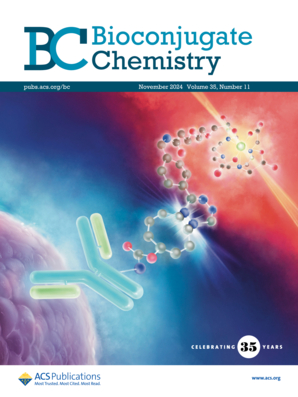
Bioconjugate Chemistry invites original contributions on all research at the interface between man-made and biological materials. The mission of the journal is to communicate to advances in fields including therapeutic delivery, imaging, bionanotechnology, and synthetic biology. Bioconjugate Chemistry is intended to provide a forum for presentation of research relevant to all aspects of bioconjugates, including the preparation, properties and applications of biomolecular conjugates.




 京公网安备 11010802042870号
京ICP备2023020795号-1
京公网安备 11010802042870号
京ICP备2023020795号-1

 分享
分享
 求助内容:
求助内容: 应助结果提醒方式:
 扫码关注我们
