{"title":"一种新的宽QRS复杂心动过速识别算法——预定位序列算法。","authors":"Honglin Ni, Yue Huang, Xiaowei Pan, Xiaoli Zhang, Zhiyong Wan, Changlin Zhai, Haihua Pan","doi":"10.1186/s12872-025-04583-1","DOIUrl":null,"url":null,"abstract":"<p><strong>Background: </strong>Electrocardiogram (ECG) plays a crucial role in the correct diagnosis of wide QRS complex tachycardia (WCT). Objective To evaluate the diagnostic value of a new WCT discrimination algorithm, herein referred to as the Prelocalization Series Algorithm.</p><p><strong>Methods: </strong>A retrospective analysis of 181 ECGs from WCT patients was conducted using the Prelocalization Series Algorithm, Brugada Series Algorithm, and Vereckei Series Algorithm. Initially, the algorithms were used to differentiate between ventricular tachycardia (VT) and supraventricular tachycardia (SVT). Subsequently, the VT cases preliminarily judged were further differentiated into VT or preexcited tachycardia (PXT). The results were compared with the clinically confirmed diagnoses to observe the diagnostic value of the three algorithms.</p><p><strong>Results: </strong>The Prelocalization Series Algorithm demonstrated higher AUC values (0.90 vs. 0.73 vs. 0.69), sensitivity (0.91 vs. 0.61 vs. 0.50), and accuracy (0.90 vs. 0.71 vs. 0.65) in diagnosing VT compared to the Brugada Series Algorithm and Vereckei Series Algorithm. The Prelocalization Algorithm's single process (without differentiating between VT and PXT) also showed higher AUC values (0.79 vs. 0.67 vs. 0.63), sensitivity (0.96 vs. 0.91 vs. 0.76), specificity (0.62 vs. 0.44 vs. 0.49), and accuracy (0.82 vs. 0.72 vs. 0.65) than the Brugada Four-Step Method and aVR lead method. The accuracy of the Prelocalization Series Algorithm in diagnosing VT (0.90 vs. 0.82) was higher than its single process algorithm.With all differences being statistically significant (all P < 0.05).</p><p><strong>Conclusion: </strong>The Prelocalization Series Algorithm is an effective new algorithm for discriminating WCT and can be attempted for diagnosing VT, SVT, and PXT.</p><p><strong>Clinical trial number: </strong>Not applicable.</p>","PeriodicalId":9195,"journal":{"name":"BMC Cardiovascular Disorders","volume":"25 1","pages":"134"},"PeriodicalIF":2.3000,"publicationDate":"2025-02-25","publicationTypes":"Journal Article","fieldsOfStudy":null,"isOpenAccess":false,"openAccessPdf":"https://www.ncbi.nlm.nih.gov/pmc/articles/PMC11853332/pdf/","citationCount":"0","resultStr":"{\"title\":\"Effective discrimination of wide QRS complex tachycardia with a new algorithm - the Prelocalization Series Algorithm.\",\"authors\":\"Honglin Ni, Yue Huang, Xiaowei Pan, Xiaoli Zhang, Zhiyong Wan, Changlin Zhai, Haihua Pan\",\"doi\":\"10.1186/s12872-025-04583-1\",\"DOIUrl\":null,\"url\":null,\"abstract\":\"<p><strong>Background: </strong>Electrocardiogram (ECG) plays a crucial role in the correct diagnosis of wide QRS complex tachycardia (WCT). Objective To evaluate the diagnostic value of a new WCT discrimination algorithm, herein referred to as the Prelocalization Series Algorithm.</p><p><strong>Methods: </strong>A retrospective analysis of 181 ECGs from WCT patients was conducted using the Prelocalization Series Algorithm, Brugada Series Algorithm, and Vereckei Series Algorithm. Initially, the algorithms were used to differentiate between ventricular tachycardia (VT) and supraventricular tachycardia (SVT). Subsequently, the VT cases preliminarily judged were further differentiated into VT or preexcited tachycardia (PXT). The results were compared with the clinically confirmed diagnoses to observe the diagnostic value of the three algorithms.</p><p><strong>Results: </strong>The Prelocalization Series Algorithm demonstrated higher AUC values (0.90 vs. 0.73 vs. 0.69), sensitivity (0.91 vs. 0.61 vs. 0.50), and accuracy (0.90 vs. 0.71 vs. 0.65) in diagnosing VT compared to the Brugada Series Algorithm and Vereckei Series Algorithm. The Prelocalization Algorithm's single process (without differentiating between VT and PXT) also showed higher AUC values (0.79 vs. 0.67 vs. 0.63), sensitivity (0.96 vs. 0.91 vs. 0.76), specificity (0.62 vs. 0.44 vs. 0.49), and accuracy (0.82 vs. 0.72 vs. 0.65) than the Brugada Four-Step Method and aVR lead method. The accuracy of the Prelocalization Series Algorithm in diagnosing VT (0.90 vs. 0.82) was higher than its single process algorithm.With all differences being statistically significant (all P < 0.05).</p><p><strong>Conclusion: </strong>The Prelocalization Series Algorithm is an effective new algorithm for discriminating WCT and can be attempted for diagnosing VT, SVT, and PXT.</p><p><strong>Clinical trial number: </strong>Not applicable.</p>\",\"PeriodicalId\":9195,\"journal\":{\"name\":\"BMC Cardiovascular Disorders\",\"volume\":\"25 1\",\"pages\":\"134\"},\"PeriodicalIF\":2.3000,\"publicationDate\":\"2025-02-25\",\"publicationTypes\":\"Journal Article\",\"fieldsOfStudy\":null,\"isOpenAccess\":false,\"openAccessPdf\":\"https://www.ncbi.nlm.nih.gov/pmc/articles/PMC11853332/pdf/\",\"citationCount\":\"0\",\"resultStr\":null,\"platform\":\"Semanticscholar\",\"paperid\":null,\"PeriodicalName\":\"BMC Cardiovascular Disorders\",\"FirstCategoryId\":\"3\",\"ListUrlMain\":\"https://doi.org/10.1186/s12872-025-04583-1\",\"RegionNum\":3,\"RegionCategory\":\"医学\",\"ArticlePicture\":[],\"TitleCN\":null,\"AbstractTextCN\":null,\"PMCID\":null,\"EPubDate\":\"\",\"PubModel\":\"\",\"JCR\":\"Q3\",\"JCRName\":\"CARDIAC & CARDIOVASCULAR SYSTEMS\",\"Score\":null,\"Total\":0}","platform":"Semanticscholar","paperid":null,"PeriodicalName":"BMC Cardiovascular Disorders","FirstCategoryId":"3","ListUrlMain":"https://doi.org/10.1186/s12872-025-04583-1","RegionNum":3,"RegionCategory":"医学","ArticlePicture":[],"TitleCN":null,"AbstractTextCN":null,"PMCID":null,"EPubDate":"","PubModel":"","JCR":"Q3","JCRName":"CARDIAC & CARDIOVASCULAR SYSTEMS","Score":null,"Total":0}
引用次数: 0
摘要
背景:心电图(ECG)在宽QRS复杂性心动过速(WCT)的正确诊断中起着至关重要的作用。目的评价一种新的WCT识别算法,即预定位序列算法的诊断价值。方法:采用预定位序列算法、Brugada序列算法和Vereckei序列算法对181例WCT患者的心电图进行回顾性分析。最初,该算法用于区分室性心动过速(VT)和室上性心动过速(SVT)。随后将初步判断的室性心动过速进一步区分为室性心动过速或预兴奋性心动过速(PXT)。将结果与临床确诊的诊断结果进行比较,观察三种算法的诊断价值。结果:与Brugada系列算法和Vereckei系列算法相比,Prelocalization Series算法在诊断VT时显示出更高的AUC值(0.90 vs. 0.73 vs. 0.69)、灵敏度(0.91 vs. 0.61 vs. 0.50)和准确性(0.90 vs. 0.71 vs. 0.65)。与Brugada四步法和aVR导联法相比,预定位算法的单一过程(不区分VT和PXT)也显示出更高的AUC值(0.79 vs. 0.67 vs. 0.63)、灵敏度(0.96 vs. 0.91 vs. 0.76)、特异性(0.62 vs. 0.44 vs. 0.49)和准确性(0.82 vs. 0.72 vs. 0.65)。预定位序列算法诊断VT的准确率(0.90 vs 0.82)高于单过程算法。结论:预定位序列算法是一种有效的WCT鉴别新算法,可用于诊断VT、SVT和PXT。临床试验号:不适用。
Effective discrimination of wide QRS complex tachycardia with a new algorithm - the Prelocalization Series Algorithm.
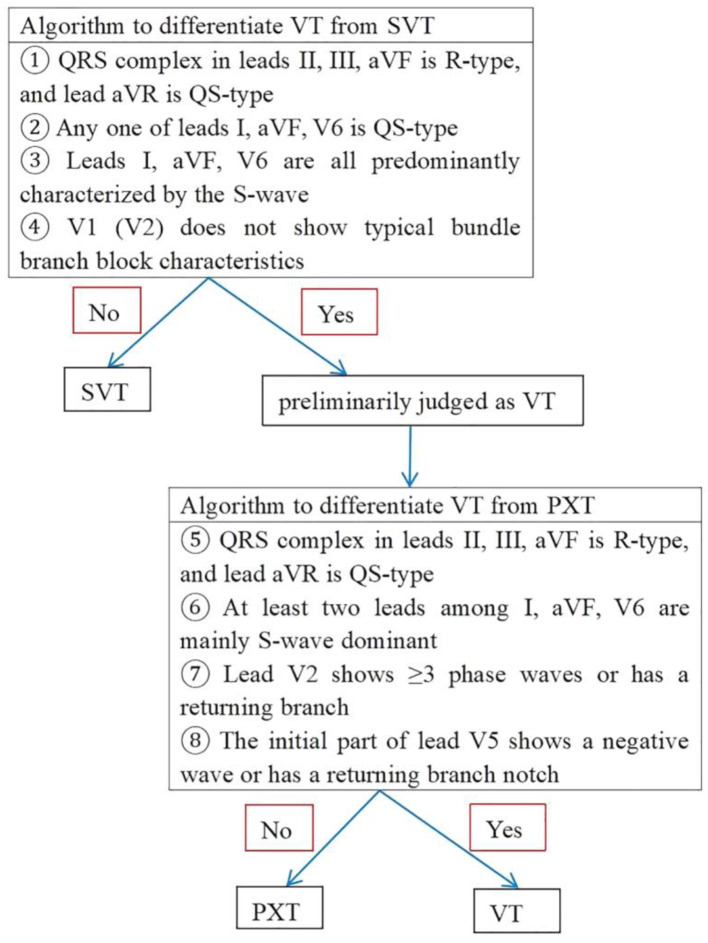
Background: Electrocardiogram (ECG) plays a crucial role in the correct diagnosis of wide QRS complex tachycardia (WCT). Objective To evaluate the diagnostic value of a new WCT discrimination algorithm, herein referred to as the Prelocalization Series Algorithm.
Methods: A retrospective analysis of 181 ECGs from WCT patients was conducted using the Prelocalization Series Algorithm, Brugada Series Algorithm, and Vereckei Series Algorithm. Initially, the algorithms were used to differentiate between ventricular tachycardia (VT) and supraventricular tachycardia (SVT). Subsequently, the VT cases preliminarily judged were further differentiated into VT or preexcited tachycardia (PXT). The results were compared with the clinically confirmed diagnoses to observe the diagnostic value of the three algorithms.
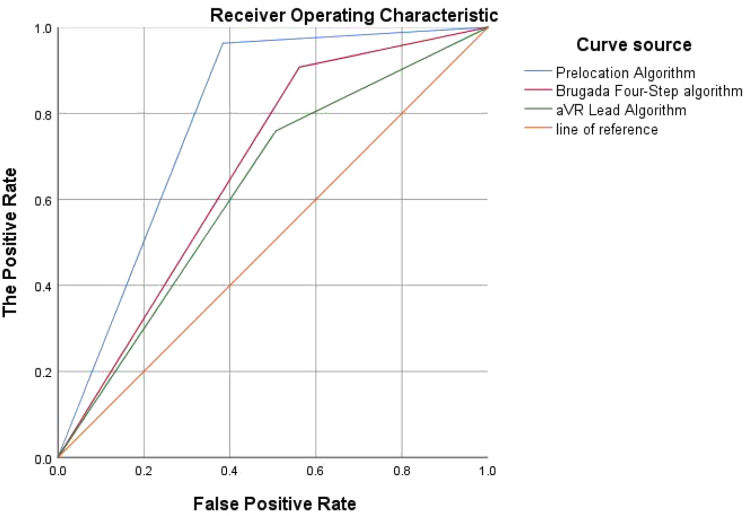
Results: The Prelocalization Series Algorithm demonstrated higher AUC values (0.90 vs. 0.73 vs. 0.69), sensitivity (0.91 vs. 0.61 vs. 0.50), and accuracy (0.90 vs. 0.71 vs. 0.65) in diagnosing VT compared to the Brugada Series Algorithm and Vereckei Series Algorithm. The Prelocalization Algorithm's single process (without differentiating between VT and PXT) also showed higher AUC values (0.79 vs. 0.67 vs. 0.63), sensitivity (0.96 vs. 0.91 vs. 0.76), specificity (0.62 vs. 0.44 vs. 0.49), and accuracy (0.82 vs. 0.72 vs. 0.65) than the Brugada Four-Step Method and aVR lead method. The accuracy of the Prelocalization Series Algorithm in diagnosing VT (0.90 vs. 0.82) was higher than its single process algorithm.With all differences being statistically significant (all P < 0.05).
Conclusion: The Prelocalization Series Algorithm is an effective new algorithm for discriminating WCT and can be attempted for diagnosing VT, SVT, and PXT.
期刊介绍:
BMC Cardiovascular Disorders is an open access, peer-reviewed journal that considers articles on all aspects of the prevention, diagnosis and management of disorders of the heart and circulatory system, as well as related molecular and cell biology, genetics, pathophysiology, epidemiology, and controlled trials.





 京公网安备 11010802042870号
京ICP备2023020795号-1
京公网安备 11010802042870号
京ICP备2023020795号-1

 分享
分享
 求助内容:
求助内容: 应助结果提醒方式:
 扫码关注我们
