Tanja Belčič Mikič, Igor Sterle, Mojca Matičič, Miha Arnol
{"title":"格列哌韦/匹布伦他韦联合索非布韦预防丙型肝炎病毒高度敏感阴性肾移植后丙型肝炎病毒感染1例报告及文献综述","authors":"Tanja Belčič Mikič, Igor Sterle, Mojca Matičič, Miha Arnol","doi":"10.3390/biomedicines13020472","DOIUrl":null,"url":null,"abstract":"<p><p><b>Background</b>: Since the discovery of successful direct-acting antiviral (DAA) treatment, kidneys from hepatitis C virus (HCV) RNA-positive donors represent a new opportunity to expand the organ donor pool for HCV-negative recipients. <b>Case presentation</b>: In this paper, we describe a unique case of transplantation of an HCV genotype 3a-infected kidney into an HCV-negative recipient who was highly sensitized, with a virtual panel-reactive antibody level of 99.96%. Prior to the kidney transplantation, the recipient received DAA treatment with glecaprevir/pibrentasvir as a viable prophylactic strategy. Post-transplant, the recipient received a triple-combination DAA regimen with glecaprevir/pibrentasvir/sofosbuvir, which continued for 12 weeks. Subsequently, viral load was undetectable at 12 and 24 weeks after treatment, with no significant adverse events associated with DAA therapy. A 12-month post-transplantation biopsy revealed mixed rejection requiring treatment. The 19-month follow-up showed a favorable outcome regarding the function of the kidney allograft and the recipient's quality of life. HCV-positive transplantation allowed our recipient to receive a kidney from an immunologically compatible donor without donor-specific antibodies and the need for desensitization strategies. <b>Conclusions</b>: Each transplant center should decide on the selection of candidates for kidney transplantation from HCV RNA-positive donors to HCV-negative recipients, the availability and choice of DAA treatment, and post-transplant follow-up. Our case emphasizes the need for early DAA treatment based on viral load and HCV genotyping, as well as for careful post-transplant surveillance including protocol biopsies.</p>","PeriodicalId":8937,"journal":{"name":"Biomedicines","volume":"13 2","pages":""},"PeriodicalIF":3.9000,"publicationDate":"2025-02-14","publicationTypes":"Journal Article","fieldsOfStudy":null,"isOpenAccess":false,"openAccessPdf":"https://www.ncbi.nlm.nih.gov/pmc/articles/PMC11853736/pdf/","citationCount":"0","resultStr":"{\"title\":\"Prophylactic Treatment of Hepatitis C Virus Infection After Kidney Transplantation with the Combination of Glecaprevir/Pibrentasvir and Sofosbuvir in a Highly Sensitized Hepatitis C Virus-Negative Recipient: A Case Report and Review of the Literature.\",\"authors\":\"Tanja Belčič Mikič, Igor Sterle, Mojca Matičič, Miha Arnol\",\"doi\":\"10.3390/biomedicines13020472\",\"DOIUrl\":null,\"url\":null,\"abstract\":\"<p><p><b>Background</b>: Since the discovery of successful direct-acting antiviral (DAA) treatment, kidneys from hepatitis C virus (HCV) RNA-positive donors represent a new opportunity to expand the organ donor pool for HCV-negative recipients. <b>Case presentation</b>: In this paper, we describe a unique case of transplantation of an HCV genotype 3a-infected kidney into an HCV-negative recipient who was highly sensitized, with a virtual panel-reactive antibody level of 99.96%. Prior to the kidney transplantation, the recipient received DAA treatment with glecaprevir/pibrentasvir as a viable prophylactic strategy. Post-transplant, the recipient received a triple-combination DAA regimen with glecaprevir/pibrentasvir/sofosbuvir, which continued for 12 weeks. Subsequently, viral load was undetectable at 12 and 24 weeks after treatment, with no significant adverse events associated with DAA therapy. A 12-month post-transplantation biopsy revealed mixed rejection requiring treatment. The 19-month follow-up showed a favorable outcome regarding the function of the kidney allograft and the recipient's quality of life. HCV-positive transplantation allowed our recipient to receive a kidney from an immunologically compatible donor without donor-specific antibodies and the need for desensitization strategies. <b>Conclusions</b>: Each transplant center should decide on the selection of candidates for kidney transplantation from HCV RNA-positive donors to HCV-negative recipients, the availability and choice of DAA treatment, and post-transplant follow-up. Our case emphasizes the need for early DAA treatment based on viral load and HCV genotyping, as well as for careful post-transplant surveillance including protocol biopsies.</p>\",\"PeriodicalId\":8937,\"journal\":{\"name\":\"Biomedicines\",\"volume\":\"13 2\",\"pages\":\"\"},\"PeriodicalIF\":3.9000,\"publicationDate\":\"2025-02-14\",\"publicationTypes\":\"Journal Article\",\"fieldsOfStudy\":null,\"isOpenAccess\":false,\"openAccessPdf\":\"https://www.ncbi.nlm.nih.gov/pmc/articles/PMC11853736/pdf/\",\"citationCount\":\"0\",\"resultStr\":null,\"platform\":\"Semanticscholar\",\"paperid\":null,\"PeriodicalName\":\"Biomedicines\",\"FirstCategoryId\":\"5\",\"ListUrlMain\":\"https://doi.org/10.3390/biomedicines13020472\",\"RegionNum\":3,\"RegionCategory\":\"工程技术\",\"ArticlePicture\":[],\"TitleCN\":null,\"AbstractTextCN\":null,\"PMCID\":null,\"EPubDate\":\"\",\"PubModel\":\"\",\"JCR\":\"Q2\",\"JCRName\":\"BIOCHEMISTRY & MOLECULAR BIOLOGY\",\"Score\":null,\"Total\":0}","platform":"Semanticscholar","paperid":null,"PeriodicalName":"Biomedicines","FirstCategoryId":"5","ListUrlMain":"https://doi.org/10.3390/biomedicines13020472","RegionNum":3,"RegionCategory":"工程技术","ArticlePicture":[],"TitleCN":null,"AbstractTextCN":null,"PMCID":null,"EPubDate":"","PubModel":"","JCR":"Q2","JCRName":"BIOCHEMISTRY & MOLECULAR BIOLOGY","Score":null,"Total":0}
Prophylactic Treatment of Hepatitis C Virus Infection After Kidney Transplantation with the Combination of Glecaprevir/Pibrentasvir and Sofosbuvir in a Highly Sensitized Hepatitis C Virus-Negative Recipient: A Case Report and Review of the Literature.
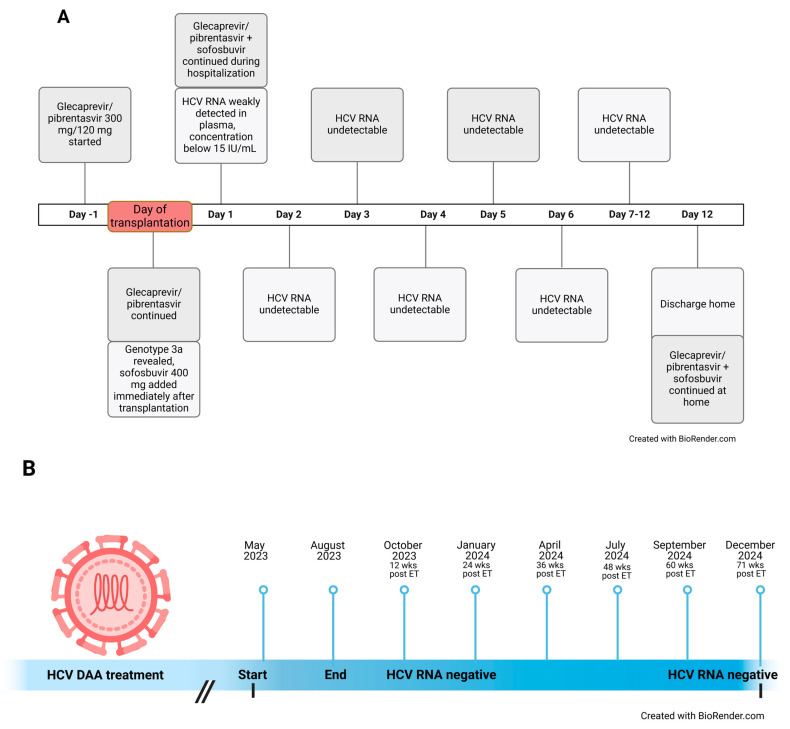
Background: Since the discovery of successful direct-acting antiviral (DAA) treatment, kidneys from hepatitis C virus (HCV) RNA-positive donors represent a new opportunity to expand the organ donor pool for HCV-negative recipients. Case presentation: In this paper, we describe a unique case of transplantation of an HCV genotype 3a-infected kidney into an HCV-negative recipient who was highly sensitized, with a virtual panel-reactive antibody level of 99.96%. Prior to the kidney transplantation, the recipient received DAA treatment with glecaprevir/pibrentasvir as a viable prophylactic strategy. Post-transplant, the recipient received a triple-combination DAA regimen with glecaprevir/pibrentasvir/sofosbuvir, which continued for 12 weeks. Subsequently, viral load was undetectable at 12 and 24 weeks after treatment, with no significant adverse events associated with DAA therapy. A 12-month post-transplantation biopsy revealed mixed rejection requiring treatment. The 19-month follow-up showed a favorable outcome regarding the function of the kidney allograft and the recipient's quality of life. HCV-positive transplantation allowed our recipient to receive a kidney from an immunologically compatible donor without donor-specific antibodies and the need for desensitization strategies. Conclusions: Each transplant center should decide on the selection of candidates for kidney transplantation from HCV RNA-positive donors to HCV-negative recipients, the availability and choice of DAA treatment, and post-transplant follow-up. Our case emphasizes the need for early DAA treatment based on viral load and HCV genotyping, as well as for careful post-transplant surveillance including protocol biopsies.
BiomedicinesBiochemistry, Genetics and Molecular Biology-General Biochemistry,Genetics and Molecular Biology
CiteScore
5.20
自引率
8.50%
发文量
2823
审稿时长
8 weeks
期刊介绍:
Biomedicines (ISSN 2227-9059; CODEN: BIOMID) is an international, scientific, open access journal on biomedicines published quarterly online by MDPI.




 京公网安备 11010802042870号
京ICP备2023020795号-1
京公网安备 11010802042870号
京ICP备2023020795号-1

 分享
分享
 求助内容:
求助内容: 应助结果提醒方式:
 扫码关注我们
