Damir Vučinić, Arnela Redžović, Goran Hauser, Ivana Mikolašević
{"title":"微生物群和放疗:释放改善胃肠道癌症治疗的潜力。","authors":"Damir Vučinić, Arnela Redžović, Goran Hauser, Ivana Mikolašević","doi":"10.3390/biomedicines13020526","DOIUrl":null,"url":null,"abstract":"<p><p>Radiotherapy (RT) is one of the major cornerstones in managing gastrointestinal (GI) cancers. However, several side effects, such as intestinal inflammation, mucosal injury, and dysbiosis, often compromise this. The gut microbiota increasingly attracts much interest as an essential modulator of RT effects influencing immune responses and tissue repair. Through short-chain fatty acids such as butyrate, representatives of certain bacterial species play a crucial role under normal conditions, keeping the mucosal integrity intact and reducing oxidative stress-mediated damage. Dysbiosis, a state where diminished microbial diversity and increased pathogenic species in the microbiota are seen, amplifies RT-induced toxicity in patients. Clinical investigations highlight that microbiota-targeted interventions, including probiotics, prebiotics, and fecal microbiota transplantation, hold the means to augment RT efficacy and lessen toxicity. Increased microflora diversity and specific microbial profiles have yielded serious patient improvements. Advanced RT methods use stereotactic body radiotherapy combined with microbiota modulation as a promising technique to shield healthy tissue and maximize immune-mediated antitumor effects. Additionally, there is an implication in tumor behavior regulated by the intratumoral microbiota regarding the response to radiotherapy. Notably, the modulation of gut and tumor microbiota provides an avenue to optimize RT benefits in GI cancers, underscoring the importance of personalized therapy.</p>","PeriodicalId":8937,"journal":{"name":"Biomedicines","volume":"13 2","pages":""},"PeriodicalIF":3.9000,"publicationDate":"2025-02-19","publicationTypes":"Journal Article","fieldsOfStudy":null,"isOpenAccess":false,"openAccessPdf":"https://www.ncbi.nlm.nih.gov/pmc/articles/PMC11852588/pdf/","citationCount":"0","resultStr":"{\"title\":\"Microbiota and Radiotherapy: Unlocking the Potential for Improved Gastrointestinal Cancer Treatment.\",\"authors\":\"Damir Vučinić, Arnela Redžović, Goran Hauser, Ivana Mikolašević\",\"doi\":\"10.3390/biomedicines13020526\",\"DOIUrl\":null,\"url\":null,\"abstract\":\"<p><p>Radiotherapy (RT) is one of the major cornerstones in managing gastrointestinal (GI) cancers. However, several side effects, such as intestinal inflammation, mucosal injury, and dysbiosis, often compromise this. The gut microbiota increasingly attracts much interest as an essential modulator of RT effects influencing immune responses and tissue repair. Through short-chain fatty acids such as butyrate, representatives of certain bacterial species play a crucial role under normal conditions, keeping the mucosal integrity intact and reducing oxidative stress-mediated damage. Dysbiosis, a state where diminished microbial diversity and increased pathogenic species in the microbiota are seen, amplifies RT-induced toxicity in patients. Clinical investigations highlight that microbiota-targeted interventions, including probiotics, prebiotics, and fecal microbiota transplantation, hold the means to augment RT efficacy and lessen toxicity. Increased microflora diversity and specific microbial profiles have yielded serious patient improvements. Advanced RT methods use stereotactic body radiotherapy combined with microbiota modulation as a promising technique to shield healthy tissue and maximize immune-mediated antitumor effects. Additionally, there is an implication in tumor behavior regulated by the intratumoral microbiota regarding the response to radiotherapy. Notably, the modulation of gut and tumor microbiota provides an avenue to optimize RT benefits in GI cancers, underscoring the importance of personalized therapy.</p>\",\"PeriodicalId\":8937,\"journal\":{\"name\":\"Biomedicines\",\"volume\":\"13 2\",\"pages\":\"\"},\"PeriodicalIF\":3.9000,\"publicationDate\":\"2025-02-19\",\"publicationTypes\":\"Journal Article\",\"fieldsOfStudy\":null,\"isOpenAccess\":false,\"openAccessPdf\":\"https://www.ncbi.nlm.nih.gov/pmc/articles/PMC11852588/pdf/\",\"citationCount\":\"0\",\"resultStr\":null,\"platform\":\"Semanticscholar\",\"paperid\":null,\"PeriodicalName\":\"Biomedicines\",\"FirstCategoryId\":\"5\",\"ListUrlMain\":\"https://doi.org/10.3390/biomedicines13020526\",\"RegionNum\":3,\"RegionCategory\":\"工程技术\",\"ArticlePicture\":[],\"TitleCN\":null,\"AbstractTextCN\":null,\"PMCID\":null,\"EPubDate\":\"\",\"PubModel\":\"\",\"JCR\":\"Q2\",\"JCRName\":\"BIOCHEMISTRY & MOLECULAR BIOLOGY\",\"Score\":null,\"Total\":0}","platform":"Semanticscholar","paperid":null,"PeriodicalName":"Biomedicines","FirstCategoryId":"5","ListUrlMain":"https://doi.org/10.3390/biomedicines13020526","RegionNum":3,"RegionCategory":"工程技术","ArticlePicture":[],"TitleCN":null,"AbstractTextCN":null,"PMCID":null,"EPubDate":"","PubModel":"","JCR":"Q2","JCRName":"BIOCHEMISTRY & MOLECULAR BIOLOGY","Score":null,"Total":0}
Microbiota and Radiotherapy: Unlocking the Potential for Improved Gastrointestinal Cancer Treatment.
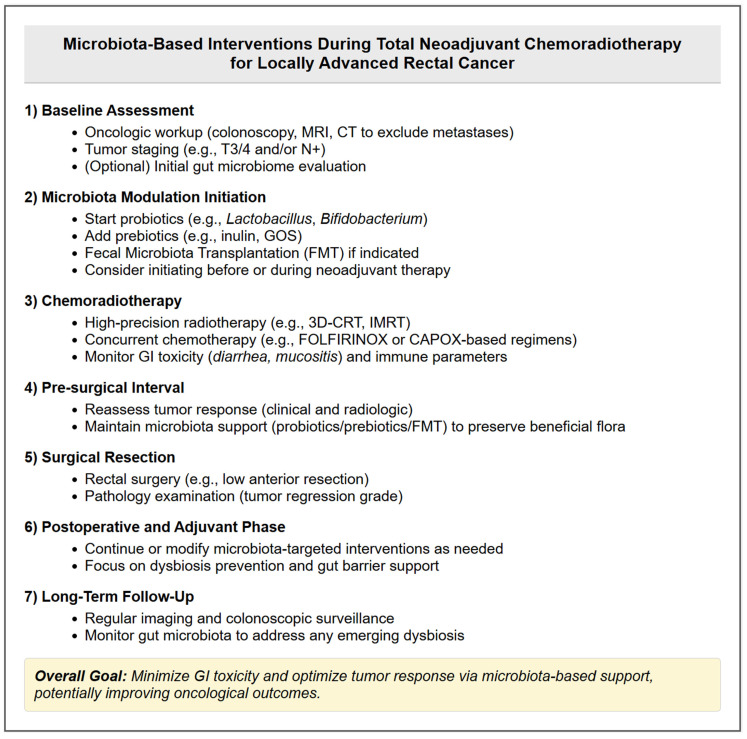
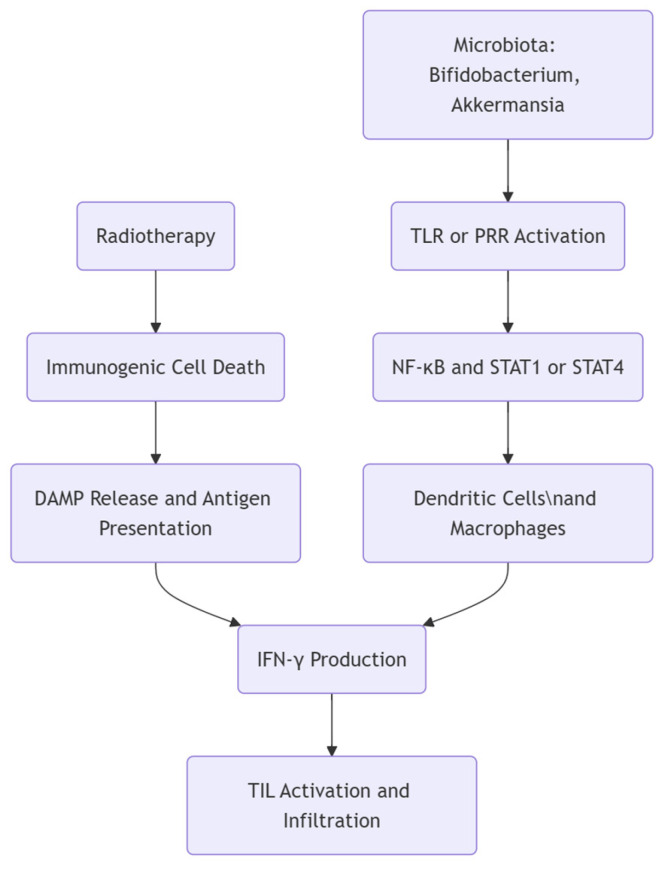
Radiotherapy (RT) is one of the major cornerstones in managing gastrointestinal (GI) cancers. However, several side effects, such as intestinal inflammation, mucosal injury, and dysbiosis, often compromise this. The gut microbiota increasingly attracts much interest as an essential modulator of RT effects influencing immune responses and tissue repair. Through short-chain fatty acids such as butyrate, representatives of certain bacterial species play a crucial role under normal conditions, keeping the mucosal integrity intact and reducing oxidative stress-mediated damage. Dysbiosis, a state where diminished microbial diversity and increased pathogenic species in the microbiota are seen, amplifies RT-induced toxicity in patients. Clinical investigations highlight that microbiota-targeted interventions, including probiotics, prebiotics, and fecal microbiota transplantation, hold the means to augment RT efficacy and lessen toxicity. Increased microflora diversity and specific microbial profiles have yielded serious patient improvements. Advanced RT methods use stereotactic body radiotherapy combined with microbiota modulation as a promising technique to shield healthy tissue and maximize immune-mediated antitumor effects. Additionally, there is an implication in tumor behavior regulated by the intratumoral microbiota regarding the response to radiotherapy. Notably, the modulation of gut and tumor microbiota provides an avenue to optimize RT benefits in GI cancers, underscoring the importance of personalized therapy.
BiomedicinesBiochemistry, Genetics and Molecular Biology-General Biochemistry,Genetics and Molecular Biology
CiteScore
5.20
自引率
8.50%
发文量
2823
审稿时长
8 weeks
期刊介绍:
Biomedicines (ISSN 2227-9059; CODEN: BIOMID) is an international, scientific, open access journal on biomedicines published quarterly online by MDPI.





 京公网安备 11010802042870号
京ICP备2023020795号-1
京公网安备 11010802042870号
京ICP备2023020795号-1

 分享
分享
 求助内容:
求助内容: 应助结果提醒方式:
 扫码关注我们
