Ulrich Grabmaier, Bartolo Ferraro, Kristin Lehnert, Astrid Petersmann, Stephan B Felix, Ludwig T Weckbach
{"title":"炎性和非炎性扩张型心肌病的Midkine血清水平。","authors":"Ulrich Grabmaier, Bartolo Ferraro, Kristin Lehnert, Astrid Petersmann, Stephan B Felix, Ludwig T Weckbach","doi":"10.3390/biomedicines13020504","DOIUrl":null,"url":null,"abstract":"<p><p><b>Objectives</b>: This retrospective study examines midkine, an inflammatory cytokine, as a potential serological biomarker to distinguish dilated cardiomyopathy (DCM) and inflammatory dilated cardiomyopathy (DCMi). Identifying such a biomarker is crucial for effective treatment of these two entities. <b>Methods</b>: The study included 54 patients with heart failure, reduced left ventricular systolic function, and suspected cardiac inflammation. Endomyocardial biopsies were obtained from all 54 patients to differentiate between DCM and DCMi. Blood sera were collected from these patients the same day the endomyocardial biopsy was performed and compared with those of 13 age-matched healthy individuals for different measurements such as midkine and NT-proBNP. Patients were followed up to a median of 194 days after the baseline visit. <b>Results</b>: Endomyocardial biopsies from patients with DCMi were associated with more infiltrating immune cells such as CD68<sup>+</sup> macrophages and CD3<sup>+</sup> T cells and a more frequent presence of a viral genome than those from patients with DCM. Both groups showed similar improvements in LV function and dimensions over time. MK serum levels were significantly higher in DCM/ DCMi patients than in healthy individuals but did not differ significantly between DCM and DCMi. MK levels did not significantly correlate with NYHA class, NT-proBNP, LVEDD, or LVEF, except for a weak correlation with LVEF at follow-up. <b>Conclusions</b>: Midkine serum levels were significantly higher in patients with a DCM phenotype and severely reduced systolic function. However, these levels could not distinguish between DCM and DCMi and showed no correlation with baseline or follow-up parameters. Therefore, midkine cannot be used as a biomarker to distinguish between DCM and DCMi.</p>","PeriodicalId":8937,"journal":{"name":"Biomedicines","volume":"13 2","pages":""},"PeriodicalIF":3.9000,"publicationDate":"2025-02-18","publicationTypes":"Journal Article","fieldsOfStudy":null,"isOpenAccess":false,"openAccessPdf":"https://www.ncbi.nlm.nih.gov/pmc/articles/PMC11852821/pdf/","citationCount":"0","resultStr":"{\"title\":\"Midkine Serum Levels in Inflammatory and Non-Inflammatory Dilated Cardiomyopathy.\",\"authors\":\"Ulrich Grabmaier, Bartolo Ferraro, Kristin Lehnert, Astrid Petersmann, Stephan B Felix, Ludwig T Weckbach\",\"doi\":\"10.3390/biomedicines13020504\",\"DOIUrl\":null,\"url\":null,\"abstract\":\"<p><p><b>Objectives</b>: This retrospective study examines midkine, an inflammatory cytokine, as a potential serological biomarker to distinguish dilated cardiomyopathy (DCM) and inflammatory dilated cardiomyopathy (DCMi). Identifying such a biomarker is crucial for effective treatment of these two entities. <b>Methods</b>: The study included 54 patients with heart failure, reduced left ventricular systolic function, and suspected cardiac inflammation. Endomyocardial biopsies were obtained from all 54 patients to differentiate between DCM and DCMi. Blood sera were collected from these patients the same day the endomyocardial biopsy was performed and compared with those of 13 age-matched healthy individuals for different measurements such as midkine and NT-proBNP. Patients were followed up to a median of 194 days after the baseline visit. <b>Results</b>: Endomyocardial biopsies from patients with DCMi were associated with more infiltrating immune cells such as CD68<sup>+</sup> macrophages and CD3<sup>+</sup> T cells and a more frequent presence of a viral genome than those from patients with DCM. Both groups showed similar improvements in LV function and dimensions over time. MK serum levels were significantly higher in DCM/ DCMi patients than in healthy individuals but did not differ significantly between DCM and DCMi. MK levels did not significantly correlate with NYHA class, NT-proBNP, LVEDD, or LVEF, except for a weak correlation with LVEF at follow-up. <b>Conclusions</b>: Midkine serum levels were significantly higher in patients with a DCM phenotype and severely reduced systolic function. However, these levels could not distinguish between DCM and DCMi and showed no correlation with baseline or follow-up parameters. Therefore, midkine cannot be used as a biomarker to distinguish between DCM and DCMi.</p>\",\"PeriodicalId\":8937,\"journal\":{\"name\":\"Biomedicines\",\"volume\":\"13 2\",\"pages\":\"\"},\"PeriodicalIF\":3.9000,\"publicationDate\":\"2025-02-18\",\"publicationTypes\":\"Journal Article\",\"fieldsOfStudy\":null,\"isOpenAccess\":false,\"openAccessPdf\":\"https://www.ncbi.nlm.nih.gov/pmc/articles/PMC11852821/pdf/\",\"citationCount\":\"0\",\"resultStr\":null,\"platform\":\"Semanticscholar\",\"paperid\":null,\"PeriodicalName\":\"Biomedicines\",\"FirstCategoryId\":\"5\",\"ListUrlMain\":\"https://doi.org/10.3390/biomedicines13020504\",\"RegionNum\":3,\"RegionCategory\":\"工程技术\",\"ArticlePicture\":[],\"TitleCN\":null,\"AbstractTextCN\":null,\"PMCID\":null,\"EPubDate\":\"\",\"PubModel\":\"\",\"JCR\":\"Q2\",\"JCRName\":\"BIOCHEMISTRY & MOLECULAR BIOLOGY\",\"Score\":null,\"Total\":0}","platform":"Semanticscholar","paperid":null,"PeriodicalName":"Biomedicines","FirstCategoryId":"5","ListUrlMain":"https://doi.org/10.3390/biomedicines13020504","RegionNum":3,"RegionCategory":"工程技术","ArticlePicture":[],"TitleCN":null,"AbstractTextCN":null,"PMCID":null,"EPubDate":"","PubModel":"","JCR":"Q2","JCRName":"BIOCHEMISTRY & MOLECULAR BIOLOGY","Score":null,"Total":0}
Midkine Serum Levels in Inflammatory and Non-Inflammatory Dilated Cardiomyopathy.
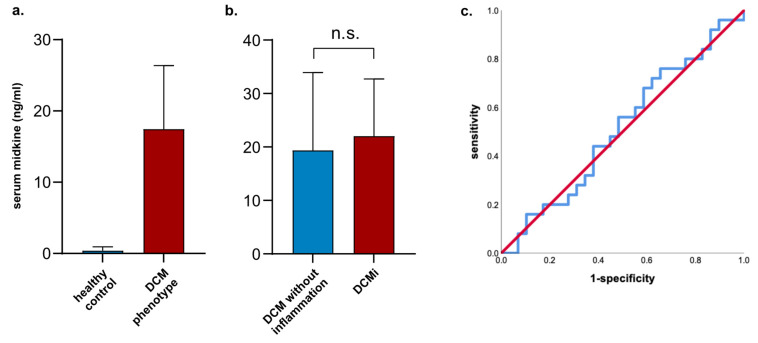
Objectives: This retrospective study examines midkine, an inflammatory cytokine, as a potential serological biomarker to distinguish dilated cardiomyopathy (DCM) and inflammatory dilated cardiomyopathy (DCMi). Identifying such a biomarker is crucial for effective treatment of these two entities. Methods: The study included 54 patients with heart failure, reduced left ventricular systolic function, and suspected cardiac inflammation. Endomyocardial biopsies were obtained from all 54 patients to differentiate between DCM and DCMi. Blood sera were collected from these patients the same day the endomyocardial biopsy was performed and compared with those of 13 age-matched healthy individuals for different measurements such as midkine and NT-proBNP. Patients were followed up to a median of 194 days after the baseline visit. Results: Endomyocardial biopsies from patients with DCMi were associated with more infiltrating immune cells such as CD68+ macrophages and CD3+ T cells and a more frequent presence of a viral genome than those from patients with DCM. Both groups showed similar improvements in LV function and dimensions over time. MK serum levels were significantly higher in DCM/ DCMi patients than in healthy individuals but did not differ significantly between DCM and DCMi. MK levels did not significantly correlate with NYHA class, NT-proBNP, LVEDD, or LVEF, except for a weak correlation with LVEF at follow-up. Conclusions: Midkine serum levels were significantly higher in patients with a DCM phenotype and severely reduced systolic function. However, these levels could not distinguish between DCM and DCMi and showed no correlation with baseline or follow-up parameters. Therefore, midkine cannot be used as a biomarker to distinguish between DCM and DCMi.
BiomedicinesBiochemistry, Genetics and Molecular Biology-General Biochemistry,Genetics and Molecular Biology
CiteScore
5.20
自引率
8.50%
发文量
2823
审稿时长
8 weeks
期刊介绍:
Biomedicines (ISSN 2227-9059; CODEN: BIOMID) is an international, scientific, open access journal on biomedicines published quarterly online by MDPI.




 京公网安备 11010802042870号
京ICP备2023020795号-1
京公网安备 11010802042870号
京ICP备2023020795号-1

 分享
分享
 求助内容:
求助内容: 应助结果提醒方式:
 扫码关注我们
