Muneeb Ul Haq, Khaled Noureldin, David Mark Pritchard, Arthur Sun Myint, Carrie A Duckworth, Ngu Wah Than, David M Hughes, Shakil Ahmed, Muhammad Ahsan Javed
{"title":"早期直肠癌经肛门内镜显微手术(TEMS)后预后不良患者的长期预后","authors":"Muneeb Ul Haq, Khaled Noureldin, David Mark Pritchard, Arthur Sun Myint, Carrie A Duckworth, Ngu Wah Than, David M Hughes, Shakil Ahmed, Muhammad Ahsan Javed","doi":"10.3390/biomedicines13020521","DOIUrl":null,"url":null,"abstract":"<p><p><b>Background:</b> Transanal endoscopic microsurgery (TEMS) is an organ-preserving approach for treatment of early rectal cancer (ERC). However, adverse histopathological features identified post-TEMS often necessitate adjuvant therapy. This study aims to compare the long-term oncological outcomes of patients who underwent TEMS and were offered adjuvant treatments with total mesorectal excision (TME), chemoradiotherapy (CRT), radiotherapy (RT), active surveillance, or dose escalation with contact X-ray brachytherapy (CXB). <b>Methods:</b> This study included patients treated with TEMS for ERC between September 2012 and December 2022, with follow-up until December 2023. Patients with adverse histopathological features (extra-mural venous invasion, lympho-vascular invasion, R1 margins, tumour budding) were assigned to adjuvant treatments. Inverse probability of treatment weighting (IPTW) was applied to mitigate selection bias. <b>Results:</b> Of the 117 patients, 24 underwent TME, 17 received CRT, 25 received RT, 14 underwent active surveillance, and 37 patients received CXB boost along with CRT. The median follow-up was 60 months (IQR 52-73). During this time, 29 patients developed recurrence, and 15 died. The 5-year overall survival (OS) was 78.6%, and disease-free survival (DFS) was 70.9%. Compared to CXB, the mortality risk for CRT (HR = 0.81; 95% CI: 0.20-3.28; <i>p</i> = 0.77) and TME (HR = 3.68; 95% CI: 0.46-29.79; <i>p</i> = 0.22) was not significantly different. However, TME was associated with a significantly higher recurrence risk compared to CXB (HR = 7.57; 95% CI: 1.23-46.84; <i>p</i> = 0.029). <b>Conclusions:</b> An organ-preserving strategy with CRT or CRT combined with a CXB boost may offer comparable long-term outcomes and reduced recurrence risks for patients undergoing TEMS for ERC with poor prognostic features. Further research with larger cohorts is needed to validate these results.</p>","PeriodicalId":8937,"journal":{"name":"Biomedicines","volume":"13 2","pages":""},"PeriodicalIF":3.9000,"publicationDate":"2025-02-19","publicationTypes":"Journal Article","fieldsOfStudy":null,"isOpenAccess":false,"openAccessPdf":"https://www.ncbi.nlm.nih.gov/pmc/articles/PMC11853461/pdf/","citationCount":"0","resultStr":"{\"title\":\"Long-Term Outcomes of Patients with Poor Prognostic Factors Following Transanal Endoscopic Microsurgery (TEMS) for Early Rectal Cancer.\",\"authors\":\"Muneeb Ul Haq, Khaled Noureldin, David Mark Pritchard, Arthur Sun Myint, Carrie A Duckworth, Ngu Wah Than, David M Hughes, Shakil Ahmed, Muhammad Ahsan Javed\",\"doi\":\"10.3390/biomedicines13020521\",\"DOIUrl\":null,\"url\":null,\"abstract\":\"<p><p><b>Background:</b> Transanal endoscopic microsurgery (TEMS) is an organ-preserving approach for treatment of early rectal cancer (ERC). However, adverse histopathological features identified post-TEMS often necessitate adjuvant therapy. This study aims to compare the long-term oncological outcomes of patients who underwent TEMS and were offered adjuvant treatments with total mesorectal excision (TME), chemoradiotherapy (CRT), radiotherapy (RT), active surveillance, or dose escalation with contact X-ray brachytherapy (CXB). <b>Methods:</b> This study included patients treated with TEMS for ERC between September 2012 and December 2022, with follow-up until December 2023. Patients with adverse histopathological features (extra-mural venous invasion, lympho-vascular invasion, R1 margins, tumour budding) were assigned to adjuvant treatments. Inverse probability of treatment weighting (IPTW) was applied to mitigate selection bias. <b>Results:</b> Of the 117 patients, 24 underwent TME, 17 received CRT, 25 received RT, 14 underwent active surveillance, and 37 patients received CXB boost along with CRT. The median follow-up was 60 months (IQR 52-73). During this time, 29 patients developed recurrence, and 15 died. The 5-year overall survival (OS) was 78.6%, and disease-free survival (DFS) was 70.9%. Compared to CXB, the mortality risk for CRT (HR = 0.81; 95% CI: 0.20-3.28; <i>p</i> = 0.77) and TME (HR = 3.68; 95% CI: 0.46-29.79; <i>p</i> = 0.22) was not significantly different. However, TME was associated with a significantly higher recurrence risk compared to CXB (HR = 7.57; 95% CI: 1.23-46.84; <i>p</i> = 0.029). <b>Conclusions:</b> An organ-preserving strategy with CRT or CRT combined with a CXB boost may offer comparable long-term outcomes and reduced recurrence risks for patients undergoing TEMS for ERC with poor prognostic features. Further research with larger cohorts is needed to validate these results.</p>\",\"PeriodicalId\":8937,\"journal\":{\"name\":\"Biomedicines\",\"volume\":\"13 2\",\"pages\":\"\"},\"PeriodicalIF\":3.9000,\"publicationDate\":\"2025-02-19\",\"publicationTypes\":\"Journal Article\",\"fieldsOfStudy\":null,\"isOpenAccess\":false,\"openAccessPdf\":\"https://www.ncbi.nlm.nih.gov/pmc/articles/PMC11853461/pdf/\",\"citationCount\":\"0\",\"resultStr\":null,\"platform\":\"Semanticscholar\",\"paperid\":null,\"PeriodicalName\":\"Biomedicines\",\"FirstCategoryId\":\"5\",\"ListUrlMain\":\"https://doi.org/10.3390/biomedicines13020521\",\"RegionNum\":3,\"RegionCategory\":\"工程技术\",\"ArticlePicture\":[],\"TitleCN\":null,\"AbstractTextCN\":null,\"PMCID\":null,\"EPubDate\":\"\",\"PubModel\":\"\",\"JCR\":\"Q2\",\"JCRName\":\"BIOCHEMISTRY & MOLECULAR BIOLOGY\",\"Score\":null,\"Total\":0}","platform":"Semanticscholar","paperid":null,"PeriodicalName":"Biomedicines","FirstCategoryId":"5","ListUrlMain":"https://doi.org/10.3390/biomedicines13020521","RegionNum":3,"RegionCategory":"工程技术","ArticlePicture":[],"TitleCN":null,"AbstractTextCN":null,"PMCID":null,"EPubDate":"","PubModel":"","JCR":"Q2","JCRName":"BIOCHEMISTRY & MOLECULAR BIOLOGY","Score":null,"Total":0}
Long-Term Outcomes of Patients with Poor Prognostic Factors Following Transanal Endoscopic Microsurgery (TEMS) for Early Rectal Cancer.
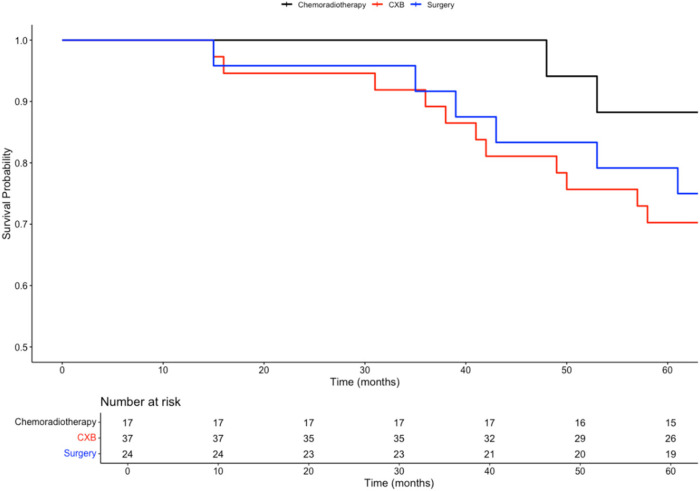
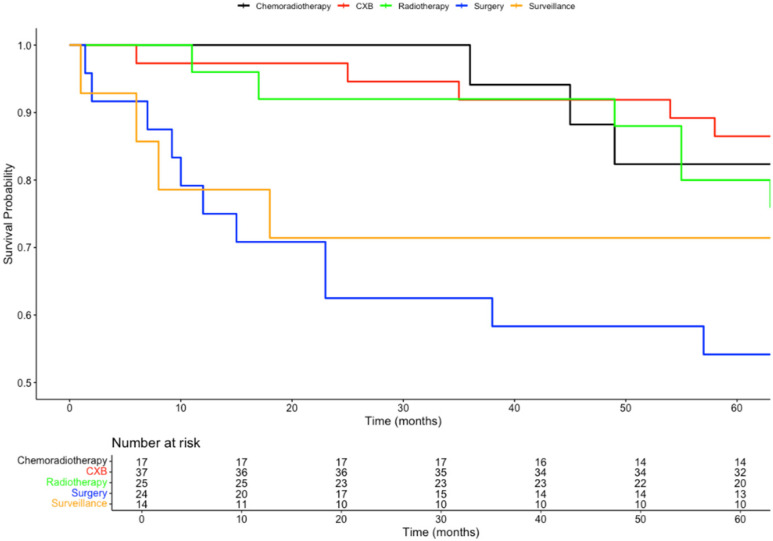
Background: Transanal endoscopic microsurgery (TEMS) is an organ-preserving approach for treatment of early rectal cancer (ERC). However, adverse histopathological features identified post-TEMS often necessitate adjuvant therapy. This study aims to compare the long-term oncological outcomes of patients who underwent TEMS and were offered adjuvant treatments with total mesorectal excision (TME), chemoradiotherapy (CRT), radiotherapy (RT), active surveillance, or dose escalation with contact X-ray brachytherapy (CXB). Methods: This study included patients treated with TEMS for ERC between September 2012 and December 2022, with follow-up until December 2023. Patients with adverse histopathological features (extra-mural venous invasion, lympho-vascular invasion, R1 margins, tumour budding) were assigned to adjuvant treatments. Inverse probability of treatment weighting (IPTW) was applied to mitigate selection bias. Results: Of the 117 patients, 24 underwent TME, 17 received CRT, 25 received RT, 14 underwent active surveillance, and 37 patients received CXB boost along with CRT. The median follow-up was 60 months (IQR 52-73). During this time, 29 patients developed recurrence, and 15 died. The 5-year overall survival (OS) was 78.6%, and disease-free survival (DFS) was 70.9%. Compared to CXB, the mortality risk for CRT (HR = 0.81; 95% CI: 0.20-3.28; p = 0.77) and TME (HR = 3.68; 95% CI: 0.46-29.79; p = 0.22) was not significantly different. However, TME was associated with a significantly higher recurrence risk compared to CXB (HR = 7.57; 95% CI: 1.23-46.84; p = 0.029). Conclusions: An organ-preserving strategy with CRT or CRT combined with a CXB boost may offer comparable long-term outcomes and reduced recurrence risks for patients undergoing TEMS for ERC with poor prognostic features. Further research with larger cohorts is needed to validate these results.
BiomedicinesBiochemistry, Genetics and Molecular Biology-General Biochemistry,Genetics and Molecular Biology
CiteScore
5.20
自引率
8.50%
发文量
2823
审稿时长
8 weeks
期刊介绍:
Biomedicines (ISSN 2227-9059; CODEN: BIOMID) is an international, scientific, open access journal on biomedicines published quarterly online by MDPI.





 京公网安备 11010802042870号
京ICP备2023020795号-1
京公网安备 11010802042870号
京ICP备2023020795号-1

 分享
分享
 求助内容:
求助内容: 应助结果提醒方式:
 扫码关注我们
