Cleo Valentine, Heather Mitcheltree, Isabelle A K Sjövall, Mohamed Hesham Khalil
{"title":"建筑介导的异稳态和神经可持续性:建筑环境对神经认知健康影响的理论框架。","authors":"Cleo Valentine, Heather Mitcheltree, Isabelle A K Sjövall, Mohamed Hesham Khalil","doi":"10.3390/brainsci15020201","DOIUrl":null,"url":null,"abstract":"<p><p>The global rise in mental health-related disorders represents a significant health and wellbeing challenge, imposing a substantial social and economic burden on individuals, communities, and healthcare systems. According to the World Health Organization, one in four people globally will be affected by mental or neurological disorders at some point in their lives, highlighting a significant global health concern that warrants carefully considered and innovative responses. While mental health challenges arise from complex, multifaceted factors, emerging research indicates that the built environment-the architecture of our homes, workplaces, and public spaces-may exert a critical but underappreciated influence on mental health outcomes. This paper outlines a novel theoretical framework for how visual stressors in the built environment might trigger neurophysiological stress responses via the HPA and SAM axes, potentially contributing over time to allostatic load. In this paper, it is proposed that chronic physiological strain can alter neuroplastic processes and neurogenesis in key brain regions-such as the hippocampus, prefrontal cortex (PFC), anterior cingulate cortex (ACC), and amygdala-thereby affecting cognitive health, emotional regulation, and overall mental wellbeing. Drawing on the principle of neurosustainability, this paper suggests that long-term exposure to stress-inducing environments may create feedback loops, particularly involving the amygdala, that have downstream effects on other brain areas and may be linked to adverse mental health outcomes such as depression. By presenting this framework, this paper aims to inspire further inquiry and applied experimental research into the intersection of neurophysiology, mental health, and the built environment, with a particular emphasis on rigorous testing and validation of the proposed mechanisms, that may then be translated into practical architectural design strategies for supporting health and wellbeing. In doing so, it is hoped that this work may contribute to a more holistic approach to improving mental health that integrates the creation of nurturing, resilient spaces into the broader public health agenda.</p>","PeriodicalId":9095,"journal":{"name":"Brain Sciences","volume":"15 2","pages":""},"PeriodicalIF":2.8000,"publicationDate":"2025-02-15","publicationTypes":"Journal Article","fieldsOfStudy":null,"isOpenAccess":false,"openAccessPdf":"https://www.ncbi.nlm.nih.gov/pmc/articles/PMC11853682/pdf/","citationCount":"0","resultStr":"{\"title\":\"Architecturally Mediated Allostasis and Neurosustainability: A Proposed Theoretical Framework for the Impact of the Built Environment on Neurocognitive Health.\",\"authors\":\"Cleo Valentine, Heather Mitcheltree, Isabelle A K Sjövall, Mohamed Hesham Khalil\",\"doi\":\"10.3390/brainsci15020201\",\"DOIUrl\":null,\"url\":null,\"abstract\":\"<p><p>The global rise in mental health-related disorders represents a significant health and wellbeing challenge, imposing a substantial social and economic burden on individuals, communities, and healthcare systems. According to the World Health Organization, one in four people globally will be affected by mental or neurological disorders at some point in their lives, highlighting a significant global health concern that warrants carefully considered and innovative responses. While mental health challenges arise from complex, multifaceted factors, emerging research indicates that the built environment-the architecture of our homes, workplaces, and public spaces-may exert a critical but underappreciated influence on mental health outcomes. This paper outlines a novel theoretical framework for how visual stressors in the built environment might trigger neurophysiological stress responses via the HPA and SAM axes, potentially contributing over time to allostatic load. In this paper, it is proposed that chronic physiological strain can alter neuroplastic processes and neurogenesis in key brain regions-such as the hippocampus, prefrontal cortex (PFC), anterior cingulate cortex (ACC), and amygdala-thereby affecting cognitive health, emotional regulation, and overall mental wellbeing. Drawing on the principle of neurosustainability, this paper suggests that long-term exposure to stress-inducing environments may create feedback loops, particularly involving the amygdala, that have downstream effects on other brain areas and may be linked to adverse mental health outcomes such as depression. By presenting this framework, this paper aims to inspire further inquiry and applied experimental research into the intersection of neurophysiology, mental health, and the built environment, with a particular emphasis on rigorous testing and validation of the proposed mechanisms, that may then be translated into practical architectural design strategies for supporting health and wellbeing. In doing so, it is hoped that this work may contribute to a more holistic approach to improving mental health that integrates the creation of nurturing, resilient spaces into the broader public health agenda.</p>\",\"PeriodicalId\":9095,\"journal\":{\"name\":\"Brain Sciences\",\"volume\":\"15 2\",\"pages\":\"\"},\"PeriodicalIF\":2.8000,\"publicationDate\":\"2025-02-15\",\"publicationTypes\":\"Journal Article\",\"fieldsOfStudy\":null,\"isOpenAccess\":false,\"openAccessPdf\":\"https://www.ncbi.nlm.nih.gov/pmc/articles/PMC11853682/pdf/\",\"citationCount\":\"0\",\"resultStr\":null,\"platform\":\"Semanticscholar\",\"paperid\":null,\"PeriodicalName\":\"Brain Sciences\",\"FirstCategoryId\":\"3\",\"ListUrlMain\":\"https://doi.org/10.3390/brainsci15020201\",\"RegionNum\":3,\"RegionCategory\":\"医学\",\"ArticlePicture\":[],\"TitleCN\":null,\"AbstractTextCN\":null,\"PMCID\":null,\"EPubDate\":\"\",\"PubModel\":\"\",\"JCR\":\"Q3\",\"JCRName\":\"NEUROSCIENCES\",\"Score\":null,\"Total\":0}","platform":"Semanticscholar","paperid":null,"PeriodicalName":"Brain Sciences","FirstCategoryId":"3","ListUrlMain":"https://doi.org/10.3390/brainsci15020201","RegionNum":3,"RegionCategory":"医学","ArticlePicture":[],"TitleCN":null,"AbstractTextCN":null,"PMCID":null,"EPubDate":"","PubModel":"","JCR":"Q3","JCRName":"NEUROSCIENCES","Score":null,"Total":0}
引用次数: 0
摘要
全球精神健康相关障碍的增加是一项重大的健康和福祉挑战,给个人、社区和卫生保健系统带来了沉重的社会和经济负担。根据世界卫生组织(World Health Organization)的数据,全球四分之一的人将在其生命的某个阶段受到精神或神经疾病的影响,这突显了一个重大的全球健康问题,需要仔细考虑和创新的应对措施。虽然心理健康挑战是由复杂的、多方面的因素引起的,但新兴的研究表明,建筑环境——我们的家庭、工作场所和公共空间的建筑——可能对心理健康结果产生关键但未被重视的影响。本文概述了一个新的理论框架,即建筑环境中的视觉压力源如何通过HPA和SAM轴触发神经生理应激反应,并随着时间的推移可能对适应负荷做出贡献。本文提出慢性生理应激可改变大脑关键区域(如海马、前额叶皮层、前扣带皮层和杏仁核)的神经可塑性过程和神经发生,从而影响认知健康、情绪调节和整体心理健康。根据神经可持续性原理,这篇论文表明,长期暴露在压力诱导的环境中可能会产生反馈回路,特别是涉及杏仁核的反馈回路,对其他大脑区域产生下游影响,并可能与抑郁症等不良心理健康结果有关。通过提出这一框架,本文旨在激发对神经生理学、心理健康和建筑环境交叉领域的进一步探索和应用实验研究,特别强调对所提出机制的严格测试和验证,然后将其转化为支持健康和福祉的实用建筑设计策略。在这样做的过程中,希望这项工作可能有助于采取更全面的方法来改善心理健康,将创造培育、有弹性的空间纳入更广泛的公共卫生议程。
Architecturally Mediated Allostasis and Neurosustainability: A Proposed Theoretical Framework for the Impact of the Built Environment on Neurocognitive Health.
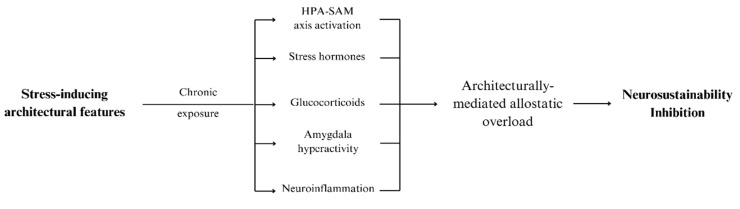
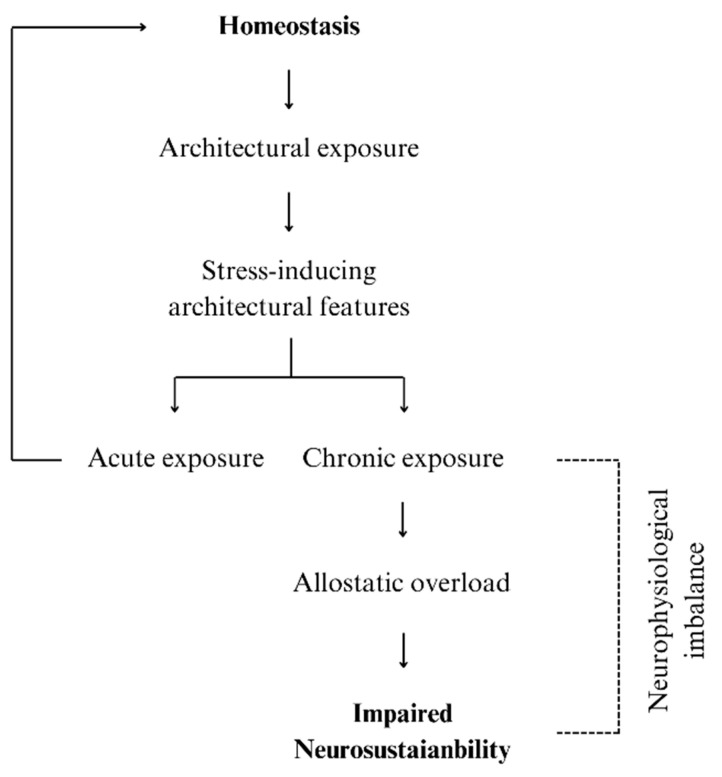
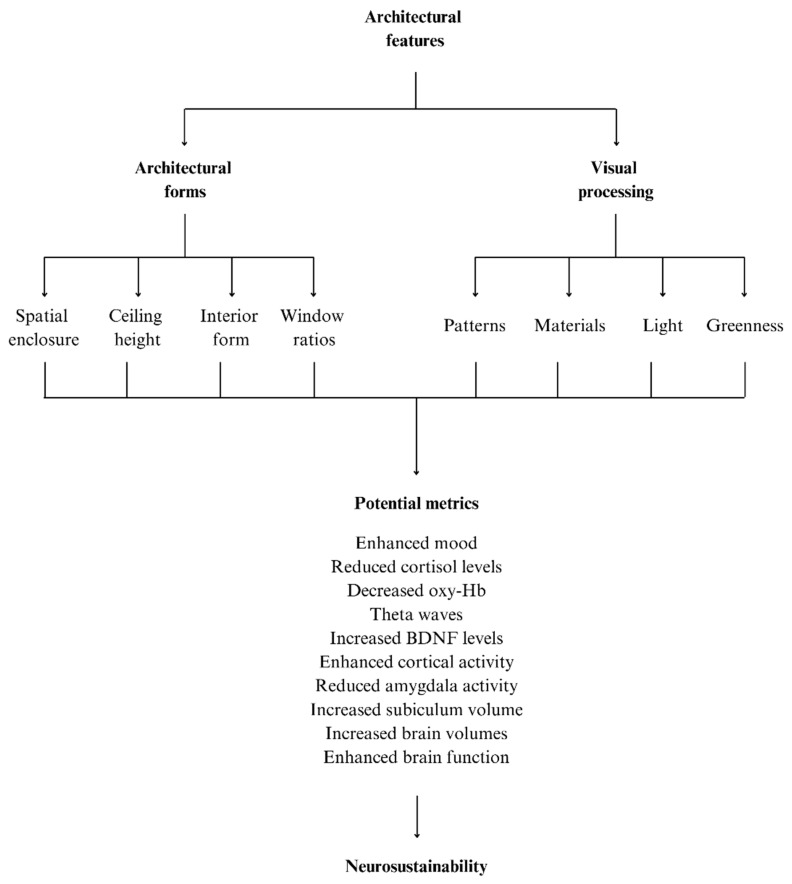
The global rise in mental health-related disorders represents a significant health and wellbeing challenge, imposing a substantial social and economic burden on individuals, communities, and healthcare systems. According to the World Health Organization, one in four people globally will be affected by mental or neurological disorders at some point in their lives, highlighting a significant global health concern that warrants carefully considered and innovative responses. While mental health challenges arise from complex, multifaceted factors, emerging research indicates that the built environment-the architecture of our homes, workplaces, and public spaces-may exert a critical but underappreciated influence on mental health outcomes. This paper outlines a novel theoretical framework for how visual stressors in the built environment might trigger neurophysiological stress responses via the HPA and SAM axes, potentially contributing over time to allostatic load. In this paper, it is proposed that chronic physiological strain can alter neuroplastic processes and neurogenesis in key brain regions-such as the hippocampus, prefrontal cortex (PFC), anterior cingulate cortex (ACC), and amygdala-thereby affecting cognitive health, emotional regulation, and overall mental wellbeing. Drawing on the principle of neurosustainability, this paper suggests that long-term exposure to stress-inducing environments may create feedback loops, particularly involving the amygdala, that have downstream effects on other brain areas and may be linked to adverse mental health outcomes such as depression. By presenting this framework, this paper aims to inspire further inquiry and applied experimental research into the intersection of neurophysiology, mental health, and the built environment, with a particular emphasis on rigorous testing and validation of the proposed mechanisms, that may then be translated into practical architectural design strategies for supporting health and wellbeing. In doing so, it is hoped that this work may contribute to a more holistic approach to improving mental health that integrates the creation of nurturing, resilient spaces into the broader public health agenda.
期刊介绍:
Brain Sciences (ISSN 2076-3425) is a peer-reviewed scientific journal that publishes original articles, critical reviews, research notes and short communications in the areas of cognitive neuroscience, developmental neuroscience, molecular and cellular neuroscience, neural engineering, neuroimaging, neurolinguistics, neuropathy, systems neuroscience, and theoretical and computational neuroscience. Our aim is to encourage scientists to publish their experimental and theoretical results in as much detail as possible. There is no restriction on the length of the papers. The full experimental details must be provided so that the results can be reproduced. Electronic files or software regarding the full details of the calculation and experimental procedure, if unable to be published in a normal way, can be deposited as supplementary material.




 京公网安备 11010802042870号
京ICP备2023020795号-1
京公网安备 11010802042870号
京ICP备2023020795号-1

 分享
分享
 求助内容:
求助内容: 应助结果提醒方式:
 扫码关注我们
