Chloe Swords, Matthew E Smith, Anant Patel, Gill Norman, Alexis Llewellyn, James R Tysome
{"title":"成人咽鼓管球囊扩张治疗阻塞性咽鼓管功能障碍。","authors":"Chloe Swords, Matthew E Smith, Anant Patel, Gill Norman, Alexis Llewellyn, James R Tysome","doi":"10.1002/14651858.CD013429.pub2","DOIUrl":null,"url":null,"abstract":"<p><strong>Background: </strong>Eustachian tube dysfunction (ETD) causes symptoms and signs of pressure dysregulation in the middle ear, and is associated with tympanic membrane retraction, otitis media with effusion, and chronic otitis media. Interventions aiming to improve symptoms can be non-surgical or surgical, including balloon dilatation of the Eustachian tube, also known as balloon eustachian tuboplasty (BET) for obstructive ETD. However, existing published evidence for the effectiveness and safety of BET remains unclear.</p><p><strong>Objectives: </strong>To evaluate the effects of balloon dilatation of the Eustachian tube in adults with obstructive Eustachian tube dysfunction.</p><p><strong>Search methods: </strong>The Cochrane ENT Information Specialist searched the Cochrane ENT Register; Central Register of Controlled Trials (CENTRAL); Ovid M>DLINE; Ovid Embase; Web of Science; Clinicaltrials.gov; ICTRP and additional sources for published and unpublished trials. The final search was updated on 18th January 2024. There were no restrictions on language, publication date or study setting.</p><p><strong>Selection criteria: </strong>Randomised controlled trials were included if they allocated adult participants with chronic obstructive ETD to treatment randomly and compared BET with non-surgical treatment, no treatment, or other surgical treatment. Studies with other designs were excluded.</p><p><strong>Data collection and analysis: </strong>At least two review authors independently selected trials using predetermined inclusion criteria, assessed the risk of bias, extracted data, and rated the certainty of evidence (CoE) according to GRADEpro. Statistical analyses were performed using a random-effects model and interpreted according to the most recent version of the Cochrane Handbook. Predefined primary outcomes were obstructive ETD symptoms, Eustachian tube function (objective or semi-objective tests), or serious adverse events. Secondary outcomes were hearing, tympanic membrane abnormalities, quality of life, and other adverse events.</p><p><strong>Main results: </strong>Nine trials were identified with 684 randomised participants across three comparisons: BET versus non-surgical treatment (five trials, 422 participants), BET versus no treatment (sham surgery; one trial, 17 participants), and BET versus other surgery (four trials, 275 participants). None of the studies were rated with an overall low risk of bias. Comparing BET to non-surgical treatment up to three months, there is low-certainty evidence showing that BET may reduce patient-reported ETD symptoms (change in ETDQ-7: mean difference (MD) -1.66 (95% CI -2.16 to -1.16; I<sup>2</sup> = 63%; 4 RCTs, 362 participants)). There is very low-certainty evidence that BET may improve ETD as assessed by objective or semi-objective measures (improvement in tympanometry: RR 2.51 (95% CI 1.82 to 3.48; I<sup>2</sup> = 0%; 3 RCTs, 369 participants). Between three and 12 months, the evidence is very uncertain whether BET reduces ETDQ-7: MD -0.55 (-1.31 to 0.21; 1 RCT, 24 participants). The evidence is very uncertain whether BET improves ETD as assessed by objective or semi-objective measures (improvement in tympanometry: RR 2.54 (95% CI 0.91 to 7.12)). Evidence was downgraded for risk of bias, imprecision, indirectness, or a combination of these. Comparing BET to no treatment (sham surgery trial) up to three months, there is very low-certainty evidence that BET improves ETD as assessed by patient-reported ETD symptoms (change in ETDQ-7: MD -0.54 (95% CI -2.55 to 1.47; 1 RCT, 17 participants)). Between three and 12 months, the evidence is very uncertain whether BET improves ETD as assessed by ETDQ-7 (MD 0.16 (95% CI -0.75 to 1.07; 1 RCT, 17 participants)). Evidence was downgraded for indirectness and twice for imprecision. Although there were no serious adverse events reported, these studies were underpowered to detect adverse events and were performed by highly trained and experienced investigators under strict study protocols. This could underestimate the true risk of adverse events by less experienced clinicians in everyday clinical practice. Evidence was rated as very low certainty, downgraded for risk of bias, imprecision, and indirectness.</p><p><strong>Authors' conclusions: </strong>BET may lead to a clinically meaningful improvement in ETD symptoms compared to non-surgical or no treatment (in the form of sham surgery) at up to three months. The effects of BET on ETD compared to non-surgical treatment are very uncertain beyond three months. However, the certainty of evidence ranged from low to very low, with the studies being underpowered to detect adverse events. The findings of this review should help to inform further BET research and guidelines. Future research should focus on longer-term outcomes and the incidence of adverse events or complications in real-world practice settings.</p>","PeriodicalId":10473,"journal":{"name":"Cochrane Database of Systematic Reviews","volume":"2 ","pages":"CD013429"},"PeriodicalIF":8.8000,"publicationDate":"2025-02-26","publicationTypes":"Journal Article","fieldsOfStudy":null,"isOpenAccess":false,"openAccessPdf":"https://www.ncbi.nlm.nih.gov/pmc/articles/PMC11863300/pdf/","citationCount":"0","resultStr":"{\"title\":\"Balloon dilatation of the Eustachian tube for obstructive Eustachian tube dysfunction in adults.\",\"authors\":\"Chloe Swords, Matthew E Smith, Anant Patel, Gill Norman, Alexis Llewellyn, James R Tysome\",\"doi\":\"10.1002/14651858.CD013429.pub2\",\"DOIUrl\":null,\"url\":null,\"abstract\":\"<p><strong>Background: </strong>Eustachian tube dysfunction (ETD) causes symptoms and signs of pressure dysregulation in the middle ear, and is associated with tympanic membrane retraction, otitis media with effusion, and chronic otitis media. Interventions aiming to improve symptoms can be non-surgical or surgical, including balloon dilatation of the Eustachian tube, also known as balloon eustachian tuboplasty (BET) for obstructive ETD. However, existing published evidence for the effectiveness and safety of BET remains unclear.</p><p><strong>Objectives: </strong>To evaluate the effects of balloon dilatation of the Eustachian tube in adults with obstructive Eustachian tube dysfunction.</p><p><strong>Search methods: </strong>The Cochrane ENT Information Specialist searched the Cochrane ENT Register; Central Register of Controlled Trials (CENTRAL); Ovid M>DLINE; Ovid Embase; Web of Science; Clinicaltrials.gov; ICTRP and additional sources for published and unpublished trials. The final search was updated on 18th January 2024. There were no restrictions on language, publication date or study setting.</p><p><strong>Selection criteria: </strong>Randomised controlled trials were included if they allocated adult participants with chronic obstructive ETD to treatment randomly and compared BET with non-surgical treatment, no treatment, or other surgical treatment. Studies with other designs were excluded.</p><p><strong>Data collection and analysis: </strong>At least two review authors independently selected trials using predetermined inclusion criteria, assessed the risk of bias, extracted data, and rated the certainty of evidence (CoE) according to GRADEpro. Statistical analyses were performed using a random-effects model and interpreted according to the most recent version of the Cochrane Handbook. Predefined primary outcomes were obstructive ETD symptoms, Eustachian tube function (objective or semi-objective tests), or serious adverse events. Secondary outcomes were hearing, tympanic membrane abnormalities, quality of life, and other adverse events.</p><p><strong>Main results: </strong>Nine trials were identified with 684 randomised participants across three comparisons: BET versus non-surgical treatment (five trials, 422 participants), BET versus no treatment (sham surgery; one trial, 17 participants), and BET versus other surgery (four trials, 275 participants). None of the studies were rated with an overall low risk of bias. Comparing BET to non-surgical treatment up to three months, there is low-certainty evidence showing that BET may reduce patient-reported ETD symptoms (change in ETDQ-7: mean difference (MD) -1.66 (95% CI -2.16 to -1.16; I<sup>2</sup> = 63%; 4 RCTs, 362 participants)). There is very low-certainty evidence that BET may improve ETD as assessed by objective or semi-objective measures (improvement in tympanometry: RR 2.51 (95% CI 1.82 to 3.48; I<sup>2</sup> = 0%; 3 RCTs, 369 participants). Between three and 12 months, the evidence is very uncertain whether BET reduces ETDQ-7: MD -0.55 (-1.31 to 0.21; 1 RCT, 24 participants). The evidence is very uncertain whether BET improves ETD as assessed by objective or semi-objective measures (improvement in tympanometry: RR 2.54 (95% CI 0.91 to 7.12)). Evidence was downgraded for risk of bias, imprecision, indirectness, or a combination of these. Comparing BET to no treatment (sham surgery trial) up to three months, there is very low-certainty evidence that BET improves ETD as assessed by patient-reported ETD symptoms (change in ETDQ-7: MD -0.54 (95% CI -2.55 to 1.47; 1 RCT, 17 participants)). Between three and 12 months, the evidence is very uncertain whether BET improves ETD as assessed by ETDQ-7 (MD 0.16 (95% CI -0.75 to 1.07; 1 RCT, 17 participants)). Evidence was downgraded for indirectness and twice for imprecision. Although there were no serious adverse events reported, these studies were underpowered to detect adverse events and were performed by highly trained and experienced investigators under strict study protocols. This could underestimate the true risk of adverse events by less experienced clinicians in everyday clinical practice. Evidence was rated as very low certainty, downgraded for risk of bias, imprecision, and indirectness.</p><p><strong>Authors' conclusions: </strong>BET may lead to a clinically meaningful improvement in ETD symptoms compared to non-surgical or no treatment (in the form of sham surgery) at up to three months. The effects of BET on ETD compared to non-surgical treatment are very uncertain beyond three months. However, the certainty of evidence ranged from low to very low, with the studies being underpowered to detect adverse events. The findings of this review should help to inform further BET research and guidelines. Future research should focus on longer-term outcomes and the incidence of adverse events or complications in real-world practice settings.</p>\",\"PeriodicalId\":10473,\"journal\":{\"name\":\"Cochrane Database of Systematic Reviews\",\"volume\":\"2 \",\"pages\":\"CD013429\"},\"PeriodicalIF\":8.8000,\"publicationDate\":\"2025-02-26\",\"publicationTypes\":\"Journal Article\",\"fieldsOfStudy\":null,\"isOpenAccess\":false,\"openAccessPdf\":\"https://www.ncbi.nlm.nih.gov/pmc/articles/PMC11863300/pdf/\",\"citationCount\":\"0\",\"resultStr\":null,\"platform\":\"Semanticscholar\",\"paperid\":null,\"PeriodicalName\":\"Cochrane Database of Systematic Reviews\",\"FirstCategoryId\":\"3\",\"ListUrlMain\":\"https://doi.org/10.1002/14651858.CD013429.pub2\",\"RegionNum\":2,\"RegionCategory\":\"医学\",\"ArticlePicture\":[],\"TitleCN\":null,\"AbstractTextCN\":null,\"PMCID\":null,\"EPubDate\":\"\",\"PubModel\":\"\",\"JCR\":\"Q1\",\"JCRName\":\"MEDICINE, GENERAL & INTERNAL\",\"Score\":null,\"Total\":0}","platform":"Semanticscholar","paperid":null,"PeriodicalName":"Cochrane Database of Systematic Reviews","FirstCategoryId":"3","ListUrlMain":"https://doi.org/10.1002/14651858.CD013429.pub2","RegionNum":2,"RegionCategory":"医学","ArticlePicture":[],"TitleCN":null,"AbstractTextCN":null,"PMCID":null,"EPubDate":"","PubModel":"","JCR":"Q1","JCRName":"MEDICINE, GENERAL & INTERNAL","Score":null,"Total":0}
引用次数: 0
摘要
背景:耳咽管功能障碍(ETD)引起中耳压力失调的症状和体征,并与鼓膜缩回、积液性中耳炎和慢性中耳炎相关。旨在改善症状的干预措施可以是非手术或手术,包括球囊扩张咽鼓管,也称为球囊咽鼓管成形术(BET),用于阻塞性ETD。然而,关于BET的有效性和安全性的现有已发表的证据仍不清楚。目的:探讨咽鼓管球囊扩张术治疗成人咽鼓管梗阻性功能障碍的疗效。检索方法:Cochrane耳鼻喉科信息专家检索Cochrane耳鼻喉科注册;中央对照试验登记册;奥维德M > DLINE;奥维德Embase;Web of Science;Clinicaltrials.gov;ICTRP和其他已发表和未发表试验的来源。最终搜索于2024年1月18日更新。没有对语言、出版日期或研究环境的限制。选择标准:如果随机对照试验随机分配慢性阻塞性ETD成年参与者进行治疗,并将BET与非手术治疗、不治疗或其他手术治疗进行比较,则纳入随机对照试验。其他设计的研究被排除在外。数据收集和分析:至少两名综述作者使用预定的纳入标准独立选择试验,评估偏倚风险,提取数据,并根据GRADEpro评估证据确定性(CoE)。使用随机效应模型进行统计分析,并根据最新版本的Cochrane手册进行解释。预先确定的主要结局是阻塞性ETD症状、咽鼓管功能(客观或半客观试验)或严重不良事件。次要结局是听力、鼓膜异常、生活质量和其他不良事件。主要结果:9项试验纳入684名随机受试者,分为3个比较:BET与非手术治疗(5项试验,422名受试者),BET与不治疗(假手术;1项试验,17名受试者),以及BET与其他手术(4项试验,275名受试者)的比较。没有一项研究被评为整体低偏倚风险。将BET与非手术治疗进行3个月的比较,有低确定性的证据表明BET可以减少患者报告的ETD症状(ETDQ-7的变化:平均差异(MD) -1.66 (95% CI -2.16至-1.16;I2 = 63%;4项随机对照试验,362名受试者)。有非常低确定性的证据表明,BET可以通过客观或半客观测量来改善ETD(鼓室测量的改善:RR 2.51 (95% CI 1.82至3.48;I2 = 0%;3项随机对照试验,369名受试者)。在3到12个月之间,证据非常不确定BET是否会降低ETDQ-7: MD -0.55(-1.31至0.21;1项随机对照试验,24名受试者)。证据非常不确定BET是否可以通过客观或半客观测量来改善ETD(鼓室测量的改善:RR 2.54 (95% CI 0.91至7.12))。证据因存在偏倚、不精确、间接或这些因素的组合风险而被降级。将BET与未治疗(假手术试验)进行比较,有非常低确定性的证据表明,通过患者报告的ETD症状评估,BET改善了ETD (ETDQ-7的变化:MD -0.54 (95% CI -2.55至1.47;1项随机对照试验,17名受试者)。在3至12个月之间,证据非常不确定BET是否改善ETD, ETDQ-7 (MD 0.16 (95% CI -0.75至1.07;1项随机对照试验,17名受试者)。证据因间接而被降级,因不精确而被降级两次。虽然没有严重的不良事件报告,但这些研究在检测不良事件方面能力不足,而且是由训练有素、经验丰富的研究者在严格的研究方案下进行的。这可能会被经验不足的临床医生在日常临床实践中低估不良事件的真实风险。证据被评为非常低的确定性,并因偏倚、不精确和间接的风险而降级。作者的结论是:与非手术或不治疗(假手术形式)相比,在长达三个月的时间里,BET可能会导致临床上有意义的ETD症状改善。三个月后,与非手术治疗相比,BET对ETD的影响非常不确定。然而,证据的确定性从低到非常低,这些研究在检测不良事件方面的能力不足。本综述的发现应有助于进一步开展BET研究和制定相关指南。未来的研究应侧重于长期结果和现实世界中不良事件或并发症的发生率。
Balloon dilatation of the Eustachian tube for obstructive Eustachian tube dysfunction in adults.
Background: Eustachian tube dysfunction (ETD) causes symptoms and signs of pressure dysregulation in the middle ear, and is associated with tympanic membrane retraction, otitis media with effusion, and chronic otitis media. Interventions aiming to improve symptoms can be non-surgical or surgical, including balloon dilatation of the Eustachian tube, also known as balloon eustachian tuboplasty (BET) for obstructive ETD. However, existing published evidence for the effectiveness and safety of BET remains unclear.
Objectives: To evaluate the effects of balloon dilatation of the Eustachian tube in adults with obstructive Eustachian tube dysfunction.
Search methods: The Cochrane ENT Information Specialist searched the Cochrane ENT Register; Central Register of Controlled Trials (CENTRAL); Ovid M>DLINE; Ovid Embase; Web of Science; Clinicaltrials.gov; ICTRP and additional sources for published and unpublished trials. The final search was updated on 18th January 2024. There were no restrictions on language, publication date or study setting.
Selection criteria: Randomised controlled trials were included if they allocated adult participants with chronic obstructive ETD to treatment randomly and compared BET with non-surgical treatment, no treatment, or other surgical treatment. Studies with other designs were excluded.
Data collection and analysis: At least two review authors independently selected trials using predetermined inclusion criteria, assessed the risk of bias, extracted data, and rated the certainty of evidence (CoE) according to GRADEpro. Statistical analyses were performed using a random-effects model and interpreted according to the most recent version of the Cochrane Handbook. Predefined primary outcomes were obstructive ETD symptoms, Eustachian tube function (objective or semi-objective tests), or serious adverse events. Secondary outcomes were hearing, tympanic membrane abnormalities, quality of life, and other adverse events.
Main results: Nine trials were identified with 684 randomised participants across three comparisons: BET versus non-surgical treatment (five trials, 422 participants), BET versus no treatment (sham surgery; one trial, 17 participants), and BET versus other surgery (four trials, 275 participants). None of the studies were rated with an overall low risk of bias. Comparing BET to non-surgical treatment up to three months, there is low-certainty evidence showing that BET may reduce patient-reported ETD symptoms (change in ETDQ-7: mean difference (MD) -1.66 (95% CI -2.16 to -1.16; I2 = 63%; 4 RCTs, 362 participants)). There is very low-certainty evidence that BET may improve ETD as assessed by objective or semi-objective measures (improvement in tympanometry: RR 2.51 (95% CI 1.82 to 3.48; I2 = 0%; 3 RCTs, 369 participants). Between three and 12 months, the evidence is very uncertain whether BET reduces ETDQ-7: MD -0.55 (-1.31 to 0.21; 1 RCT, 24 participants). The evidence is very uncertain whether BET improves ETD as assessed by objective or semi-objective measures (improvement in tympanometry: RR 2.54 (95% CI 0.91 to 7.12)). Evidence was downgraded for risk of bias, imprecision, indirectness, or a combination of these. Comparing BET to no treatment (sham surgery trial) up to three months, there is very low-certainty evidence that BET improves ETD as assessed by patient-reported ETD symptoms (change in ETDQ-7: MD -0.54 (95% CI -2.55 to 1.47; 1 RCT, 17 participants)). Between three and 12 months, the evidence is very uncertain whether BET improves ETD as assessed by ETDQ-7 (MD 0.16 (95% CI -0.75 to 1.07; 1 RCT, 17 participants)). Evidence was downgraded for indirectness and twice for imprecision. Although there were no serious adverse events reported, these studies were underpowered to detect adverse events and were performed by highly trained and experienced investigators under strict study protocols. This could underestimate the true risk of adverse events by less experienced clinicians in everyday clinical practice. Evidence was rated as very low certainty, downgraded for risk of bias, imprecision, and indirectness.
Authors' conclusions: BET may lead to a clinically meaningful improvement in ETD symptoms compared to non-surgical or no treatment (in the form of sham surgery) at up to three months. The effects of BET on ETD compared to non-surgical treatment are very uncertain beyond three months. However, the certainty of evidence ranged from low to very low, with the studies being underpowered to detect adverse events. The findings of this review should help to inform further BET research and guidelines. Future research should focus on longer-term outcomes and the incidence of adverse events or complications in real-world practice settings.
期刊介绍:
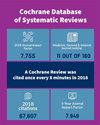
The Cochrane Database of Systematic Reviews (CDSR) stands as the premier database for systematic reviews in healthcare. It comprises Cochrane Reviews, along with protocols for these reviews, editorials, and supplements. Owned and operated by Cochrane, a worldwide independent network of healthcare stakeholders, the CDSR (ISSN 1469-493X) encompasses a broad spectrum of health-related topics, including health services.




 京公网安备 11010802042870号
京ICP备2023020795号-1
京公网安备 11010802042870号
京ICP备2023020795号-1

 分享
分享
 求助内容:
求助内容: 应助结果提醒方式:
 扫码关注我们
