Kambiz Kadkhodayan, Zubair Khan, Shayan Irani, Artur Viana, Saurabh Chandan, Sagar Pathak, Abdullah Abassi, Mustafa A Arain, Maham Hayat, Deepanshu Jain, Dennis Yang, Muhammad Khalid Hasan, Gustavo Bello Vincentelli
{"title":"Roux-en-Y胃旁路术后盲肢复位联合鼻中隔切开术治疗糖手杖综合征的初步可行性研究。","authors":"Kambiz Kadkhodayan, Zubair Khan, Shayan Irani, Artur Viana, Saurabh Chandan, Sagar Pathak, Abdullah Abassi, Mustafa A Arain, Maham Hayat, Deepanshu Jain, Dennis Yang, Muhammad Khalid Hasan, Gustavo Bello Vincentelli","doi":"10.1055/a-2509-7573","DOIUrl":null,"url":null,"abstract":"<p><strong>Background and study aims: </strong>Candy cane syndrome (CCS) refers to patients with a long and symptomatic blind afferent roux limb (BARL) after Roux-en-Y gastric bypass (RYGB). Revisional surgery is efficacious but can be cost prohibitive.</p><p><strong>Patients and methods: </strong>We describe endoscopic blind limb reduction (EBLR), that converts the BARL into a \"common channel\" and eliminates food pooling, thereby improving symptoms. Patients that did not have a complete symptomatic response underwent a repeat EBLR or EBLR with septotomy (EBLR-S) based on residual BARL length.</p><p><strong>Results: </strong>Five patients with CCS underwent the EBLR procedure. Mean age was 60.4 years, average BARL length 5.8 cm, and median Charlson comorbidity index was 3. Technical success was achieved in all five patients (100%). Symptom resolution was achieved in all five patients (100%). Two patients required a second procedure.</p><p><strong>Conclusions: </strong>EBLR may be a potentially safe, efficacious, and cost-effective alternative to surgery in patients with CCS. Further prospective studies are needed.</p>","PeriodicalId":11671,"journal":{"name":"Endoscopy International Open","volume":"13 ","pages":"a25097573"},"PeriodicalIF":2.3000,"publicationDate":"2025-02-05","publicationTypes":"Journal Article","fieldsOfStudy":null,"isOpenAccess":false,"openAccessPdf":"https://www.ncbi.nlm.nih.gov/pmc/articles/PMC11855250/pdf/","citationCount":"0","resultStr":"{\"title\":\"Endoscopic blind limb reduction with septotomy for the treatment of candy cane syndrome after Roux-en-Y gastric bypass: Pilot feasibility study.\",\"authors\":\"Kambiz Kadkhodayan, Zubair Khan, Shayan Irani, Artur Viana, Saurabh Chandan, Sagar Pathak, Abdullah Abassi, Mustafa A Arain, Maham Hayat, Deepanshu Jain, Dennis Yang, Muhammad Khalid Hasan, Gustavo Bello Vincentelli\",\"doi\":\"10.1055/a-2509-7573\",\"DOIUrl\":null,\"url\":null,\"abstract\":\"<p><strong>Background and study aims: </strong>Candy cane syndrome (CCS) refers to patients with a long and symptomatic blind afferent roux limb (BARL) after Roux-en-Y gastric bypass (RYGB). Revisional surgery is efficacious but can be cost prohibitive.</p><p><strong>Patients and methods: </strong>We describe endoscopic blind limb reduction (EBLR), that converts the BARL into a \\\"common channel\\\" and eliminates food pooling, thereby improving symptoms. Patients that did not have a complete symptomatic response underwent a repeat EBLR or EBLR with septotomy (EBLR-S) based on residual BARL length.</p><p><strong>Results: </strong>Five patients with CCS underwent the EBLR procedure. Mean age was 60.4 years, average BARL length 5.8 cm, and median Charlson comorbidity index was 3. Technical success was achieved in all five patients (100%). Symptom resolution was achieved in all five patients (100%). Two patients required a second procedure.</p><p><strong>Conclusions: </strong>EBLR may be a potentially safe, efficacious, and cost-effective alternative to surgery in patients with CCS. Further prospective studies are needed.</p>\",\"PeriodicalId\":11671,\"journal\":{\"name\":\"Endoscopy International Open\",\"volume\":\"13 \",\"pages\":\"a25097573\"},\"PeriodicalIF\":2.3000,\"publicationDate\":\"2025-02-05\",\"publicationTypes\":\"Journal Article\",\"fieldsOfStudy\":null,\"isOpenAccess\":false,\"openAccessPdf\":\"https://www.ncbi.nlm.nih.gov/pmc/articles/PMC11855250/pdf/\",\"citationCount\":\"0\",\"resultStr\":null,\"platform\":\"Semanticscholar\",\"paperid\":null,\"PeriodicalName\":\"Endoscopy International Open\",\"FirstCategoryId\":\"1085\",\"ListUrlMain\":\"https://doi.org/10.1055/a-2509-7573\",\"RegionNum\":0,\"RegionCategory\":null,\"ArticlePicture\":[],\"TitleCN\":null,\"AbstractTextCN\":null,\"PMCID\":null,\"EPubDate\":\"2025/1/1 0:00:00\",\"PubModel\":\"eCollection\",\"JCR\":\"Q3\",\"JCRName\":\"GASTROENTEROLOGY & HEPATOLOGY\",\"Score\":null,\"Total\":0}","platform":"Semanticscholar","paperid":null,"PeriodicalName":"Endoscopy International Open","FirstCategoryId":"1085","ListUrlMain":"https://doi.org/10.1055/a-2509-7573","RegionNum":0,"RegionCategory":null,"ArticlePicture":[],"TitleCN":null,"AbstractTextCN":null,"PMCID":null,"EPubDate":"2025/1/1 0:00:00","PubModel":"eCollection","JCR":"Q3","JCRName":"GASTROENTEROLOGY & HEPATOLOGY","Score":null,"Total":0}
Endoscopic blind limb reduction with septotomy for the treatment of candy cane syndrome after Roux-en-Y gastric bypass: Pilot feasibility study.
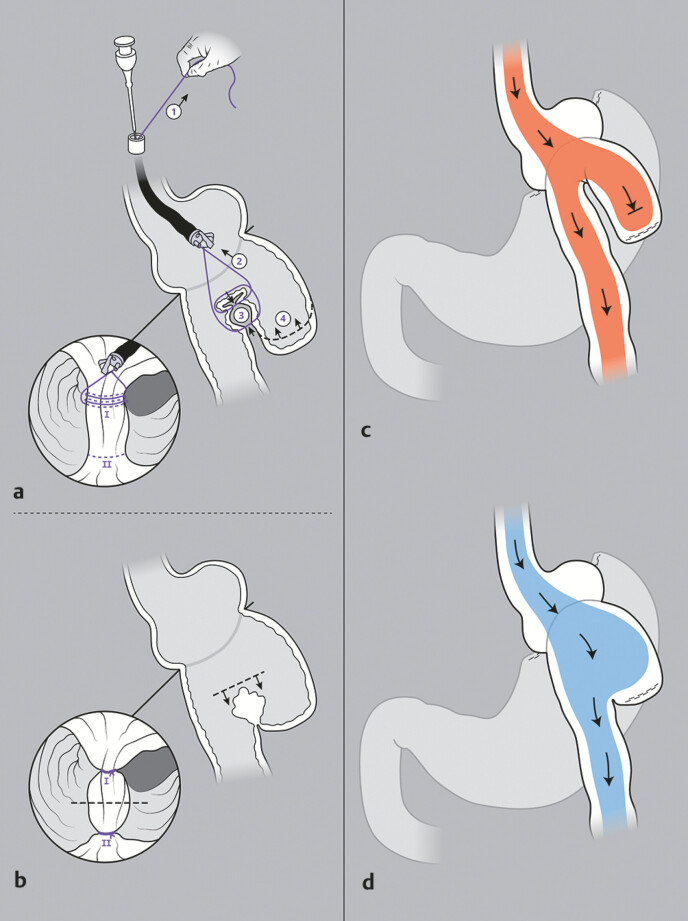
Background and study aims: Candy cane syndrome (CCS) refers to patients with a long and symptomatic blind afferent roux limb (BARL) after Roux-en-Y gastric bypass (RYGB). Revisional surgery is efficacious but can be cost prohibitive.
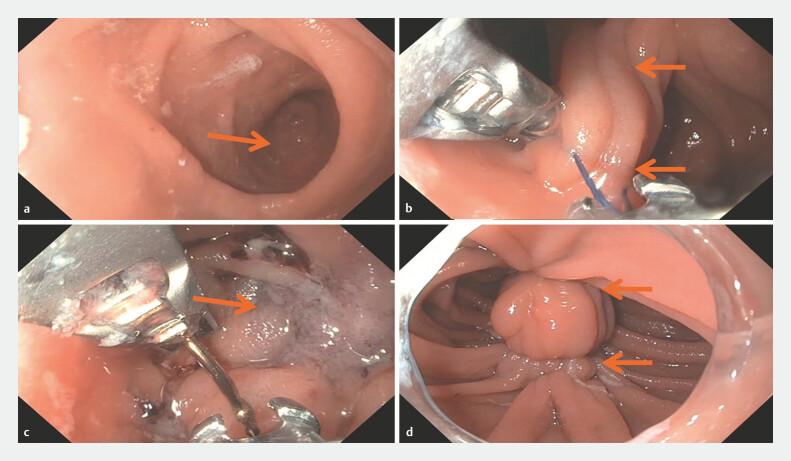
Patients and methods: We describe endoscopic blind limb reduction (EBLR), that converts the BARL into a "common channel" and eliminates food pooling, thereby improving symptoms. Patients that did not have a complete symptomatic response underwent a repeat EBLR or EBLR with septotomy (EBLR-S) based on residual BARL length.
Results: Five patients with CCS underwent the EBLR procedure. Mean age was 60.4 years, average BARL length 5.8 cm, and median Charlson comorbidity index was 3. Technical success was achieved in all five patients (100%). Symptom resolution was achieved in all five patients (100%). Two patients required a second procedure.
Conclusions: EBLR may be a potentially safe, efficacious, and cost-effective alternative to surgery in patients with CCS. Further prospective studies are needed.






 京公网安备 11010802042870号
京ICP备2023020795号-1
京公网安备 11010802042870号
京ICP备2023020795号-1

 分享
分享
 求助内容:
求助内容: 应助结果提醒方式:
 扫码关注我们
