{"title":"氨甲环酸治疗自发性脑出血:荟萃分析。","authors":"Yu Chang, Pei-Chun Lai, Chih-Yuan Huang, Junmin Song, Kuan-Yu Chi, Hsiang-Yi Hung, Yen-Ta Huang","doi":"10.1186/s40001-025-02385-x","DOIUrl":null,"url":null,"abstract":"<p><strong>Background: </strong>Spontaneous intracerebral hemorrhage (sICH) is a critical and disabling form of stroke and accounts for an obvious number of stroke-related deaths and disabilities globally. Hematoma growth is a key target for therapeutic intervention because of its association with poor outcomes. Recently, the STOP-MSU trial showed that intravenous tranexamic acid (TA) did not reduce hematoma growth or improve clinical outcomes when administered within 2 h of intracerebral hemorrhage symptom onset. This study aims to evaluate the efficacy of TA in reducing hematoma growth and improving clinical outcomes in patients with spontaneous sICH by incorporating the findings from the latest STOP-MSU trial and consolidating past research to clarify the overall efficacy and safety of TA on sICH.</p><p><strong>Methods: </strong>A systematic review and meta-analysis were conducted according to the Cochrane Handbook for Systematic Reviews of Interventions and PRISMA guidelines. We included randomized controlled trials (RCTs) comparing TA to placebo in adult patients with sICH. Databases such as PubMed, Medline, and Cochrane were searched up to May 2024. Key outcomes analyzed included hematoma expansion, mortality within 90 days, thromboembolic events, and favorable functional outcomes. Data were pooled using a random-effects model and analyzed using the \"metafor\" package in RStudio.</p><p><strong>Results: </strong>Five RCTs involving 1419 patients were included. The meta-analysis showed no significant difference in hematoma expansion (odds ratio [OR] 0.87, 95% confidence interval [CI] 0.74-1.03), mortality within 90 days (OR 1.03, 95% CI 0.86-1.24), thromboembolic events (OR 1.07, 95% CI 0.69-1.64), and favorable functional outcomes (modified Rankin Scale of 0-2 at 90 days; OR 1.04, 95% CI 0.88-1.22) between the TA and placebo groups.</p><p><strong>Conclusions: </strong>TA does not significantly reduce hematoma growth or improve clinical outcomes in patients with sICH. Despite its affordability and availability, the routine use of TA in sICH is not supported by current evidence.</p>","PeriodicalId":11949,"journal":{"name":"European Journal of Medical Research","volume":"30 1","pages":"133"},"PeriodicalIF":3.4000,"publicationDate":"2025-02-25","publicationTypes":"Journal Article","fieldsOfStudy":null,"isOpenAccess":false,"openAccessPdf":"https://www.ncbi.nlm.nih.gov/pmc/articles/PMC11854317/pdf/","citationCount":"0","resultStr":"{\"title\":\"Tranexamic acid in spontaneous intracerebral hemorrhage: a meta-analysis.\",\"authors\":\"Yu Chang, Pei-Chun Lai, Chih-Yuan Huang, Junmin Song, Kuan-Yu Chi, Hsiang-Yi Hung, Yen-Ta Huang\",\"doi\":\"10.1186/s40001-025-02385-x\",\"DOIUrl\":null,\"url\":null,\"abstract\":\"<p><strong>Background: </strong>Spontaneous intracerebral hemorrhage (sICH) is a critical and disabling form of stroke and accounts for an obvious number of stroke-related deaths and disabilities globally. Hematoma growth is a key target for therapeutic intervention because of its association with poor outcomes. Recently, the STOP-MSU trial showed that intravenous tranexamic acid (TA) did not reduce hematoma growth or improve clinical outcomes when administered within 2 h of intracerebral hemorrhage symptom onset. This study aims to evaluate the efficacy of TA in reducing hematoma growth and improving clinical outcomes in patients with spontaneous sICH by incorporating the findings from the latest STOP-MSU trial and consolidating past research to clarify the overall efficacy and safety of TA on sICH.</p><p><strong>Methods: </strong>A systematic review and meta-analysis were conducted according to the Cochrane Handbook for Systematic Reviews of Interventions and PRISMA guidelines. We included randomized controlled trials (RCTs) comparing TA to placebo in adult patients with sICH. Databases such as PubMed, Medline, and Cochrane were searched up to May 2024. Key outcomes analyzed included hematoma expansion, mortality within 90 days, thromboembolic events, and favorable functional outcomes. Data were pooled using a random-effects model and analyzed using the \\\"metafor\\\" package in RStudio.</p><p><strong>Results: </strong>Five RCTs involving 1419 patients were included. The meta-analysis showed no significant difference in hematoma expansion (odds ratio [OR] 0.87, 95% confidence interval [CI] 0.74-1.03), mortality within 90 days (OR 1.03, 95% CI 0.86-1.24), thromboembolic events (OR 1.07, 95% CI 0.69-1.64), and favorable functional outcomes (modified Rankin Scale of 0-2 at 90 days; OR 1.04, 95% CI 0.88-1.22) between the TA and placebo groups.</p><p><strong>Conclusions: </strong>TA does not significantly reduce hematoma growth or improve clinical outcomes in patients with sICH. Despite its affordability and availability, the routine use of TA in sICH is not supported by current evidence.</p>\",\"PeriodicalId\":11949,\"journal\":{\"name\":\"European Journal of Medical Research\",\"volume\":\"30 1\",\"pages\":\"133\"},\"PeriodicalIF\":3.4000,\"publicationDate\":\"2025-02-25\",\"publicationTypes\":\"Journal Article\",\"fieldsOfStudy\":null,\"isOpenAccess\":false,\"openAccessPdf\":\"https://www.ncbi.nlm.nih.gov/pmc/articles/PMC11854317/pdf/\",\"citationCount\":\"0\",\"resultStr\":null,\"platform\":\"Semanticscholar\",\"paperid\":null,\"PeriodicalName\":\"European Journal of Medical Research\",\"FirstCategoryId\":\"3\",\"ListUrlMain\":\"https://doi.org/10.1186/s40001-025-02385-x\",\"RegionNum\":3,\"RegionCategory\":\"医学\",\"ArticlePicture\":[],\"TitleCN\":null,\"AbstractTextCN\":null,\"PMCID\":null,\"EPubDate\":\"\",\"PubModel\":\"\",\"JCR\":\"Q2\",\"JCRName\":\"MEDICINE, RESEARCH & EXPERIMENTAL\",\"Score\":null,\"Total\":0}","platform":"Semanticscholar","paperid":null,"PeriodicalName":"European Journal of Medical Research","FirstCategoryId":"3","ListUrlMain":"https://doi.org/10.1186/s40001-025-02385-x","RegionNum":3,"RegionCategory":"医学","ArticlePicture":[],"TitleCN":null,"AbstractTextCN":null,"PMCID":null,"EPubDate":"","PubModel":"","JCR":"Q2","JCRName":"MEDICINE, RESEARCH & EXPERIMENTAL","Score":null,"Total":0}
引用次数: 0
摘要
背景:自发性脑出血(siich)是卒中的一种严重致残形式,是全球卒中相关死亡和残疾的明显原因。血肿生长是治疗干预的关键目标,因为它与不良预后相关。最近,STOP-MSU试验显示,在脑出血症状出现后2小时内静脉注射氨甲环酸(TA)并没有减少血肿生长或改善临床结果。本研究旨在通过结合最新的STOP-MSU试验结果,并巩固过去的研究,评估TA在减少自发性sICH患者血肿生长和改善临床结果方面的疗效,以阐明TA治疗sICH的总体疗效和安全性。方法:根据Cochrane干预措施系统评价手册和PRISMA指南进行系统评价和荟萃分析。我们纳入了比较TA与安慰剂在成年sICH患者中的疗效的随机对照试验(RCTs)。PubMed、Medline和Cochrane等数据库被检索到2024年5月。分析的主要结局包括血肿扩大、90天内死亡率、血栓栓塞事件和良好的功能结局。使用随机效应模型汇总数据,并使用RStudio中的“元”包进行分析。结果:纳入5项随机对照试验,共1419例患者。meta分析显示,血肿扩张(比值比[OR] 0.87, 95%可信区间[CI] 0.74-1.03)、90天内死亡率(比值比[OR] 1.03, 95% CI 0.86-1.24)、血栓栓塞事件(比值比[OR] 1.07, 95% CI 0.69-1.64)和良好的功能结局(90天修正Rankin量表0-2;TA组和安慰剂组的OR为1.04,95% CI为0.88-1.22)。结论:TA不能显著减少sICH患者的血肿生长或改善临床结果。尽管其可负担性和可获得性,但目前尚无证据支持在siich中常规使用TA。
Tranexamic acid in spontaneous intracerebral hemorrhage: a meta-analysis.
Background: Spontaneous intracerebral hemorrhage (sICH) is a critical and disabling form of stroke and accounts for an obvious number of stroke-related deaths and disabilities globally. Hematoma growth is a key target for therapeutic intervention because of its association with poor outcomes. Recently, the STOP-MSU trial showed that intravenous tranexamic acid (TA) did not reduce hematoma growth or improve clinical outcomes when administered within 2 h of intracerebral hemorrhage symptom onset. This study aims to evaluate the efficacy of TA in reducing hematoma growth and improving clinical outcomes in patients with spontaneous sICH by incorporating the findings from the latest STOP-MSU trial and consolidating past research to clarify the overall efficacy and safety of TA on sICH.
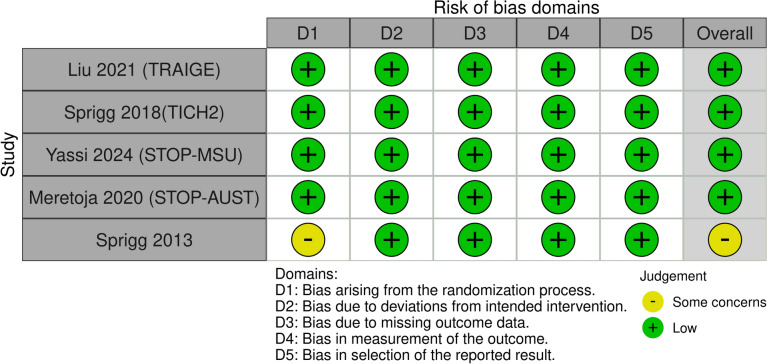
Methods: A systematic review and meta-analysis were conducted according to the Cochrane Handbook for Systematic Reviews of Interventions and PRISMA guidelines. We included randomized controlled trials (RCTs) comparing TA to placebo in adult patients with sICH. Databases such as PubMed, Medline, and Cochrane were searched up to May 2024. Key outcomes analyzed included hematoma expansion, mortality within 90 days, thromboembolic events, and favorable functional outcomes. Data were pooled using a random-effects model and analyzed using the "metafor" package in RStudio.
Results: Five RCTs involving 1419 patients were included. The meta-analysis showed no significant difference in hematoma expansion (odds ratio [OR] 0.87, 95% confidence interval [CI] 0.74-1.03), mortality within 90 days (OR 1.03, 95% CI 0.86-1.24), thromboembolic events (OR 1.07, 95% CI 0.69-1.64), and favorable functional outcomes (modified Rankin Scale of 0-2 at 90 days; OR 1.04, 95% CI 0.88-1.22) between the TA and placebo groups.
Conclusions: TA does not significantly reduce hematoma growth or improve clinical outcomes in patients with sICH. Despite its affordability and availability, the routine use of TA in sICH is not supported by current evidence.
期刊介绍:
European Journal of Medical Research publishes translational and clinical research of international interest across all medical disciplines, enabling clinicians and other researchers to learn about developments and innovations within these disciplines and across the boundaries between disciplines. The journal publishes high quality research and reviews and aims to ensure that the results of all well-conducted research are published, regardless of their outcome.






 京公网安备 11010802042870号
京ICP备2023020795号-1
京公网安备 11010802042870号
京ICP备2023020795号-1

 分享
分享
 求助内容:
求助内容: 应助结果提醒方式:
 扫码关注我们
