C Ramos-Navarro, R Gregorio-Hernández, A Pérez-Pérez, E Rodríguez-Corrales, S Vigil-Vázquez, M Arriaga-Redondo, A Merino-Hernández, M Sánchez-Luna
{"title":"胎盘病理对早产儿支气管肺发育不良风险的影响:胎龄和性别的作用。","authors":"C Ramos-Navarro, R Gregorio-Hernández, A Pérez-Pérez, E Rodríguez-Corrales, S Vigil-Vázquez, M Arriaga-Redondo, A Merino-Hernández, M Sánchez-Luna","doi":"10.1007/s00431-025-06016-9","DOIUrl":null,"url":null,"abstract":"<p><p>To analyze the impact of placental histological findings on the development of bronchopulmonary dysplasia (BPD) in preterm infants, this prospective, observational, single-center study included infants born before 32 weeks of gestation between 2012 and 2023. Perinatal variables were collected and correlated with mortality at hospital discharge and the diagnosis of grade 2-3 BPD at 36 weeks postmenstrual age (PMA). Placental histology was categorized into three groups: inflammatory pathology, vascular malperfusion, and no pathology. A total of 1128 preterm infants were enrolled, with placental histology results available for 899 cases. Inflammatory placental pathology was associated with a lower gestational age (GA) at birth (- 1.4 weeks, 95% CI - 1.74 to - 1.11). The increased mortality linked to placental inflammation was no longer significant after adjusting for GA. In preterm infants born at 27 weeks' GA or later, the effect of vascular malperfusion on BPD showed sexual dimorphism. In males, placental malperfusion was associated with a 2.25-fold increased risk of developing BPD (95% CI 1.10 to 4.57), independent of GA and exposure to mechanical ventilation. No significant differences were observed in females born at 27 weeks or later.</p><p><strong>Conclusions: </strong>The impact of placental histological abnormalities on BPD development is influenced by gestational age and sex. While placental inflammation increases mortality by triggering extremely preterm birth, it does not appear to increase respiratory morbidity compared to cases with normal placental histology at similar GAs. In males, however, placental malperfusion appears to affect lung development and contributes to BPD independently of GA and exposure to mechanical ventilation.</p><p><strong>What is known: </strong>• Bronchopulmonary dysplasia (BPD) is a common respiratory complication among preterm infants, strongly influenced by prenatal events. • The placenta plays a crucial role in fetal lung development, and its analysis provides objective insight into antenatal conditions.</p><p><strong>What is new: </strong>• Placental malperfusion affects lung development in a sex-specific manner, with male infants born at or after 27 weeks of gestation being more specifically affected and showing a higher susceptibility to BPD, independent of gestational age or mechanical ventilation. • These findings highlight the importance of considering sex differences in BPD pathophysiology and the role of placental pathology.</p>","PeriodicalId":11997,"journal":{"name":"European Journal of Pediatrics","volume":"184 3","pages":"211"},"PeriodicalIF":2.6000,"publicationDate":"2025-02-26","publicationTypes":"Journal Article","fieldsOfStudy":null,"isOpenAccess":false,"openAccessPdf":"https://www.ncbi.nlm.nih.gov/pmc/articles/PMC12476302/pdf/","citationCount":"0","resultStr":"{\"title\":\"Impact of placental pathology on the risk of bronchopulmonary dysplasia in preterm infants: The role of gestational age and sex.\",\"authors\":\"C Ramos-Navarro, R Gregorio-Hernández, A Pérez-Pérez, E Rodríguez-Corrales, S Vigil-Vázquez, M Arriaga-Redondo, A Merino-Hernández, M Sánchez-Luna\",\"doi\":\"10.1007/s00431-025-06016-9\",\"DOIUrl\":null,\"url\":null,\"abstract\":\"<p><p>To analyze the impact of placental histological findings on the development of bronchopulmonary dysplasia (BPD) in preterm infants, this prospective, observational, single-center study included infants born before 32 weeks of gestation between 2012 and 2023. Perinatal variables were collected and correlated with mortality at hospital discharge and the diagnosis of grade 2-3 BPD at 36 weeks postmenstrual age (PMA). Placental histology was categorized into three groups: inflammatory pathology, vascular malperfusion, and no pathology. A total of 1128 preterm infants were enrolled, with placental histology results available for 899 cases. Inflammatory placental pathology was associated with a lower gestational age (GA) at birth (- 1.4 weeks, 95% CI - 1.74 to - 1.11). The increased mortality linked to placental inflammation was no longer significant after adjusting for GA. In preterm infants born at 27 weeks' GA or later, the effect of vascular malperfusion on BPD showed sexual dimorphism. In males, placental malperfusion was associated with a 2.25-fold increased risk of developing BPD (95% CI 1.10 to 4.57), independent of GA and exposure to mechanical ventilation. No significant differences were observed in females born at 27 weeks or later.</p><p><strong>Conclusions: </strong>The impact of placental histological abnormalities on BPD development is influenced by gestational age and sex. While placental inflammation increases mortality by triggering extremely preterm birth, it does not appear to increase respiratory morbidity compared to cases with normal placental histology at similar GAs. In males, however, placental malperfusion appears to affect lung development and contributes to BPD independently of GA and exposure to mechanical ventilation.</p><p><strong>What is known: </strong>• Bronchopulmonary dysplasia (BPD) is a common respiratory complication among preterm infants, strongly influenced by prenatal events. • The placenta plays a crucial role in fetal lung development, and its analysis provides objective insight into antenatal conditions.</p><p><strong>What is new: </strong>• Placental malperfusion affects lung development in a sex-specific manner, with male infants born at or after 27 weeks of gestation being more specifically affected and showing a higher susceptibility to BPD, independent of gestational age or mechanical ventilation. • These findings highlight the importance of considering sex differences in BPD pathophysiology and the role of placental pathology.</p>\",\"PeriodicalId\":11997,\"journal\":{\"name\":\"European Journal of Pediatrics\",\"volume\":\"184 3\",\"pages\":\"211\"},\"PeriodicalIF\":2.6000,\"publicationDate\":\"2025-02-26\",\"publicationTypes\":\"Journal Article\",\"fieldsOfStudy\":null,\"isOpenAccess\":false,\"openAccessPdf\":\"https://www.ncbi.nlm.nih.gov/pmc/articles/PMC12476302/pdf/\",\"citationCount\":\"0\",\"resultStr\":null,\"platform\":\"Semanticscholar\",\"paperid\":null,\"PeriodicalName\":\"European Journal of Pediatrics\",\"FirstCategoryId\":\"3\",\"ListUrlMain\":\"https://doi.org/10.1007/s00431-025-06016-9\",\"RegionNum\":3,\"RegionCategory\":\"医学\",\"ArticlePicture\":[],\"TitleCN\":null,\"AbstractTextCN\":null,\"PMCID\":null,\"EPubDate\":\"\",\"PubModel\":\"\",\"JCR\":\"Q1\",\"JCRName\":\"PEDIATRICS\",\"Score\":null,\"Total\":0}","platform":"Semanticscholar","paperid":null,"PeriodicalName":"European Journal of Pediatrics","FirstCategoryId":"3","ListUrlMain":"https://doi.org/10.1007/s00431-025-06016-9","RegionNum":3,"RegionCategory":"医学","ArticlePicture":[],"TitleCN":null,"AbstractTextCN":null,"PMCID":null,"EPubDate":"","PubModel":"","JCR":"Q1","JCRName":"PEDIATRICS","Score":null,"Total":0}
引用次数: 0
摘要
为了分析胎盘组织学结果对早产儿支气管肺发育不良(BPD)发展的影响,这项前瞻性、观察性、单中心研究纳入了2012年至2023年妊娠32周前出生的婴儿。收集围产期变量,并将其与出院时死亡率和经后36周(PMA) 2-3级BPD诊断相关联。胎盘组织学分为炎性病理组、血管灌注不良组和无病理组。共纳入1128例早产儿,其中899例有胎盘组织学结果。胎盘炎性病理与出生时较低胎龄(- 1.4周,95% CI - 1.74至- 1.11)相关。在调整GA后,与胎盘炎症相关的死亡率增加不再显著。在27周或更晚出生的早产儿中,血管灌注不良对BPD的影响表现为性别二态性。在男性中,与GA和机械通气暴露无关,胎盘灌注不良与BPD发生风险增加2.25倍相关(95% CI 1.10 - 4.57)。在27周或更晚出生的女性中没有观察到显著差异。结论:胎盘组织学异常对BPD的影响受胎龄和性别的影响。虽然胎盘炎症通过引发极度早产而增加死亡率,但在类似的GAs中,与胎盘组织学正常的病例相比,它似乎不会增加呼吸道疾病的发病率。然而,在男性中,胎盘灌注不良似乎会影响肺部发育,并独立于GA和机械通气暴露导致BPD。•支气管肺发育不良(BPD)是早产儿中一种常见的呼吸系统并发症,受产前事件的强烈影响。•胎盘在胎儿肺部发育中起着至关重要的作用,其分析提供了对产前状况的客观见解。新发现:•胎盘灌注不良以性别特异性的方式影响肺发育,妊娠27周或27周后出生的男婴受到更具体的影响,并表现出对BPD的更高易感性,与胎龄或机械通气无关。•这些发现强调了在BPD病理生理和胎盘病理中考虑性别差异的重要性。
Impact of placental pathology on the risk of bronchopulmonary dysplasia in preterm infants: The role of gestational age and sex.
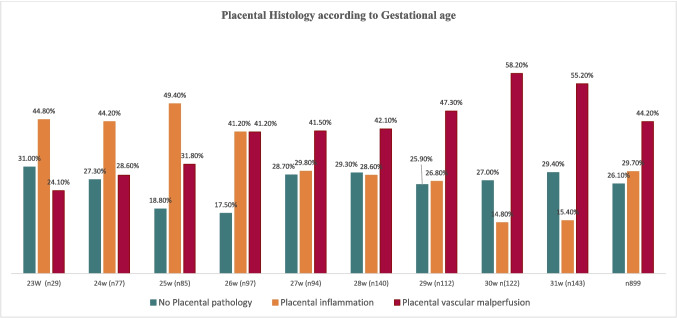
To analyze the impact of placental histological findings on the development of bronchopulmonary dysplasia (BPD) in preterm infants, this prospective, observational, single-center study included infants born before 32 weeks of gestation between 2012 and 2023. Perinatal variables were collected and correlated with mortality at hospital discharge and the diagnosis of grade 2-3 BPD at 36 weeks postmenstrual age (PMA). Placental histology was categorized into three groups: inflammatory pathology, vascular malperfusion, and no pathology. A total of 1128 preterm infants were enrolled, with placental histology results available for 899 cases. Inflammatory placental pathology was associated with a lower gestational age (GA) at birth (- 1.4 weeks, 95% CI - 1.74 to - 1.11). The increased mortality linked to placental inflammation was no longer significant after adjusting for GA. In preterm infants born at 27 weeks' GA or later, the effect of vascular malperfusion on BPD showed sexual dimorphism. In males, placental malperfusion was associated with a 2.25-fold increased risk of developing BPD (95% CI 1.10 to 4.57), independent of GA and exposure to mechanical ventilation. No significant differences were observed in females born at 27 weeks or later.
Conclusions: The impact of placental histological abnormalities on BPD development is influenced by gestational age and sex. While placental inflammation increases mortality by triggering extremely preterm birth, it does not appear to increase respiratory morbidity compared to cases with normal placental histology at similar GAs. In males, however, placental malperfusion appears to affect lung development and contributes to BPD independently of GA and exposure to mechanical ventilation.
What is known: • Bronchopulmonary dysplasia (BPD) is a common respiratory complication among preterm infants, strongly influenced by prenatal events. • The placenta plays a crucial role in fetal lung development, and its analysis provides objective insight into antenatal conditions.
What is new: • Placental malperfusion affects lung development in a sex-specific manner, with male infants born at or after 27 weeks of gestation being more specifically affected and showing a higher susceptibility to BPD, independent of gestational age or mechanical ventilation. • These findings highlight the importance of considering sex differences in BPD pathophysiology and the role of placental pathology.
期刊介绍:
The European Journal of Pediatrics (EJPE) is a leading peer-reviewed medical journal which covers the entire field of pediatrics. The editors encourage authors to submit original articles, reviews, short communications, and correspondence on all relevant themes and topics.
EJPE is particularly committed to the publication of articles on important new clinical research that will have an immediate impact on clinical pediatric practice. The editorial office very much welcomes ideas for publications, whether individual articles or article series, that fit this goal and is always willing to address inquiries from authors regarding potential submissions. Invited review articles on clinical pediatrics that provide comprehensive coverage of a subject of importance are also regularly commissioned.
The short publication time reflects both the commitment of the editors and publishers and their passion for new developments in the field of pediatrics.
EJPE is active on social media (@EurJPediatrics) and we invite you to participate.
EJPE is the official journal of the European Academy of Paediatrics (EAP) and publishes guidelines and statements in cooperation with the EAP.




 京公网安备 11010802042870号
京ICP备2023020795号-1
京公网安备 11010802042870号
京ICP备2023020795号-1

 分享
分享
 求助内容:
求助内容: 应助结果提醒方式:
 扫码关注我们
