Florian van Bömmel, Thierry Verbinnen, Kosh Agarwal, Thomas Vanwolleghem, Pietro Lampertico, Maria Buti, Ewa Janczewska, Marc Bourliere, John Jezorwski, Kathleen Donohue, Gloria Kim, Thomas N Kakuda, Sandra De Meyer, Adam Bakala, Michael Biermer, Oliver Lenz
{"title":"慢性乙型肝炎患者停止核苷类似物时乙型肝炎核心抗体和乙型肝炎核心相关抗原的血清水平与严重急性发作的风险","authors":"Florian van Bömmel, Thierry Verbinnen, Kosh Agarwal, Thomas Vanwolleghem, Pietro Lampertico, Maria Buti, Ewa Janczewska, Marc Bourliere, John Jezorwski, Kathleen Donohue, Gloria Kim, Thomas N Kakuda, Sandra De Meyer, Adam Bakala, Michael Biermer, Oliver Lenz","doi":"10.1097/HC9.0000000000000656","DOIUrl":null,"url":null,"abstract":"<p><strong>Background: </strong>In the nucleos(t)ide analog (NA)-control arm of the REEF-2 study (NCT04129554), virologic relapse (confirmed increase in HBV DNA >2000 IU/mL) and biochemical flare (ALT increases ≥3× upper limit of normal) were frequently observed after stopping NA treatment. We characterized the posttreatment virologic relapses and biochemical flares and assessed their association with end-of-treatment (EOT) HBV serum markers.</p><p><strong>Methods: </strong>In REEF-2, a randomized-controlled study, virologically suppressed HBeAg-negative patients stopped treatment at week 48, followed by 48 weeks of follow-up. EOT HBV RNA, hepatitis B core-related antigen, and quantitative anti-hepatitis B core (HBc) IgG levels were assessed in 41/45 NA-control arm patients; their association with off-treatment response was evaluated.</p><p><strong>Results: </strong>A similar proportion of patients with EOT HBV RNA or hepatitis B core-related antigen detectable and target not detectable had virologic relapse or ALT flares (p>0.05). A higher frequency of severe virologic relapse (peak HBV DNA >100,000 IU/mL) and/or severe biochemical flares (peak ALT ≥10× upper limit of normal) was observed in patients with EOT detectable hepatitis B core-related antigen levels, HBsAg <1000 IU/mL, and/or anti-HBc IgG titers <300 IU/mL, respectively (p<0.05). None of the 11 patients with EOT anti-HBc titers ≥300 IU/mL had severe virologic or biochemical flare off treatment (100% positive predictive value and 48% negative predictive value).</p><p><strong>Conclusions: </strong>In this prospective study of patients who stopped NA, anti-HBc levels ≥300 IU/mL were associated with a low risk of developing virologic relapse and severe biochemical flares. Future research should confirm a potential protective effect of high anti-HBc IgG levels.</p>","PeriodicalId":12978,"journal":{"name":"Hepatology Communications","volume":"9 3","pages":""},"PeriodicalIF":6.0000,"publicationDate":"2025-02-26","publicationTypes":"Journal Article","fieldsOfStudy":null,"isOpenAccess":false,"openAccessPdf":"https://www.ncbi.nlm.nih.gov/pmc/articles/PMC11868428/pdf/","citationCount":"0","resultStr":"{\"title\":\"Serum levels of hepatitis B core antibodies and hepatitis B core-related antigen at the time of nucleos(t)ide analog cessation and risk of severe flares in patients with chronic hepatitis B.\",\"authors\":\"Florian van Bömmel, Thierry Verbinnen, Kosh Agarwal, Thomas Vanwolleghem, Pietro Lampertico, Maria Buti, Ewa Janczewska, Marc Bourliere, John Jezorwski, Kathleen Donohue, Gloria Kim, Thomas N Kakuda, Sandra De Meyer, Adam Bakala, Michael Biermer, Oliver Lenz\",\"doi\":\"10.1097/HC9.0000000000000656\",\"DOIUrl\":null,\"url\":null,\"abstract\":\"<p><strong>Background: </strong>In the nucleos(t)ide analog (NA)-control arm of the REEF-2 study (NCT04129554), virologic relapse (confirmed increase in HBV DNA >2000 IU/mL) and biochemical flare (ALT increases ≥3× upper limit of normal) were frequently observed after stopping NA treatment. We characterized the posttreatment virologic relapses and biochemical flares and assessed their association with end-of-treatment (EOT) HBV serum markers.</p><p><strong>Methods: </strong>In REEF-2, a randomized-controlled study, virologically suppressed HBeAg-negative patients stopped treatment at week 48, followed by 48 weeks of follow-up. EOT HBV RNA, hepatitis B core-related antigen, and quantitative anti-hepatitis B core (HBc) IgG levels were assessed in 41/45 NA-control arm patients; their association with off-treatment response was evaluated.</p><p><strong>Results: </strong>A similar proportion of patients with EOT HBV RNA or hepatitis B core-related antigen detectable and target not detectable had virologic relapse or ALT flares (p>0.05). A higher frequency of severe virologic relapse (peak HBV DNA >100,000 IU/mL) and/or severe biochemical flares (peak ALT ≥10× upper limit of normal) was observed in patients with EOT detectable hepatitis B core-related antigen levels, HBsAg <1000 IU/mL, and/or anti-HBc IgG titers <300 IU/mL, respectively (p<0.05). None of the 11 patients with EOT anti-HBc titers ≥300 IU/mL had severe virologic or biochemical flare off treatment (100% positive predictive value and 48% negative predictive value).</p><p><strong>Conclusions: </strong>In this prospective study of patients who stopped NA, anti-HBc levels ≥300 IU/mL were associated with a low risk of developing virologic relapse and severe biochemical flares. Future research should confirm a potential protective effect of high anti-HBc IgG levels.</p>\",\"PeriodicalId\":12978,\"journal\":{\"name\":\"Hepatology Communications\",\"volume\":\"9 3\",\"pages\":\"\"},\"PeriodicalIF\":6.0000,\"publicationDate\":\"2025-02-26\",\"publicationTypes\":\"Journal Article\",\"fieldsOfStudy\":null,\"isOpenAccess\":false,\"openAccessPdf\":\"https://www.ncbi.nlm.nih.gov/pmc/articles/PMC11868428/pdf/\",\"citationCount\":\"0\",\"resultStr\":null,\"platform\":\"Semanticscholar\",\"paperid\":null,\"PeriodicalName\":\"Hepatology Communications\",\"FirstCategoryId\":\"3\",\"ListUrlMain\":\"https://doi.org/10.1097/HC9.0000000000000656\",\"RegionNum\":2,\"RegionCategory\":\"医学\",\"ArticlePicture\":[],\"TitleCN\":null,\"AbstractTextCN\":null,\"PMCID\":null,\"EPubDate\":\"2025/3/1 0:00:00\",\"PubModel\":\"eCollection\",\"JCR\":\"Q1\",\"JCRName\":\"GASTROENTEROLOGY & HEPATOLOGY\",\"Score\":null,\"Total\":0}","platform":"Semanticscholar","paperid":null,"PeriodicalName":"Hepatology Communications","FirstCategoryId":"3","ListUrlMain":"https://doi.org/10.1097/HC9.0000000000000656","RegionNum":2,"RegionCategory":"医学","ArticlePicture":[],"TitleCN":null,"AbstractTextCN":null,"PMCID":null,"EPubDate":"2025/3/1 0:00:00","PubModel":"eCollection","JCR":"Q1","JCRName":"GASTROENTEROLOGY & HEPATOLOGY","Score":null,"Total":0}
Serum levels of hepatitis B core antibodies and hepatitis B core-related antigen at the time of nucleos(t)ide analog cessation and risk of severe flares in patients with chronic hepatitis B.
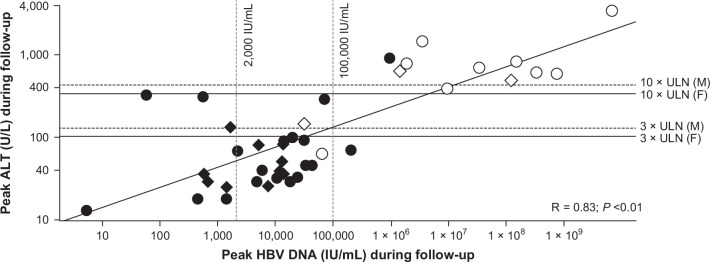
Background: In the nucleos(t)ide analog (NA)-control arm of the REEF-2 study (NCT04129554), virologic relapse (confirmed increase in HBV DNA >2000 IU/mL) and biochemical flare (ALT increases ≥3× upper limit of normal) were frequently observed after stopping NA treatment. We characterized the posttreatment virologic relapses and biochemical flares and assessed their association with end-of-treatment (EOT) HBV serum markers.
Methods: In REEF-2, a randomized-controlled study, virologically suppressed HBeAg-negative patients stopped treatment at week 48, followed by 48 weeks of follow-up. EOT HBV RNA, hepatitis B core-related antigen, and quantitative anti-hepatitis B core (HBc) IgG levels were assessed in 41/45 NA-control arm patients; their association with off-treatment response was evaluated.
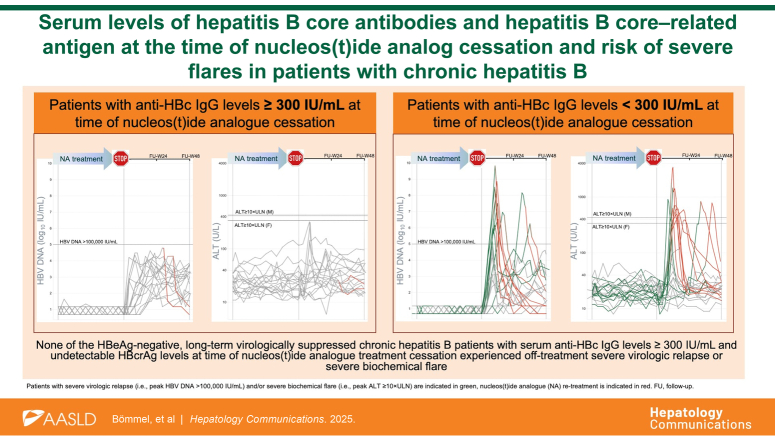
Results: A similar proportion of patients with EOT HBV RNA or hepatitis B core-related antigen detectable and target not detectable had virologic relapse or ALT flares (p>0.05). A higher frequency of severe virologic relapse (peak HBV DNA >100,000 IU/mL) and/or severe biochemical flares (peak ALT ≥10× upper limit of normal) was observed in patients with EOT detectable hepatitis B core-related antigen levels, HBsAg <1000 IU/mL, and/or anti-HBc IgG titers <300 IU/mL, respectively (p<0.05). None of the 11 patients with EOT anti-HBc titers ≥300 IU/mL had severe virologic or biochemical flare off treatment (100% positive predictive value and 48% negative predictive value).
Conclusions: In this prospective study of patients who stopped NA, anti-HBc levels ≥300 IU/mL were associated with a low risk of developing virologic relapse and severe biochemical flares. Future research should confirm a potential protective effect of high anti-HBc IgG levels.
期刊介绍:
Hepatology Communications is a peer-reviewed, online-only, open access journal for fast dissemination of high quality basic, translational, and clinical research in hepatology. Hepatology Communications maintains high standard and rigorous peer review. Because of its open access nature, authors retain the copyright to their works, all articles are immediately available and free to read and share, and it is fully compliant with funder and institutional mandates. The journal is committed to fast publication and author satisfaction.





 京公网安备 11010802042870号
京ICP备2023020795号-1
京公网安备 11010802042870号
京ICP备2023020795号-1

 分享
分享
 求助内容:
求助内容: 应助结果提醒方式:
 扫码关注我们
