Karlygash B Zikibayeva, Asset A Svanbayev, Nurlan N Akhmetsadykov, Kamshat N Kudaibergenova, Shynar N Akhmetsadykova, Ernur N Nurolda, Aidyn I Kydyrmanov
{"title":"2021-2024年哈萨克斯坦家禽传染病流行病学调查。","authors":"Karlygash B Zikibayeva, Asset A Svanbayev, Nurlan N Akhmetsadykov, Kamshat N Kudaibergenova, Shynar N Akhmetsadykova, Ernur N Nurolda, Aidyn I Kydyrmanov","doi":"10.3389/fvets.2024.1520606","DOIUrl":null,"url":null,"abstract":"<p><strong>Introduction: </strong>This study examines the epidemiological dynamics and genetic diversity of major avian infectious diseases in Kazakhstan, including highly pathogenic avian influenza (HPAI), Newcastle disease virus (NDV), and others. Using official data, laboratory diagnostics, and surveys, we identified high prevalence rates and virulent strains, exposing gaps in vaccination coverage and biosecurity practices. Continuous monitoring, improved vaccination strategies, and robust biosecurity measures are essential to reduce disease impact and ensure sustainable poultry farming.</p><p><strong>Methods: </strong>A cross-sectional study was conducted to assess the prevalence and genetic diversity of major avian infectious diseases in Kazakhstan. Data sources included official reports, laboratory diagnostics (RT-PCR, ELISA, and sequencing), and a survey of veterinary specialists. Serum samples were analyzed to evaluate antibody responses and vaccine efficacy. Genetic and phylogenetic analyses were conducted for key pathogens, while a questionnaire provided insights into farm-level disease control practices.</p><p><strong>Results: </strong>Analysis of official data recorded 27 outbreaks of avian diseases in Kazakhstan from 2005 to 2023, primarily involving HPAI and NDV. Our research further identified virulent strains such as NDV genotype VII and infectious bursal disease virus (IBDV) variants linked to global lineages. Serological studies revealed widespread exposure to pathogens, including Mycoplasma gallisepticum (MG), Mycoplasma synoviae (MS), chicken anemia virus (CAV), Ornithobacterium rhinotracheale (ORT), and low-pathogenic avian influenza (LPAI) H9, underscoring deficiencies in vaccination coverage. Farm surveys also identified weaknesses in biosecurity measures and inconsistencies in vaccination protocols.</p><p><strong>Discussion: </strong>The findings underscore the urgent need for enhanced biosecurity measures, standardized vaccination programs, and routine monitoring to mitigate the impact of avian infectious diseases. This integrated approach offers valuable insights to support evidence-based decision-making for effective poultry health management in Kazakhstan.</p>","PeriodicalId":12772,"journal":{"name":"Frontiers in Veterinary Science","volume":"11 ","pages":"1520606"},"PeriodicalIF":3.1000,"publicationDate":"2025-02-11","publicationTypes":"Journal Article","fieldsOfStudy":null,"isOpenAccess":false,"openAccessPdf":"https://www.ncbi.nlm.nih.gov/pmc/articles/PMC11851941/pdf/","citationCount":"0","resultStr":"{\"title\":\"Epidemiological investigation of poultry infectious in Kazakhstan (2021-2024).\",\"authors\":\"Karlygash B Zikibayeva, Asset A Svanbayev, Nurlan N Akhmetsadykov, Kamshat N Kudaibergenova, Shynar N Akhmetsadykova, Ernur N Nurolda, Aidyn I Kydyrmanov\",\"doi\":\"10.3389/fvets.2024.1520606\",\"DOIUrl\":null,\"url\":null,\"abstract\":\"<p><strong>Introduction: </strong>This study examines the epidemiological dynamics and genetic diversity of major avian infectious diseases in Kazakhstan, including highly pathogenic avian influenza (HPAI), Newcastle disease virus (NDV), and others. Using official data, laboratory diagnostics, and surveys, we identified high prevalence rates and virulent strains, exposing gaps in vaccination coverage and biosecurity practices. Continuous monitoring, improved vaccination strategies, and robust biosecurity measures are essential to reduce disease impact and ensure sustainable poultry farming.</p><p><strong>Methods: </strong>A cross-sectional study was conducted to assess the prevalence and genetic diversity of major avian infectious diseases in Kazakhstan. Data sources included official reports, laboratory diagnostics (RT-PCR, ELISA, and sequencing), and a survey of veterinary specialists. Serum samples were analyzed to evaluate antibody responses and vaccine efficacy. Genetic and phylogenetic analyses were conducted for key pathogens, while a questionnaire provided insights into farm-level disease control practices.</p><p><strong>Results: </strong>Analysis of official data recorded 27 outbreaks of avian diseases in Kazakhstan from 2005 to 2023, primarily involving HPAI and NDV. Our research further identified virulent strains such as NDV genotype VII and infectious bursal disease virus (IBDV) variants linked to global lineages. Serological studies revealed widespread exposure to pathogens, including Mycoplasma gallisepticum (MG), Mycoplasma synoviae (MS), chicken anemia virus (CAV), Ornithobacterium rhinotracheale (ORT), and low-pathogenic avian influenza (LPAI) H9, underscoring deficiencies in vaccination coverage. Farm surveys also identified weaknesses in biosecurity measures and inconsistencies in vaccination protocols.</p><p><strong>Discussion: </strong>The findings underscore the urgent need for enhanced biosecurity measures, standardized vaccination programs, and routine monitoring to mitigate the impact of avian infectious diseases. This integrated approach offers valuable insights to support evidence-based decision-making for effective poultry health management in Kazakhstan.</p>\",\"PeriodicalId\":12772,\"journal\":{\"name\":\"Frontiers in Veterinary Science\",\"volume\":\"11 \",\"pages\":\"1520606\"},\"PeriodicalIF\":3.1000,\"publicationDate\":\"2025-02-11\",\"publicationTypes\":\"Journal Article\",\"fieldsOfStudy\":null,\"isOpenAccess\":false,\"openAccessPdf\":\"https://www.ncbi.nlm.nih.gov/pmc/articles/PMC11851941/pdf/\",\"citationCount\":\"0\",\"resultStr\":null,\"platform\":\"Semanticscholar\",\"paperid\":null,\"PeriodicalName\":\"Frontiers in Veterinary Science\",\"FirstCategoryId\":\"97\",\"ListUrlMain\":\"https://doi.org/10.3389/fvets.2024.1520606\",\"RegionNum\":2,\"RegionCategory\":\"农林科学\",\"ArticlePicture\":[],\"TitleCN\":null,\"AbstractTextCN\":null,\"PMCID\":null,\"EPubDate\":\"2024/1/1 0:00:00\",\"PubModel\":\"eCollection\",\"JCR\":\"Q1\",\"JCRName\":\"VETERINARY SCIENCES\",\"Score\":null,\"Total\":0}","platform":"Semanticscholar","paperid":null,"PeriodicalName":"Frontiers in Veterinary Science","FirstCategoryId":"97","ListUrlMain":"https://doi.org/10.3389/fvets.2024.1520606","RegionNum":2,"RegionCategory":"农林科学","ArticlePicture":[],"TitleCN":null,"AbstractTextCN":null,"PMCID":null,"EPubDate":"2024/1/1 0:00:00","PubModel":"eCollection","JCR":"Q1","JCRName":"VETERINARY SCIENCES","Score":null,"Total":0}
Epidemiological investigation of poultry infectious in Kazakhstan (2021-2024).
Introduction: This study examines the epidemiological dynamics and genetic diversity of major avian infectious diseases in Kazakhstan, including highly pathogenic avian influenza (HPAI), Newcastle disease virus (NDV), and others. Using official data, laboratory diagnostics, and surveys, we identified high prevalence rates and virulent strains, exposing gaps in vaccination coverage and biosecurity practices. Continuous monitoring, improved vaccination strategies, and robust biosecurity measures are essential to reduce disease impact and ensure sustainable poultry farming.
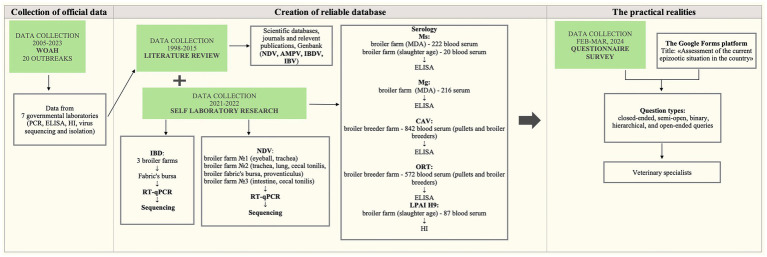
Methods: A cross-sectional study was conducted to assess the prevalence and genetic diversity of major avian infectious diseases in Kazakhstan. Data sources included official reports, laboratory diagnostics (RT-PCR, ELISA, and sequencing), and a survey of veterinary specialists. Serum samples were analyzed to evaluate antibody responses and vaccine efficacy. Genetic and phylogenetic analyses were conducted for key pathogens, while a questionnaire provided insights into farm-level disease control practices.
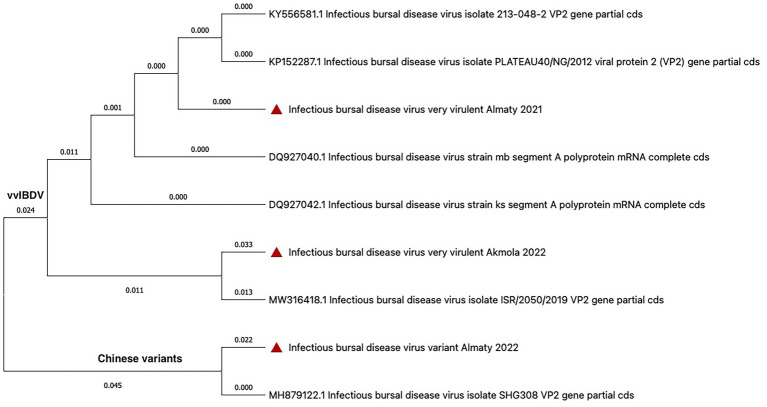
Results: Analysis of official data recorded 27 outbreaks of avian diseases in Kazakhstan from 2005 to 2023, primarily involving HPAI and NDV. Our research further identified virulent strains such as NDV genotype VII and infectious bursal disease virus (IBDV) variants linked to global lineages. Serological studies revealed widespread exposure to pathogens, including Mycoplasma gallisepticum (MG), Mycoplasma synoviae (MS), chicken anemia virus (CAV), Ornithobacterium rhinotracheale (ORT), and low-pathogenic avian influenza (LPAI) H9, underscoring deficiencies in vaccination coverage. Farm surveys also identified weaknesses in biosecurity measures and inconsistencies in vaccination protocols.
Discussion: The findings underscore the urgent need for enhanced biosecurity measures, standardized vaccination programs, and routine monitoring to mitigate the impact of avian infectious diseases. This integrated approach offers valuable insights to support evidence-based decision-making for effective poultry health management in Kazakhstan.
期刊介绍:
Frontiers in Veterinary Science is a global, peer-reviewed, Open Access journal that bridges animal and human health, brings a comparative approach to medical and surgical challenges, and advances innovative biotechnology and therapy.
Veterinary research today is interdisciplinary, collaborative, and socially relevant, transforming how we understand and investigate animal health and disease. Fundamental research in emerging infectious diseases, predictive genomics, stem cell therapy, and translational modelling is grounded within the integrative social context of public and environmental health, wildlife conservation, novel biomarkers, societal well-being, and cutting-edge clinical practice and specialization. Frontiers in Veterinary Science brings a 21st-century approach—networked, collaborative, and Open Access—to communicate this progress and innovation to both the specialist and to the wider audience of readers in the field.
Frontiers in Veterinary Science publishes articles on outstanding discoveries across a wide spectrum of translational, foundational, and clinical research. The journal''s mission is to bring all relevant veterinary sciences together on a single platform with the goal of improving animal and human health.





 京公网安备 11010802042870号
京ICP备2023020795号-1
京公网安备 11010802042870号
京ICP备2023020795号-1

 分享
分享
 求助内容:
求助内容: 应助结果提醒方式:
 扫码关注我们
