{"title":"使用髓内钉治疗关节内钙骨骨折的中期结果。","authors":"Piotr Sypien, Dariusz Grzelecki","doi":"10.3390/jcm14041369","DOIUrl":null,"url":null,"abstract":"<p><p><b>Background:</b> Intra-articular calcaneal fracture (CF) treatment is associated with a high risk of complications, but closed reduction and internal fixation (CRIF) is a minimally invasive alternative for treatment. <b>Methods</b>: Forty-eight patients treated with CRIF and CALCAnail<sup>®</sup> due to intra-articular CF between 2016 and 2021 were analyzed to check union time, complication rate, and functionality after the intervention. Functional and pain outcomes were assessed, including the Maryland Foot Score (MFS), American Orthopedic Foot & Ankle Society (AOFAS) scale questionnaires, and the numerical pain scale (NRS) at mid-term follow-ups 2-5 years after the intervention. <b>Results:</b> Intervention increased median Böhler's angle from 21.5° to 32° (<i>p</i> < 0.01). The median bone union time was 12 weeks. The risk of malunion was higher in patients with Sanders type 4 (RR = 2.28; 95% CI 1.11-4.72) and those operated on later than the 2nd day after injury (RR = 2.1; 95% CI 1.08-4.09). Patients with at least one of the comorbidities (nicotinism, diabetes, obesity) had a higher risk of intensive pain (NRS > 3) 2-5 years after surgery (RR = 1.69; 95% CI 1.06-2.68), and 84% were satisfied with their treatment. Other complications included complex regional pain syndrome in two patients (4%), malunion in three (6%), and surgical site infection in two (4%). The MFS had a median score of 85 points, while that of the AOFAS was 82 points. <b>Conclusions</b>: CRIF, with the use of the CALCAnail<sup>®</sup> implant, allows doctors to restore anatomical relationships around the subtalar joint, resulting in good clinical and functional results.</p>","PeriodicalId":15533,"journal":{"name":"Journal of Clinical Medicine","volume":"14 4","pages":""},"PeriodicalIF":3.3000,"publicationDate":"2025-02-19","publicationTypes":"Journal Article","fieldsOfStudy":null,"isOpenAccess":false,"openAccessPdf":"https://www.ncbi.nlm.nih.gov/pmc/articles/PMC11856691/pdf/","citationCount":"0","resultStr":"{\"title\":\"A Mid-Term Result of the Treatment of Intra-Articular Calcaneal Fractures with the Use of Intramedullary Nailing.\",\"authors\":\"Piotr Sypien, Dariusz Grzelecki\",\"doi\":\"10.3390/jcm14041369\",\"DOIUrl\":null,\"url\":null,\"abstract\":\"<p><p><b>Background:</b> Intra-articular calcaneal fracture (CF) treatment is associated with a high risk of complications, but closed reduction and internal fixation (CRIF) is a minimally invasive alternative for treatment. <b>Methods</b>: Forty-eight patients treated with CRIF and CALCAnail<sup>®</sup> due to intra-articular CF between 2016 and 2021 were analyzed to check union time, complication rate, and functionality after the intervention. Functional and pain outcomes were assessed, including the Maryland Foot Score (MFS), American Orthopedic Foot & Ankle Society (AOFAS) scale questionnaires, and the numerical pain scale (NRS) at mid-term follow-ups 2-5 years after the intervention. <b>Results:</b> Intervention increased median Böhler's angle from 21.5° to 32° (<i>p</i> < 0.01). The median bone union time was 12 weeks. The risk of malunion was higher in patients with Sanders type 4 (RR = 2.28; 95% CI 1.11-4.72) and those operated on later than the 2nd day after injury (RR = 2.1; 95% CI 1.08-4.09). Patients with at least one of the comorbidities (nicotinism, diabetes, obesity) had a higher risk of intensive pain (NRS > 3) 2-5 years after surgery (RR = 1.69; 95% CI 1.06-2.68), and 84% were satisfied with their treatment. Other complications included complex regional pain syndrome in two patients (4%), malunion in three (6%), and surgical site infection in two (4%). The MFS had a median score of 85 points, while that of the AOFAS was 82 points. <b>Conclusions</b>: CRIF, with the use of the CALCAnail<sup>®</sup> implant, allows doctors to restore anatomical relationships around the subtalar joint, resulting in good clinical and functional results.</p>\",\"PeriodicalId\":15533,\"journal\":{\"name\":\"Journal of Clinical Medicine\",\"volume\":\"14 4\",\"pages\":\"\"},\"PeriodicalIF\":3.3000,\"publicationDate\":\"2025-02-19\",\"publicationTypes\":\"Journal Article\",\"fieldsOfStudy\":null,\"isOpenAccess\":false,\"openAccessPdf\":\"https://www.ncbi.nlm.nih.gov/pmc/articles/PMC11856691/pdf/\",\"citationCount\":\"0\",\"resultStr\":null,\"platform\":\"Semanticscholar\",\"paperid\":null,\"PeriodicalName\":\"Journal of Clinical Medicine\",\"FirstCategoryId\":\"3\",\"ListUrlMain\":\"https://doi.org/10.3390/jcm14041369\",\"RegionNum\":3,\"RegionCategory\":\"医学\",\"ArticlePicture\":[],\"TitleCN\":null,\"AbstractTextCN\":null,\"PMCID\":null,\"EPubDate\":\"\",\"PubModel\":\"\",\"JCR\":\"Q1\",\"JCRName\":\"MEDICINE, GENERAL & INTERNAL\",\"Score\":null,\"Total\":0}","platform":"Semanticscholar","paperid":null,"PeriodicalName":"Journal of Clinical Medicine","FirstCategoryId":"3","ListUrlMain":"https://doi.org/10.3390/jcm14041369","RegionNum":3,"RegionCategory":"医学","ArticlePicture":[],"TitleCN":null,"AbstractTextCN":null,"PMCID":null,"EPubDate":"","PubModel":"","JCR":"Q1","JCRName":"MEDICINE, GENERAL & INTERNAL","Score":null,"Total":0}
引用次数: 0
摘要
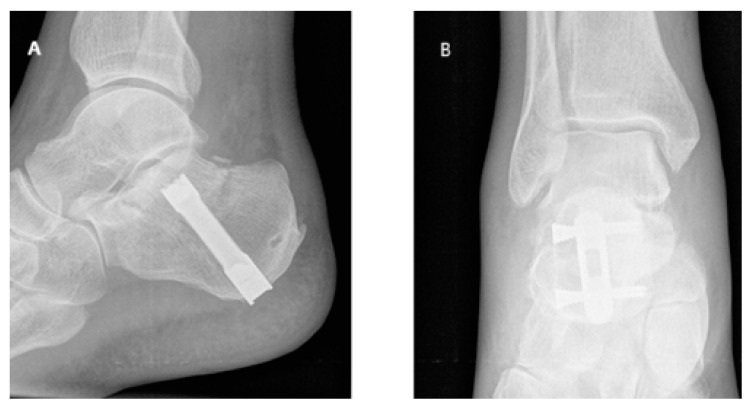
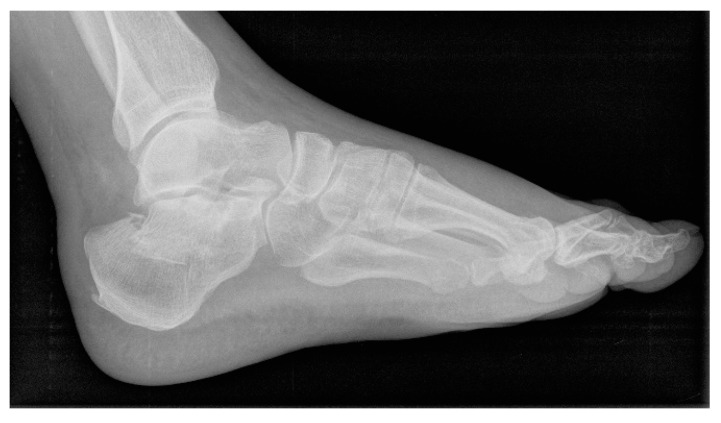
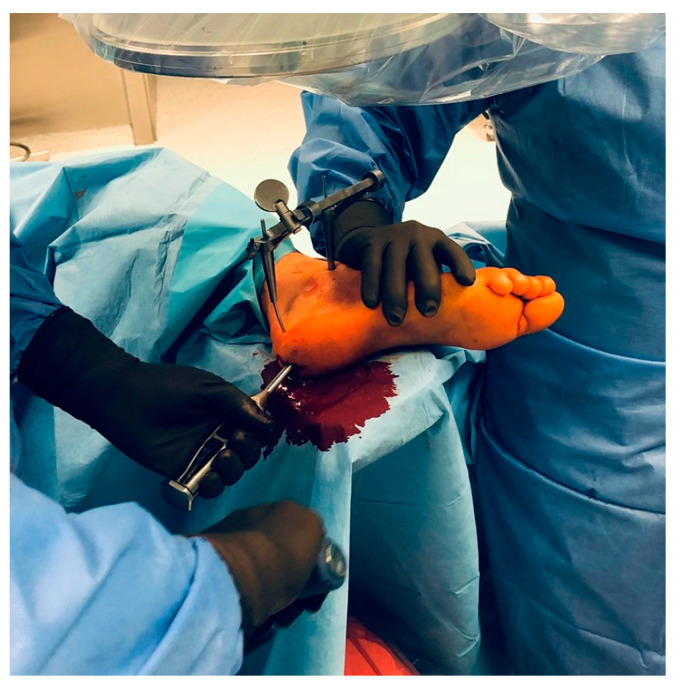
背景:跟骨关节内骨折(CF)治疗与并发症的高风险相关,但闭合复位内固定(CRIF)是一种微创治疗方法。方法:分析2016年至2021年期间48例因关节内CF接受CRIF和CALCAnail®治疗的患者,检查干预后的愈合时间、并发症发生率和功能。评估功能和疼痛结果,包括干预后2-5年中期随访时的马里兰足部评分(MFS)、美国骨科足踝学会(AOFAS)量表问卷和数值疼痛量表(NRS)。结果:干预使Böhler中位角度由21.5°增加到32°(p < 0.01)。中位骨愈合时间为12周。Sanders 4型患者发生畸形愈合的风险较高(RR = 2.28;95% CI 1.11-4.72)及术后第2天手术组(RR = 2.1;95% ci 1.08-4.09)。伴有至少一种合并症(烟碱中毒、糖尿病、肥胖)的患者术后2-5年出现剧烈疼痛(NRS bbbb3)的风险较高(RR = 1.69;95% CI 1.06-2.68), 84%的患者对治疗满意。其他并发症包括2例(4%)复杂区域疼痛综合征,3例(6%)畸形愈合,2例(4%)手术部位感染。MFS的中位数为85分,而AOFAS的中位数为82分。结论:CRIF配合CALCAnail®种植体,使医生能够恢复距下关节周围的解剖关系,取得了良好的临床和功能效果。
A Mid-Term Result of the Treatment of Intra-Articular Calcaneal Fractures with the Use of Intramedullary Nailing.
Background: Intra-articular calcaneal fracture (CF) treatment is associated with a high risk of complications, but closed reduction and internal fixation (CRIF) is a minimally invasive alternative for treatment. Methods: Forty-eight patients treated with CRIF and CALCAnail® due to intra-articular CF between 2016 and 2021 were analyzed to check union time, complication rate, and functionality after the intervention. Functional and pain outcomes were assessed, including the Maryland Foot Score (MFS), American Orthopedic Foot & Ankle Society (AOFAS) scale questionnaires, and the numerical pain scale (NRS) at mid-term follow-ups 2-5 years after the intervention. Results: Intervention increased median Böhler's angle from 21.5° to 32° (p < 0.01). The median bone union time was 12 weeks. The risk of malunion was higher in patients with Sanders type 4 (RR = 2.28; 95% CI 1.11-4.72) and those operated on later than the 2nd day after injury (RR = 2.1; 95% CI 1.08-4.09). Patients with at least one of the comorbidities (nicotinism, diabetes, obesity) had a higher risk of intensive pain (NRS > 3) 2-5 years after surgery (RR = 1.69; 95% CI 1.06-2.68), and 84% were satisfied with their treatment. Other complications included complex regional pain syndrome in two patients (4%), malunion in three (6%), and surgical site infection in two (4%). The MFS had a median score of 85 points, while that of the AOFAS was 82 points. Conclusions: CRIF, with the use of the CALCAnail® implant, allows doctors to restore anatomical relationships around the subtalar joint, resulting in good clinical and functional results.
期刊介绍:
Journal of Clinical Medicine (ISSN 2077-0383), is an international scientific open access journal, providing a platform for advances in health care/clinical practices, the study of direct observation of patients and general medical research. This multi-disciplinary journal is aimed at a wide audience of medical researchers and healthcare professionals.
Unique features of this journal:
manuscripts regarding original research and ideas will be particularly welcomed.JCM also accepts reviews, communications, and short notes.
There is no limit to publication length: our aim is to encourage scientists to publish their experimental and theoretical results in as much detail as possible.




 京公网安备 11010802042870号
京ICP备2023020795号-1
京公网安备 11010802042870号
京ICP备2023020795号-1

 分享
分享
 求助内容:
求助内容: 应助结果提醒方式:
 扫码关注我们
