Ana Paula Santos Tartari, Joslaine Jacumazo, Ariane Krause Padilha Lorenzett, Rilton Alves de Freitas, Rubiana Mara Mainardes
{"title":"负载水飞蓟宾的纳米乳的开发和表征:一种有前途的增强粘膜药物传递的黏附平台。","authors":"Ana Paula Santos Tartari, Joslaine Jacumazo, Ariane Krause Padilha Lorenzett, Rilton Alves de Freitas, Rubiana Mara Mainardes","doi":"10.3390/pharmaceutics17020192","DOIUrl":null,"url":null,"abstract":"<p><p><b>Background:</b> Silibinin (SLB), a flavonoid derived from milk thistle, exhibits promising therapeutic properties but faces significant clinical limitations due to poor solubility and bioavailability. <b>Objectives:</b> This study focuses on the development and characterization of SLB-loaded nanoemulsions designed for mucosal delivery. <b>Methods:</b> Nanoemulsions were prepared using the spontaneous emulsification method, guided by pseudoternary phase diagrams to determine selected component ratios. Comprehensive characterization included particle size, polydispersity index (PDI), zeta potential, encapsulation efficiency, rheological properties, and surface tension. Mucoadhesive properties were evaluated using quartz crystal microbalance with dissipation (QCM-D) to quantify interactions with mucin layers. <b>Results:</b> The combination of Capryol 90, Tween 80, and Transcutol in selected proportions yielded nanoemulsions with excellent stability and solubilization capacity, enhancing the solubility of silibinin by 625 times compared to its intrinsic solubility in water. The ternary phase diagram indicated that achieving nanoemulsions with particle sizes between 100 and 300 nm required higher concentrations of surfactants (60%), relative to oil (20%) and water (20%), with formulations predominantly composed of Smix (surfactant and cosurfactant mixture in a 1:1 ratio). Rheological analysis revealed Newtonian behavior, characterized by constant viscosity across varying shear rates and a linear torque response, ensuring ease of application and mechanical stability. QCM-D analysis confirmed strong mucoadhesive interactions, with significant frequency and dissipation shifts, indicative of prolonged retention and enhanced mucosal drug delivery. Furthermore, contact angle measurements showed a marked reduction in surface tension upon interaction with mucin, with the SLB-loaded nanoemulsion demonstrating superior wettability and strong mucoadhesive potential. <b>Conclusions:</b> These findings underscore the suitability of SLB-loaded nanoemulsions as a robust platform for effective mucosal drug delivery, addressing solubility and bioavailability challenges while enabling prolonged retention and controlled therapeutic release.</p>","PeriodicalId":19894,"journal":{"name":"Pharmaceutics","volume":"17 2","pages":""},"PeriodicalIF":5.5000,"publicationDate":"2025-02-04","publicationTypes":"Journal Article","fieldsOfStudy":null,"isOpenAccess":false,"openAccessPdf":"https://www.ncbi.nlm.nih.gov/pmc/articles/PMC11859180/pdf/","citationCount":"0","resultStr":"{\"title\":\"Development and Characterization of Silibinin-Loaded Nanoemulsions: A Promising Mucoadhesive Platform for Enhanced Mucosal Drug Delivery.\",\"authors\":\"Ana Paula Santos Tartari, Joslaine Jacumazo, Ariane Krause Padilha Lorenzett, Rilton Alves de Freitas, Rubiana Mara Mainardes\",\"doi\":\"10.3390/pharmaceutics17020192\",\"DOIUrl\":null,\"url\":null,\"abstract\":\"<p><p><b>Background:</b> Silibinin (SLB), a flavonoid derived from milk thistle, exhibits promising therapeutic properties but faces significant clinical limitations due to poor solubility and bioavailability. <b>Objectives:</b> This study focuses on the development and characterization of SLB-loaded nanoemulsions designed for mucosal delivery. <b>Methods:</b> Nanoemulsions were prepared using the spontaneous emulsification method, guided by pseudoternary phase diagrams to determine selected component ratios. Comprehensive characterization included particle size, polydispersity index (PDI), zeta potential, encapsulation efficiency, rheological properties, and surface tension. Mucoadhesive properties were evaluated using quartz crystal microbalance with dissipation (QCM-D) to quantify interactions with mucin layers. <b>Results:</b> The combination of Capryol 90, Tween 80, and Transcutol in selected proportions yielded nanoemulsions with excellent stability and solubilization capacity, enhancing the solubility of silibinin by 625 times compared to its intrinsic solubility in water. The ternary phase diagram indicated that achieving nanoemulsions with particle sizes between 100 and 300 nm required higher concentrations of surfactants (60%), relative to oil (20%) and water (20%), with formulations predominantly composed of Smix (surfactant and cosurfactant mixture in a 1:1 ratio). Rheological analysis revealed Newtonian behavior, characterized by constant viscosity across varying shear rates and a linear torque response, ensuring ease of application and mechanical stability. QCM-D analysis confirmed strong mucoadhesive interactions, with significant frequency and dissipation shifts, indicative of prolonged retention and enhanced mucosal drug delivery. Furthermore, contact angle measurements showed a marked reduction in surface tension upon interaction with mucin, with the SLB-loaded nanoemulsion demonstrating superior wettability and strong mucoadhesive potential. <b>Conclusions:</b> These findings underscore the suitability of SLB-loaded nanoemulsions as a robust platform for effective mucosal drug delivery, addressing solubility and bioavailability challenges while enabling prolonged retention and controlled therapeutic release.</p>\",\"PeriodicalId\":19894,\"journal\":{\"name\":\"Pharmaceutics\",\"volume\":\"17 2\",\"pages\":\"\"},\"PeriodicalIF\":5.5000,\"publicationDate\":\"2025-02-04\",\"publicationTypes\":\"Journal Article\",\"fieldsOfStudy\":null,\"isOpenAccess\":false,\"openAccessPdf\":\"https://www.ncbi.nlm.nih.gov/pmc/articles/PMC11859180/pdf/\",\"citationCount\":\"0\",\"resultStr\":null,\"platform\":\"Semanticscholar\",\"paperid\":null,\"PeriodicalName\":\"Pharmaceutics\",\"FirstCategoryId\":\"3\",\"ListUrlMain\":\"https://doi.org/10.3390/pharmaceutics17020192\",\"RegionNum\":3,\"RegionCategory\":\"医学\",\"ArticlePicture\":[],\"TitleCN\":null,\"AbstractTextCN\":null,\"PMCID\":null,\"EPubDate\":\"\",\"PubModel\":\"\",\"JCR\":\"Q1\",\"JCRName\":\"PHARMACOLOGY & PHARMACY\",\"Score\":null,\"Total\":0}","platform":"Semanticscholar","paperid":null,"PeriodicalName":"Pharmaceutics","FirstCategoryId":"3","ListUrlMain":"https://doi.org/10.3390/pharmaceutics17020192","RegionNum":3,"RegionCategory":"医学","ArticlePicture":[],"TitleCN":null,"AbstractTextCN":null,"PMCID":null,"EPubDate":"","PubModel":"","JCR":"Q1","JCRName":"PHARMACOLOGY & PHARMACY","Score":null,"Total":0}
Development and Characterization of Silibinin-Loaded Nanoemulsions: A Promising Mucoadhesive Platform for Enhanced Mucosal Drug Delivery.
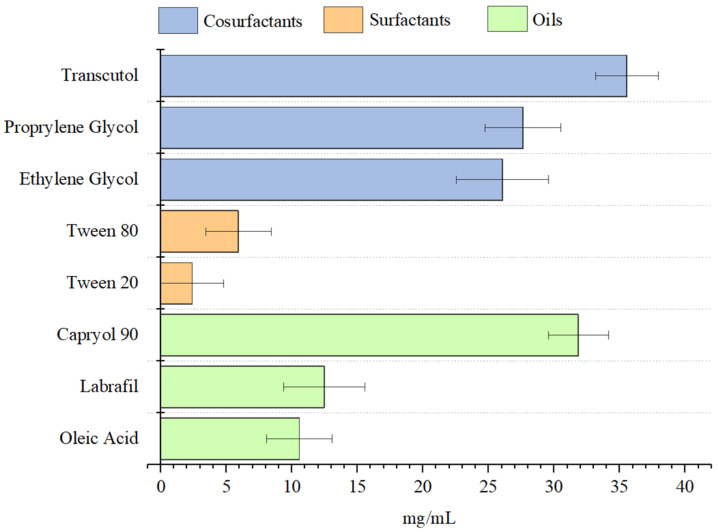
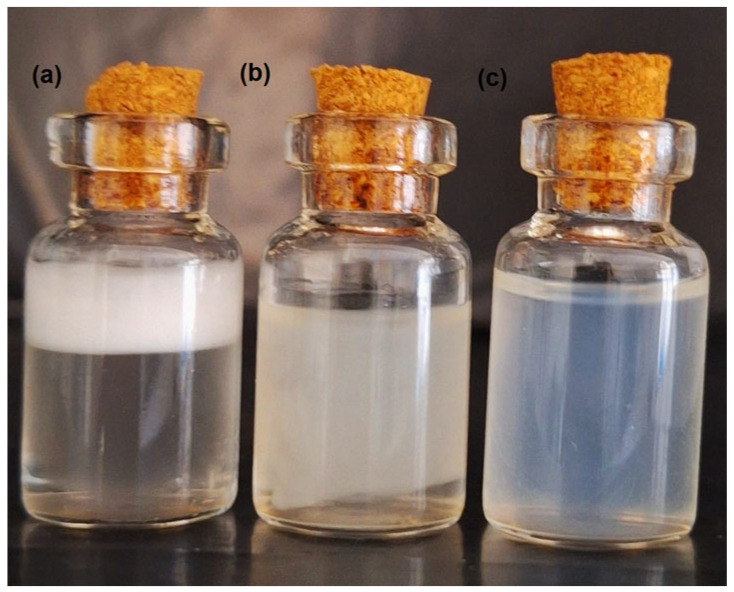
Background: Silibinin (SLB), a flavonoid derived from milk thistle, exhibits promising therapeutic properties but faces significant clinical limitations due to poor solubility and bioavailability. Objectives: This study focuses on the development and characterization of SLB-loaded nanoemulsions designed for mucosal delivery. Methods: Nanoemulsions were prepared using the spontaneous emulsification method, guided by pseudoternary phase diagrams to determine selected component ratios. Comprehensive characterization included particle size, polydispersity index (PDI), zeta potential, encapsulation efficiency, rheological properties, and surface tension. Mucoadhesive properties were evaluated using quartz crystal microbalance with dissipation (QCM-D) to quantify interactions with mucin layers. Results: The combination of Capryol 90, Tween 80, and Transcutol in selected proportions yielded nanoemulsions with excellent stability and solubilization capacity, enhancing the solubility of silibinin by 625 times compared to its intrinsic solubility in water. The ternary phase diagram indicated that achieving nanoemulsions with particle sizes between 100 and 300 nm required higher concentrations of surfactants (60%), relative to oil (20%) and water (20%), with formulations predominantly composed of Smix (surfactant and cosurfactant mixture in a 1:1 ratio). Rheological analysis revealed Newtonian behavior, characterized by constant viscosity across varying shear rates and a linear torque response, ensuring ease of application and mechanical stability. QCM-D analysis confirmed strong mucoadhesive interactions, with significant frequency and dissipation shifts, indicative of prolonged retention and enhanced mucosal drug delivery. Furthermore, contact angle measurements showed a marked reduction in surface tension upon interaction with mucin, with the SLB-loaded nanoemulsion demonstrating superior wettability and strong mucoadhesive potential. Conclusions: These findings underscore the suitability of SLB-loaded nanoemulsions as a robust platform for effective mucosal drug delivery, addressing solubility and bioavailability challenges while enabling prolonged retention and controlled therapeutic release.
PharmaceuticsPharmacology, Toxicology and Pharmaceutics-Pharmaceutical Science
CiteScore
7.90
自引率
11.10%
发文量
2379
审稿时长
16.41 days
期刊介绍:
Pharmaceutics (ISSN 1999-4923) is an open access journal which provides an advanced forum for the science and technology of pharmaceutics and biopharmaceutics. It publishes reviews, regular research papers, communications, and short notes. Covered topics include pharmacokinetics, toxicokinetics, pharmacodynamics, pharmacogenetics and pharmacogenomics, and pharmaceutical formulation. Our aim is to encourage scientists to publish their experimental and theoretical details in as much detail as possible. There is no restriction on the length of the papers. The full experimental details must be provided so that the results can be reproduced.





 京公网安备 11010802042870号
京ICP备2023020795号-1
京公网安备 11010802042870号
京ICP备2023020795号-1

 分享
分享
 求助内容:
求助内容: 应助结果提醒方式:
 扫码关注我们
