{"title":"x射线照射诱导氧化应激,上调肠道Nrf2-Mrp2通路,导致缬沙坦肠道吸收减少。","authors":"Yunhua Teng, Jiaojiao Ma, Junxia Zhang, Bohan Liang, Aijie Zhang, Yanjie Li, Shiqi Dong, Huirong Fan","doi":"10.3390/pharmaceutics17020268","DOIUrl":null,"url":null,"abstract":"<p><p><b>Background:</b> It has been documented that radiation can influence the pharmacokinetics of chemotherapy drugs, yet the underlying mechanisms remain poorly understood. In clinical practice, a considerable number of cancer patients undergo radiotherapy, and those with comorbid hypertension required antihypertensive drugs, including valsartan, an angiotensin II receptor blocker. However, there is no research investigating whether radiotherapy poses a risk of altering the pharmacokinetics. <b>Objective:</b> The objective of this study is to investigate the impact of X-ray abdominal irradiation on the pharmacokinetics of valsartan and to preliminarily elucidate the underlying mechanism. <b>Methods:</b> The pharmacokinetics of valsartan after X-ray irradiation was investigated in rats and in vitro by detecting the concentration of valsartan in biological samples by LC-MS/MS. The oxidative stress in the intestine and the mRNA expression of partial transporters and Nrf2 in the liver and small intestine were detected by biochemical reagent kit or RT-qPCR. <b>Results</b>: In vivo studies showed that X-ray irradiation resulted in a significant decrease in the AUC and C<sub>max</sub> of valsartan, and the cumulative fractional excretion of valsartan in bile and urine, although there was no significant change in fecal excretion. In vitro studies showed that the uptake of valsartan by both intestine and Caco-2 cells decreased after irradiation, and the cellular uptake could be restored by Mrp2 inhibitor MK571. The levels of GSH, SOD, and CAT in the intestine decreased after irradiation. The mRNA expressions of Mrp2 and P-gp in the intestine or Caco-2 cells were significantly upregulated after irradiation while there was a downregulation of Mrp2 and oatp1b2 in liver. Nrf2 and HO-1 in the intestine were also significantly upregulated, which clarified the involvement of Mrp2 and the possible molecular mechanism. <b>Conclusions:</b> Abdominal X-ray irradiation can cause oxidative stress and upregulate intestinal Mrp2, which may be related to oxidative stress and upregulation of Nrf2, reducing intestinal absorption of valsartan and leading to a significant decrease in the blood concentration of valsartan.</p>","PeriodicalId":19894,"journal":{"name":"Pharmaceutics","volume":"17 2","pages":""},"PeriodicalIF":6.9000,"publicationDate":"2025-02-17","publicationTypes":"Journal Article","fieldsOfStudy":null,"isOpenAccess":false,"openAccessPdf":"https://www.ncbi.nlm.nih.gov/pmc/articles/PMC11860126/pdf/","citationCount":"0","resultStr":"{\"title\":\"X-Ray Irradiation Induces Oxidative Stress and Upregulates Intestinal Nrf2-Mrp2 Pathway, Leading to Decreased Intestinal Absorption of Valsartan.\",\"authors\":\"Yunhua Teng, Jiaojiao Ma, Junxia Zhang, Bohan Liang, Aijie Zhang, Yanjie Li, Shiqi Dong, Huirong Fan\",\"doi\":\"10.3390/pharmaceutics17020268\",\"DOIUrl\":null,\"url\":null,\"abstract\":\"<p><p><b>Background:</b> It has been documented that radiation can influence the pharmacokinetics of chemotherapy drugs, yet the underlying mechanisms remain poorly understood. In clinical practice, a considerable number of cancer patients undergo radiotherapy, and those with comorbid hypertension required antihypertensive drugs, including valsartan, an angiotensin II receptor blocker. However, there is no research investigating whether radiotherapy poses a risk of altering the pharmacokinetics. <b>Objective:</b> The objective of this study is to investigate the impact of X-ray abdominal irradiation on the pharmacokinetics of valsartan and to preliminarily elucidate the underlying mechanism. <b>Methods:</b> The pharmacokinetics of valsartan after X-ray irradiation was investigated in rats and in vitro by detecting the concentration of valsartan in biological samples by LC-MS/MS. The oxidative stress in the intestine and the mRNA expression of partial transporters and Nrf2 in the liver and small intestine were detected by biochemical reagent kit or RT-qPCR. <b>Results</b>: In vivo studies showed that X-ray irradiation resulted in a significant decrease in the AUC and C<sub>max</sub> of valsartan, and the cumulative fractional excretion of valsartan in bile and urine, although there was no significant change in fecal excretion. In vitro studies showed that the uptake of valsartan by both intestine and Caco-2 cells decreased after irradiation, and the cellular uptake could be restored by Mrp2 inhibitor MK571. The levels of GSH, SOD, and CAT in the intestine decreased after irradiation. The mRNA expressions of Mrp2 and P-gp in the intestine or Caco-2 cells were significantly upregulated after irradiation while there was a downregulation of Mrp2 and oatp1b2 in liver. Nrf2 and HO-1 in the intestine were also significantly upregulated, which clarified the involvement of Mrp2 and the possible molecular mechanism. <b>Conclusions:</b> Abdominal X-ray irradiation can cause oxidative stress and upregulate intestinal Mrp2, which may be related to oxidative stress and upregulation of Nrf2, reducing intestinal absorption of valsartan and leading to a significant decrease in the blood concentration of valsartan.</p>\",\"PeriodicalId\":19894,\"journal\":{\"name\":\"Pharmaceutics\",\"volume\":\"17 2\",\"pages\":\"\"},\"PeriodicalIF\":6.9000,\"publicationDate\":\"2025-02-17\",\"publicationTypes\":\"Journal Article\",\"fieldsOfStudy\":null,\"isOpenAccess\":false,\"openAccessPdf\":\"https://www.ncbi.nlm.nih.gov/pmc/articles/PMC11860126/pdf/\",\"citationCount\":\"0\",\"resultStr\":null,\"platform\":\"Semanticscholar\",\"paperid\":null,\"PeriodicalName\":\"Pharmaceutics\",\"FirstCategoryId\":\"3\",\"ListUrlMain\":\"https://doi.org/10.3390/pharmaceutics17020268\",\"RegionNum\":3,\"RegionCategory\":\"医学\",\"ArticlePicture\":[],\"TitleCN\":null,\"AbstractTextCN\":null,\"PMCID\":null,\"EPubDate\":\"\",\"PubModel\":\"\",\"JCR\":\"Q1\",\"JCRName\":\"PHARMACOLOGY & PHARMACY\",\"Score\":null,\"Total\":0}","platform":"Semanticscholar","paperid":null,"PeriodicalName":"Pharmaceutics","FirstCategoryId":"3","ListUrlMain":"https://doi.org/10.3390/pharmaceutics17020268","RegionNum":3,"RegionCategory":"医学","ArticlePicture":[],"TitleCN":null,"AbstractTextCN":null,"PMCID":null,"EPubDate":"","PubModel":"","JCR":"Q1","JCRName":"PHARMACOLOGY & PHARMACY","Score":null,"Total":0}
X-Ray Irradiation Induces Oxidative Stress and Upregulates Intestinal Nrf2-Mrp2 Pathway, Leading to Decreased Intestinal Absorption of Valsartan.
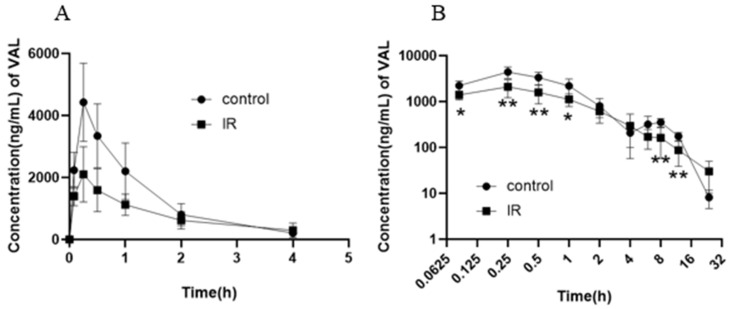
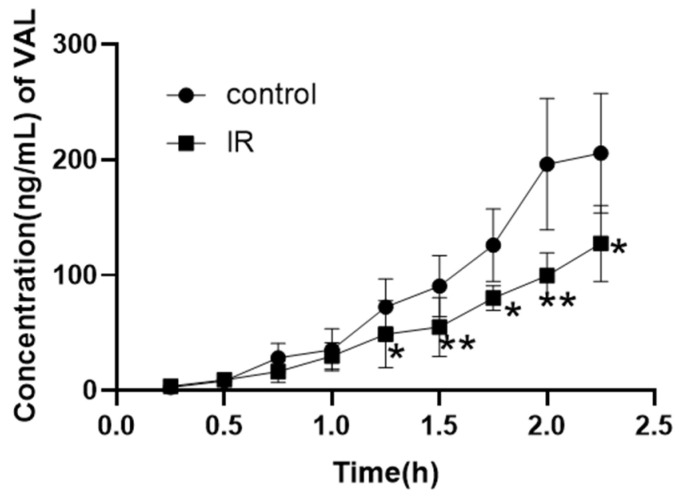
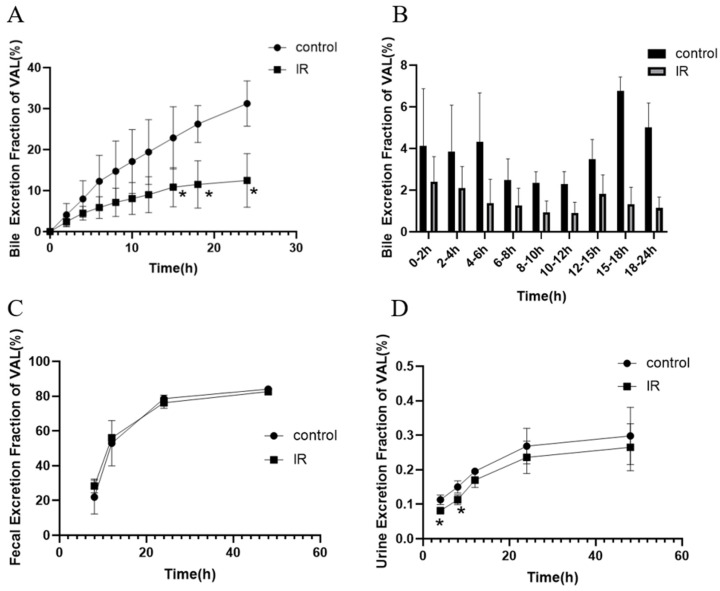
Background: It has been documented that radiation can influence the pharmacokinetics of chemotherapy drugs, yet the underlying mechanisms remain poorly understood. In clinical practice, a considerable number of cancer patients undergo radiotherapy, and those with comorbid hypertension required antihypertensive drugs, including valsartan, an angiotensin II receptor blocker. However, there is no research investigating whether radiotherapy poses a risk of altering the pharmacokinetics. Objective: The objective of this study is to investigate the impact of X-ray abdominal irradiation on the pharmacokinetics of valsartan and to preliminarily elucidate the underlying mechanism. Methods: The pharmacokinetics of valsartan after X-ray irradiation was investigated in rats and in vitro by detecting the concentration of valsartan in biological samples by LC-MS/MS. The oxidative stress in the intestine and the mRNA expression of partial transporters and Nrf2 in the liver and small intestine were detected by biochemical reagent kit or RT-qPCR. Results: In vivo studies showed that X-ray irradiation resulted in a significant decrease in the AUC and Cmax of valsartan, and the cumulative fractional excretion of valsartan in bile and urine, although there was no significant change in fecal excretion. In vitro studies showed that the uptake of valsartan by both intestine and Caco-2 cells decreased after irradiation, and the cellular uptake could be restored by Mrp2 inhibitor MK571. The levels of GSH, SOD, and CAT in the intestine decreased after irradiation. The mRNA expressions of Mrp2 and P-gp in the intestine or Caco-2 cells were significantly upregulated after irradiation while there was a downregulation of Mrp2 and oatp1b2 in liver. Nrf2 and HO-1 in the intestine were also significantly upregulated, which clarified the involvement of Mrp2 and the possible molecular mechanism. Conclusions: Abdominal X-ray irradiation can cause oxidative stress and upregulate intestinal Mrp2, which may be related to oxidative stress and upregulation of Nrf2, reducing intestinal absorption of valsartan and leading to a significant decrease in the blood concentration of valsartan.
PharmaceuticsPharmacology, Toxicology and Pharmaceutics-Pharmaceutical Science
CiteScore
7.90
自引率
11.10%
发文量
2379
审稿时长
16.41 days
期刊介绍:
Pharmaceutics (ISSN 1999-4923) is an open access journal which provides an advanced forum for the science and technology of pharmaceutics and biopharmaceutics. It publishes reviews, regular research papers, communications, and short notes. Covered topics include pharmacokinetics, toxicokinetics, pharmacodynamics, pharmacogenetics and pharmacogenomics, and pharmaceutical formulation. Our aim is to encourage scientists to publish their experimental and theoretical details in as much detail as possible. There is no restriction on the length of the papers. The full experimental details must be provided so that the results can be reproduced.




 京公网安备 11010802042870号
京ICP备2023020795号-1
京公网安备 11010802042870号
京ICP备2023020795号-1

 分享
分享
 求助内容:
求助内容: 应助结果提醒方式:
 扫码关注我们
