{"title":"通过纳米颗粒将CRISPR/Cas9核糖核蛋白(Cas9 RNPs)无创传递到细胞中进行膜运输。","authors":"Toshihiko Tashima","doi":"10.3390/pharmaceutics17020201","DOIUrl":null,"url":null,"abstract":"<p><p>The clustered regularly interspaced short palindromic repeats/CRISPR-associated protein 9 (CRISPR/Cas9) system is a promising biotechnology tool for genome editing. However, in living organisms, several pharmacokinetic challenges arise, including off-target side effects due to incorrect distribution, low bioavailability caused by membrane impermeability, and instability resulting from enzymatic degradation. Therefore, innovative delivery strategies must be developed to address these issues. Modified nanoparticles offer a potential solution for the non-invasive delivery of CRISPR/Cas9 ribonucleoproteins (Cas9 RNPs). Cas9 RNPs encapsulated in nanoparticles are protected from enzymatic degradation, similar to how microRNAs are shielded within exosomes. It is well-established that certain materials, including proteins, are expressed selectively in specific cell types. For example, the α-7 nicotinic receptor is expressed in endothelial and neuronal cells, while the αvβ3 integrin is expressed in cancer cells. These endogenous materials can facilitate receptor-mediated endocytosis or transcytosis. Nanoparticles encapsulating Cas9 RNPs and coated with ligands targeting such receptors may be internalized through receptor-mediated mechanisms. Once internalized, Cas9 RNPs could perform the desired gene editing in the nucleus after escaping the endosome through mechanisms such as the proton sponge effect or membrane fusion. In this review, I discuss the potential and advantages of delivering Cas9 RNP-encapsulated nanoparticles coated with ligands through receptor-mediated endocytosis or transcytosis.</p>","PeriodicalId":19894,"journal":{"name":"Pharmaceutics","volume":"17 2","pages":""},"PeriodicalIF":5.5000,"publicationDate":"2025-02-06","publicationTypes":"Journal Article","fieldsOfStudy":null,"isOpenAccess":false,"openAccessPdf":"https://www.ncbi.nlm.nih.gov/pmc/articles/PMC11859894/pdf/","citationCount":"0","resultStr":"{\"title\":\"Non-Invasive Delivery of CRISPR/Cas9 Ribonucleoproteins (Cas9 RNPs) into Cells via Nanoparticles for Membrane Transport.\",\"authors\":\"Toshihiko Tashima\",\"doi\":\"10.3390/pharmaceutics17020201\",\"DOIUrl\":null,\"url\":null,\"abstract\":\"<p><p>The clustered regularly interspaced short palindromic repeats/CRISPR-associated protein 9 (CRISPR/Cas9) system is a promising biotechnology tool for genome editing. However, in living organisms, several pharmacokinetic challenges arise, including off-target side effects due to incorrect distribution, low bioavailability caused by membrane impermeability, and instability resulting from enzymatic degradation. Therefore, innovative delivery strategies must be developed to address these issues. Modified nanoparticles offer a potential solution for the non-invasive delivery of CRISPR/Cas9 ribonucleoproteins (Cas9 RNPs). Cas9 RNPs encapsulated in nanoparticles are protected from enzymatic degradation, similar to how microRNAs are shielded within exosomes. It is well-established that certain materials, including proteins, are expressed selectively in specific cell types. For example, the α-7 nicotinic receptor is expressed in endothelial and neuronal cells, while the αvβ3 integrin is expressed in cancer cells. These endogenous materials can facilitate receptor-mediated endocytosis or transcytosis. Nanoparticles encapsulating Cas9 RNPs and coated with ligands targeting such receptors may be internalized through receptor-mediated mechanisms. Once internalized, Cas9 RNPs could perform the desired gene editing in the nucleus after escaping the endosome through mechanisms such as the proton sponge effect or membrane fusion. In this review, I discuss the potential and advantages of delivering Cas9 RNP-encapsulated nanoparticles coated with ligands through receptor-mediated endocytosis or transcytosis.</p>\",\"PeriodicalId\":19894,\"journal\":{\"name\":\"Pharmaceutics\",\"volume\":\"17 2\",\"pages\":\"\"},\"PeriodicalIF\":5.5000,\"publicationDate\":\"2025-02-06\",\"publicationTypes\":\"Journal Article\",\"fieldsOfStudy\":null,\"isOpenAccess\":false,\"openAccessPdf\":\"https://www.ncbi.nlm.nih.gov/pmc/articles/PMC11859894/pdf/\",\"citationCount\":\"0\",\"resultStr\":null,\"platform\":\"Semanticscholar\",\"paperid\":null,\"PeriodicalName\":\"Pharmaceutics\",\"FirstCategoryId\":\"3\",\"ListUrlMain\":\"https://doi.org/10.3390/pharmaceutics17020201\",\"RegionNum\":3,\"RegionCategory\":\"医学\",\"ArticlePicture\":[],\"TitleCN\":null,\"AbstractTextCN\":null,\"PMCID\":null,\"EPubDate\":\"\",\"PubModel\":\"\",\"JCR\":\"Q1\",\"JCRName\":\"PHARMACOLOGY & PHARMACY\",\"Score\":null,\"Total\":0}","platform":"Semanticscholar","paperid":null,"PeriodicalName":"Pharmaceutics","FirstCategoryId":"3","ListUrlMain":"https://doi.org/10.3390/pharmaceutics17020201","RegionNum":3,"RegionCategory":"医学","ArticlePicture":[],"TitleCN":null,"AbstractTextCN":null,"PMCID":null,"EPubDate":"","PubModel":"","JCR":"Q1","JCRName":"PHARMACOLOGY & PHARMACY","Score":null,"Total":0}
Non-Invasive Delivery of CRISPR/Cas9 Ribonucleoproteins (Cas9 RNPs) into Cells via Nanoparticles for Membrane Transport.
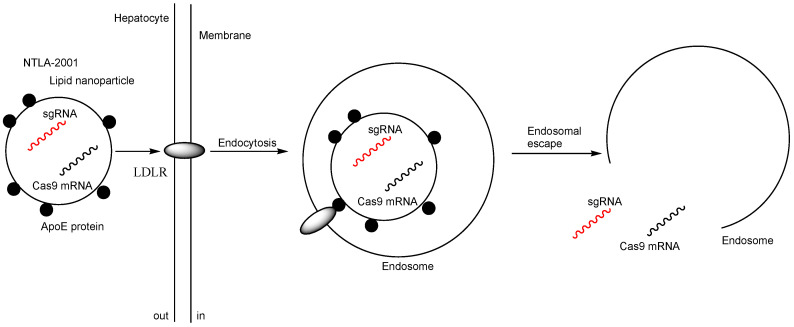
The clustered regularly interspaced short palindromic repeats/CRISPR-associated protein 9 (CRISPR/Cas9) system is a promising biotechnology tool for genome editing. However, in living organisms, several pharmacokinetic challenges arise, including off-target side effects due to incorrect distribution, low bioavailability caused by membrane impermeability, and instability resulting from enzymatic degradation. Therefore, innovative delivery strategies must be developed to address these issues. Modified nanoparticles offer a potential solution for the non-invasive delivery of CRISPR/Cas9 ribonucleoproteins (Cas9 RNPs). Cas9 RNPs encapsulated in nanoparticles are protected from enzymatic degradation, similar to how microRNAs are shielded within exosomes. It is well-established that certain materials, including proteins, are expressed selectively in specific cell types. For example, the α-7 nicotinic receptor is expressed in endothelial and neuronal cells, while the αvβ3 integrin is expressed in cancer cells. These endogenous materials can facilitate receptor-mediated endocytosis or transcytosis. Nanoparticles encapsulating Cas9 RNPs and coated with ligands targeting such receptors may be internalized through receptor-mediated mechanisms. Once internalized, Cas9 RNPs could perform the desired gene editing in the nucleus after escaping the endosome through mechanisms such as the proton sponge effect or membrane fusion. In this review, I discuss the potential and advantages of delivering Cas9 RNP-encapsulated nanoparticles coated with ligands through receptor-mediated endocytosis or transcytosis.
PharmaceuticsPharmacology, Toxicology and Pharmaceutics-Pharmaceutical Science
CiteScore
7.90
自引率
11.10%
发文量
2379
审稿时长
16.41 days
期刊介绍:
Pharmaceutics (ISSN 1999-4923) is an open access journal which provides an advanced forum for the science and technology of pharmaceutics and biopharmaceutics. It publishes reviews, regular research papers, communications, and short notes. Covered topics include pharmacokinetics, toxicokinetics, pharmacodynamics, pharmacogenetics and pharmacogenomics, and pharmaceutical formulation. Our aim is to encourage scientists to publish their experimental and theoretical details in as much detail as possible. There is no restriction on the length of the papers. The full experimental details must be provided so that the results can be reproduced.






 京公网安备 11010802042870号
京ICP备2023020795号-1
京公网安备 11010802042870号
京ICP备2023020795号-1

 分享
分享
 求助内容:
求助内容: 应助结果提醒方式:
 扫码关注我们
