Byung Min Lee, Jaeho Cho, Dong-Seok Kim, Jong Hee Chang, Seok-Gu Kang, Eui-Hyun Kim, Ju Hyung Moon, Sung Soo Ahn, Yae Won Park, Chang-Ok Suh, Hong In Yoon
{"title":"颅咽管瘤辅助治疗方式对治疗结果的影响。","authors":"Byung Min Lee, Jaeho Cho, Dong-Seok Kim, Jong Hee Chang, Seok-Gu Kang, Eui-Hyun Kim, Ju Hyung Moon, Sung Soo Ahn, Yae Won Park, Chang-Ok Suh, Hong In Yoon","doi":"10.3349/ymj.2023.0566","DOIUrl":null,"url":null,"abstract":"<p><strong>Purpose: </strong>Adjuvant treatment for craniopharyngioma after surgery is controversial. Adjuvant external beam radiation therapy (EBRT) can increase the risk of long-term sequelae. Stereotactic radiosurgery (SRS) is used to reduce treatment-related toxicity. In this study, we compared the treatment outcomes and toxicities of adjuvant therapies for craniopharyngioma.</p><p><strong>Materials and methods: </strong>We analyzed patients who underwent craniopharyngioma tumor removal between 2000 and 2017. Of the 153 patients, 27 and 20 received adjuvant fractionated EBRT and SRS, respectively. We compared the local control (LC), progression-free survival (PFS), and overall survival between groups that received adjuvant fractionated EBRT, SRS, and surveillance.</p><p><strong>Results: </strong>The median follow-up period was 77.7 months. For SRS and surveillance, the 10-year LC was 57.2% and 57.4%, respectively. No local progression was observed after adjuvant fractionated EBRT. One patient in the adjuvant fractionated EBRT group died owing to glioma 94 months after receiving radiotherapy (10-year PFS: 80%). The 10-year PFS was 43.6% and 50.7% in the SRS and surveillance groups, respectively. The treatment outcomes significantly differed according to adjuvant treatment in non-gross total resection (GTR) patients. Additional treatment-related toxicity was comparable in the adjuvant fractionated EBRT and other groups.</p><p><strong>Conclusion: </strong>Adjuvant fractionated EBRT could be effective in controlling local failure, especially in patients with non-GTR, while maintaining acceptable treatment-related toxicity.</p>","PeriodicalId":23765,"journal":{"name":"Yonsei Medical Journal","volume":"66 3","pages":"141-150"},"PeriodicalIF":2.8000,"publicationDate":"2025-03-01","publicationTypes":"Journal Article","fieldsOfStudy":null,"isOpenAccess":false,"openAccessPdf":"https://www.ncbi.nlm.nih.gov/pmc/articles/PMC11865873/pdf/","citationCount":"0","resultStr":"{\"title\":\"Differences in Treatment Outcomes Depending on the Adjuvant Treatment Modality in Craniopharyngioma.\",\"authors\":\"Byung Min Lee, Jaeho Cho, Dong-Seok Kim, Jong Hee Chang, Seok-Gu Kang, Eui-Hyun Kim, Ju Hyung Moon, Sung Soo Ahn, Yae Won Park, Chang-Ok Suh, Hong In Yoon\",\"doi\":\"10.3349/ymj.2023.0566\",\"DOIUrl\":null,\"url\":null,\"abstract\":\"<p><strong>Purpose: </strong>Adjuvant treatment for craniopharyngioma after surgery is controversial. Adjuvant external beam radiation therapy (EBRT) can increase the risk of long-term sequelae. Stereotactic radiosurgery (SRS) is used to reduce treatment-related toxicity. In this study, we compared the treatment outcomes and toxicities of adjuvant therapies for craniopharyngioma.</p><p><strong>Materials and methods: </strong>We analyzed patients who underwent craniopharyngioma tumor removal between 2000 and 2017. Of the 153 patients, 27 and 20 received adjuvant fractionated EBRT and SRS, respectively. We compared the local control (LC), progression-free survival (PFS), and overall survival between groups that received adjuvant fractionated EBRT, SRS, and surveillance.</p><p><strong>Results: </strong>The median follow-up period was 77.7 months. For SRS and surveillance, the 10-year LC was 57.2% and 57.4%, respectively. No local progression was observed after adjuvant fractionated EBRT. One patient in the adjuvant fractionated EBRT group died owing to glioma 94 months after receiving radiotherapy (10-year PFS: 80%). The 10-year PFS was 43.6% and 50.7% in the SRS and surveillance groups, respectively. The treatment outcomes significantly differed according to adjuvant treatment in non-gross total resection (GTR) patients. Additional treatment-related toxicity was comparable in the adjuvant fractionated EBRT and other groups.</p><p><strong>Conclusion: </strong>Adjuvant fractionated EBRT could be effective in controlling local failure, especially in patients with non-GTR, while maintaining acceptable treatment-related toxicity.</p>\",\"PeriodicalId\":23765,\"journal\":{\"name\":\"Yonsei Medical Journal\",\"volume\":\"66 3\",\"pages\":\"141-150\"},\"PeriodicalIF\":2.8000,\"publicationDate\":\"2025-03-01\",\"publicationTypes\":\"Journal Article\",\"fieldsOfStudy\":null,\"isOpenAccess\":false,\"openAccessPdf\":\"https://www.ncbi.nlm.nih.gov/pmc/articles/PMC11865873/pdf/\",\"citationCount\":\"0\",\"resultStr\":null,\"platform\":\"Semanticscholar\",\"paperid\":null,\"PeriodicalName\":\"Yonsei Medical Journal\",\"FirstCategoryId\":\"3\",\"ListUrlMain\":\"https://doi.org/10.3349/ymj.2023.0566\",\"RegionNum\":4,\"RegionCategory\":\"医学\",\"ArticlePicture\":[],\"TitleCN\":null,\"AbstractTextCN\":null,\"PMCID\":null,\"EPubDate\":\"\",\"PubModel\":\"\",\"JCR\":\"Q1\",\"JCRName\":\"MEDICINE, GENERAL & INTERNAL\",\"Score\":null,\"Total\":0}","platform":"Semanticscholar","paperid":null,"PeriodicalName":"Yonsei Medical Journal","FirstCategoryId":"3","ListUrlMain":"https://doi.org/10.3349/ymj.2023.0566","RegionNum":4,"RegionCategory":"医学","ArticlePicture":[],"TitleCN":null,"AbstractTextCN":null,"PMCID":null,"EPubDate":"","PubModel":"","JCR":"Q1","JCRName":"MEDICINE, GENERAL & INTERNAL","Score":null,"Total":0}
Differences in Treatment Outcomes Depending on the Adjuvant Treatment Modality in Craniopharyngioma.
Purpose: Adjuvant treatment for craniopharyngioma after surgery is controversial. Adjuvant external beam radiation therapy (EBRT) can increase the risk of long-term sequelae. Stereotactic radiosurgery (SRS) is used to reduce treatment-related toxicity. In this study, we compared the treatment outcomes and toxicities of adjuvant therapies for craniopharyngioma.
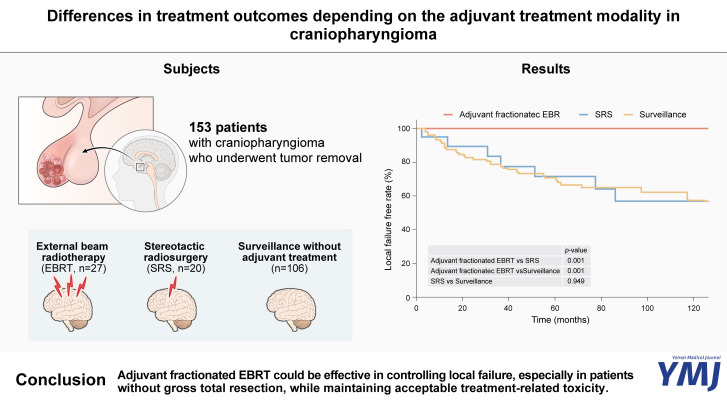
Materials and methods: We analyzed patients who underwent craniopharyngioma tumor removal between 2000 and 2017. Of the 153 patients, 27 and 20 received adjuvant fractionated EBRT and SRS, respectively. We compared the local control (LC), progression-free survival (PFS), and overall survival between groups that received adjuvant fractionated EBRT, SRS, and surveillance.
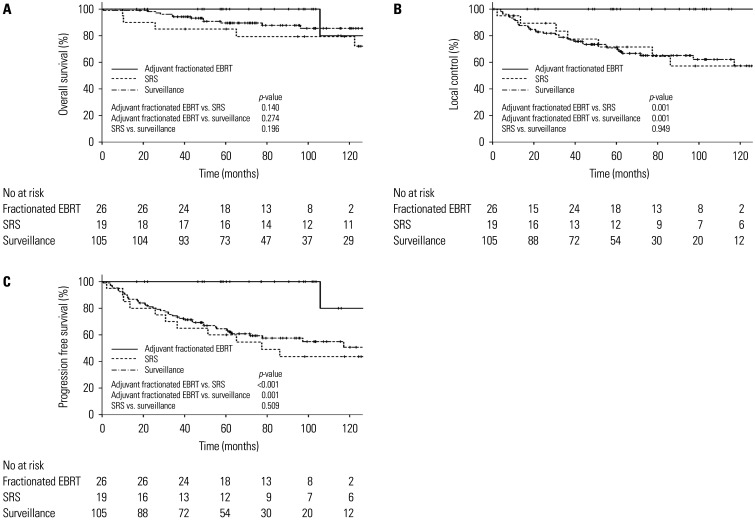
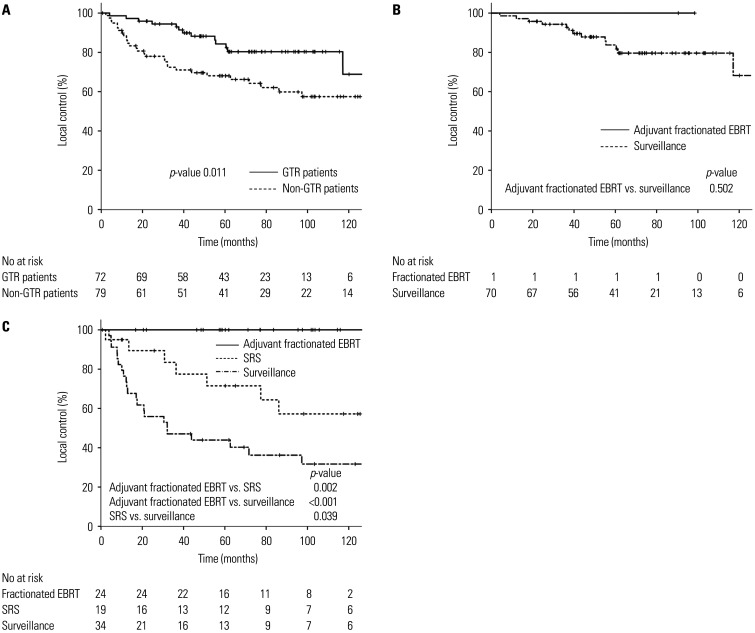
Results: The median follow-up period was 77.7 months. For SRS and surveillance, the 10-year LC was 57.2% and 57.4%, respectively. No local progression was observed after adjuvant fractionated EBRT. One patient in the adjuvant fractionated EBRT group died owing to glioma 94 months after receiving radiotherapy (10-year PFS: 80%). The 10-year PFS was 43.6% and 50.7% in the SRS and surveillance groups, respectively. The treatment outcomes significantly differed according to adjuvant treatment in non-gross total resection (GTR) patients. Additional treatment-related toxicity was comparable in the adjuvant fractionated EBRT and other groups.
Conclusion: Adjuvant fractionated EBRT could be effective in controlling local failure, especially in patients with non-GTR, while maintaining acceptable treatment-related toxicity.
期刊介绍:
The goal of the Yonsei Medical Journal (YMJ) is to publish high quality manuscripts dedicated to clinical or basic research. Any authors affiliated with an accredited biomedical institution may submit manuscripts of original articles, review articles, case reports, brief communications, and letters to the Editor.




 京公网安备 11010802042870号
京ICP备2023020795号-1
京公网安备 11010802042870号
京ICP备2023020795号-1

 分享
分享
 求助内容:
求助内容: 应助结果提醒方式:
 扫码关注我们
