Christina Papanikolaou, Panagiota Economopoulou, Niki Gavrielatou, Dimitra Mavroeidi, Amanda Psyrri, Vassilis L Souliotis
{"title":"uvc诱导的氧化应激和DNA损伤修复状态对纳武单抗治疗的不同反应头颈部鳞状细胞癌患者","authors":"Christina Papanikolaou, Panagiota Economopoulou, Niki Gavrielatou, Dimitra Mavroeidi, Amanda Psyrri, Vassilis L Souliotis","doi":"10.3390/biology14020195","DOIUrl":null,"url":null,"abstract":"<p><p>Accumulation of evidence highlighted the crosstalk between DNA damage repair and the immune system. Herein, we tested the hypothesis that in head and neck squamous cell carcinoma (HNSCC), the DNA repair capacity of patients' PBMCs correlates with therapeutic response to immune checkpoint blockade. Following in vitro UVC irradiation, oxidative stress, apurinic/apyrimidinic (AP) lesions, endogenous/baseline DNA damage, and DNA damage repair efficiency were evaluated in three HNSCC (UM-SCC-11A, Cal-33, BB49) and two normal cell lines (RPMI-1788, 1BR-3h-T), as well as in peripheral blood mononuclear cells (PBMCs) from 15 healthy controls (HC) and 49 recurrent/metastatic HNSCC patients at baseline (8 responders, 41 non-responders to subsequent nivolumab therapy). HNSCC cell lines showed lower DNA repair efficiency, increased oxidative stress, and higher AP sites than normal ones (all <i>p</i> < 0.001). Moreover, patients' PBMCs exhibited increased endogenous/baseline DNA damage, decreased DNA repair capacity, augmented oxidative stress, and higher AP sites than PBMCs from HC (all <i>p</i> < 0.001). Importantly, PBMCs from responders to nivolumab therapy showed lower endogenous/baseline DNA damage, higher DNA repair capacities, decreased oxidative stress, and reduced AP sites than non-responders (all <i>p</i> < 0.05). Together, we demonstrated that oxidative stress status and DNA repair efficiency in PBMCs from HNSCC patients are correlated with the response to immune checkpoint blockade.</p>","PeriodicalId":48624,"journal":{"name":"Biology-Basel","volume":"14 2","pages":""},"PeriodicalIF":3.5000,"publicationDate":"2025-02-13","publicationTypes":"Journal Article","fieldsOfStudy":null,"isOpenAccess":false,"openAccessPdf":"https://www.ncbi.nlm.nih.gov/pmc/articles/PMC11852043/pdf/","citationCount":"0","resultStr":"{\"title\":\"UVC-Induced Oxidative Stress and DNA Damage Repair Status in Head and Neck Squamous Cell Carcinoma Patients with Different Responses to Nivolumab Therapy.\",\"authors\":\"Christina Papanikolaou, Panagiota Economopoulou, Niki Gavrielatou, Dimitra Mavroeidi, Amanda Psyrri, Vassilis L Souliotis\",\"doi\":\"10.3390/biology14020195\",\"DOIUrl\":null,\"url\":null,\"abstract\":\"<p><p>Accumulation of evidence highlighted the crosstalk between DNA damage repair and the immune system. Herein, we tested the hypothesis that in head and neck squamous cell carcinoma (HNSCC), the DNA repair capacity of patients' PBMCs correlates with therapeutic response to immune checkpoint blockade. Following in vitro UVC irradiation, oxidative stress, apurinic/apyrimidinic (AP) lesions, endogenous/baseline DNA damage, and DNA damage repair efficiency were evaluated in three HNSCC (UM-SCC-11A, Cal-33, BB49) and two normal cell lines (RPMI-1788, 1BR-3h-T), as well as in peripheral blood mononuclear cells (PBMCs) from 15 healthy controls (HC) and 49 recurrent/metastatic HNSCC patients at baseline (8 responders, 41 non-responders to subsequent nivolumab therapy). HNSCC cell lines showed lower DNA repair efficiency, increased oxidative stress, and higher AP sites than normal ones (all <i>p</i> < 0.001). Moreover, patients' PBMCs exhibited increased endogenous/baseline DNA damage, decreased DNA repair capacity, augmented oxidative stress, and higher AP sites than PBMCs from HC (all <i>p</i> < 0.001). Importantly, PBMCs from responders to nivolumab therapy showed lower endogenous/baseline DNA damage, higher DNA repair capacities, decreased oxidative stress, and reduced AP sites than non-responders (all <i>p</i> < 0.05). Together, we demonstrated that oxidative stress status and DNA repair efficiency in PBMCs from HNSCC patients are correlated with the response to immune checkpoint blockade.</p>\",\"PeriodicalId\":48624,\"journal\":{\"name\":\"Biology-Basel\",\"volume\":\"14 2\",\"pages\":\"\"},\"PeriodicalIF\":3.5000,\"publicationDate\":\"2025-02-13\",\"publicationTypes\":\"Journal Article\",\"fieldsOfStudy\":null,\"isOpenAccess\":false,\"openAccessPdf\":\"https://www.ncbi.nlm.nih.gov/pmc/articles/PMC11852043/pdf/\",\"citationCount\":\"0\",\"resultStr\":null,\"platform\":\"Semanticscholar\",\"paperid\":null,\"PeriodicalName\":\"Biology-Basel\",\"FirstCategoryId\":\"99\",\"ListUrlMain\":\"https://doi.org/10.3390/biology14020195\",\"RegionNum\":3,\"RegionCategory\":\"生物学\",\"ArticlePicture\":[],\"TitleCN\":null,\"AbstractTextCN\":null,\"PMCID\":null,\"EPubDate\":\"\",\"PubModel\":\"\",\"JCR\":\"Q1\",\"JCRName\":\"BIOLOGY\",\"Score\":null,\"Total\":0}","platform":"Semanticscholar","paperid":null,"PeriodicalName":"Biology-Basel","FirstCategoryId":"99","ListUrlMain":"https://doi.org/10.3390/biology14020195","RegionNum":3,"RegionCategory":"生物学","ArticlePicture":[],"TitleCN":null,"AbstractTextCN":null,"PMCID":null,"EPubDate":"","PubModel":"","JCR":"Q1","JCRName":"BIOLOGY","Score":null,"Total":0}
UVC-Induced Oxidative Stress and DNA Damage Repair Status in Head and Neck Squamous Cell Carcinoma Patients with Different Responses to Nivolumab Therapy.
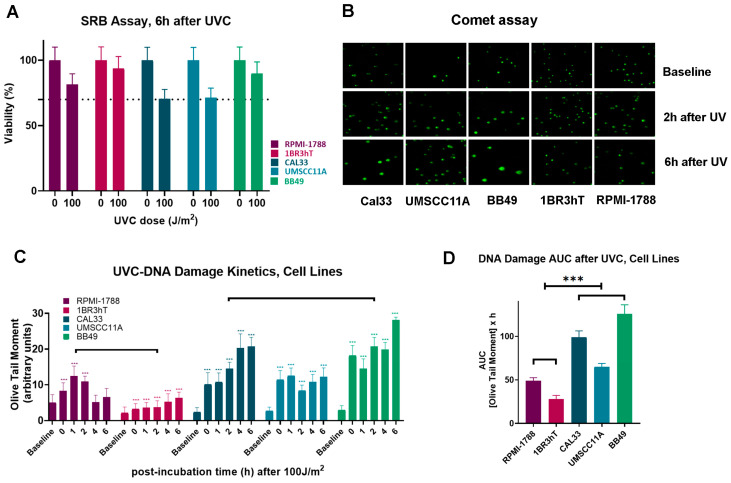
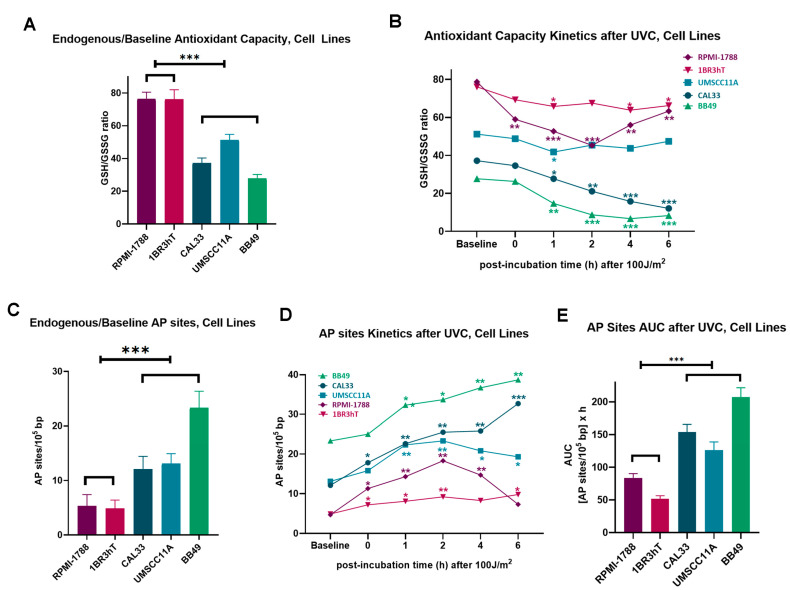
Accumulation of evidence highlighted the crosstalk between DNA damage repair and the immune system. Herein, we tested the hypothesis that in head and neck squamous cell carcinoma (HNSCC), the DNA repair capacity of patients' PBMCs correlates with therapeutic response to immune checkpoint blockade. Following in vitro UVC irradiation, oxidative stress, apurinic/apyrimidinic (AP) lesions, endogenous/baseline DNA damage, and DNA damage repair efficiency were evaluated in three HNSCC (UM-SCC-11A, Cal-33, BB49) and two normal cell lines (RPMI-1788, 1BR-3h-T), as well as in peripheral blood mononuclear cells (PBMCs) from 15 healthy controls (HC) and 49 recurrent/metastatic HNSCC patients at baseline (8 responders, 41 non-responders to subsequent nivolumab therapy). HNSCC cell lines showed lower DNA repair efficiency, increased oxidative stress, and higher AP sites than normal ones (all p < 0.001). Moreover, patients' PBMCs exhibited increased endogenous/baseline DNA damage, decreased DNA repair capacity, augmented oxidative stress, and higher AP sites than PBMCs from HC (all p < 0.001). Importantly, PBMCs from responders to nivolumab therapy showed lower endogenous/baseline DNA damage, higher DNA repair capacities, decreased oxidative stress, and reduced AP sites than non-responders (all p < 0.05). Together, we demonstrated that oxidative stress status and DNA repair efficiency in PBMCs from HNSCC patients are correlated with the response to immune checkpoint blockade.
期刊介绍:
Biology (ISSN 2079-7737) is an international, peer-reviewed, quick-refereeing open access journal of Biological Science published by MDPI online. It publishes reviews, research papers and communications in all areas of biology and at the interface of related disciplines. Our aim is to encourage scientists to publish their experimental and theoretical results in as much detail as possible. There is no restriction on the length of the papers. The full experimental details must be provided so that the results can be reproduced. Electronic files regarding the full details of the experimental procedure, if unable to be published in a normal way, can be deposited as supplementary material.





 京公网安备 11010802042870号
京ICP备2023020795号-1
京公网安备 11010802042870号
京ICP备2023020795号-1

 分享
分享
 求助内容:
求助内容: 应助结果提醒方式:
 扫码关注我们
