{"title":"半集约化养殖条件下,饲粮中添加生姜生姜对红腹小鲵免疫、血液代谢和抗病能力的影响","authors":"Priya Rawat, Vaneet Inder Kaur, Anuj Tyagi, Parisa Norouzitallab, Kartik Baruah","doi":"10.3390/biology14020135","DOIUrl":null,"url":null,"abstract":"<p><p>A feeding trial was conducted for 120 days in a pilot field condition to evaluate ginger powder (GP; <i>Zingiber officinale</i>) as a feed supplement for <i>Labeo rohita</i> to improve immunity, blood metabolic profile, and resistance to <i>Aeromonas hydrophila</i> bacterial infection. The study was conducted following a complete randomized design in outdoor cemented tanks (20 m<sup>2</sup>) with a stocking density of 30 fish (average weight: 20.5 g) per tank. <i>L. rohita</i> fingerlings were divided into five groups and fed a diet with no GP supplementation (control diet; C) or a diet supplemented with 5 g (GP5), 10 g (GP10), 15 g (GP15), or 20 g (GP20) of GP per kg of the control diet. The results showed that fish well-being, determined by measuring the condition factor, remained higher than 1.0 for all the experimental groups. The condition factors of all the groups were not significantly different between the groups, suggesting GP had no negative impact on overall fish health. Immune responses significantly improved in the groups fed with diets supplemented with GP at doses of 10 to 15 g per kg of their diet, as seen in respiratory burst activity, total immunoglobulins, and lysozyme activity at 60 and 120 days. Blood metabolic variables, particularly the albumin level, tended to show some level of improvement in the GP15-fed group. However, the effect was not significant. Total protein and globulin levels and the albumin/globulin ratio were not significantly affected by dietary GP. Importantly, fish fed the GP15 diet showed the highest resistance to the <i>A. hydrophila</i> challenge. In conclusion, ginger powder holds promise as a health-promoting nutraceutical for farmed <i>L. rohita</i>, contributing to their sustainable farming.</p>","PeriodicalId":48624,"journal":{"name":"Biology-Basel","volume":"14 2","pages":""},"PeriodicalIF":4.3000,"publicationDate":"2025-01-28","publicationTypes":"Journal Article","fieldsOfStudy":null,"isOpenAccess":false,"openAccessPdf":"https://www.ncbi.nlm.nih.gov/pmc/articles/PMC11851856/pdf/","citationCount":"0","resultStr":"{\"title\":\"A Pilot Field Evaluation of Dietary Ginger <i>Zingiber officinale</i> Effects on Immunity, Blood Metabolic Profile, and Disease Resistance in <i>Labeo rohita</i> Under Semi-Intensive Farming.\",\"authors\":\"Priya Rawat, Vaneet Inder Kaur, Anuj Tyagi, Parisa Norouzitallab, Kartik Baruah\",\"doi\":\"10.3390/biology14020135\",\"DOIUrl\":null,\"url\":null,\"abstract\":\"<p><p>A feeding trial was conducted for 120 days in a pilot field condition to evaluate ginger powder (GP; <i>Zingiber officinale</i>) as a feed supplement for <i>Labeo rohita</i> to improve immunity, blood metabolic profile, and resistance to <i>Aeromonas hydrophila</i> bacterial infection. The study was conducted following a complete randomized design in outdoor cemented tanks (20 m<sup>2</sup>) with a stocking density of 30 fish (average weight: 20.5 g) per tank. <i>L. rohita</i> fingerlings were divided into five groups and fed a diet with no GP supplementation (control diet; C) or a diet supplemented with 5 g (GP5), 10 g (GP10), 15 g (GP15), or 20 g (GP20) of GP per kg of the control diet. The results showed that fish well-being, determined by measuring the condition factor, remained higher than 1.0 for all the experimental groups. The condition factors of all the groups were not significantly different between the groups, suggesting GP had no negative impact on overall fish health. Immune responses significantly improved in the groups fed with diets supplemented with GP at doses of 10 to 15 g per kg of their diet, as seen in respiratory burst activity, total immunoglobulins, and lysozyme activity at 60 and 120 days. Blood metabolic variables, particularly the albumin level, tended to show some level of improvement in the GP15-fed group. However, the effect was not significant. Total protein and globulin levels and the albumin/globulin ratio were not significantly affected by dietary GP. Importantly, fish fed the GP15 diet showed the highest resistance to the <i>A. hydrophila</i> challenge. In conclusion, ginger powder holds promise as a health-promoting nutraceutical for farmed <i>L. rohita</i>, contributing to their sustainable farming.</p>\",\"PeriodicalId\":48624,\"journal\":{\"name\":\"Biology-Basel\",\"volume\":\"14 2\",\"pages\":\"\"},\"PeriodicalIF\":4.3000,\"publicationDate\":\"2025-01-28\",\"publicationTypes\":\"Journal Article\",\"fieldsOfStudy\":null,\"isOpenAccess\":false,\"openAccessPdf\":\"https://www.ncbi.nlm.nih.gov/pmc/articles/PMC11851856/pdf/\",\"citationCount\":\"0\",\"resultStr\":null,\"platform\":\"Semanticscholar\",\"paperid\":null,\"PeriodicalName\":\"Biology-Basel\",\"FirstCategoryId\":\"99\",\"ListUrlMain\":\"https://doi.org/10.3390/biology14020135\",\"RegionNum\":3,\"RegionCategory\":\"生物学\",\"ArticlePicture\":[],\"TitleCN\":null,\"AbstractTextCN\":null,\"PMCID\":null,\"EPubDate\":\"\",\"PubModel\":\"\",\"JCR\":\"Q1\",\"JCRName\":\"BIOLOGY\",\"Score\":null,\"Total\":0}","platform":"Semanticscholar","paperid":null,"PeriodicalName":"Biology-Basel","FirstCategoryId":"99","ListUrlMain":"https://doi.org/10.3390/biology14020135","RegionNum":3,"RegionCategory":"生物学","ArticlePicture":[],"TitleCN":null,"AbstractTextCN":null,"PMCID":null,"EPubDate":"","PubModel":"","JCR":"Q1","JCRName":"BIOLOGY","Score":null,"Total":0}
引用次数: 0
摘要
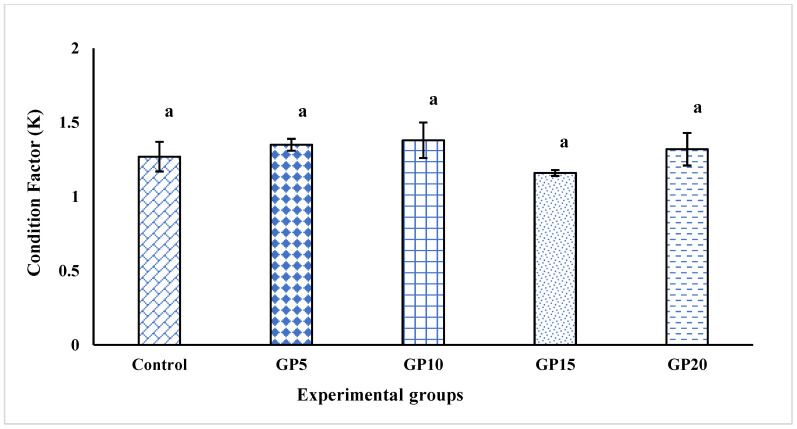
在中试条件下进行了为期120 d的生姜粉(GP;生姜(officinale)作为罗希塔Labeo rohita的饲料添加剂,提高免疫力、血液代谢谱和对嗜水气单胞菌感染的抵抗力。该研究采用完全随机设计,在室外胶结池(20 m2)中进行,每个池的放养密度为30条鱼(平均体重:20.5 g)。将罗氏乳杆菌鱼种分为5组,分别饲喂不添加GP的饲粮(对照饲粮;C)或在对照日粮中每公斤添加5 g (GP5)、10 g (GP10)、15 g (GP15)或20 g (GP20) GP的日粮。结果表明,通过测量条件因子来确定鱼的健康状况,所有实验组的鱼都保持在1.0以上。各组间各条件因子无显著差异,说明GP对鱼类整体健康无负面影响。在60天和120天的呼吸爆发活性、总免疫球蛋白和溶菌酶活性方面,每千克饲料中添加10至15克GP的组的免疫反应显著改善。血液代谢变量,特别是白蛋白水平,倾向于在gp15喂养组显示出一定程度的改善。然而,效果并不显著。饲粮GP对总蛋白和球蛋白水平以及白蛋白/球蛋白比无显著影响。重要的是,饲喂GP15饲料的鱼对嗜水拟虫的抗性最高。总之,生姜粉有望作为一种促进健康的营养保健品,为养殖的罗氏乳杆菌的可持续养殖做出贡献。
A Pilot Field Evaluation of Dietary Ginger Zingiber officinale Effects on Immunity, Blood Metabolic Profile, and Disease Resistance in Labeo rohita Under Semi-Intensive Farming.
A feeding trial was conducted for 120 days in a pilot field condition to evaluate ginger powder (GP; Zingiber officinale) as a feed supplement for Labeo rohita to improve immunity, blood metabolic profile, and resistance to Aeromonas hydrophila bacterial infection. The study was conducted following a complete randomized design in outdoor cemented tanks (20 m2) with a stocking density of 30 fish (average weight: 20.5 g) per tank. L. rohita fingerlings were divided into five groups and fed a diet with no GP supplementation (control diet; C) or a diet supplemented with 5 g (GP5), 10 g (GP10), 15 g (GP15), or 20 g (GP20) of GP per kg of the control diet. The results showed that fish well-being, determined by measuring the condition factor, remained higher than 1.0 for all the experimental groups. The condition factors of all the groups were not significantly different between the groups, suggesting GP had no negative impact on overall fish health. Immune responses significantly improved in the groups fed with diets supplemented with GP at doses of 10 to 15 g per kg of their diet, as seen in respiratory burst activity, total immunoglobulins, and lysozyme activity at 60 and 120 days. Blood metabolic variables, particularly the albumin level, tended to show some level of improvement in the GP15-fed group. However, the effect was not significant. Total protein and globulin levels and the albumin/globulin ratio were not significantly affected by dietary GP. Importantly, fish fed the GP15 diet showed the highest resistance to the A. hydrophila challenge. In conclusion, ginger powder holds promise as a health-promoting nutraceutical for farmed L. rohita, contributing to their sustainable farming.
期刊介绍:
Biology (ISSN 2079-7737) is an international, peer-reviewed, quick-refereeing open access journal of Biological Science published by MDPI online. It publishes reviews, research papers and communications in all areas of biology and at the interface of related disciplines. Our aim is to encourage scientists to publish their experimental and theoretical results in as much detail as possible. There is no restriction on the length of the papers. The full experimental details must be provided so that the results can be reproduced. Electronic files regarding the full details of the experimental procedure, if unable to be published in a normal way, can be deposited as supplementary material.






 京公网安备 11010802042870号
京ICP备2023020795号-1
京公网安备 11010802042870号
京ICP备2023020795号-1

 分享
分享
 求助内容:
求助内容: 应助结果提醒方式:
 扫码关注我们
