Asmaa Elhaieg, Ahmed Farag, Ahmed S Mandour, Miki Hirose, Ahmed Elfadadny, Ryou Tanaka
{"title":"口腔研究中的小鼠模型:实验方法和心血管意义的叙述综述。","authors":"Asmaa Elhaieg, Ahmed Farag, Ahmed S Mandour, Miki Hirose, Ahmed Elfadadny, Ryou Tanaka","doi":"10.3390/biology14020127","DOIUrl":null,"url":null,"abstract":"<p><p>Oral research using murine models spans a broad spectrum of studies, including investigations into oral infections such as periodontitis and peri-implantitis, wound healing, periodontal responses to orthodontic treatment, and occlusal overload. This review aims to provide a comprehensive overview of murine models employed in oral research, with a particular focus on their relevance in studying systemic implications, including cardiovascular diseases (CVDs). The objectives of this review are twofold: first, to highlight the diversity of experimental methods utilized in murine oral research, such as ligature placement, bacterial inoculation, surgical interventions, and mechanical manipulations; second, to explore how these models enhance our understanding of oral-systemic interactions. The findings demonstrate that murine models have significantly contributed to uncovering how oral conditions influence systemic health. Models of oral infections reveal pathways linking systemic inflammation, endothelial dysfunction, and atherogenesis, while studies on wound healing and mechanical stress offer valuable insights into periodontal tissue responses and regeneration under various conditions. These diverse findings underscore the versatility of murine models in addressing key questions across oral health research. By replicating human disease mechanisms, murine models serve as powerful tools for investigating the interplay between oral health and systemic diseases, including cardiovascular dysfunction. The insights gained from these models guide the development of integrated therapeutic approaches aimed at mitigating systemic inflammation and promoting periodontal regeneration.</p>","PeriodicalId":48624,"journal":{"name":"Biology-Basel","volume":"14 2","pages":""},"PeriodicalIF":3.5000,"publicationDate":"2025-01-26","publicationTypes":"Journal Article","fieldsOfStudy":null,"isOpenAccess":false,"openAccessPdf":"https://www.ncbi.nlm.nih.gov/pmc/articles/PMC11851954/pdf/","citationCount":"0","resultStr":"{\"title\":\"Murine Models in Oral Research: A Narrative Review of Experimental Approaches and Cardiovascular Implications.\",\"authors\":\"Asmaa Elhaieg, Ahmed Farag, Ahmed S Mandour, Miki Hirose, Ahmed Elfadadny, Ryou Tanaka\",\"doi\":\"10.3390/biology14020127\",\"DOIUrl\":null,\"url\":null,\"abstract\":\"<p><p>Oral research using murine models spans a broad spectrum of studies, including investigations into oral infections such as periodontitis and peri-implantitis, wound healing, periodontal responses to orthodontic treatment, and occlusal overload. This review aims to provide a comprehensive overview of murine models employed in oral research, with a particular focus on their relevance in studying systemic implications, including cardiovascular diseases (CVDs). The objectives of this review are twofold: first, to highlight the diversity of experimental methods utilized in murine oral research, such as ligature placement, bacterial inoculation, surgical interventions, and mechanical manipulations; second, to explore how these models enhance our understanding of oral-systemic interactions. The findings demonstrate that murine models have significantly contributed to uncovering how oral conditions influence systemic health. Models of oral infections reveal pathways linking systemic inflammation, endothelial dysfunction, and atherogenesis, while studies on wound healing and mechanical stress offer valuable insights into periodontal tissue responses and regeneration under various conditions. These diverse findings underscore the versatility of murine models in addressing key questions across oral health research. By replicating human disease mechanisms, murine models serve as powerful tools for investigating the interplay between oral health and systemic diseases, including cardiovascular dysfunction. The insights gained from these models guide the development of integrated therapeutic approaches aimed at mitigating systemic inflammation and promoting periodontal regeneration.</p>\",\"PeriodicalId\":48624,\"journal\":{\"name\":\"Biology-Basel\",\"volume\":\"14 2\",\"pages\":\"\"},\"PeriodicalIF\":3.5000,\"publicationDate\":\"2025-01-26\",\"publicationTypes\":\"Journal Article\",\"fieldsOfStudy\":null,\"isOpenAccess\":false,\"openAccessPdf\":\"https://www.ncbi.nlm.nih.gov/pmc/articles/PMC11851954/pdf/\",\"citationCount\":\"0\",\"resultStr\":null,\"platform\":\"Semanticscholar\",\"paperid\":null,\"PeriodicalName\":\"Biology-Basel\",\"FirstCategoryId\":\"99\",\"ListUrlMain\":\"https://doi.org/10.3390/biology14020127\",\"RegionNum\":3,\"RegionCategory\":\"生物学\",\"ArticlePicture\":[],\"TitleCN\":null,\"AbstractTextCN\":null,\"PMCID\":null,\"EPubDate\":\"\",\"PubModel\":\"\",\"JCR\":\"Q1\",\"JCRName\":\"BIOLOGY\",\"Score\":null,\"Total\":0}","platform":"Semanticscholar","paperid":null,"PeriodicalName":"Biology-Basel","FirstCategoryId":"99","ListUrlMain":"https://doi.org/10.3390/biology14020127","RegionNum":3,"RegionCategory":"生物学","ArticlePicture":[],"TitleCN":null,"AbstractTextCN":null,"PMCID":null,"EPubDate":"","PubModel":"","JCR":"Q1","JCRName":"BIOLOGY","Score":null,"Total":0}
Murine Models in Oral Research: A Narrative Review of Experimental Approaches and Cardiovascular Implications.
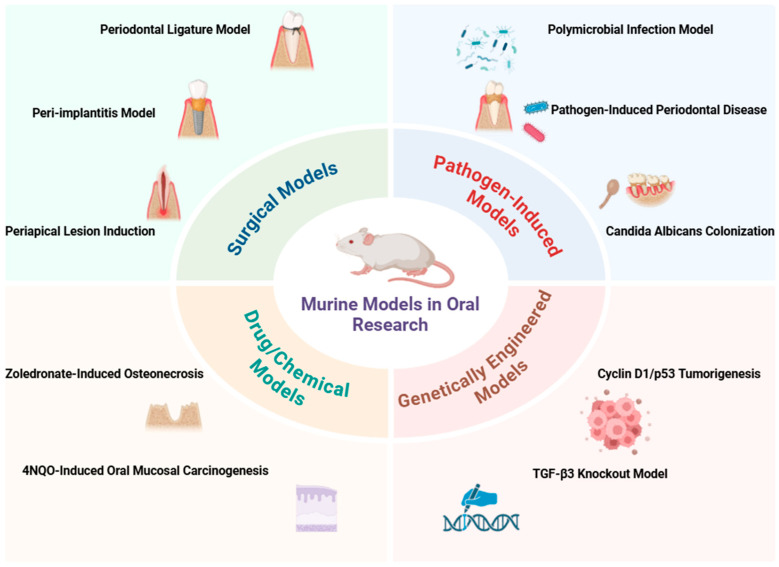
Oral research using murine models spans a broad spectrum of studies, including investigations into oral infections such as periodontitis and peri-implantitis, wound healing, periodontal responses to orthodontic treatment, and occlusal overload. This review aims to provide a comprehensive overview of murine models employed in oral research, with a particular focus on their relevance in studying systemic implications, including cardiovascular diseases (CVDs). The objectives of this review are twofold: first, to highlight the diversity of experimental methods utilized in murine oral research, such as ligature placement, bacterial inoculation, surgical interventions, and mechanical manipulations; second, to explore how these models enhance our understanding of oral-systemic interactions. The findings demonstrate that murine models have significantly contributed to uncovering how oral conditions influence systemic health. Models of oral infections reveal pathways linking systemic inflammation, endothelial dysfunction, and atherogenesis, while studies on wound healing and mechanical stress offer valuable insights into periodontal tissue responses and regeneration under various conditions. These diverse findings underscore the versatility of murine models in addressing key questions across oral health research. By replicating human disease mechanisms, murine models serve as powerful tools for investigating the interplay between oral health and systemic diseases, including cardiovascular dysfunction. The insights gained from these models guide the development of integrated therapeutic approaches aimed at mitigating systemic inflammation and promoting periodontal regeneration.
期刊介绍:
Biology (ISSN 2079-7737) is an international, peer-reviewed, quick-refereeing open access journal of Biological Science published by MDPI online. It publishes reviews, research papers and communications in all areas of biology and at the interface of related disciplines. Our aim is to encourage scientists to publish their experimental and theoretical results in as much detail as possible. There is no restriction on the length of the papers. The full experimental details must be provided so that the results can be reproduced. Electronic files regarding the full details of the experimental procedure, if unable to be published in a normal way, can be deposited as supplementary material.





 京公网安备 11010802042870号
京ICP备2023020795号-1
京公网安备 11010802042870号
京ICP备2023020795号-1

 分享
分享
 求助内容:
求助内容: 应助结果提醒方式:
 扫码关注我们
