Alejandro García-Giménez, Francisco Pradas, Miguel Lecina, Nicolae Ochiana, Carlos Castellar-Otín
{"title":"超trail赛事中随意补水对肌肉和肝脏损伤及电解质平衡的影响:生物标志物和赛事特征的热图分析-一项试点研究","authors":"Alejandro García-Giménez, Francisco Pradas, Miguel Lecina, Nicolae Ochiana, Carlos Castellar-Otín","doi":"10.3390/biology14020136","DOIUrl":null,"url":null,"abstract":"<p><p>Ultra-trail events (UTs) pose significant challenges to maintaining hydration and electrolyte balance, with risks of dehydration (DH), overhydration (OH), exercise-associated hyponatremia (EAH), and exertional rhabdomyolysis (ER). This study examined the effects of ad libitum (ADL) hydration on hydration status and muscle damage during a nine-stage UT (635 km, 40,586 m elevation gain). Four highly trained male athletes participated. Hydration was assessed via body weight loss (BWL), urine specific gravity (U<sub>sg</sub>), and serum sodium ([Na+]), while muscle damage markers included creatine kinase (CK), lactate dehydrogenase (LDH), and calcium (Ca), and liver damage biomarkers included aspartate aminotransferase (AST) and alanine aminotransferase (ALT). Our results showed no cases of EAH or hypernatremia ([Na+] > 145 mmol·L<sup>-1</sup>), with serum [Na+] maintained above 135 mmol·L<sup>-1</sup>. BWL exceeded the 2% DH threshold in early stages (<i>p</i> = 0.029), and U<sub>sg</sub> remained elevated (>1.020 g·mL<sup>-1</sup>). LDH and CK significantly increased at all stages (<i>p</i> < 0.05), persisting for 48 h post-event. Correlations showed BWL aggravated muscle damage (r = 0.47 with CK) and hypocalcemia (r = -0.68 with Ca). Elevation gain/loss amplified fluid loss and muscle injury. While ADL hydration mitigated EAH, it did not fully address DH or muscle damage. Personalized hydration and recovery protocols are crucial to optimizing performance and health in UT events.</p>","PeriodicalId":48624,"journal":{"name":"Biology-Basel","volume":"14 2","pages":""},"PeriodicalIF":4.3000,"publicationDate":"2025-01-28","publicationTypes":"Journal Article","fieldsOfStudy":null,"isOpenAccess":false,"openAccessPdf":"https://www.ncbi.nlm.nih.gov/pmc/articles/PMC11851697/pdf/","citationCount":"0","resultStr":"{\"title\":\"Impact of Ad Libitum Hydration on Muscle and Liver Damage and Electrolyte Balance in Ultra-Trail Events: A Heatmap Analysis of Biomarkers and Event Characteristics-A Pilot Study.\",\"authors\":\"Alejandro García-Giménez, Francisco Pradas, Miguel Lecina, Nicolae Ochiana, Carlos Castellar-Otín\",\"doi\":\"10.3390/biology14020136\",\"DOIUrl\":null,\"url\":null,\"abstract\":\"<p><p>Ultra-trail events (UTs) pose significant challenges to maintaining hydration and electrolyte balance, with risks of dehydration (DH), overhydration (OH), exercise-associated hyponatremia (EAH), and exertional rhabdomyolysis (ER). This study examined the effects of ad libitum (ADL) hydration on hydration status and muscle damage during a nine-stage UT (635 km, 40,586 m elevation gain). Four highly trained male athletes participated. Hydration was assessed via body weight loss (BWL), urine specific gravity (U<sub>sg</sub>), and serum sodium ([Na+]), while muscle damage markers included creatine kinase (CK), lactate dehydrogenase (LDH), and calcium (Ca), and liver damage biomarkers included aspartate aminotransferase (AST) and alanine aminotransferase (ALT). Our results showed no cases of EAH or hypernatremia ([Na+] > 145 mmol·L<sup>-1</sup>), with serum [Na+] maintained above 135 mmol·L<sup>-1</sup>. BWL exceeded the 2% DH threshold in early stages (<i>p</i> = 0.029), and U<sub>sg</sub> remained elevated (>1.020 g·mL<sup>-1</sup>). LDH and CK significantly increased at all stages (<i>p</i> < 0.05), persisting for 48 h post-event. Correlations showed BWL aggravated muscle damage (r = 0.47 with CK) and hypocalcemia (r = -0.68 with Ca). Elevation gain/loss amplified fluid loss and muscle injury. While ADL hydration mitigated EAH, it did not fully address DH or muscle damage. Personalized hydration and recovery protocols are crucial to optimizing performance and health in UT events.</p>\",\"PeriodicalId\":48624,\"journal\":{\"name\":\"Biology-Basel\",\"volume\":\"14 2\",\"pages\":\"\"},\"PeriodicalIF\":4.3000,\"publicationDate\":\"2025-01-28\",\"publicationTypes\":\"Journal Article\",\"fieldsOfStudy\":null,\"isOpenAccess\":false,\"openAccessPdf\":\"https://www.ncbi.nlm.nih.gov/pmc/articles/PMC11851697/pdf/\",\"citationCount\":\"0\",\"resultStr\":null,\"platform\":\"Semanticscholar\",\"paperid\":null,\"PeriodicalName\":\"Biology-Basel\",\"FirstCategoryId\":\"99\",\"ListUrlMain\":\"https://doi.org/10.3390/biology14020136\",\"RegionNum\":3,\"RegionCategory\":\"生物学\",\"ArticlePicture\":[],\"TitleCN\":null,\"AbstractTextCN\":null,\"PMCID\":null,\"EPubDate\":\"\",\"PubModel\":\"\",\"JCR\":\"Q1\",\"JCRName\":\"BIOLOGY\",\"Score\":null,\"Total\":0}","platform":"Semanticscholar","paperid":null,"PeriodicalName":"Biology-Basel","FirstCategoryId":"99","ListUrlMain":"https://doi.org/10.3390/biology14020136","RegionNum":3,"RegionCategory":"生物学","ArticlePicture":[],"TitleCN":null,"AbstractTextCN":null,"PMCID":null,"EPubDate":"","PubModel":"","JCR":"Q1","JCRName":"BIOLOGY","Score":null,"Total":0}
Impact of Ad Libitum Hydration on Muscle and Liver Damage and Electrolyte Balance in Ultra-Trail Events: A Heatmap Analysis of Biomarkers and Event Characteristics-A Pilot Study.
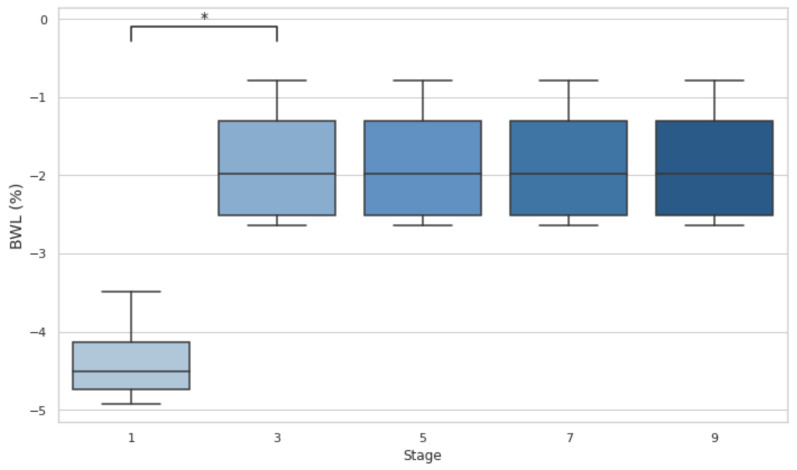
Ultra-trail events (UTs) pose significant challenges to maintaining hydration and electrolyte balance, with risks of dehydration (DH), overhydration (OH), exercise-associated hyponatremia (EAH), and exertional rhabdomyolysis (ER). This study examined the effects of ad libitum (ADL) hydration on hydration status and muscle damage during a nine-stage UT (635 km, 40,586 m elevation gain). Four highly trained male athletes participated. Hydration was assessed via body weight loss (BWL), urine specific gravity (Usg), and serum sodium ([Na+]), while muscle damage markers included creatine kinase (CK), lactate dehydrogenase (LDH), and calcium (Ca), and liver damage biomarkers included aspartate aminotransferase (AST) and alanine aminotransferase (ALT). Our results showed no cases of EAH or hypernatremia ([Na+] > 145 mmol·L-1), with serum [Na+] maintained above 135 mmol·L-1. BWL exceeded the 2% DH threshold in early stages (p = 0.029), and Usg remained elevated (>1.020 g·mL-1). LDH and CK significantly increased at all stages (p < 0.05), persisting for 48 h post-event. Correlations showed BWL aggravated muscle damage (r = 0.47 with CK) and hypocalcemia (r = -0.68 with Ca). Elevation gain/loss amplified fluid loss and muscle injury. While ADL hydration mitigated EAH, it did not fully address DH or muscle damage. Personalized hydration and recovery protocols are crucial to optimizing performance and health in UT events.
期刊介绍:
Biology (ISSN 2079-7737) is an international, peer-reviewed, quick-refereeing open access journal of Biological Science published by MDPI online. It publishes reviews, research papers and communications in all areas of biology and at the interface of related disciplines. Our aim is to encourage scientists to publish their experimental and theoretical results in as much detail as possible. There is no restriction on the length of the papers. The full experimental details must be provided so that the results can be reproduced. Electronic files regarding the full details of the experimental procedure, if unable to be published in a normal way, can be deposited as supplementary material.






 京公网安备 11010802042870号
京ICP备2023020795号-1
京公网安备 11010802042870号
京ICP备2023020795号-1

 分享
分享
 求助内容:
求助内容: 应助结果提醒方式:
 扫码关注我们
