{"title":"中国白蚁生殖和非生殖阶层躯体器官的简单序列重复序列(SSRs)和端粒分析。","authors":"Haroon, Zahid Khan, Wasim Javaid, Lian-Xi Xing","doi":"10.3390/biology14020166","DOIUrl":null,"url":null,"abstract":"<p><p>The study of <i>Reticulitermes chinensis</i> offers valuable insights into insect aging and longevity, focusing on telomere biology and simple sequence repeats (SSRs). Telomeres, the protective cap at chromosome ends, are often linked to cellular aging and lifespan. Through transcriptomic analysis using the RepeatExplorer tool, a total of 10,740 SSR loci were identified, encompassing di-, tri-, tetra-, penta-, and hexa-nucleotide motifs. Among these, tri-nucleotide repeats were the most prevalent (2702), with prominent motifs including AC/GT (21.91%), AAG/CTT (8.49%), and AGC/CTG (8.2%). The identified SSRs serve as valuable genetic markers for taxonomy, phylogenetic, and population genetics. A telomeric sequence array featuring the TTAGG repeat motif was also discovered, with fluorescence in situ hybridization (FISH) confirming its localization at chromosome ends. Telomere lengths <i>R. chinensis</i> ranged from tens to hundreds of kilobases but showed no significant correlation with lifespan differences among termite castes. All castes had the same telomere length. This finding suggests that <i>R. chinensis</i> may possess a unique telomere maintenance mechanism, decoupling telomere length from aging and challenging the conventional view that shorter telomeres are indicative aging. It is hypothesized that telomerase activity plays a critical role in preserving telomere integrity in this species. These findings underscore the complexity and evolutionary adaptations of telomere biology in social insects. Moreover, the variation and organization of SSRs in <i>R. chinensis</i> provide a rich genetic resource for genome mapping, evolutionary research, and population genetics. This study sheds light on telomere dynamics and genetic diversity in termites, opening new pathways for research in evolutionary biology and the molecular mechanisms of aging.</p>","PeriodicalId":48624,"journal":{"name":"Biology-Basel","volume":"14 2","pages":""},"PeriodicalIF":4.3000,"publicationDate":"2025-02-06","publicationTypes":"Journal Article","fieldsOfStudy":null,"isOpenAccess":false,"openAccessPdf":"https://www.ncbi.nlm.nih.gov/pmc/articles/PMC11852100/pdf/","citationCount":"0","resultStr":"{\"title\":\"Simple Sequence Repeats (SSRs) and Telomeric Analysis in Somatic Organs of Reproductive and Non-Reproductive Castes of Termite <i>Reticulitermes chinensis</i>.\",\"authors\":\"Haroon, Zahid Khan, Wasim Javaid, Lian-Xi Xing\",\"doi\":\"10.3390/biology14020166\",\"DOIUrl\":null,\"url\":null,\"abstract\":\"<p><p>The study of <i>Reticulitermes chinensis</i> offers valuable insights into insect aging and longevity, focusing on telomere biology and simple sequence repeats (SSRs). Telomeres, the protective cap at chromosome ends, are often linked to cellular aging and lifespan. Through transcriptomic analysis using the RepeatExplorer tool, a total of 10,740 SSR loci were identified, encompassing di-, tri-, tetra-, penta-, and hexa-nucleotide motifs. Among these, tri-nucleotide repeats were the most prevalent (2702), with prominent motifs including AC/GT (21.91%), AAG/CTT (8.49%), and AGC/CTG (8.2%). The identified SSRs serve as valuable genetic markers for taxonomy, phylogenetic, and population genetics. A telomeric sequence array featuring the TTAGG repeat motif was also discovered, with fluorescence in situ hybridization (FISH) confirming its localization at chromosome ends. Telomere lengths <i>R. chinensis</i> ranged from tens to hundreds of kilobases but showed no significant correlation with lifespan differences among termite castes. All castes had the same telomere length. This finding suggests that <i>R. chinensis</i> may possess a unique telomere maintenance mechanism, decoupling telomere length from aging and challenging the conventional view that shorter telomeres are indicative aging. It is hypothesized that telomerase activity plays a critical role in preserving telomere integrity in this species. These findings underscore the complexity and evolutionary adaptations of telomere biology in social insects. Moreover, the variation and organization of SSRs in <i>R. chinensis</i> provide a rich genetic resource for genome mapping, evolutionary research, and population genetics. This study sheds light on telomere dynamics and genetic diversity in termites, opening new pathways for research in evolutionary biology and the molecular mechanisms of aging.</p>\",\"PeriodicalId\":48624,\"journal\":{\"name\":\"Biology-Basel\",\"volume\":\"14 2\",\"pages\":\"\"},\"PeriodicalIF\":4.3000,\"publicationDate\":\"2025-02-06\",\"publicationTypes\":\"Journal Article\",\"fieldsOfStudy\":null,\"isOpenAccess\":false,\"openAccessPdf\":\"https://www.ncbi.nlm.nih.gov/pmc/articles/PMC11852100/pdf/\",\"citationCount\":\"0\",\"resultStr\":null,\"platform\":\"Semanticscholar\",\"paperid\":null,\"PeriodicalName\":\"Biology-Basel\",\"FirstCategoryId\":\"99\",\"ListUrlMain\":\"https://doi.org/10.3390/biology14020166\",\"RegionNum\":3,\"RegionCategory\":\"生物学\",\"ArticlePicture\":[],\"TitleCN\":null,\"AbstractTextCN\":null,\"PMCID\":null,\"EPubDate\":\"\",\"PubModel\":\"\",\"JCR\":\"Q1\",\"JCRName\":\"BIOLOGY\",\"Score\":null,\"Total\":0}","platform":"Semanticscholar","paperid":null,"PeriodicalName":"Biology-Basel","FirstCategoryId":"99","ListUrlMain":"https://doi.org/10.3390/biology14020166","RegionNum":3,"RegionCategory":"生物学","ArticlePicture":[],"TitleCN":null,"AbstractTextCN":null,"PMCID":null,"EPubDate":"","PubModel":"","JCR":"Q1","JCRName":"BIOLOGY","Score":null,"Total":0}
Simple Sequence Repeats (SSRs) and Telomeric Analysis in Somatic Organs of Reproductive and Non-Reproductive Castes of Termite Reticulitermes chinensis.
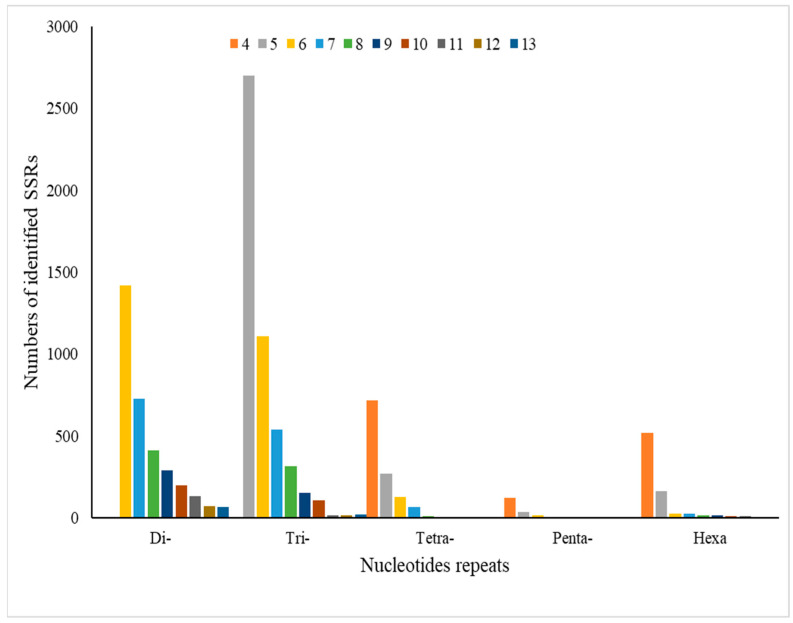
The study of Reticulitermes chinensis offers valuable insights into insect aging and longevity, focusing on telomere biology and simple sequence repeats (SSRs). Telomeres, the protective cap at chromosome ends, are often linked to cellular aging and lifespan. Through transcriptomic analysis using the RepeatExplorer tool, a total of 10,740 SSR loci were identified, encompassing di-, tri-, tetra-, penta-, and hexa-nucleotide motifs. Among these, tri-nucleotide repeats were the most prevalent (2702), with prominent motifs including AC/GT (21.91%), AAG/CTT (8.49%), and AGC/CTG (8.2%). The identified SSRs serve as valuable genetic markers for taxonomy, phylogenetic, and population genetics. A telomeric sequence array featuring the TTAGG repeat motif was also discovered, with fluorescence in situ hybridization (FISH) confirming its localization at chromosome ends. Telomere lengths R. chinensis ranged from tens to hundreds of kilobases but showed no significant correlation with lifespan differences among termite castes. All castes had the same telomere length. This finding suggests that R. chinensis may possess a unique telomere maintenance mechanism, decoupling telomere length from aging and challenging the conventional view that shorter telomeres are indicative aging. It is hypothesized that telomerase activity plays a critical role in preserving telomere integrity in this species. These findings underscore the complexity and evolutionary adaptations of telomere biology in social insects. Moreover, the variation and organization of SSRs in R. chinensis provide a rich genetic resource for genome mapping, evolutionary research, and population genetics. This study sheds light on telomere dynamics and genetic diversity in termites, opening new pathways for research in evolutionary biology and the molecular mechanisms of aging.
期刊介绍:
Biology (ISSN 2079-7737) is an international, peer-reviewed, quick-refereeing open access journal of Biological Science published by MDPI online. It publishes reviews, research papers and communications in all areas of biology and at the interface of related disciplines. Our aim is to encourage scientists to publish their experimental and theoretical results in as much detail as possible. There is no restriction on the length of the papers. The full experimental details must be provided so that the results can be reproduced. Electronic files regarding the full details of the experimental procedure, if unable to be published in a normal way, can be deposited as supplementary material.




 京公网安备 11010802042870号
京ICP备2023020795号-1
京公网安备 11010802042870号
京ICP备2023020795号-1

 分享
分享
 求助内容:
求助内容: 应助结果提醒方式:
 扫码关注我们
